Milos Trajkovic is an external researcher at the University of Groningen , affiliated with the Faculty of Science and Engineering and the Biotechnology department. His work focuses on biocatalysis, enzyme engineering, and computational methods in organic chemistry, particularly for lignin-derived compounds and stereoselective synthesis. Biocatalysis Enzyme Engineering Synthetic Biology Organic Chemistry Lignin-derived Compounds His recent publications highlight trends in computational redesign of enzymes (e.g., aspartase for β-alanine synthesis), stereoselective reductions and oxidations (e.g., F420-dependent alcohol dehydrogenase), and lignin valorization through tailored oxidase/peroxidase systems. Key subfields include enantioselectivity, cofactor engineering, and biocatalytic cascades. M. Trajkovic collaborates with prominent researchers such as M.W. Fraaije and A. Mattevi on projects involving enzyme stability, bioluminescence, and synthetic biology applications. His work has resulted in 20 research outputs, including patents and datasets, with significant citations and Mendeley readership.
Dr. H.J. Hauptmann is an Assistant Professor at the Faculty of Science , Utrecht University , specializing in Human-Centered Computing and Artificial Intelligence . Their work bridges Health Informatics , Visual Analytics , and Human-AI Interaction . Research Themes : Health Recommender Systems, Gamified Interfaces, Explainable AI, Nutritional Informatics Affiliation : Utrecht University (2024–present) Research Interests : Hauptmann's research focuses on designing health-promoting technologies that integrate recommender systems with uncertainty-aware explanations . They explore visual analytics for sheet music , language models , and nutritional support systems , emphasizing user-centered design and inclusive technology for neurodiverse populations. Publication Trends : Recent work (2024–2025) includes health equity in AI , exergames for skill adaptation , and privacy-respecting medical reporting systems . Collaborations span health sciences , musicology , and data ethics . Scientific Awards : HAI-small grant (2023) Lab & Collaborations : Affiliated with Utrecht's AI Labs Human-Centered Artificial Intelligence , Hauptmann collaborates on big data visualization and persuasive AI projects. Their lab explores visual feedback mechanisms in mixed-method studies and long-term user engagement in health technologies.
Luuk van Duuren is a Researcher in Public Health at Erasmus MC, Erasmus University Rotterdam, specializing in cancer screening modeling with emphasis on colorectal and pancreatic malignancies. His work integrates advanced microsimulation techniques to evaluate screening strategies and health policy impacts. Education: Master in Econometrics and Management Science (awarded February 12, 2021) Van Duuren's research focuses on developing risk-prediction models for colorectal cancer screening, validating surrogate endpoints in clinical trials, and simulating disease progression pathways. He employs Bayesian calibration and emulator-based methods to refine cancer intervention models, collaborating with international consortia including CISNET and the Dutch Pancreatic Cancer Group. His methodology bridges computational statistics with clinical decision-making to optimize population-level screening programs. Analysis of his 2023-2025 publications reveals dominant trends in microsimulation modeling applied to gastrointestinal cancers, particularly colorectal carcinoma risk stratification and pancreatic neoplasia progression. His work consistently intersects public health policy, cost-effectiveness analysis, and translational oncology, with growing emphasis on AI-enhanced model calibration. No scientific awards are documented in available sources. Information regarding student supervision and research grants remains unspecified in current profiles, though his collaborative publications indicate active participation in multi-institutional research networks. Van Duuren contributes to the Dutch Pancreatic Cancer Group and CISNET colorectal modeling consortium, leveraging team-based approaches to address complex questions in cancer prevention and early detection through computational simulation.
Marc Geers is a Full Professor in the Department of Mechanical Engineering at Eindhoven University of Technology (TU/e), leading the Mechanics of Materials research group. His work bridges solid mechanics, multi-scale modeling, and computational homogenization, focusing on advanced materials like metamaterials, energy materials, and additive manufacturing systems. Research Themes: Multi-scale mechanics, metamaterials, computational homogenization, micromechanics, and deformation analysis of metals and composites. Leadership: Chairs TU/e’s multi-scale lab, serves as Editor-in-Chief of the European Journal of Mechanics A/Solids , and leads the European Mechanics Society EUROMECH since 2019. Recent publications emphasize additive manufacturing , metamaterial design , and multi-physics homogenization , leveraging machine learning and finite element methods. His team explores applications in fusion-reactor shielding , MEMS , and hygroscopic paper networks . Grants & Awards : Structurally funded by ERC (Advanced Grant), NWO (STW, FOM), EU, and M2i. Elected to KNAW (2022) and Koninklijke Hollandsche Maatschappij der Wetenschappen (2012).
Varvara Kouznetsova is an Associate Professor in Multi-scale Mechanics of Solids in the Mechanics of Materials group at the Department of Mechanical Engineering of Eindhoven University of Technology (TU/e). Her research focuses on understanding, predicting, and tailoring structure-property-performance relations in various materials based on underlying microstructural phenomena. Dr. Kouznetsova holds a degree in Applied Mathematics from Perm State Technical University, Russia, and a PhD in Mechanical Engineering from TU/e. From 2002 to 2009 she was a research fellow at the Netherlands Institute for Metals Research (NIMR) and the Materials innovation institute (M2i). She served as an Assistant Professor at Eindhoven University of Technology from 2006 to 2018 before becoming an Associate Professor. Her research interests include: Multi-scale mechanics of solids Computational homogenization techniques Metamaterials and their emergent properties Wave propagation phenomena in structured materials Damage and fracture mechanics Mechanics of advanced high-strength steels Dr. Kouznetsova's recent publications demonstrate a strong focus on multi-scale modeling approaches applied to metamaterials, porous solids, and advanced metallic materials. Her work bridges fundamental methodological developments with practical applications across various materials systems. She has made significant contributions to computational homogenization techniques, particularly for transient phenomena and locally resonant structures. She has received substantial research recognition with over 6,000 citations according to Scopus metrics. Dr. Kouznetsova teaches courses including "Composite and light-weight materials: design and analysis," "Advanced computational continuum mechanics," "Computer aided engineering," and "Material models." She also engages in research collaboration and co-supervision of PhD researchers with Keio University.
Duygu Keskin is an Assistant Professor in Industrial Engineering & Innovation Sciences at Eindhoven University of Technology (TU/e), conducting research at the intersection of design, entrepreneurship, and sustainability. Her work primarily focuses on the dynamics of product innovation in sustainability-oriented new ventures, examining how design and entrepreneurship contribute to creating innovations that transform society toward sustainable practices. Dr. Keskin holds a PhD from Delft University of Technology (TU Delft), an MSc in Industrial Design, and a BA in Environmental Engineering from Middle East Technical University in Ankara, Turkey. Prior to joining TU/e, she worked as a researcher, project manager, and lecturer at TU Delft from 2007 to 2014. Her research interests include: The dynamics of product innovation in sustainability-oriented new ventures Decision-making logics (causal and effectual) throughout product and business development Value creation strategies of sustainability-oriented new ventures Serious gaming in teaching alternative decision-making theories Design approaches in entrepreneurship education Circular business model innovation Smart city ecosystems and urban challenges Dr. Keskin's recent publications demonstrate a strong focus on sustainable business model innovation, effectuation theory, and the integration of design thinking with entrepreneurial practices. Her work spans multiple disciplines, connecting engineering, business, and sustainability to address complex societal challenges through innovative approaches. Key themes include tactical experimentation tools for circular business models, sustainability assessment frameworks, and value creation in nascent ecosystems. Her notable contributions include developing educational frameworks for entrepreneurship education, studying value creation in smart city contexts, and creating design principles for sustainability assessments in business model innovation processes. Her research has been published in reputable journals such as IEEE Transactions on Engineering Management and Journal of Cleaner Production. As an educator, Dr. Keskin teaches courses related to design science methodology, innovation and entrepreneurship, and technology entrepreneurship, with a particular focus on sustainable development. Her teaching reflects her research interests, emphasizing practical applications of theoretical frameworks in real-world contexts.
Remco Dijkman is a Full Professor in Information Systems and chair of the Information Systems group at Eindhoven University of Technology (TU/e) within the Industrial Engineering and Innovation Sciences school. He leads research in Business Process Management with a focus on data-driven optimization of business processes. His work bridges theoretical advancements with practical applications in transportation and high-tech supply chains. Dr. Dijkman received his PhD and Master's degrees in computer science from the University of Twente. His academic journey includes visiting positions at New York University, Hasso Plattner Institute, IBM Zurich Research Lab, Humboldt-University Berlin, and Queensland University of Technology. PhD in Computer Science - University of Twente Master's in Computer Science - University of Twente Professor Dijkman's research focuses on the detection, diagnosis and prediction of optimal execution scenarios, mathematical models for quantitative analysis of business processes, and resource assignment optimization. His work integrates advanced techniques including queueing models, stochastic programming, and deep reinforcement learning to solve complex business process challenges. He has particular expertise in applying these methods to transportation logistics and high-tech supply chain planning, where he investigates how data-driven predictions can improve transport order assignment and supply chain planning. His recent publications demonstrate a strong trend toward integrating artificial intelligence techniques with traditional operations research methods. The research shows increasing sophistication in handling uncertainty in business processes, with a growing emphasis on real-time decision making and optimization. His work spans theoretical advancements in process modeling and practical applications in logistics and supply chain management, reflecting his commitment to bridging academic research with industry needs. Professor Dijkman serves on the editorial board of Information Systems journal and has published over 100 papers in prestigious venues including Information Systems, Computers in Industry, and Transactions on Software Engineering and Methodology. He currently leads or participates in several major research projects including DynaPlex, CERTIF-AI, SLEM, and FENIX. Additionally, he serves as research director for high-tech supply chain at the European Supply Chain Forum, a networking organization with over 50 multinational companies. His adjunct professorship at Queensland University of Technology demonstrates his international academic engagement. Professor Dijkman's research group focuses on developing advanced methods for business process analysis and optimization, with particular emphasis on handling uncertainty and making real-time decisions in complex business environments. The team works closely with industry partners to ensure practical relevance of their research, particularly in transportation and high-tech manufacturing sectors.
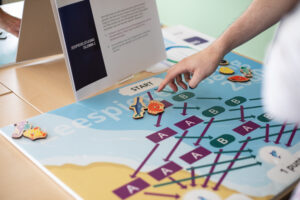
Dr. Nieske Vergunst is a Science Communication Researcher at the Center for Science and Culture , Utrecht University. As part of the Faculty Open Science Team and Freudenthal Institute, she focuses on improving public engagement with science through innovative methods like serious games and dilemma-based educational tools. PhD in Artificial Intelligence (2011, Utrecht University) Research Themes: Bridges climate science communication with youth engagement via games like the Sea Level Game , targeting accessibility for diverse audiences. Her work spans: Sustainability Education Science Communication Strategies Board Game Design for Learning Public Engagement Metrics AI-Driven Dialogue Systems Robotics Social Reasoning Recent Scientific Outputs demonstrate expertise in climate gamification and AI communication frameworks. She has also authored two popular-scientific books: Oorlogsbrieven (2016) and Hallo Robot (2017), with international translations.
Pavel S. Ruzankin is an Associate Professor at Novosibirsk State University's Department of Probability Theory and Mathematical Statistics. He also serves as Head of the Laboratory of Applied Inverse Problems at the Sobolev Institute of Mathematics. His email is ruzankin@math.nsc.ru . Education: 1993-1999: Novosibirsk State University (Mathematics), 1999-2001: Postgraduate at Sobolev Institute of Mathematics, 2001: Candidate of Science (PhD) from Sobolev Institute of Mathematics. His research spans Medical Statistics , Image Reconstruction in Emission Tomography , Nonparametric Statistics , and Poisson Approximation . He has contributed to Monge-Kantorovich Problem solutions and developed advanced Statistical Regression Models with uniform consistency guarantees. His work bridges theoretical probability with practical applications in biomedical research. Key publication trends include computational algorithms, cardiovascular medicine applications, and nonparametric estimation methods. He has co-authored multidisciplinary studies combining Cardiac surgery trials Genomic diagnostics Mathematical statistics Algorithm design As course leader, he designed the Random Processes curriculum for master's students at Novosibirsk State University and provides guidance through editorial roles at journals like Heart and Vessels and Journal of Cardiothoracic and Vascular Anesthesia . His leadership in the Laboratory of Applied Inverse Problems demonstrates expertise in solving complex mathematical challenges, particularly in Statistical inverse problems Poisson process approximations Medical data analysis
Dr. Hongyang Cheng is an Assistant Professor at the University of Twente's Civil Engineering & Management Department, specializing in multi-scale modeling of granular materials and Bayesian uncertainty quantification for geotechnical applications. His work bridges physics-based and data-driven approaches, focusing on soil mechanics from quasi-static to dynamic behaviors, with applications in geohazard mitigation, laser sintering, and pharmaceutical powder processing. Education: PhD in Multiscale characterization of geosynthetic-reinforced soil, Hiroshima University (2013–2016) Master's in Civil Engineering, Hiroshima University (2011–2013) Dr. Cheng's research spans multi-scale modeling of granular materials, including Discrete Element Method (DEM) and Finite Element Method (FEM) integrations, and Bayesian uncertainty quantification frameworks like GrainLearning. His work addresses geotechnical challenges such as dike safety, offshore infrastructure resilience, and soil-structure interactions under extreme loading, utilizing machine learning surrogates to enhance computational efficiency. Scientific awards include the Japanese Government Scholarship (2011), Best Student Paper at DEM2016, and IACMAG Excellence in 2022. He leads EU-funded projects like POSEIDON (offshore geohazards) and TUSAIL (upscaling particle systems), supervises postdocs/PhD students, and co-leads Working Group 1 for COST Action ON-DEM to promote open-source DEM tools. Recent publications emphasize DEM's role in bio-cemented soils, vegetation effects on soil mechanics, and sintering kinetics. His teaching includes undergraduate courses on Soil Mechanics and graduate-level GeoRisk Management, integrating probability theory, stochastic modeling, and Python-based risk assessment tools.
Dr. Ellen-Wien Augustijn is an Assistant Professor at the Department of Geo-Information Processing, Faculty of Geo-Information Science and Earth Observation, University of Twente. She combines teaching, research, and international capacity development projects, focusing on GIS, agent-based modeling (ABM), and geocomputation for health applications. Her work bridges technical innovation with real-world problem-solving in coastal management, disease diffusion, and educational technology. Research Interests: Ellen-Wien specializes in spatial agent-based models integrating geographical environments and human behavior. Her keywords include Agent-Based Modeling, Geocomputation, and Disease Modeling, with current projects applying artificial intelligence to ABMs for behavior change analysis. She uses methods like Self-Organizing Maps (SOMs), Bayesian Networks, and clustering for spatiotemporal disease pattern detection. Recent Publications: Her 2025 work on wastewater-based epidemiology frameworks and beach visitation patterns highlights trends in collaborative modeling and sustainable coastal design. Earlier studies (2024-2023) cover topics like visceral leishmaniasis in Kenya, recreational risk perception, and AI-enhanced disease simulations. Scientific Awards: 1st place: TU Delft | Water for Impact Best Paper Award (2024) Education & Capacity Development: She contributes to the Living Textbook project and has developed MOOCs and international courses in India, the Netherlands, and beyond. Her educational work spans GIMA, GFM, and ITC E-Core modules, emphasizing innovative teaching methods for geospatial concepts. International Projects: Active in Asia and Africa, she designs GIS curricula and delivers training on GeoHealth applications. Recent assignments include a Nuffic refresher course in India (2016) and sabbaticals at Purdue University (2013).
Jean Paul Sebastian Piest is an Assistant Professor at the University of Twente, affiliated with the Digital Society Institute and the Industrial Engineering & Business Information Systems department. His work aligns with UN Sustainable Development Goals related to artificial intelligence, logistics, and societal-technical systems. Expertise: Artificial Intelligence, Data Mining, Process Mining, Machine Learning, Human-AI Interaction, and Logistics. Research Trends: Focuses on intelligence amplification, digital twins, federated learning, and enterprise architecture frameworks. His recent work explores AI applications in logistics and healthcare, emphasizing resilience, data privacy, and human-centric design. Scientific Contributions: Active in design science research, developing tools like the Intelligence Amplification Design Canvas and AIDAF framework. His publications span topics including data mesh architectures, smart truck parking, and Society 5.0 implementations.
J.N. Post is an Associate Professor in Developmental BioEngineering at the TechMed Centre , University of Twente. His research focuses on cartilage biology, cell signaling, and computational modeling in tissue engineering, with a strong emphasis on osteoarthritis and stem cell research. Education: PhD in Molecular Oncology (2002), Memorial University of Newfoundland External Experience: Post-Doc at Max Planck Institute for Biophysical Chemistry (2002–2005) His work integrates computational modeling with experimental approaches to study tissue development and disease. Key areas include transcriptional regulation (e.g., SOX9, RUNX2), molecular crowding in osteoarthritis, and amyloid-based scaffold design for cartilage regeneration. Recent publications highlight interdisciplinary collaborations and innovative computational methods. Scientific awards include the Stimuleringsfonds Prize (2010) from the University of Twente. He has presented at major conferences and serves as Chair for the Nederlandse Vereniging voor Biochemie en Moleculaire Biologie (NVBMB) since 2025.
Anne M. Leferink is a Senior Lecturer at the University of Twente, affiliated with the Faculty of Science and Technology and embedded within the Applied Stem Cell Technologies group (TNW-BET-AST). She contributes to the Technical Medicine BSc and MSc programs, teaching courses in Cell Biology, Biomaterials for Clinical Interventions, and Clinical Biotechnology, while also serving as module- and course-coordinator. From August 2021 to December 2022, she held a 0.2 FTE appointment as a Teaching Fellow on Challenge Based Learning, focusing on educational research and methods. Research Areas: Organ-on-a-Chip technology Biomedical devices for medical interventions and diagnostics Tissue engineering and stem cell applications Cell biology at molecular and functional scales Cross-disciplinary practices in natural sciences Collaborations & Affiliations: She is actively involved in the national LymphChip Consortium, the Organ On a Chip Centre Twente (OoCCT), the Dutch Human Organ And Disease Model Technologies (hDMT) consortium, and the European Organ-on-a-Chip Society (EUROoCS). Her work bridges clinical and industrial partnerships to optimize medical device designs and clinical trials. Scientific Awards: Teaching Fellow on Challenge Based Learning (August 2021 - December 2022)
Marija Bockarjova is an Assistant Professor in Land and Urban Economics at the University of Twente's ITC Faculty. Her work focuses on urban environment issues, integrating economic perspectives into urban development, resilience, and climate adaptation. She leads multidisciplinary projects such as PARATUS, RiskPACC, and WISER, addressing disaster risk reduction and sustainable urban planning. Her research spans environmental economics, disaster risk management, and urban inequalities. Key projects include flood vulnerability modeling in Malawi, heat mitigation strategies using digital twins, and global reviews of national adaptation plans. She has published extensively on topics like urban nature valuation, socioeconomic impacts of disasters, and policy frameworks for climate resilience. Marija has contributed to over 40 peer-reviewed articles and collaborates globally on systemic risk assessments and urban sustainability. Her work aligns with UN SDGs, particularly addressing climate action and sustainable cities.