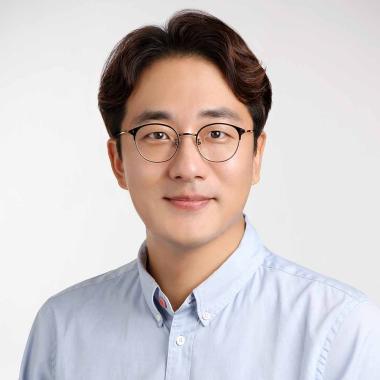
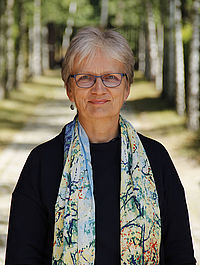
Julia Lawton is Professor of Health & Social Science at the Usher Institute , University of Edinburgh, where she leads the Edinburgh Qualitative Health Research Group (EQual) . Her work focuses on improving healthcare delivery through qualitative research, particularly in chronic condition self-management and health inequalities. Education: PhD and BA in Social Anthropology from University of Cambridge Research Themes: Diabetes self-management, health technology adoption, inequities in healthcare access, process evaluations of complex interventions Key Projects: UNBIASED (diabetes technology disparities), REDUCE (diabetic foot ulcers), CL4P-CF (cystic fibrosis-related diabetes), AiDAPT (pregnancy diabetes management) Her recent publications highlight innovations in diabetes care, including closed-loop systems, structured education, and addressing disparities in technology access for underserved populations. She collaborates extensively with NHS entities and international institutions.
Dr. Abby Haynes is a Research Fellow at the Sydney School of Public Health, University of Sydney, affiliated with the Institute for Musculoskeletal Health and Faculty of Medicine and Health. Her work focuses on physical activity for healthy ageing and people with disability, employing qualitative research, systems thinking, and realist evaluation. Key research themes include: Healthy Ageing Disability and Physical Activity Implementation Science Knowledge Mobilisation Her recent publications analyze: Inclusive sports programs for children with disability Fall prevention in acute hospitals Telehealth physiotherapy for aged care Realist evaluations of yoga and dance interventions Systems thinking in public health policy These emphasize public health, gerontology, and health equity approaches. Grants include MRFF-funded projects on traumatic brain injury rehabilitation (2024), fall prevention (2023), and aged care mobility (2022).
Professor Yvonne Rydin is Chair of Planning Environment and Public Policy at The Bartlett School of Planning, University College London (UCL), where she has been based since 2006. She currently holds a 50 % part-time appointment at UCL and previously spent 16 years at the London School of Economics in the Department of Geography and Environment. Education PhD in Urban and Regional Planning Studies, University College London (1984) BA (Hons) in Land Economy, University of Cambridge (1978) Research Interests Professor Rydin is an internationally recognised scholar in governing for sustainability. Her work spans urban green space management, community energy, retail planning, and post-growth urban futures. Conceptually, she mobilises network metaphors (including social capital) and discourse analysis to unpack governing processes, while also drawing on socio-technical studies to examine large-scale energy infrastructure. A long-standing strand of research interrogates knowledge production within planning, scrutinising classificatory systems such as BREEAM and sustainability indicators and exploring the implications of socio-materiality. Her forthcoming monograph Planning without Growth (Policy Press, 2025) extends her agenda on low-growth planning by investigating how embedded and new knowledges can support alternative local economic models. Research Outputs & Trends Since 2018 she has published extensively on post-growth planning, regulatory theory, digital tools in participation, and diverse economies. Recent articles in Planning Theory, Built Environment and Planning Practice & Research articulate critical perspectives on moving beyond pro-growth orthodoxies and re-tooling the planning profession. Scientific Awards & Recognition While no specific awards are listed, Professor Rydin has held numerous prestigious roles: member of the RAE 2014 panel, invited oral evidence to the House of Commons Environmental Audit Committee, participant in the Raynsford Review of Planning, and repeated evaluator for the Norwegian Research Council, Finnish Academy, ESRC and FORMAS. Advising & Grants She has supervised collaborative Engineering Doctorate (EngD) studentships with industrial partners BRE Global and Buro Happold (2011-2020), and co-taught on the MSc Sustainable Urban Development at Oxford University’s Department for Continuing Education (2014-2018). Labs & Teams Professor Rydin served as Director of the UCL Environment Institute (2010-2013) and leads teaching on the postgraduate module Planning for Sustainability and Inclusion alongside Dr Yasminah Beebeejaun.
Prof. Dr. Gabriel Zeilinger is a Professor of Bavarian and Franconian Regional History at Friedrich-Alexander-Universität Erlangen-Nürnberg since April 2022. He holds a Chair in the Department of History and focuses on medieval and early modern urban history, comparative regional studies, and pre-modern socio-economic dynamics. Born in Freiburg im Breisgau in 1975, he studied History and Norse Philology in Kiel and Oslo, earning his PhD in 2006 with a thesis on the impact of war on urban life in 15th-century Southern Germany. His habilitation (2013) explored urbanization in Upper Alsace. Education: 1996–2002: Studies in History and Norse Philology (Kiel/Oslo) 2006: PhD, Kiel University 2013: Habilitation, Kiel University His research interests span Bavarian/Franconian regional history, comparative urbanization processes, and the interplay between nobility, cities, and political structures. Key themes include medieval disasters, economic resource management, and the role of violence in urban contexts. Zeilinger has authored/co-edited over 30 books and numerous articles on topics like medieval festivals, city-state conflicts, and the socio-political dynamics of urban communities. His work often bridges archaeology, historical documentation, and interdisciplinary methodologies. Memberships: Board Member, Society for Franconian History Editor, Jahrbuch für fränkische Landesforschung DSM Fellow/Senior Expert, Leibniz Institute for Maritime History Member, German Historical Association and multiple regional history associations His recent studies examine medieval water management, urban conflict strategies, and the legacy of the Protestant Reformation in Franconia. Zeilinger’s interdisciplinary approach integrates material culture analysis with textual evidence to illuminate medieval socio-political landscapes.
Colm McLaughlin is a Professor of Employment Relations at the UCD School of Business. He serves as Vice-Principal for Equality, Diversity and Inclusion at the College of Business, Co-Director of the UCD Centre for Business and Society (CeBaS), and UN Principles for Responsible Management Education (PRME) Coordinator. He holds a PhD from the University of Cambridge and has held academic roles at the University of Auckland and postdoctoral positions at Cambridge, alongside industry experience in local government and hospitality. Education : BA and MComm (University of Auckland), PhD (University of Cambridge). Research Interests : Comparative employment relations, institutional regulation, gender equality, training systems, and low-paid work. Professional Appointments : Research Associate at Cambridge’s Centre for Business Research, Visiting Fellow at the University of Sydney and Victoria University Wellington. His recent research focuses on immigration policy as a skills supply mechanism in liberal market economies, trade union legitimation politics, and reflexive regulation frameworks. He has examined how ideational power resources shape labour relations and contributed to debates on corporate social responsibility and sustainable HRM practices. His work bridges theory and practice, particularly in case method pedagogy reform. Colm has received multiple awards, including the AMLE Best Article Winner (2017), Academy of Management Dark Side Case Competition Winner (2013), and University Teaching Excellence Awards (2020). His publications appear in prestigious journals such as Industrial Relations , Journal of Industrial Relations , and Academy of Management Learning and Education . He has served on editorial boards for Industrial Relations: A Journal of Economy and Society and Journal of Industrial Relations , and held leadership roles in committees like BITCI Leadership for Sustainability and the SDG Engagement Working Group.
Dr. Chanel Watson is a Senior Lecturer and Programme Director in the School of Nursing and Midwifery at the Royal College of Surgeons in Ireland (RCSI), where she also serves as Deputy Director of Academic Affairs and coordinates Erasmus activities. She holds a Doctorate in Higher and Adult Education from Maynooth University (2020) and has additional postgraduate qualifications in Healthcare Ethics and Health Professions Education. Her research focuses on nursing education and prescribing practices, employing qualitative methodologies. She currently co-supervises 3 PhD students and is the primary supervisor for an additional 3. Dr. Watson has held roles in research ethics committees, including appointment to the National Research Ethics Committee for clinical trials in 2024, and has led national initiatives in nurse prescribing education frameworks. She has secured grants totaling over €1.6M for projects including nurse prescribing programs, gerontology education, and clinical trial coordination. Dr. Watson is an external examiner at multiple universities and actively reviews submissions for journals like Nursing Ethics and Journal of Nursing Education and Practice . Her professional engagements include leadership in national healthcare education reforms and international conference speaking engagements. Education: MSc in Healthcare Ethics and Law, RCSI (2004–2006) Post Graduate Diploma in Health Professions Education, RCSI (2014–2015) Doctorate in Higher and Adult Education, Maynooth University (2016–2020) Research Interests: Dr. Watson’s work emphasizes advancing nurse and midwife prescribing education, healthcare ethics, and clinical trial coordination. She has pioneered programs such as Ireland’s first Professional Certificate in Musculoskeletal Casting and Splinting. Her qualitative research explores nurse-patient interactions in acute care settings and the impact of burnout on pediatric nursing outcomes. She advocates for evidence-based practices in pain management and patient safety. Grants & Awards: €968,830 National Tender for PGDip Gerontology (2024) €450,000 Sexual Assault Forensic Nurse Examiner Education (2025) €225,180 Residential Care Education (2024) Fellowship of the Faculty of Nursing and Midwifery Committees & Leadership: National Lead for Nurse/Midwife Prescribing Competency Framework (HSE/NMBI) Member of National Research Ethics Committee CT-D External Examiner for University of South Wales and University College Cork
James Turner is an Associate Professor in Exercise Physiology and Immunology at the University of Birmingham's School of Sport, Exercise and Rehabilitation Sciences. Previously, he held roles at the University of Bath as a Lecturer (Assistant Professor) from 2013 to 2018 and promoted to Senior Lecturer (Associate Professor) in 2018 before moving to Birmingham in 2022. His research focuses on lifestyle impacts on ageing and chronic disease, particularly adipose tissue immunology and cancer immunology (e.g., breast cancer). He leads projects examining obesity, immune system ageing, and factors influencing cancer treatment outcomes. His work aligns with UN Sustainable Development Goals related to health and well-being. Education: BSc (Hons) Sport and Exercise Science (University of Bath, 2006); PhD in Exercise Biochemistry and Immunology (University of Birmingham, 2011). Post-doctoral training in cancer immunology followed. He has mentored 9 PhD/MSc students as lead or co-supervisor and contributed to grants from bodies like Cancer Research UK and the Biotechnology and Biological Sciences Research Council. Current research includes projects on adipose tissue inflammation and muscle mass regulation in older adults. Labs/Teams: Active in collaborative projects with institutions globally, focusing on exercise immunology and cancer treatment efficacy. Editor for journals like Frontiers in Physiology and International Journal of Sport Nutrition and Exercise Metabolism .
Dr. Karen Birkenhead is a Postdoctoral Research Fellow in Implementation Science at the Sydney School of Health Sciences, University of Sydney. She holds a PhD in Human Movement (2018) and a Master of Sports Nutrition by Research (2014). Her research focuses on cardiovascular diseases, nutrition, exercise physiology, and genetic medicine, with a current project implementing a shared care model for familial hypercholesterolemia (FH). She previously worked as a Registered Dietitian in Canada for 14 years, specializing in public health, sports nutrition, telehealth, and chronic disease management. Education: PhD in Human Movement, 2018 Masters in Sports Nutrition, 2014 Her research themes include Obesity, Diabetes and Cardiovascular Disease, Healthy Ageing, and Lifespan Health. Key projects include translational research grants for FH care models and perioperative nutrition strategies. She has received awards such as the HDR Student Research Grant (2015) and the USCIRS (2014). Dr. Birkenhead collaborates with organizations like the Nutrition Society of Australia and Professionals in Nutrition for Exercise and Sport. Her work bridges clinical practice and research, aiming to improve patient outcomes through evidence-based interventions.
John Gledhill is an Associate Professor of Global Governance in the Department of International Development at the University of Oxford, where he teaches courses on Global Governance and Diplomacy, Peacebuilding & Statebuilding, and Power, Conflict, & the Arts. He is a Fellow of St. Cross College and actively collaborates with international institutions such as the Asia-Pacific Centre for the Responsibility to Protect (University of Queensland), the Conflict Research Society, and OxPeace, a multidisciplinary peace research network at Oxford. PhD in Government from Georgetown University BA in History and Political Science from Trinity College, Dublin His research spans peace and conflict studies, focusing on the political dimensions of development, nonviolent resistance, and the role of music and the arts in conflict and peacebuilding. Recent work examines UN peacekeeping withdrawal legacies, the economic impacts of peace operation exits, and the integration of arts into peace processes. The 15 most recent publications reflect his expertise in UN peacekeeping dynamics, state formation, and the intersection of arts and conflict. These include studies in the European Journal of International Relations , Journal of Global Security Studies , and International Peacekeeping , alongside book chapters and encyclopedia entries addressing transitional justice, regime transitions, and globalization's effects on emerging economies. Scientific Awards: Teaching Excellence Award, University of Oxford (2013) Teaching Excellence Award, London School of Economics (prior to 2013) John has supervised research students Sabrina Brandt and Rachel Nguyen-Morrow. His projects include ESRC-funded studies on post-peacekeeping withdrawal outcomes and investigations into music's role in UN peacebuilding. He contributes to academic governance through roles on the Conflict Research Society's Governing Council and the OxPeace Steering Committee.
Dustie Spencer is a Visiting Faculty member at SIT Study Abroad, specifically within the Human Rights: Movements, Power, and Resistance program. She holds a PhD from the University of Edinburgh’s School of Social and Political Science and has taught as a visiting professor in South Korea, focusing on global studies and transnational activism. PhD, MRes South Asian Studies – University of Edinburgh MSc International Conflict – Kingston Upon Thames BA International Studies – University of South Florida Her research centers on transnational social movements, particularly feminist and human rights activism in the South Asian diaspora. She investigates how digital platforms and global networks influence political mobilization, with a special focus on the Kashmir freedom movement. Her work bridges political science, postcolonial theory, and gender studies, emphasizing the politicization of feminism and challenges to multiculturalism in South Korea. Her recent publications analyze transnational framing, online activism, and subaltern narratives in the context of Kashmir, reflecting a strong interdisciplinary approach across political science, human rights, and digital sociology. These works highlight evolving strategies of resistance and identity formation among diasporic communities. Beyond Ethnonationalism: Transnational Mobilisation and Framing in Kashmir’s Freedom Movement (2023) Kashmir Online, Offline, and Abroad (2022) The Subaltern Kashmiri (2013) Dr. Spencer is actively involved in teaching and research, with no indication of formal advising relationships or grant funding mentioned in the text. She has contributed to civic engagement initiatives, notably encouraging expatriate voting from abroad. Her academic journey reflects a global perspective, shaped by experiences in the United States, the UK, and South Korea. She is affiliated with the School of International Training and contributes to interdisciplinary human rights education through experiential learning programs.
Dr. Jonghyuk Cha is a Senior Lecturer in Information Systems and Project Management at Westminster Business School, University of Westminster. Previously, he worked as a Research Associate at the University of Manchester and held roles in software/IT consulting. He holds a PhD and MSc from Alliance Manchester Business School and a degree in Industrial Systems Engineering and Business Management from Yonsei University. He was also a Visiting Research Fellow at South Korea's Science and Technology Policy Institute. His research focuses on digital transformation, digital government, organisational project management, and benefits realisation. Key publications explore owner challenges in major projects, digital transformation dynamics, and government transformation strategies. He has been awarded the 2021 JAIS Best Paper Honorable Mention, 2021 BAM Best Developmental Paper Award, and 2017 ICIS Best Paper-a-Thon Paper Award. Teaching modules include Digital Innovation, Project Management, Social Media for Business, and Web-enabled Business. He is part of the Centre for Digital Business Research, contributing to interdisciplinary studies on digital business and organisational transformation.
Professor Michaela Benson is Professor of Public Sociology at Lancaster University's School of Social Sciences. She is internationally recognised for her leadership in Migration Studies and Urban Sociology, with her work critically examining Brexit and migration, lifestyle migration, class, space and place, and self-build housing. Since 2022 she also serves as Chief Executive of The Sociological Review , a charitable foundation advancing public sociology. Education & Recognition: Michaela holds a PhD and was elected Fellow of the Academy of Social Sciences (FAcSS) in 2025. Research Interests: Her research agenda centres on the intersections of migration, citizenship, and urban life, with a particular focus on how these phenomena are reshaped by Brexit. She explores lifestyle migration as a lens on class, coloniality, and identity, and interrogates the meanings of home and housing through self-build practices. Her work is marked by a commitment to reflexive, empirical methodologies and public engagement. Scholarly Output: Across more than 60 publications, her recent articles span critiques of post-Brexit bordering practices, the colonial legacies shaping UK migration regimes, and innovative pedagogies in sociology. A consistent theme is the biopolitical and geopolitical dimensions of migration governance, analysed through ethnographic and multi-sensory methods. Awards & Fellowships: Fellow of the Academy of Social Sciences (FAcSS) – 2025 British Academy Mid-Career Fellowship – 2020-2021 Research Funding & Projects: Brexit, citizens’ rights and British Citizens in the EU-27 5 years on – ESRC consultancy (2025) Rebordering Britain and Britons after Brexit (MIGZEN) – ESRC (2021-2024) BrExpats: Freedom of Movement, Citizenship and Brexit in the lives of Britons resident in the European Union – ESRC (2017-2019) PhD Supervision & Research Groups: She welcomes doctoral researchers working on migration and citizenship, Brexit, class, home and housing, and urban sociology, especially those employing qualitative or ethnographic methods. She is affiliated with the Centre for Alternatives to Social and Economic Inequalities and the Centre for Health Futures .
Alex J. Wood is a sociologist of work and employment at the Oxford Internet Institute (OII), University of Oxford. He holds roles as Research Associate (2019–2023) and Researcher (2015–2019). His work focuses on employment relations, labour market transformation, and digital labour dynamics. Wood completed his PhD at the University of Cambridge Department of Sociology (2015), titled The insecure worker: workplace control in the 21st Century , exploring flexible work forms like zero-hour contracts. His research interests include job insecurity, workplace resistance, industrial relations, and the gig economy. Notable projects include the Microwork and Virtual Production Networks study examining digital labour in Africa/Asia and the iLabour project analyzing global labour market shifts. He has contributed to policy initiatives like the ESRC-funded Zero2Zero workshops addressing workplace stress from insecure scheduling. Wood’s publications span topics such as algorithmic control in gig economies, online freelancer organisation, and temporal flexibility in work. He has co-authored reports for global unions and think tanks, emphasizing policy reforms for vulnerable workers. His work bridges academic research with practical advocacy, focusing on digital-age labour challenges and systemic inequalities.
Dr. Heike Liebau is a Senior Research Fellow and Head of the Research Unit 'Representations of the Past as a Mobilising Force' at the Leibniz-Zentrum Moderner Orient (ZMO) in Berlin. Her work focuses on South Asian history, particularly colonial and post-colonial periods, intercultural encounters, and the politics of historical memory. She leads the DFG-funded project 'Das Moderne Indien in deutschen Archiven 1706–1989' (MIDA) and has directed several major research initiatives, including the HERA project on cultural exchange during World War I. She is an expert on the Tranquebar Mission and translocal knowledge production between Europe and South Asia. Her research interests include: Colonial and post-colonial history Historical authenticity and iconization Missionary history and religious exchange World War I in global contexts Archival studies and knowledge transfer Public history and museum curation The 15 most recent publications reflect a strong trend toward interdisciplinary work combining history, cultural studies, and memory politics. Her articles and edited volumes explore themes such as the construction of historical icons, the role of authenticity in populist discourse, the lives of South Asian prisoners of war in Germany, and the legacy of missionary scholarship. She frequently examines how historical narratives are shaped by power, ideology, and cultural context. Scientific awards: Preis für Übersetzungförderung des Börsenvereins des Deutschen Buchhandels (2010) Dr. Liebau has advised numerous research projects and publications. She has not publicly listed formal PhD or Master’s students. She has led major funded research programs, including DFG and HERA grants, and has collaborated extensively with international scholars. She has curated exhibitions and contributed to public media, including Deutschlandfunk. She is actively involved in academic networks and editorial work, including as section editor for 'South Asia' in the '1914-1918-online' encyclopedia. She has been affiliated with ZMO since 1996, holding successive research fellowships and leadership roles. She previously worked at the Francke Foundations in Halle and was a research fellow at Humboldt University. Her career demonstrates sustained engagement with German-Indian historical relations, archival research, and the cultural dimensions of colonialism.
Marta Conde is a Long Term Researcher at the Institute of Earth Sciences Jaume Almera (GEO3BCN), Spanish National Research Council (CSIC), and holds a Ramón y Cajal fellowship (2024). Her research addresses socio-environmental conflicts, environmental justice, and science-activism dynamics, with critical focus on extractive industries, deep sea mining governance, and post-growth transitions. Her educational background: PhD in Environmental Science, Institute for Environmental Science and Technology (ICTA), Autonomous University of Barcelona (2015) Master in Interdisciplinary Studies in Environmental, Economic and Social Sustainability, ICTA, UAB (2009) Postgraduate in Environmental Science, Birkbeck College, University of London (2001) Graduate in Agricultural Engineering, Universitat Politècnica de Catalunya, Barcelona (2000) Conde's research integrates Science and Technology Studies (STS) with political ecology to examine knowledge co-production in environmental conflicts. Her work spans extractive industry impacts, deep sea mining governance, urban gentrification, and degrowth theory, emphasizing community-led solutions for environmental justice and just transitions. This interdisciplinary approach bridges academic research with activist movements to challenge conventional sustainability paradigms. Her major recognitions include: Ramón y Cajal fellowship (2024) - Spain's premier research talent program I3 certification (2022) - National excellence in research leadership Marie Sklodowska Curie fellowship for Governing Resource Urbanisation (2021) Co-PI for Recercaixa project 'Activism Mobilising Science' (2018) Conde has secured competitive funding across international institutions: Marie Sklodowska fellowships at University of Queensland (2023) and ICTA-UAB (2025), EU project coordination for NATURVATION and B-MINCOME (2018), and Recercaixa project leadership at Pompeu Fabra University/John Hopkins (2020). Her Durham University affiliation (2016) established her early research trajectory in critical geography. Embedded in global research networks, she collaborates with the Centre for Social Responsibility in Mining and EU environmental governance initiatives, driving transdisciplinary work that connects academic rigor with frontline environmental justice movements through sustained knowledge co-production practices.