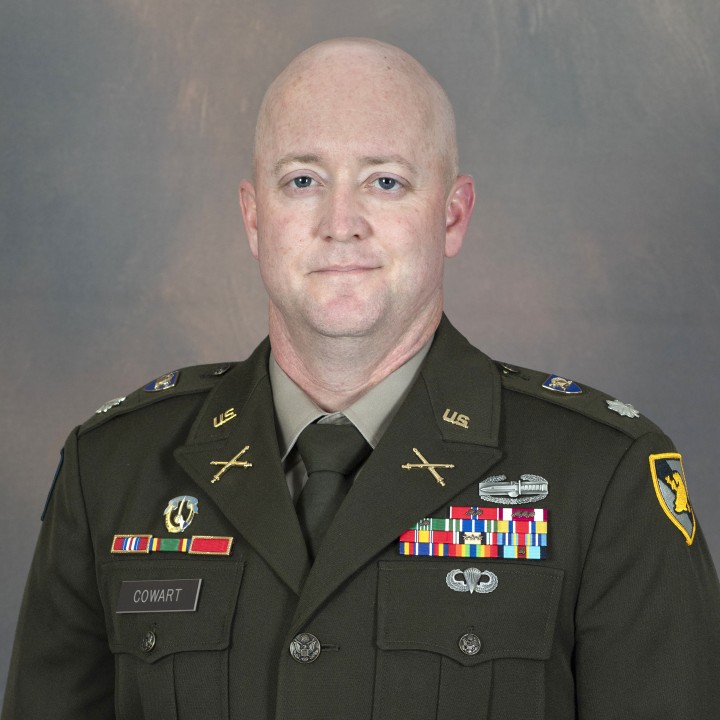
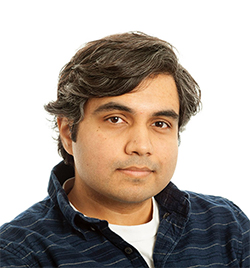
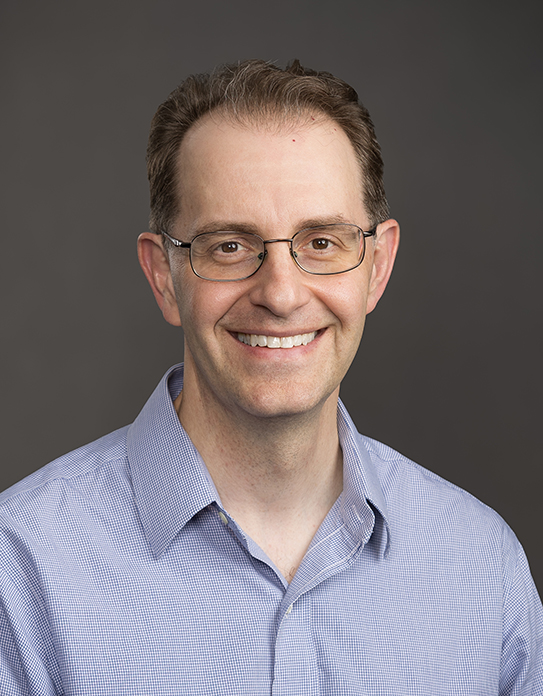
Samuel Cowart is a Lecturer in the Department of Chemical Engineering at the United States Military Academy (USMA). He serves as Course Director and instructor for key courses including CH485 (Heat & Mass Transfer), CH364 (Chemical Reaction Engineering), and CH362 (Mass & Energy Balances). Ph.D., M.S., and B.S. in Chemical Engineering from the University of North Dakota His research focuses on combustion phenomena through computational fluid dynamics (CFD), particularly mechanisms of deflagration-to-detonation transitions (DDT) for pulse detonation engine development. Additional interests include computationally efficient combustion reaction mechanisms, soot production modeling, and heat transfer in oxy-fuel combustion systems. Cowart’s recent publications emphasize thermodynamic modeling, soot contributions to radiative heat transfer, and micro-scale combustion dynamics. They reflect interdisciplinary applications of chemical engineering and fluid mechanics to energy systems and combustion science.
Mona Jarrahi is a Professor in the Department of Electrical and Computer Engineering at the Henry Samueli School of Engineering and Applied Science, University of California, Los Angeles (UCLA). Holding the Northrop Grumman Chair in Electrical Engineering, she leads groundbreaking research in terahertz/millimeter-wave electronics, microwave photonics, and AI-driven imaging systems. Terahertz Electronics Millimeter-wave Optoelectronics Microwave Photonics Imaging and Spectroscopy Systems AI-Driven Optical Imaging Her recent publications highlight advancements in terahertz plasmonic focal-plane arrays, single-pixel diffractive terahertz processors, and coherent terahertz synthesis. These works span keywords like Optoelectronics , Signal Processing , and Machine Learning , with sub-fields focusing on Plasmonics , Pixel-level Resolution , and Diffractive Neural Networks . Scientific Awards: Fellow of IEEE, AAAS, APS, Optica, SPIE, and IOP Guggenheim Fellowship SPIE Quantum Sensing Achievement Award IEEE Photonics Society Aron Kressel Award Moore Inventor Fellowship As head of the Terahertz Electronics Laboratory at UCLA, she drives innovations in terahertz technologies with applications in medical imaging, security, and deep-space exploration. Her work includes room-temperature terahertz sensors and photodetectors with 50 GHz speeds.
Gregory S Tucker is Professor of Physics at Brown University, where he joined the faculty in 1997. A graduate of MIT with a PhD from Princeton University, he previously completed postdoctoral work at the University of British Columbia and served as a physicist at the Harvard-Smithsonian Center for Astrophysics. He leads the Observational Cosmology and Astrophysics group at Brown, which develops specialized instrumentation for cutting-edge research in cosmology and astrophysics. Dr. Tucker's educational background includes a BS from Massachusetts Institute of Technology (1985), MA from Princeton University (1987), and PhD from Princeton University (1991). His academic journey has positioned him at the forefront of observational cosmology research. Professor Tucker's research spans multiple frontiers in cosmology and astrophysics. His work focuses on measuring the universe at very large scales through cosmic microwave background (CMB) observations and studying the earliest galaxies. He has made significant contributions to projects like the Wilkinson Microwave Anisotropy Probe (WMAP), the Balloon-borne Large Aperture Submillimeter Telescope (BLAST), and its polarimetry extension BLASTPol. More recently, his group has developed techniques using 21 cm emission of neutral hydrogen to study dark energy and has expanded into exoplanet research with projects like the Exoplanet Climate Infrared Telescope (EXCITE). His research group specializes in developing novel instrumentation for balloon-borne, ground-based, and space-based observations. The analysis of Professor Tucker's recent publications reveals a consistent focus on precision cosmological measurements, particularly in CMB polarization and interferometric techniques. His work spans theoretical modeling, instrument development, and data analysis, with strong emphasis on overcoming systematic errors in observations. The publications demonstrate expertise in both theoretical cosmology and practical instrumentation design, particularly for balloon-borne experiments. National Academy of Sciences National Research Council Senior Fellowship (2002) Gruber Prize in Cosmology (2012) Breakthrough Prize in Fundamental Physics (2018) Giuseppe and Vanna Cocconi Prize (2019) Professor Tucker has secured significant funding from NASA and NSF for his research, serving as Principal Investigator for projects including the EXoplanet Climate Infrared TElescope (EXCITE) and simulations of systematic effects in interferometry for CMB studies. His group trains students in multiple aspects of experimental cosmology, from simulation development to instrument construction and data analysis. Current projects include the development of the Millimeter-wave Bolometric Interferometer (MBI), the QU Bolometric Interferometer for Cosmology (QUBIC), and the E and B Experiment (EBEX). The Observational Cosmology and Astrophysics group operates multiple experimental platforms, including balloon-borne telescopes like BLAST and BLASTPol that have conducted Antarctic flights, and is developing new instrumentation like EXCITE for exoplanet atmospheric studies. The group maintains strong collaborations with international partners on major cosmological projects.
Max Lemme is a Professor at the Institute of Microelectronics (AMICA) within the College of Engineering at RWTH Aachen University. His research focuses on Materials Science & Engineering , particularly on advanced 2D materials and semiconductor devices for applications in flexible electronics, photonics, and neuromorphic computing. Key affiliations: Chair of Electronic Components, Institute of Microelectronics (AMICA) Research areas: Graphene and TMD integration, memristors, photonic devices, and 2D heterostructures Notable projects: NeuroSys (memristor crossbar architectures), MOSTFLEX (flexible electronics), AEOLUS (mid-IR spectroscopy) Recent work demonstrates expertise in atomic layer deposition, resistive switching mechanisms, and low-loss waveguide design. Publications highlight innovations in plasmonics , CMOS integration , and energy-efficient sensors . Active in transdisciplinary initiatives addressing technological, economic, and environmental aspects of neuromorphic hardware. Publications trends (2023–2025) emphasize 2D materials for neuromorphic computing, mid-IR photonics , and flexible semiconductor devices . Research spans from fundamental defect analysis in 2D transistors to wafer-scale fabrication techniques for industrial applications.
Professor Jamie Phillips serves as Chair of the Electrical and Computer Engineering Department at the University of Delaware. His research focuses on optoelectronic materials for infrared detectors, solar energy systems, biomedical sensors, and IoT energy harvesting. He emphasizes interdisciplinary solutions for energy, security, and healthcare challenges. Phillips holds a PhD from the University of Michigan and previously held roles as Arthur F. Thurnau Professor at Michigan, Director of the Lurie Nanofabrication Facility, and Associate Chair for Undergraduate Affairs. Education: BS, MS, PhD in Electrical Engineering from University of Michigan; Postdoctoral Researcher at Sandia National Labs; Research Scientist at Rockwell Science Center. Research interests integrate semiconductor materials innovation with real-world applications. Key areas include thermoradiative energy conversion, type-II superlattice detectors, and wireless neural interfaces. His group develops miniaturized sensor systems for biomedical and environmental applications, such as monarch butterfly migration tracking using millimeter-scale computers. Notable awards include NSF CAREER Award, DARPA Young Faculty Award, and IEEE/OSA fellowships. His work bridges device physics with practical implementation through collaborations in nanofabrication and curriculum development emphasizing inclusive education and hands-on learning. Labs/Teams: Leads a multidisciplinary research group focused on optoelectronics and biomedical systems. Previously directed the Lurie Nanofabrication Facility, enabling advanced materials research. Collaborates on initiatives like energy-autonomous sensor nodes and neural prosthetics.
Christian Appel is a Research Fellow at the Paul Scherrer Institut (PSI) within the Coherent X-ray Scattering Group, leading projects and providing operational support at the cSAXS beamline of the Swiss Light Source (SLS). He holds a prestigious Marie Sklodowska-Curie Research Fellowship under the 3i scheme and collaborates internationally with institutions including Chalmers University of Technology and MAX IV Laboratory. His educational background includes: B.Sc. in Physics, Technical University Darmstadt (2012) M.Sc. in Physics, Technical University Darmstadt (2014), focusing on structural/rheological properties of amphiphilic macromolecules using Langmuir and X-ray surface scattering Ph.D. in Soft Matter Physics at TU Darmstadt under Prof. Bernd Stühn, utilizing scattering and imaging techniques for nanomaterial characterization Appel's research centers on multi-scale structural analysis using advanced X-ray techniques including SAXS imaging (2D/3D), ptychographic nanotomography, and X-ray fluorescence. His work investigates hierarchical structures in energy conversion systems, biomedical applications, and functional materials, with current emphasis on polymer electrolyte fuel cell catalysts spanning nano-to-millimeter scales. He pioneers correlative multi-modal imaging to map chemical and structural properties across length scales. His scientific recognition includes the Marie Sklodowska-Curie Research Fellowship (3i scheme). Appel leads independent projects within the CXS group, develops novel coherent X-ray imaging techniques, and facilitates knowledge transfer through international collaborations. His team-based work at the cSAXS beamline integrates computational and experimental approaches to solve interdisciplinary challenges in materials science.
Dr. Chang Liu is a Senior Lecturer in Electronic Engineering at the University of Edinburgh's School of Engineering. He received his B.Sc. in Automation from Tianjin University (2010) and Ph.D. in Testing, Measurement Technology and Instrument from Beihang University (2016). Following postdoctoral research at Empa-Swiss Federal Laboratories, he joined the Agile Tomography Group at Edinburgh. His research focuses on laser spectroscopy, laser imaging, and data-driven imaging techniques for applications in reacting flow-field diagnostics and environmental monitoring. Key specialties include design of near/mid-infrared LAS sensing systems, development of high-sensitivity imaging methodologies, spectroscopic modeling, inverse problem solving, and embedded system design. His publications demonstrate a consistent focus on advancing tomographic imaging techniques, with recent work emphasizing machine learning integration, hardware acceleration, and industrial applications in aero-engine monitoring. Research consistently addresses challenges in spatial/temporal resolution enhancement and real-time system implementation. Dr. Liu teaches courses in Digital System Design, Analogue Circuits, and Embedded Systems. He leads multiple research projects including EPSRC-funded initiatives on laser imaging of turbine engine combustion species. His team collaborates with industrial partners to develop cutting-edge laser-based sensing solutions.
Amir Safavi-Naeini is a Professor and Packard Fellow conducting pioneering research in quantum information systems. His group develops chip-scale devices that manipulate electromagnetic, optical, and mechanical fields to enable novel quantum technologies. Focus areas: quantum transduction, integrated photonics, and hybrid quantum systems Key materials: thin-film lithium niobate, diamond, and silicon Target applications: quantum computing, sensing, and communication Recent work demonstrates unprecedented control over photon-phonon interactions and quantum electro-optic effects, with implications for scalable quantum networks. His research has earned the Packard Fellowship for Science and Engineering, recognizing innovative contributions to quantum engineering.
Dirk H J Pesch is a Professor at the School of Computer Science and Information Technology , University College Cork (UCC), and currently serves as Head of School. His research focuses on future networked systems for the Internet of Things (IoT) and Cyber-Physical Systems (CPS), with applications in smart communities, health, and manufacturing. He leads the Science Foundation Ireland-funded ADVANCE CRT and is a co-PI of the CONNECT Centre . Prior to UCC, he was at Cork Institute of Technology (now Munster Tech U), where he founded the Nimbus Research Centre. He holds a PhD from the University of Strathclyde and a Dipl.Ing from RWTH Aachen University. Research Interests include IoT/CPS protocols, system architectures, interoperability challenges, and AI-driven analysis for well-being. He has authored/co-authored over 250 publications and co-edited a book on energy-positive urban systems. His work spans conference organization (e.g., IEEE SmartComp 2025 General Chair) and industry collaborations, with €80M+ in grant funding. Key contributions include developing low-power wireless protocols (e.g., MeshMAC), smart building monitoring systems, and frameworks for IoT in energy-positive neighborhoods. His recent work explores loneliness detection via passive sensing and 6G-V2X technologies for autonomous driving. Grants & Leadership: Directed €16M of his own research grants, managed large-scale EU/Irish projects, and advised on industrial IoT implementations. His Nimbus Centre became a leader in IoT applications under his leadership. Labs/Teams: Founded Nimbus Research Centre; active in Cork Smart Gateway initiative. Supervised numerous students and researchers in interdisciplinary projects.
Mingzhe Chen is an Assistant Professor and John S. and James L. Knight Foundation Chair in Data Science and AI at the University of Miami's Department of Electrical and Computer Engineering. He holds affiliations with the Frost Institute for Data Science and Computing. His research focuses on machine learning for wireless networks, federated learning, semantic communications, and UAV applications. He earned his Ph.D. from Beijing University of Posts and Telecommunications (2019), with postdoctoral work at Princeton University and Virginia Tech. Education: Ph.D., Beijing University of Posts and Telecommunications (2019) Postdoctoral Research, Princeton University (2019–2021) Visiting Researcher, Virginia Tech (2016–2019) Research Interests: Machine learning for wireless systems, federated learning fundamentals, semantic communication, UAV networks, and VR over wireless. Recent work emphasizes 6G advancements, digital twins, and secure AI-driven networks. Awards: IEEE Marconi Prize Paper Award (2023) IEEE Katherine Johnson Young Author Award (2023) NSF grants for projects on 6G, digital twins, and secure AI (2022–2024) Advising & Grants: Supervises PhD students including Dongyu Wei and Hanzhi Yu. Secured NSF funding for initiatives like "3D HARMONY" (CNS Core) and "Untethered Extended Reality" (NewSpectrum). Active in organizing IEEE conferences (e.g., WFIOT 2025, MILCOM 2025). Labs & Teams: Leads research groups focusing on AI-driven wireless networks and collaborates with Ericsson Research. His lab explores digital twin synchronization, federated learning, and semantic feature multiple access (SFMA) systems.
Srigokul Upadhyayula is an Assistant Professor in Residence in the Department of Molecular and Cell Biology at the University of California, Berkeley. He serves as the Scientific Director of the Advanced Bioimaging Center (ABC) and is a Chan Zuckerberg Initiative Imaging Scientist. His work bridges applied engineering with basic science, focusing on developing cutting-edge imaging technologies like the Adaptive Optical Multi-functional Lattice Light-Sheet Microscope. The ABC specializes in handling tera- to petabyte-scale imaging data, integrating artificial intelligence to analyze complex datasets and advance both fundamental and translational research. Academic Role: Assistant Professor in Residence Directorships: Advanced Bioimaging Center, CZI Imaging Scientist Research interests center on optical imaging systems, high-resolution microscopy, and computational workflows for biological data analysis. Key projects include multi-scale imaging across millimeter-scale specimens and long-term imaging sessions, emphasizing the synergy between advanced microscopy and AI-driven data interpretation. Publications highlight breakthroughs in lattice light-sheet microscopy, clathrin-mediated endocytosis, and mitochondrial dynamics. His work has been featured on Science and eLife covers, underscoring contributions to cellular and developmental biology. Advising and grants involve leading interdisciplinary teams to develop imaging infrastructure and computational tools. The ABC aims to democratize access to advanced imaging through open-source workflows. Laboratory initiatives include the ABC’s global imaging initiative, combining hardware innovation with AI to solve complex biological questions.
Wenwen Zhang is a Professor at the Department of Electronic Engineering, College of Information Science and Electronic Engineering, Zhejiang University. With an extensive publication record spanning from 2016 to 2025, Dr. Zhang has established herself as a prominent researcher in multiple interdisciplinary fields at the intersection of computer vision, machine learning, and sensor systems. Her work demonstrates significant contributions to medical imaging, sensor array systems, wireless communications, and AI-assisted applications. Dr. Zhang's research interests encompass a wide range of topics including medical image analysis, sensor array systems, wireless communications, and AI-assisted applications. Her work demonstrates particular expertise in developing innovative deep learning architectures for medical imaging tasks such as cardiac segmentation and nuclei detection, as well as creating sophisticated models for gas sensing and wireless communication systems. She has made significant contributions to the fields of one-shot object detection, medical image segmentation, and sensor fusion techniques, with her research often bridging theoretical advancements with practical applications in healthcare and engineering. Analysis of Dr. Zhang's recent publications reveals a strong focus on cutting-edge deep learning approaches applied to medical imaging and sensor systems. Her work shows increasing sophistication in model architectures, moving from traditional CNNs to more complex transformer-based and hybrid models. There's a clear trajectory toward more explainable and clinically relevant AI systems, particularly in medical applications. Her research also demonstrates growing interest in multimodal approaches, combining different types of data and sensors to improve system performance. Dr. Zhang maintains active collaborations with researchers at Zhejiang University, particularly with Yuanjin Zheng and Zhiping Lin in the field of electronic engineering and sensor systems. She also collaborates extensively with Fei-Yue Wang from the University of Chinese Academy of Sciences, evidenced by multiple publications on parallel vision frameworks. Her international collaborations include work with researchers from institutions in Canada on intelligent knee sleeves and other biomedical applications. Her publication record shows consistent productivity with 12 publications in 2025 (as of this writing), 25 in 2024, and 26 in 2023, indicating an active and growing research program across multiple high-impact journals and conferences.
Kevin Huffenberger is a Professor at Texas A&M University, leading research in astrophysics and cosmology with a primary focus on the Cosmic Microwave Background (CMB). He is actively involved in major experimental collaborations including the Atacama Cosmology Telescope (ACT), The Simons Observatory, and CMB-S4. His work has contributed to past missions like Planck and QUIET, and spans diverse topics such as galaxy cluster physics, dust polarization modeling, and gravitational lensing analysis. His research aims to unravel the universe’s large-scale structure, dark matter interactions, and cosmic evolution through precise observational techniques and advanced data analysis methods. Research Interests : Dr. Huffenberger’s expertise lies in CMB anisotropy studies, millimeter-wave astronomy, and cosmological parameter estimation. He develops sophisticated algorithms for foreground separation and transient detection, and his team produces high-resolution maps of the microwave sky. Key areas include understanding galactic dust emission via filament-based models, probing cosmic birefringence, and analyzing Sunyaev-Zel’dovich effects in galaxy clusters. His work bridges observational data with theoretical models to constrain dark matter properties and cosmic acceleration mechanisms. His research is supported by grants from NASA, the National Science Foundation, and the Department of Energy. While no formal advisees are listed, his collaborative projects involve large teams working on next-generation instrumentation and data analysis pipelines. He contributes to both the Atacama Cosmology Telescope and Simons Observatory initiatives, advancing scientific goals in cosmology, astrophysics, and fundamental physics.
Upamanyu Madhow is a Distinguished Professor in the Department of Electrical and Computer Engineering at the University of California, Santa Barbara (UCSB). His research focuses on next-generation wireless communication and sensor networks, including millimeter-wave communication, distributed sensor architectures, and bio-inspired networking. He holds a Ph.D. from the University of Illinois, Urbana-Champaign, and has been recognized with the IEEE Marconi Prize Paper Award and NSF CAREER Award. Madhow's academic roles include serving as an Associate Editor for IEEE Transactions on Communications, Information Theory, and Information Forensics. He is the author of two textbooks: Fundamentals of Digital Communication (2008) and Introduction to Communication Systems (2014). His teaching spans undergraduate courses in signals and systems, graduate-level digital communication, and a machine learning course emphasizing signal processing principles. His research projects include mmWave communication networks, large-scale sensor systems, and radar-based perception. Awards include IEEE Fellow status, National Academy of Inventors Fellow, and ISI Highly Cited Researcher designation. His work bridges theoretical communication principles with practical hardware implementations, emphasizing robustness and scalability. Madhow collaborates on NSF-funded initiatives such as the 4D100 project for city-scale 4D RF imaging and RINGS for scalable mmWave MIMO systems. His grants focus on advancing mmWave technology, adversarial robustness in neural networks, and distributed wireless infrastructure.
Lingyu Wang is a Lecturer in Astronomy at the Faculty of Science and Engineering , University of Groningen , Netherlands. Their research focuses on galaxy evolution , active galactic nuclei (AGN) , deep learning applications , and cosmological simulations . Email : L.Wang@rug.nl Phone : +31 50 363 4073, +31 50 363 6100 Address : Landleven 12, 9747 AD Groningen, Netherlands Key research areas include: Merger-AGN connection in galaxy evolution Machine learning for galaxy classification systems Cosmological hydrodynamical simulations Multi-wavelength observations (HST, LOFAR, Euclid) Recent work trends: 2025 Astronomy & Astrophysics paper on adaptive deep learning for merger stage classification 2024 Monthly Notices of the Royal Astronomical Society study on Herschel-selected lens candidates 2024 Astronomy & Astrophysics article on dust-AGN co-evolution Contributions to the Euclid mission's machine learning-based morphology analysis (2024 preprints)