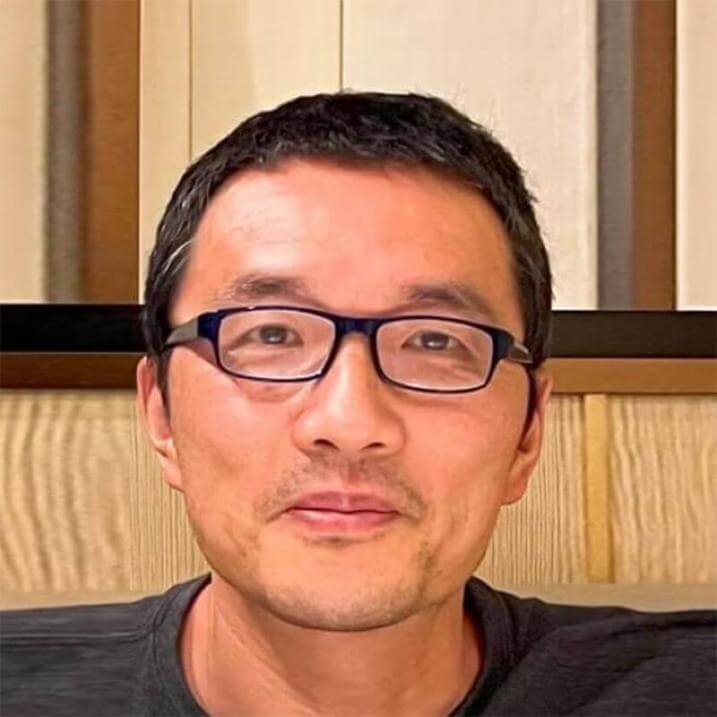
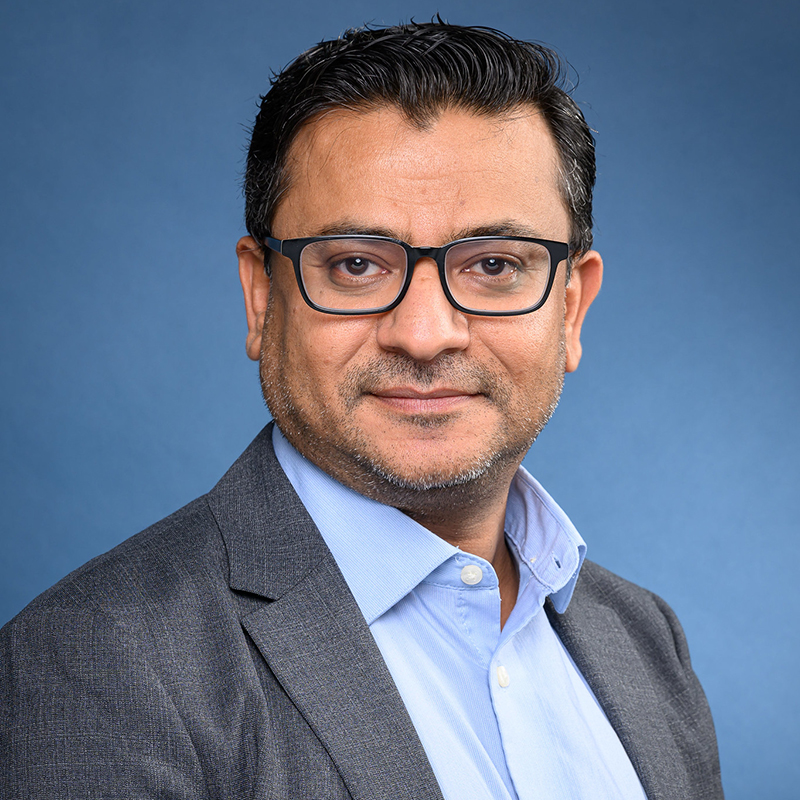
Nam Nguyen is a Professor in the Department of Computer and Information Sciences at Towson University. He holds a Ph.D. in Computer Science from the University of Florida (2013), an M.S. from Ohio University (2009), and a B.S. from Vietnam National University (2007). His research focuses on complex network analysis, mobile computing, social data analysis, and data mining with applications in cybersecurity and big data. Education: Ph.D., Computer Science, University of Florida (2013) M.S., Computer Science, Ohio University (2009) B.S., Computer Science, Vietnam National University (2007) Research Interests: His work explores network vulnerability assessment, dynamic community detection, and applications in cybersecurity, mobile systems, and social computing. Recent projects include analyzing misinformation containment in social networks and developing robust algorithms for adaptive network structures. Professional Contributions: Nguyen has authored over 30 publications in top-tier venues like IEEE INFOCOM and IEEE Transactions journals. He serves as Associate Editor for Computational Social Networks and has organized conferences like CSoNet 2015. His reviews span multiple IEEE journals and conferences, emphasizing computational methods in social systems and network science. Labs/Teams: Engages in interdisciplinary collaborations on network resilience, mobile computing, and big data analytics through Towson University’s research initiatives.
Joe Wiart is a Professor and Holder of the C2M Chair at Institut Mines-Télécom (IMT), where he leads research in electromagnetic dosimetry and wireless systems. His work focuses on numerical methods, statistical modeling, and AI applications in electromagnetism. He directs the Radio-Frequency Microwaves and Millimeter Waves (RFM²) Laboratory and coordinates large-scale projects like LEXNET, ACTE, and AMPERE. His research covers five main axes: digital/experimental dosimetry, statistical exposure modeling, network technology impacts, exposure standardization, and societal risk perception. He holds leadership roles at CENELEC TC106x, URSI Commission K, and Paris's Observatoire Ondes committee. Previously, he headed Orange's human exposure research unit. Research interests span stochastic dosimetry, RF exposure characterization, and network architecture impacts. His publications demonstrate consistent focus on electromagnetic safety across telecommunications and biomedical applications. Honors include Senior IEEE membership and Emeritus status at SEE. His team collaborates internationally on projects like MOBI-Kids investigating mobile phone radiation health effects.
Jonas Zmuidzinas is the Merle Kingsley Professor of Physics at the California Institute of Technology, affiliated with the Division of Physics, Mathematics, and Astronomy. He holds joint roles as a Senior Research Scientist (2005-11) and former Chief Technologist (2011-16) at the Jet Propulsion Laboratory (JPL). His research focuses on submillimeter astronomy, instrumentation, and superconducting detector technologies. Key projects include the Caltech Submillimeter Observatory (CSO) and the CCAT (Cornell-Caltech Atacama Telescope) initiative in Chile. Education: B.S. from Caltech (1981), Ph.D. from UC Berkeley (1987). He has held academic positions at Caltech since 1989, progressing from Assistant to Full Professor. Awards include the NSF Presidential Young Investigator (1990-95) and ASCIT Teaching Award (1995). Research areas: Submillimeter astronomy, superconducting detectors (e.g., MKIDs), instrumentation development, galaxy evolution, and star formation. Leadership roles: Directed the Micro-Devices Laboratory at JPL (2007-11) and Caltech Optical Observatories (2018-23). Service: Active in NASA committees, SOFIA Science Steering Committee, and SPIE conference organization. His work bridges physics, engineering, and astronomy, emphasizing innovative technologies like MKIDs for sensitive astronomical surveys. Current efforts include developing detectors and instruments for next-generation telescopes.
Douglas Finkbeiner is Professor of Astronomy and Physics at Harvard University, affiliated with the Harvard-Smithsonian Center for Astrophysics. His research focuses on dark matter, Galactic microwave emission, cosmic microwave background radiation, and large-scale astronomical surveys. He earned dual majors in physics and German literature from the University of Michigan and a PhD from UC Berkeley. Finkbeiner developed foundational dust maps for Galactic extinction estimation and contributed significantly to the Sloan Digital Sky Survey through photometric calibration. His analysis of WMAP data revealed spinning dust emission and the Galactic 'haze' potentially linked to dark matter annihilation. He currently investigates dark matter through cosmic-ray electron observations and participates in the Pan-STARRs survey. Professor Finkbeiner teaches astrophysics and mentors graduate students. His work contributes to understanding interstellar medium properties and foreground subtraction for precision cosmology. He has published extensively in astronomical data analysis and computational astrophysics.
Sam Palermo is Professor and J.W. Runyon Jr. Professor in the Department of Electrical and Computer Engineering at Texas A&M University's College of Engineering. He holds a Ph.D. from Stanford University and M.S./B.S. degrees from Texas A&M University. Palermo's research develops: High-speed electrical/optical interconnect circuits Clock generation/recovery systems (PLL/DLL/CDR) Variability-tolerant analog/mixed-signal ICs Energy-efficient wireline communications His publications demonstrate consistent innovation in integrated circuit design for optical communications, with recent work on silicon photonic transceivers, jitter-robust multicarrier systems, and radiation-hardened oscillators. Research bridges high-frequency circuit design with advanced photonics integration. Palermo has contributed to optical interconnect standards and developed testbeds for tera-scale computing interfaces. His work on CMOS-photonic integration has enabled high-bandwidth interconnects for data centers and HPC systems. He serves on technical committees for IEEE conferences including the International Solid-State Circuits Conference and Custom Integrated Circuits Conference (CICC).
Shaibal Mukherjee is an Adjunct Associate Professor in the School of Engineering at RMIT University, Australia. He specializes in nanotechnology, materials engineering, and electronics, focusing on advanced sensor technologies and memristive systems. His research spans semiconductor materials, gas sensing, and neuromorphic computing applications. He has authored over 186 publications, including recent works on 2D materials, memristor-based neuromorphic systems, and biomedical image processing. His research interests include nanotechnology-driven sensor development, memristor device physics, and the application of advanced materials in health services and environmental monitoring. Notable contributions include studies on MoS₂-based sensors for toxic ions and Bi₂S₃ memristors for synaptic applications. He collaborates widely on semiconductor device optimization and thin film deposition techniques. His articles highlight innovations in energy-efficient neuromorphic circuits, high-performance gas sensors, and statistical modeling of memristive devices. These contributions address challenges in environmental sensing, biomedical diagnostics, and next-generation electronics.
Edward W. Knightly is the Sheafor-Lindsay Professor of Electrical and Computer Engineering and Professor of Computer Science at Rice University. He serves as Department Chair of Electrical and Computer Engineering. His research focuses on wireless networks, urban-scale testbeds, and spectrum access innovations. Knightly holds ACM, IEEE, and Sloan Fellowships, and has received multiple best paper awards at top venues. He leads the Rice Networks Group, deploying large-scale wireless networks like Technology For All (TFA) Wireless, serving over 4,000 users in underserved communities. Education: Ph.D./M.S. in EECS, University of California at Berkeley (1996/1992) B.S. in Electrical Engineering, Auburn University (1991) Research Interests: Design and demonstration of next-generation wireless systems including multi-user beamforming, mmWave/THz communication, and spectrum access up to 60 GHz and beyond. Current projects emphasize autonomous drone networks, security, and urban-scale deployments. Awards: ACM Fellow (2017) IEEE Fellow (2009) Dynamic Spectrum Alliance Award (2018) IEEE INFOCOM Best Paper (2021) Grants & Advising: Led major NSF-funded projects and chairs academic conferences like ACM MobiHoc and IEEE INFOCOM. Advises on national spectrum policy and serves on scientific councils for IMDEA Networks and INESC TEC. Labs/Teams: Directs Rice Networks Group, advancing experimental platforms in urban wireless and terahertz communication.
Dr. Nirupama Sensharma is a Postdoctoral Researcher at Argonne National Laboratory specializing in experimental low-energy nuclear physics with expertise in gamma-ray spectroscopy techniques. Her research focuses on exotic nuclear phenomena including wobbling motion and chirality in triaxial nuclei such as 135 Pr and 187 Au. Her academic credentials include: Ph.D. in Physics (2021) from the University of Notre Dame, USA M.S. in Physics (2018) from the University of Notre Dame, USA M.Tech. in Nuclear Science and Technology (2015) from the University of Delhi, India B.Sc. Physics (Honors) (2012) from the University of Delhi, India Dr. Sensharma's research centers on nuclear structure physics, particularly investigating wobbling modes and chiral symmetry breaking in triaxial nuclei using advanced gamma-ray detection systems. Her work aims to identify new regions of the nuclear chart exhibiting these rare phenomena, contributing to fundamental understanding of nuclear rotation and collective behavior through precision spectroscopy of high-spin states. Her 2019-2022 publications reveal consistent focus on wobbling excitations across multiple nuclides ( 135 Pr, 187 Au), with recent expansion into single-particle and collective excitations in 62 Co and 66 Zn. These studies published in Physical Review C/Letters demonstrate methodological progression from theoretical frameworks to experimental validation using state-of-the-art detector arrays, establishing her expertise in both computational modeling and hands-on nuclear spectroscopy. No scientific awards are documented in the provided information. Details regarding student advising and research grants are not specified in available materials. At Argonne, she operates within the nuclear structure physics group utilizing Gammasphere and Gretina gamma-ray spectrometers coupled with particle detectors (CHICO, Microball, Neutron Shell) and recoil separators (FMA, AGFA), conducting low-energy experiments that require millimeter-scale precision in nuclear reaction measurements.
James Aguirre is an Associate Professor in the Department of Physics and Astronomy at the University of Pennsylvania's School of Arts & Sciences. His research focuses on understanding the formation and evolution of stars and galaxies within the context of cosmology and large-scale structure. He leads instrumentation projects like HERA (Hydrogen Epoch of Reionization Array) and TIM (Terahertz Intensity Mapper), advancing radio and millimeter-wave observational capabilities. Aguirre has contributed to discoveries such as quantifying water reservoirs around distant quasars and determining distances for gravitationally lensed starburst galaxies through Z-Spec observations. His work involves cutting-edge instrument design (e.g., antennas for low-frequency radio arrays) and data analysis pipelines for cosmological studies. Aguirre has received NSF funding (Grant No. 0807990) for projects like PAPER (Precision Array for Probing the Epoch of Reionization) and collaborates on initiatives like the Simons Observatory. He teaches ASTR011: Introduction to Astrophysics I. Key research areas include: Epoch of Reionization (EoR) observations via 21cm signal analysis Galaxy evolution studies using far-infrared spectroscopy (TIM) Instrumentation development for radio interferometers and detectors His contributions bridge observational cosmology with technological innovation, advancing our understanding of cosmic structure formation from the earliest universe to present-day galaxies.
Professor Kaushik Sengupta holds a faculty position at Princeton University's Department of Electrical and Computer Engineering, affiliated with the Princeton Materials Institute. His research focuses on integrated microsystems, spanning electromagnetic systems, AI-driven chip design, and bioelectronic technologies. He leads the Integrated Microsystems Research Lab (IMRL), emphasizing interdisciplinary innovation across scales from macro to nano. Education: PhD (Caltech, 2012), MS (Caltech, 2008), B.Tech/Integrated M.Tech (IIT Kharagpur, 2007). Research interests include reconfigurable millimeter-wave systems, nano-optical systems, microfluidics, and AI-enabled chip design for next-gen communication, sensing, and healthcare applications. His work bridges electronics, photonics, biochemistry, and control systems. Notable awards include the IEEE Solid-State Circuits Society New Frontier Award (2022) and multiple young investigator awards. He has mentored 13 advisees and pioneered projects in THz systems, secure wireless links, and point-of-care diagnostics. Labs/Teams: Integrated Microsystems Research Lab (IMRL), collaborating across disciplines to create adaptive, integrated systems for healthcare and infrastructure applications.
Dr. Tian Xia is a Professor at the University of Vermont in the Department of Electrical and Biomedical Engineering within the College of Engineering and Mathematical Sciences. He received his PhD in Computer Engineering from the University of Rhode Island after completing his B.S. and M.S. in China. PhD: University of Rhode Island M.S.: Nanjing University of Posts and Telecommunications B.S.: Huazhong University of Science and Technology His research focuses on Mixed Signal and RF Circuits , Embedded Systems for Sensing/Communication , and Reconfigurable Computing . He has made significant contributions to Ground Penetrating Radar technology, Physical Unclonable Functions, and wireless sensor networks. Dr. Xia's publications demonstrate expertise in RF Circuit Design , Ground Penetrating Radar Applications , Water Quality Monitoring , and Hardware Security . His work has appeared in top journals like IEEE Transactions on Circuits and Systems, IEEE Sensors Journal, and Journal of Applied Remote Sensing. 3× IBM Faculty Award Recipient Best Paper Award Winner at IEEE System on Chip Conference IEEE Green Mountain Section Leadership Award Excellence in Research Award (2022, CEMS) Outstanding Faculty Award (2025) He serves as Associate Editor for Journal of Electronic Testing and Journal of Circuits, Systems and Computers . Students from his lab have found positions at major tech companies like IBM, Intel, and Qualcomm. His research combines theoretical innovation with practical applications in infrastructure monitoring, biomedical devices, and secure computing.
Imran Ahmad, Ph.D., is a Research Assistant Professor at Florida International University’s Chaplin School of Hospitality & Tourism Management, where he leverages 16 years of combined academic and industry experience to advance food-process and bioprocess engineering research. Before joining FIU, he served as affiliated faculty in the Biosystems Engineering Program at the Asian Institute of Technology (AIT) in Thailand, developing and teaching courses such as Food Analysis and Quality Assurance, Engineering Properties of Food & Bio-materials, and Biosystems Engineering Applications. From 2008-2015 he acted as instructor for AIT’s Food Engineering and Bioprocess Technology (FEBT) graduate program, coordinating three laboratory courses annually while directing the Food Processing and Bioprocess Research Laboratories. Education & Training: Although explicit degree details are not provided, Dr. Ahmad’s extensive teaching record at graduate level, coupled with his authorship of high-impact journal articles and textbooks, indicates advanced training in Food/ Bioprocess Engineering or a closely related discipline. Research Interests: Dr. Ahmad’s work centers on quality management of fresh produce, agri-food supply-chain optimization, post-harvest technology, predictive modelling, and the application of artificial intelligence and machine-learning techniques to food systems. He is particularly interested in how engineering properties of food materials influence processing outcomes, and how data-driven models can forecast shelf-life and safety parameters for seafood and other perishables. Publications Trend: Across his recent works, a clear trajectory emerges from traditional food-engineering experimentation toward integration of machine-learning and AI tools for predictive quality assurance. Studies on shrimp shelf-life estimation via micro-calorimetry and machine-learning illustrate this convergence of engineering rigor with advanced analytics. Scientific Awards & Recognition: While no formal awards are explicitly listed, Dr. Ahmad has earned international recognition through invitations to deliver professional training and outreach programs across Thailand, Pakistan, Myanmar, Sri Lanka, Laos, Vietnam, and Cambodia under AIT-sponsored initiatives. Advising & Grant Activity: Dr. Ahmad has co-supervised numerous graduate research projects covering cereals, fruits, vegetables, dairy, and value-added food production. His industry background includes serving as Project Manager (Manufacturing) for Dutch Mill Group, Thailand’s largest dairy company, where he oversaw scale-up and quality-assurance operations. Laboratories & Teams: At AIT he spearheaded two key graduate research laboratories—the Food Processing Laboratory and the Bioprocess Laboratory—managing facilities and mentoring teams of master’s and doctoral students for eight consecutive years.
Dr. David R. Smith is the James B. Duke Distinguished Professor of Electrical and Computer Engineering at Duke University's Pratt School of Engineering, with a secondary appointment as Professor of Physics in Trinity College of Arts & Sciences. He serves as Director of the Center for Metamaterials and Integrated Plasmonics at Duke University and holds additional positions as Adjunct Associate Professor at UC San Diego and Visiting Professor at Imperial College London. Dr. Smith received his Ph.D. in Physics from the University of California, San Diego in 1994, following his B.S. degree from the same institution in 1988. His academic credentials have positioned him as a leader in the field of metamaterials research. Dr. Smith's research spans the development and application of metamaterials and plasmonic structures for electromagnetic wave control. His work bridges fundamental physics with practical engineering solutions, particularly in computational imaging using dynamic metasurface apertures. He has pioneered techniques that have revolutionized microwave and millimeter-wave imaging systems, with applications ranging from security screening to nuclear safety. His research also extends to radiation detection, plasma physics for fusion energy, and novel optical devices. Analysis of his recent publications reveals a consistent theme of using metasurface technology to solve challenging problems in electromagnetic wave manipulation, with applications across multiple domains including imaging systems, radiation detection, and wireless communications. His work demonstrates the versatility of metamaterials across different frequency ranges and applications. Fellow of the National Academy of Inventors (2016) Highly Cited Researcher (Thomson Reuters, 2014) Fellow of the Optical Society of America (2013) Top Ten Breakthroughs for 2006 (Science Magazine, for Cloaking) Top 50 Researchers (Scientific American, 2008) Top Ten Breakthroughs for 2003 (Science Magazine, for Negative Index Materials) Top 100 Science Accomplishments for 2006 (Discover Magazine, for Cloaking) Descartes Prize for Research (European Union, 2008) Fellow of the Institute for Electrical and Electronics Engineers (1986) Dr. Smith has secured significant research funding for projects including "Metasurface Antenna for Cloud-Targeting Radar (MACTRad)" (2023-2026), "Metasurface Antennas" (2023-2025), and "Large-scale Adaptive Metamaterial Apertures for Space (LAMAS)" (2023-2024), awarded by MetaCept, Inc., Kymeta Corporation, and NASA. These grants support his innovative work in developing next-generation metamaterial-based technologies. As Director of the Center for Metamaterials and Integrated Plasmonics, Dr. Smith leads a multidisciplinary research team working at the intersection of physics, electrical engineering, and materials science. His laboratory has been instrumental in advancing metamaterials from theoretical concepts to practical applications, particularly in imaging systems and electromagnetic wave control technologies.
Prof. Robert Staszewski is a Full Professor at the School of Electrical and Electronic Engineering, University College Dublin (since 2014) and a Visiting Full Professor at Delft University of Technology (since 2009). His academic journey began with a PhD from University of Texas at Dallas (2002), preceded by MSEE (1992) and BSEE (1991) degrees. He previously worked at Alcatel (1991–1995) and Texas Instruments (1995–2009), where he co-founded the Digital RF Processor (DRP) group and served as CTO (2007–2009). Research Focus : Nanoscale CMOS architectures, quantum computing hardware, millimeter-wave PLLs, and low-power IoT RF circuits. Recent Publications : 15 most recent works span quantum dots in 22nm FDSOI, harmonic predistortion in ADPLLs, ultra-low-jitter charge-sharing PLLs, and RF reuse strategies for IoT. Scientific Contributions include 6 books, 11 book chapters, 150+ journal papers, and 210 US patents. His Equal1 Labs co-founded in 2014 aims to build the first single-chip CMOS quantum computer. Awards: 2012 IEEE Circuits and Systems Industrial Pioneer Award IEEE Fellow (2009) Teaching Leadership : Coordinates advanced modules in Analogue Integrated Circuits , Mixed-Signal Circuits , and Quantum Computing (2014–2025). Supervises PhD thesis projects in nanoscale RF and quantum systems.
Professor Steven Longmore is a faculty member at the Astrophysics Research Institute (ARI), Liverpool John Moores University, where he leads the Astro-Ecology group. His research bridges astrophysics and ecological applications. Current affiliation: Liverpool John Moores University Academic rank: Professor Research focus: Star formation, galactic evolution, and ecological technology His astrophysical research explores cosmic gas cloud dynamics, star system formation, and galactic evolution. He innovatively applies astronomical techniques to conservation challenges like endangered species protection, search-and-rescue optimization, and peat fire mitigation. Recent publications highlight his leadership in Central Molecular Zone studies using ALMA and JCMT surveys, alongside AI-driven ecological monitoring systems. Key themes include magnetic field alignment, spiral arm effects on star formation, and drone-based thermal imaging for fire detection. The Astro-Ecology group under his leadership demonstrates interdisciplinary approaches to sustainable development goals (Life on Land, Climate Action, Affordable Energy). Collaborations span institutions like Harvard-Smithsonian Center for Astrophysics and European Southern Observatory.