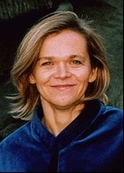
Prof. Dr. hab. Marzena Górecka is a Full Professor at the Department of German-Language Literature and Culture , Faculty of Humanities , John Paul II Catholic University of Lublin . Her academic career includes habilitation (2006), Erasmus teaching assignments at the University of Freiburg (Switzerland), and leadership of the INTERREG III C project Language Bridges (2004-2006). Education: University of Lublin (Humanities), University of Zurich (Germanic Philology), University of Perugia (Italian Studies) Degree: Licentiata Philosophiae (1995), Doctorate in German Medieval Literature (1999) Research Focus: German medieval mysticism (Mechthild von Magdeburg, Hildegard von Bingen), Swiss German-language literature of the 20th century (Meinrad Inglin, Albin Zollinger), and literary translation theory with emphasis on Joseph Ratzinger/Benedict XVI's Opera Omnia . She explores mystical anthropology, cultural boundaries, and the interplay between theology and literature. Recent Trends: Analysis of postmodern literary spirituality, translation challenges of theological texts, and cultural memory in European border regions. Her 2023 publications examine educational crises through religious pedagogy and contemporary social critique in Swiss literature. Key Awards: Feniks National Literary Award (2014, 2013), Ministerial Individual Scholarship (MEiN), Landes&Gyr Foundation Research Stipend (Switzerland) Academic Service: Active in international research (SNSF Berlin evaluation), editorial leadership for Opera Omnia Ratzinger , and conference organization on European values and migration. She serves on the Polish Ministerial Expert Panel for academic promotions.
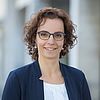
Dr. Susanne Ehrich (born 1977) is a Research Fellow and academic coordinator at the Institute of History , University of Regensburg , since 2012. As academic coordinator of the Forum Mittelalter since 2007, she specializes in interdisciplinary medieval research with focus on apocalyptic commentaries , German religious poetry , and text-image analysis . She co-edits the Forum Mittelalter-Studien series. Education: German Studies, Catholic Theology, Romance Studies (Regensburg & Pisa, 2002); First State Examination for secondary school teaching; German as a Foreign Language Certificate Research Interests center on medieval eschatological frameworks, vernacular biblical poetry, and the interplay between textual and visual media in apocalyptic traditions. Her work examines how religious texts were adapted across Teutonic Order communities and urban contexts. Publications focus on Middle High German apocalypse manuscripts, urban cultural analysis, and interdisciplinary methodologies. Key trends include text-image relationships , didactic elements in religious poetry , and eschatological historiography . Scientific Awards: Doctoral grant from the Cusanuswerk (Bishop's Study Fund, 2003–2007) Editorial Roles: Co-editor of Forum Mittelalter-Studien series since 2009; collaborative projects with Prof. Dr. Jörg Oberste and other medievalists.
Univ.-Prof. Dr. Ricarda Bauschke-Hartung holds the Chair of Old German Literature and Language at the Heinrich Heine University Düsseldorf since 2008. She previously held professorships at Albert-Ludwigs-University Freiburg and the University of Fribourg, Switzerland, and served as Vice Rector for Academic Quality and Equality (2012-2014). Her research focuses on medieval poetry, narrative texts, and cultural transfer research, particularly exploring Romance-German relations in medieval literature. Key affiliations: Wolfram von Eschenbach Society (President since 2021, Board since 2012), Bavarian Academy of Sciences (Project Advisory Board since 2022), HHU University Council (since 2017) Research Interests : Spanning Middle High German love poetry, Walther von der Vogelweide studies, manuscript mediations, and cultural transfer mechanisms. Her work bridges editorial scholarship with theoretical approaches to intertextuality, narrative structures, and body semantics in medieval texts. She contributes to debates on historical semantics (e.g., concepts of 'arebeit', 'dienest'), poetic models, and institutional supports for young researchers. Publications highlight her expertise in textual editions, narrative theory, and comparative studies, including co-editorship of Wolfram-Studien and leadership in major colloquia series. Current projects include a new translation of Herbort von Fritzlar's Trojaroman and book projects on European medieval poetic networks. Honors : DFG Research Grant (2001-2003) FRIAS Fellowship (2008) Board member of Wolfram von Eschenbach Society (2012-) Academic Leadership : As HHU University Council member, she shapes institutional policies. Her pedagogical work includes digital resources development and supervision of student research projects, supported by a team of academic counselors and research assistants.
Maria Grazia Cammarota is a full professor of Germanic Philology at the Department of Foreign Languages, Literatures and Cultures, University of Bergamo. She serves as the Department's Quality Policy Officer and coordinates the PhD programs in Linguistic Sciences and in Philological and Linguistic Studies on Written and Oral Heritage. Her research focuses primarily on medieval Germanic traditions with particular expertise in: Old English philology Old and Middle German studies Textual criticism of medieval Germanic literature Translation theory and practice for Germanic texts Comparative analysis of Germanic cultural traditions Professor Cammarota's scholarly output reveals a consistent focus on the translation and interpretation of medieval Germanic texts, with particular attention to the Nibelungenlied , the Tannhäuser legend, and cultural representations of life-death interactions. Her work demonstrates sophisticated engagement with both philological methodology and contemporary translation theory, examining how these texts have been received and adapted across different linguistic and cultural contexts over time. As an academic leader, Professor Cammarota teaches advanced courses on Intercultural Phenomena in the Germanic World, Medieval Germanic Cultures, and Textual Criticism and Transmedial Studies. She coordinates two PhD programs, significantly shaping doctoral research in linguistic and philological studies at the University of Bergamo.
Maria Averintseva-Klisch is a Senior Lecturer at the Department of German Linguistics, Faculty of Humanities, University of Tübingen. She specializes in text coherence (particularly referential coherence), semantics and pragmatics (especially demonstrative pronouns), syntax (right displacement), and linguistic applications in school education. Her research bridges linguistic theory with pedagogical practice, focusing on text grammar, literary analysis, and language education. University of Tübingen Department of German Linguistics Senior Lecturer since 2018 Her work emphasizes the integration of linguistic theory into school curricula, particularly through the Topological Model and referential coherence in texts. She has published extensively on German syntax-discourse interfaces, anaphoric demonstratives, and aesthetic reading strategies. Recent publications focus on pragmatic inferences in medieval literature, reference resolution in educational texts, and demonstrative pronouns in discourse. She actively contributes to academic conferences and collaborates with institutions like the German Society for Linguistics (Deutsche Gesellschaft für Sprachwissenschaft).
Marco Coniglio is a Professor of German Philology/Linguistics at the Department of German Philology, Georg-August-University Göttingen. His research spans historical grammar, syntactic theory, corpus linguistics, and digital humanities, with a focus on modal particles, information structure, and Germanic language interfaces. Key Research Areas: Historical Grammar, Modal Particles, Corpus Linguistics, Digital Humanities Projects: WiN-Korpus (Middle Low German Corpus), HIPKON (Historical Sermons Corpus), DFG Network on Subordinate Clauses Collaborations: Institute for Digital Humanities at Göttingen, Graduiertenkolleg 'Form-Meaning Mismatches' His 15 most recent publications (2021–2025) address Germanic syntax, modal particles, mood marking in subordinate clauses, and corpus-driven language change. Topics span grammaticalization of adverbs, information structure evolution, and comparative analysis across Old High German, Old Saxon, and Old English. Collaborative works include contributions to the 'Wörterbücher zur Sprach- und Kommunikationswissenschaft' project.
Prof. Dr. Michael Mecklenburg is a Professor of Older German Literature (Medieval Studies) at the Department of German Studies, Faculty of Humanities and Social Sciences, University of Kassel. His office is located at Kurt-Wolters-Straße 5, Room 3024, 34125 Kassel, with consultation hours by prior registration via Moodle. He has maintained an active teaching position through the winter semester 2024/25, offering courses including Introduction to Old German Literature and Language 1 , Konrad von Würzburg , and Middle Ages in Film . Dr. Mecklenburg's research focuses span evolutionary psychology and literature, emotionality in medieval texts, heroic poetry, early modern prose novels, medieval perception in film, ancient poetry, spiritual game, and medieval comedy. His approach uniquely combines cognitive and evolutionary perspectives with traditional literary analysis, particularly examining how emotions like shame function within medieval narrative structures. He has pioneered interdisciplinary approaches connecting medieval studies with contemporary psychological frameworks. His scholarly output demonstrates consistent engagement with narrative theory and reception studies, with particular attention to how medieval texts handle complex emotional landscapes. The publications trend shows increasing interdisciplinary work, connecting medieval literature with evolutionary psychology, gender studies, and film studies. His edited volume Adventurous 'Crossings': Premodern Intersectionality (2017) represents a significant contribution to intersectional approaches in medieval studies. Evolution - Emotion - Literature. Studies on Shame in Middle High German Narrative Poems (Habilitation thesis, 2007) Parody and Pathos. The Reception of Heroic Sagas in Historical Dietrich Epics (2002) Adventurous 'Crossings': Premodern Intersectionality (Edited volume, 2017) The Last Judgment in European Sermons (Edited volume, 2013) Throughout his career, Mecklenburg has demonstrated commitment to both teaching and research, with a distinctive focus on the emotional dimensions of medieval literature. His work bridges historical literary scholarship with contemporary theoretical approaches, creating new pathways for understanding medieval texts through modern psychological frameworks. He has contributed significantly to the study of emotion in medieval narrative, particularly through his habilitation thesis on shame in Middle High German poetry.
Professor Margreth Egidi holds a position in Older German Literature and Language at the University of Paderborn within the Institute of German Studies and Comparative Literature, Faculty of Cultural Studies. She has been a professor at this institution since April 2012 and is currently on research sabbatical during the summer semester of 2025. Her academic background includes a habilitation from the University of Konstanz (2008) and a PhD from Freie Universität Berlin (1997). Prior to her current position, she held various academic appointments at several German universities including substitute and guest professorships at Paderborn, Münster, Freiburg, and FU Berlin. Professor Egidi's research focuses on medieval German literature, with particular expertise in courtly love poetry (Minnesang), medieval narrative structures, and manuscript traditions. Her recent work has examined power dynamics in medieval texts, Frauenlob's theory of love, and cultural-historical perspectives on Hartmann von Aue's works. Her publications reveal a consistent focus on medieval German literary traditions, particularly examining courtly literature, narrative techniques, and the representation of love and power in medieval contexts. She has contributed significantly to understanding the manuscript tradition and cultural reception of medieval German texts. As an educator, she has taught courses on Old German Language and Literature, courtly novels, and medieval love narratives, though her current courses for the summer semester of 2025 are all listed as cancelled due to her research sabbatical.
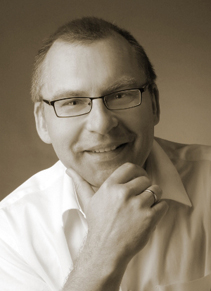
Professor Michael Baldzuhn is a distinguished scholar of Medieval and Early Modern German literature at the University of Hamburg's Faculty of Humanities, Department of Language, Literature, Media I Institute of German Studies. Appointed as full professor in 2019, he has established himself as a leading expert in medieval song poetry, school literature, and manuscript studies. His research focuses span medieval song poetry , school literature of the Middle Ages and Early Modern period , medieval fables , transmission and textual history of medieval literature , manuscript studies/codicology , orality and writtenness , and Latin and vernacular languages in the late Middle Ages . His work bridges philological precision with cultural historical insights, particularly in how educational practices shaped literary transmission. Professor Baldzuhn's recent publications reveal a sustained engagement with textual transmission and educational practices, with his 2024 critical edition of Jacobus Montanus's Centuria epistolarium formularum representing a major contribution to understanding late medieval educational practices. His work consistently demonstrates how school contexts shaped literary production and transmission, with particular attention to bilingual (Latin-German) educational materials. His scholarly activities include participation in international workshops and conferences focused on manuscript cultures, textual transmission, and educational practices across Europe. Professor Baldzuhn also maintains significant digital resources including www.liederhandschriften.de and www.meistergesang.de , supporting research in medieval song poetry and manuscript studies. Beyond his research, Professor Baldzuhn has extensive teaching experience across multiple German universities, with courses covering medieval German literature, language history, and specialized topics in medieval studies. His academic trajectory reflects deep commitment to both research excellence and pedagogical innovation in medieval studies.
Prof. Dr. Hans Jürgen Scheuer is Professor for German Literature of the Late Middle Ages and the Early Modern Period at the Institute of German Literature, Faculty of Languages and Literature, Humboldt University of Berlin. Born in Trier in 1964, he completed his doctorate at the University of Münster in 1994 and habilitation at the University of Göttingen in 2000. Prior to his current position since winter semester 2011/12, he held academic positions at the Universities of Stuttgart, Freiburg, and Göttingen, as well as teaching appointments at King's College London and Johns Hopkins University. His research is organized around three interconnected axes: Brain (history of imagination in antiquity and the Middle Ages), Ars (rhetoric, poetics, and the relationship between liberal and mechanical arts), and Himmel (political theology and religious intelligence in medieval literature). His work explores how premodern thought forms persist in contemporary media and art, with particular interest in schema literature, allegory, metaphor, small narrative forms, and the trickster figure. Scheuer's recent publications include the monograph The Urban Trickster: A Premodern Figure Between Elementary World Knowledge and Religious Intelligence (2024) and Holy Road in Hollywood: Apocryphal Narrative Patterns of Premodernity in the Canon of 'Great Cinema' (2025). His scholarship reveals how medieval narrative patterns, religious thought forms, and visual culture continue to shape contemporary artistic expression across media. Scientific awards: While specific awards are not listed in the available information, Scheuer has received significant research support including 'Freiräume' funding from the Excellence Initiative at Humboldt University for his monograph The Urban Trickster , and is collaborating on the new edition of Walter Benjamin's works (WuN 6) with the Hamburg Foundation for the Promotion of Science and Culture and Suhrkamp Verlag. Professor Scheuer teaches courses including Poetry, Interpretation, and Thinking of Patterns; Beyond Wit: Late Medieval Verse Novels; and The Knowledge of Utopia, reflecting his interdisciplinary approach that bridges medieval studies with contemporary media theory. His research team includes doctoral students and research assistants working on projects related to premodern narrative forms, religious communication, and the persistence of medieval thought patterns in modern media.
Pierre-Yves Modicom is a University Professor of Germanic Linguistics at the Faculty of Languages, Jean Moulin University Lyon 3. He serves as Director of the Department of German Studies, Head of the LLCER and LEA German degrees, and Vice-President for Internationalization, Europe, and Support for Component Areas. He is also co-facilitator of the 'Description and Modeling' research axis at the Center for Linguistic Studies – Corpus, Discourse and Societies (CELESTES). Research Interests: His primary research areas include Germanic and contrastive linguistics, with a focus on syntax, semantics, pragmatics, discourse markers, modal particles, information structure, and historical development of Germanic languages. He investigates the interplay between grammatical structure and discourse function, especially in older Germanic varieties and heritage language contexts. Recent Publications: His recent scholarly output reflects a strong trend in theoretical and descriptive linguistics, particularly on adverbial categorization, subject properties in Germanic, construction grammar, and discourse particles. He frequently collaborates with scholars such as Olivier Duplâtre and Camille Noûs, and his work appears in leading linguistics series from De Gruyter, John Benjamins, and Peter Lang. Scientific Contributions: He has contributed to interdisciplinary debates, including the impact of neoliberalism on science and the epistemology of linguistic knowledge. His publications span monographs, edited volumes, peer-reviewed journal articles, and book chapters in French, English, and German. Advising and Leadership: While no specific advisees are listed, he holds significant academic leadership roles, including training management for international degrees and research coordination. He is actively involved in professional associations like the Association of Germanists in Higher Education, where he served as national treasurer from 2018 to 2021. Laboratories and Teams: He is affiliated with CELESTES (Centre d'Études Linguistiques - Corpus, Discours et Sociétés) and the Cogitamus Laboratory, contributing to research on linguistic modeling, corpus-based analysis, and cognitive approaches to language.
M. Talha Cicek serves as an Associate Professor in the School of History at University College Dublin, where he contributes to the academic community through teaching, research, and professional activities. His institutional affiliation with University College Dublin places him within one of Ireland's leading research-intensive universities. His educational background includes a PhD from Sabanci University, followed by prestigious postdoctoral experiences including The British Academy Newton Post-Doctoral Fellowship at the School of Oriental and African Studies (SOAS) in London and The Humboldt Experienced Research Fellowship at the Alexander von Humboldt Foundation in Bonn, Germany. Professor Cicek's research focuses on the Modern Middle East, with particular emphasis on Ottoman history, World War I in the Middle East, and Arab tribal societies. His scholarly work examines complex historical processes including state formation, political engineering, and the dynamics between imperial centers and peripheral regions. He has made significant contributions to understanding Ottoman-Arab relations during critical historical transitions, particularly the late Ottoman period and early Turkish Republic era. His extensive publication record demonstrates consistent scholarly productivity with a clear trajectory toward increasingly sophisticated analyses of translocal tribal dynamics, imperial governance, and post-Ottoman political formations. His recent work shows a progression from examining specific historical events to analyzing broader structural patterns in Middle Eastern history, with growing attention to transnational and translocal phenomena that challenge conventional state-centered historical narratives. Among his notable recognitions are The Incentive Award for pioneering research on modern Middle Eastern history, the Exceptional Young Scientist Award, and the High Achiever Young Academics Award. These honors reflect the significance and impact of his scholarly contributions to the field. The Incentive Award (2021) - For conducting pioneering research on the history of the modern Middle East Exceptional Young Scientist Award (2021) High Achiever Young Academics Award (2015-2018) Professor Cicek actively supervises PhD students and has developed and taught numerous courses including Middle East State & Society, Rurality in Modern Middle East, Elites and Empire in the Ottoman Arab Lands, and Modernisation in the Middle East. His professional engagement extends to grant assessment for organizations including the Swiss National Science Foundation and service on editorial boards for several prominent journals in Middle Eastern studies. He maintains active membership in scholarly associations such as the Turkish Academy of Sciences (since 2023), Union Académic Internationale, British Society of Middle Eastern Studies, and Middle East Studies Association. His multilingual capabilities in Turkish, Arabic, Ottoman Turkish, English, French, and German enable him to work with primary sources across multiple languages, enhancing the depth and authenticity of his historical research. This linguistic proficiency supports his analysis of diverse historical materials including Ottoman archives, Arabic memoirs, and European diplomatic correspondence.
Annette M. Volfing is a Professor of Medieval German Studies and Fellow of Oriel College at the University of Oxford. Her research focuses on later medieval religious, mystical, and allegorical writing, with particular expertise in medieval German literature, textual analysis, and gender studies. She holds a D.Phil. and has authored monographs on figures like Heinrich von Mügeln and John the Evangelist, as well as edited volumes on friendship in medieval culture and medieval notions of inner space. Her teaching includes Old High German, medieval German language, and literature. She is a Fellow of the British Academy, recognizing her contributions to humanities scholarship. Notable publications include The Daughter Zion Allegory in Medieval German Religious Writing (2017) and Medieval Literacy and Textuality in Middle High German (2007). Her articles span topics from allegorical interpretation to medieval mysticism's gendered dimensions. Her work often bridges theological, literary, and cultural analysis, with a focus on medieval German texts' intertextual and allegorical layers. Recent research explores dialogic structures in medieval sermons and the role of desire in mystical writing. She has contributed to collaborative projects like Punishment and Penitential Practices in Medieval German Writing (2018) and co-edited special journal issues on Dorothea von Montau and medieval friendship concepts.
Kristin Bech is a Professor of English Linguistics at the Department of Literature, Area Studies and European Languages at the University of Oslo. She specializes in historical linguistics with a focus on Germanic languages, particularly Old and Middle English. Her academic career combines rigorous research with exceptional public engagement. Department of Literature, Area Studies and European Languages, University of Oslo Member of the Institute Board at ILOS Former Chair of the National Professional Body for English Former Vice President for Education at the International Society for the Linguistics of English Professor Bech's research centers on language history, medieval linguistics, and syntactic changes across Germanic and Romance languages. She has particular expertise in noun phrases in older Germanic languages including Old English, Old Norse, Old High German, and Old Saxon. Her work utilizes corpus linguistics and annotation methods to analyze historical language patterns and changes. She emphasizes the importance of understanding language history to appreciate contemporary linguistic phenomena and challenges misconceptions about language change. Her recent publications focus on syntactic structures in early Germanic languages, particularly examining word order patterns and noun phrase construction across different historical periods. These works reveal fascinating connections between language structure and historical context, showing how linguistic elements evolve through time while maintaining underlying grammatical principles. The Student Parliament's Teaching Award 2023 (for Word Festival and music lectures) Knight of Dend Most Excellent Order of the Owl (2015) Knight of the Academic Order of the Book Globe (2023) Professor Bech actively mentors students and has developed innovative teaching approaches that combine linguistic scholarship with public engagement. She has created musical lectures that trace English language history through song, from Gregorian chants to The Beatles. Her research has been supported by the Research Council of Norway through projects on information structure and syntactic change (2011-2014) and noun phrases in early Germanic languages (2017-2021). As festival director for the Word Festival in 2020 and 2022, she organized language exhibitions and creative writing competitions that brought linguistic scholarship to the public. Her work bridges academic research and public understanding of language history, making complex linguistic concepts accessible to general audiences.
Prof. Dr. Magnus Gaul serves as Professor and Chair of Music Education and Music Didactics at the University of Regensburg within the Faculty of Philosophy, Arts, History and Social Sciences. He has held this position since 2013 following his appointment to the W3-Professorship, after previously serving as Professor for Music Didactics at the Hochschule für Musik und Theater Rostock from 2008-2013. His academic leadership extends to coordinating teacher education programs for primary, middle, and high schools, serving as ERASMUS coordinator for music education, and administering music aptitude tests for teaching positions. Gaul's educational trajectory features international breadth with studies completed at the University of Regensburg, Goethe-Universität Frankfurt/Main, and the Conservatory in Cremona, Italy. Key academic milestones include: 2001: Doctorate in Musicology at University of Regensburg with thesis "Music Theater in Regensburg in the first half of the 19th century" 2003-2006: Additional studies in Germanistics and Music Education at Goethe-Universität Frankfurt/Main 2007: Habilitation in Music Education at Goethe-Universität Frankfurt/Main with empirical study "Music Lessons from a Student's Perspective" 2009: Qualification as professor in music education His research program demonstrates remarkable thematic coherence while evolving toward increasingly applied educational contexts. Core research interests include music education methodology, language acquisition through music (notably the SPRING program - "SPRache lernen durch sINGen"), time perception processes in musical learning contexts, and inclusive educational approaches for diverse student populations. His methodological approach combines qualitative data collection techniques including interviews, classroom observations, group discussions, and video technology analysis. Recent publications reveal growing emphasis on digital learning environments and time management aspects in contemporary music education. Gaul has developed distinctive expertise in applying qualitative-hermeneutic and quantitative-analytical approaches to classroom research, particularly regarding student perspectives on music instruction. Analysis of Gaul's publication record reveals a clear scholarly trajectory from historical music theater research toward increasingly applied educational studies with practical classroom implications. His work consistently bridges theoretical foundations with practical teaching applications, with notable thematic clusters including music-mediated language acquisition (SPRING program), time perception in musical learning, inclusive education approaches, and interdisciplinary connections between music education and other academic domains. The publications demonstrate methodological diversity, combining qualitative hermeneutic approaches with quantitative analytical techniques, reflecting his commitment to comprehensive understanding of music education phenomena. Gaul has supervised numerous academic advisees across various teacher education programs and secured funding for multiple research initiatives including the SPRING language acquisition project and studies on time perception in musical learning. His collaborative work extends to partnerships with cultural institutions including the Norddeutsche Philharmonie Rostock and Volkstheater Rostock during his tenure in Rostock, and more recently with various schools in Regensburg focusing on inclusive education processes, migration contexts, and SPRING implementation. He has coordinated multiple continuing education programs for music teachers across German federal states including Bavaria, Hesse, and Mecklenburg-Western Pomerania. Active research teams under Gaul's direction include the SPRING research group examining music-mediated language acquisition, projects investigating time perception in musical learning contexts (notably his 2022 publication "Vom Umgang mit der Zeit bei Kindern"), and interdisciplinary collaborations exploring connections between music education and special educational needs. His international research network includes collaborations with institutions in England, France, Italy, Lebanon, Austria, Spain, and the Czech Republic through ERASMUS programs and international workshops. Current projects focus on digital time management in music education (2024 publication) and creating spatial opportunities for musical education (2021 publication).