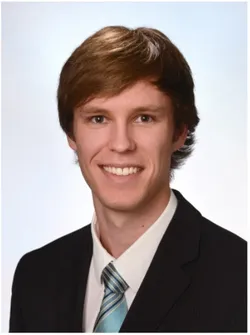
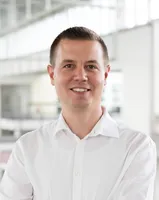
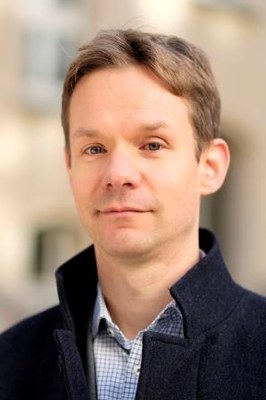
Arun Prakashمشاهده پروفایل
پژوهشگر ارشد
Dr. Arun Prakash is a Leading Scientific Staff Member at the Institute for Mechanics and Fluid Dynamics within the Faculty of Mechanical Engineering, Process and Energy Technology at Technische Universität Bergakademie Freiberg. He previously served as a Leading Scientific Staff Member at Friedrich-Alexander-Universität Erlangen-Nürnberg from 2011-2018, where he was also a member of the executive committee for the international Master's program in Advanced Materials and Processes (MAP). His educational background includes: PhD in Computational Micromechanics of Polycrystals from Karlsruhe Institute of Technology (2009-2010) Master's degree in Computational Mechanics in Materials and Structures from University of Stuttgart (2003-2005) Bachelor's degree in Mechanical Engineering from B.M.S. College of Engineering, Bangalore University (1997-2001) Dr. Prakash's research focuses on multiscale material modeling with expertise spanning from atomistic simulations to finite element methods. His work bridges experimental observations with computational approaches, particularly in nanomechanics, small-scale plasticity, and nanomaterials. He has developed sophisticated methodologies for generating realistic microstructures and analyzing material behavior across scales, with applications in metal forming processes, nanowires, and laminated composites. His research often involves advanced computational techniques including machine learning for materials science applications. His publication record demonstrates a consistent focus on multiscale modeling approaches, with recent work emphasizing the integration of machine learning with traditional computational mechanics. His research spans fundamental studies of dislocation mechanisms in magnesium alloys, silica glass deformation, and practical applications in metal forming processes like accumulative roll bonding. The publications reveal a strong emphasis on developing computational tools that bridge the gap between atomistic simulations and continuum mechanics. Notable scientific achievements include: 2017 Best poster award at international CAE conference 'Simulation: The Soul of Industry 4.0' 2016 Teaching award for 'Exercises in Computational Nanoscience' 2010 Werkstoffmechanik-Preis der Plansee-Gruppe (2nd Place) 2009 Best paper award from 'Steel Research International' Dr. Prakash has made significant contributions to open-source scientific software development, creating tools that have become valuable resources for the materials science community. He is an active member of several professional organizations including the Institution of Engineers (India), German Materials Society (DGM), and German University Association (DHV). His laboratory work centers around advanced computational materials science, with significant contributions to open-source software development. He is the co-author of several important tools including OptiMic for generating optimized polycrystalline microstructures, nanoSCULPT for creating complex realistic structures for atomistic simulations, and FE2AT for bridging finite element and atomistic simulations. These tools have been made available to the scientific community as open-source software through GitLab repositories.