معرفی
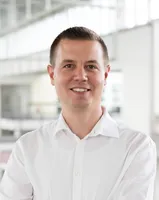
Patrick Praegla, M.Sc., is a Research Associate at the Institute for Computational Mechanics within the Department of Mechanical Engineering at the Technical University of Munich (TUM). Working under Prof. Dr.-Ing. Christoph Meier at the Professorship of Simulation for Additive Manufacturing, he contributes to advancing computational methods for metal additive manufacturing processes.
His educational background includes a Master of Science in Mechanical Engineering (2020) and a Bachelor of Science in Mechanical Engineering (2018), both from TUM. His research focuses on developing and applying computational models to understand and improve powder-based metal additive manufacturing processes.
Praegla's research interests center on the Discrete Element Method (DEM), Smoothed Particle Hydrodynamics (SPH), metal additive manufacturing processes, and the modeling and simulation of powder spreading. His work addresses challenges in cohesive metal powders, complex multiphase flows, thermo-solid-mechanics, and microstructure evolution during additive manufacturing.
His publication record shows a consistent research trajectory from 2021 through 2025, with multiple high-impact publications in 2024. His work demonstrates expertise in both experimental validation (using X-ray imaging techniques) and computational modeling (DEM, SPH, thermal simulation) with strong practical applications for improving powder spreading strategies, understanding powder behavior, and developing novel additively manufactured structures with tailored properties.
Praegla has contributed to teaching as a tutor for Technical Mechanics I and II during multiple semesters (WS 20/21, SS 21, WS 22/23, SS 23), supporting student learning in fundamental engineering mechanics.
As part of the Simulation for Additive Manufacturing team at TUM, he collaborates with researchers across multiple institutions including the Institute for Applied Materials at Karlsruhe Institute of Technology, the Chair for Product Development and Lightweight Design at TUM, and international collaborators from MIT. His research has practical implications for improving the reliability and capabilities of metal additive manufacturing technologies.