Roarke Horstmeyer is an Assistant Professor of Biomedical Engineering at Duke University, with secondary appointments in Electrical and Computer Engineering and Physics. He leads the Computational Optics Lab, focusing on advancing optical imaging techniques through machine learning and algorithm design. His research includes developing multi-camera array microscopes (MCAMs) for high-throughput, gigapixel-scale imaging, and applying deep learning to improve biomedical diagnostics. Education: B.S. in Physics and Japanese from Duke University (2006), M.S. from MIT Media Lab (2011), Ph.D. in Electrical Engineering from Caltech (2016). Postdoctoral training included an Einstein Fellowship at Charité Medical School in Berlin and a role as Interim CTO at Kernel Inc. Research Interests: Computational optics, machine learning for hardware design, Fourier ptychography, diffuse correlation spectroscopy, and imaging neural activity in freely moving organisms. His lab collaborates with industry via startups like Ramona Optics and MIRA Inc. Key Achievements: Developed the multi-camera array microscope (MCAM) enabling 3D topographic imaging at cellular resolution. Awarded the APL Photonics Future Luminary Award (2021). Over 150 peer-reviewed publications in top journals like Nature Photonics, Optica, and Neurophotonics. Labs/Teams: Computational Optics Lab at Duke, collaborations with Erlangen School of Advanced Optical Technologies Grants: NSF, NIH, and industry partnerships supporting imaging innovation
Benjamin Weiss is the Chair of the Program in Planetary Science and Robert R. Shrock Professor of Earth and Planetary Sciences at the Massachusetts Institute of Technology (MIT). He leads research in planetary magnetism and serves as Deputy Principal Investigator on NASA's Psyche mission, while also contributing as a Co-Investigator on the Mars Perseverance rover and Europa Clipper missions. Department of Earth, Atmospheric and Planetary Sciences MIT Planetary Magnetism Laboratory Director NASA Psyche Mission Deputy Principal Investigator Mars Perseverance Rover Co-Investigator Europa Clipper Mission Co-Investigator Weiss earned his bachelor's degree in physics from Amherst College before pursuing graduate studies in planetary science and geology at the California Institute of Technology, where he received his master's degree in 2001 and PhD in 2003. His doctoral dissertation on Martian meteorite ALH 84001 provided groundbreaking insights into ancient Martian climate and magnetic fields, demonstrating how meteorites could transfer materials from Mars to Earth without heat sterilization. As a specialist in magnetometry, Professor Weiss investigates the formation and evolution of planetary bodies through laboratory analysis, spacecraft observations, and fieldwork. His research spans nebular magnetic fields in the early solar system , planetesimal structures and dynamos , lunar magnetism and the early lunar dynamo , Hadean Earth and the origins of Earth's magnetic field , the Martian dynamo and changes in Mars' paleoclimate , and innovations in magnetic microscopy . The MIT Planetary Magnetism Laboratory, which he directs, develops high-sensitivity techniques to image magnetic fields in rock samples from meteorites, the lunar surface, and terrestrial sites. Analysis of Weiss's recent publications reveals a strong focus on Mars exploration through the Perseverance rover mission, lunar magnetism studies, and research on asteroid Psyche. His work increasingly integrates data from multiple NASA missions while advancing paleomagnetic techniques to understand planetary evolution and habitability throughout the solar system. Professor Weiss has received numerous prestigious honors including the James B. Macelwane Medal from the American Geophysical Union (2009), election as an AGU Fellow (2009), the Visiting Miller Professor Award from UC Berkeley (2014), and having Asteroid (8069) named 'Benweiss' by the International Astronomical Union (2012). Most recently, he was elected to the National Academy of Sciences (April 29, 2025). James B. Macelwane Medal, American Geophysical Union (2009) Fellow, American Geophysical Union (2009) Visiting Miller Professor Award, UC Berkeley (2014) Asteroid (8069) Benweiss named by IAU (2012) Elected to National Academy of Sciences (2025) As an academic leader, Weiss chairs MIT's Program in Planetary Science and mentors numerous graduate students in the Planetary Magnetism Laboratory. His research is supported by multiple NASA grants related to the Psyche mission, Mars exploration, and lunar science investigations. Weiss also contributes to international collaborations including missions with JAXA (Hayabusa 2), ESA (Rosetta), and SpaceIL (Beresheet). The MIT Planetary Magnetism Laboratory under Weiss's direction develops cutting-edge instrumentation for magnetic analysis, including the Quantum Diamond Microscope. His research team collaborates with scientists across multiple institutions and space agencies to analyze samples from meteorites, lunar missions, and Mars rovers, advancing our understanding of planetary formation and evolution.
Christine Ortiz is the Morris Cohen Professor of Materials Science and Engineering and Director of the Technology and Policy Program (TPP) at MIT's Institute for Data, Systems, and Society (IDSS). She is also the founder of Station1, a nonprofit focused on socially-directed science and technology education. Her roles include former Dean for Graduate Education at MIT (2010–2016), board director for Mueller Water Products and Enovis, and trustee of the Essex County Community Foundation. She holds a B.S. from Rensselaer Polytechnic Institute and M.S./Ph.D. from Cornell University. Education: B.S., Materials Science and Engineering, Rensselaer Polytechnic Institute M.S. and Ph.D., Materials Science and Engineering (Theoretical and Applied Mechanics minor), Cornell University Research Interests: Dr. Ortiz’s work spans biomaterials, advanced manufacturing, and socially-responsible materials design. Her lab explores biological systems like cartilage, bone, and chiton armor to develop bio-inspired materials. She integrates nanotechnology, computational modeling, and additive manufacturing to create sustainable, protective materials. Her research also addresses societal impacts of technology through education and policy initiatives. Articles Trends: Recent publications focus on bio-inspired armor (e.g., chiton scales, fish mechanics), advanced materials fabrication, and interdisciplinary STEM education reforms. Her work bridges engineering, biology, and policy to address global challenges like sustainable design and equitable education access. Scientific Awards: Presidential Early Career Award in Science and Engineering (2003) Vannevar Bush Faculty Fellowship (2013) Advising & Grants: Supervised over 300 students/postdocs across 60 disciplines. Led MIT’s graduate strategic plan, including global education initiatives and fellowship infrastructure. Secured over $200M in research funds through interdisciplinary grants. Founded Station1 to scale socially-conscious STEM education via partnerships with startups and global networks. Labs/Teams: Leads the Ortiz Research Group at MIT and Station1’s cross-disciplinary teams. Collaborates with engineers, scientists, physicians, and urban planners to advance socioresilient materials and education equity. Station1’s programs include a historic wool mill learning space and collective impact initiatives with 30,000+ students across 30 programs.
Dr. Suzan Arslanturk is Associate Professor in Computer Science and Industrial & Systems Engineering at Wayne State University's College of Engineering. She directs the Machine Learning and Health Informatics Laboratory, focusing on predictive analytics for healthcare applications. Research domains include: Cancer subtyping through multi-omics data integration Biomarker discovery for prostate cancer using cross-cancer learning Drug repurposing for cancers with DNA-repair deficiencies Neonatal brain anomaly detection via MRI analysis Operational healthcare optimization during medical surges Leads the development of deep learning frameworks for medical imaging segmentation and clinical text analysis. Publications demonstrate innovations in multimodal data fusion, domain adaptation, and unsupervised abnormality detection. Advises PhD candidates in computational healthcare research and directs academic programs in data mining and intelligent systems.
D. Eric Aston is a Professor in the Department of Chemical and Materials Engineering at the University of Idaho. He earned his Ph.D. in Chemical Engineering from the University of Washington (2001), with concurrent M.S. in Physics (2000) and B.S. in Chemical Engineering from the University of Idaho (1995). His research focuses on nanomaterials, colloids, and electrochemical systems, with applications in environmental remediation, biosensors, and energy storage. He has held roles as Associate Professor (2007–2013) and Assistant Professor (2001–2007) at the University of Idaho and is an Adjunct Professor of Materials Science and Engineering. He has mentored numerous students and collaborated on projects funded by NSF, W.M. Keck, and others. Education: Ph.D., Chemical Engineering, University of Washington, 2001 M.S., Physics, University of Washington, 2000 B.S., Chemical Engineering, University of Idaho, 1995 Research Interests: Dr. Aston’s work spans colloids, nanotechnology, and electrochemical systems. Key areas include: Design of sorbents for radioactive gas capture Nanomaterial-based sensors for food safety and environmental monitoring Electrochemical stability of conducting polymers Microfluidic and surface characterization techniques Applications of Raman spectroscopy in material analysis His research has produced over 60 refereed publications and advanced innovations in biosensor development and waste management technologies. Awards: President’s Mid-Career Faculty Award (2014–2016) Alumni Award for Excellence (2008, 2011) NSF MRI Grant (2006–2007) W.M. Keck Foundation Engineering Grant (2003–2006) Outreach & Teaching: Dr. Aston teaches courses in chemical engineering thermodynamics, separation processes, and nanotechnology. He has mentored students in HOIST programs and engaged in K-12 outreach, including lectures on nanotechnology and engineering. Labs & Collaborations: His lab focuses on interdisciplinary projects combining materials science, electrochemistry, and biochemistry. Key collaborations include work with Idaho National Laboratory on nuclear waste management and partnerships with researchers in microbiology and physics.
Matt Maschmann is an Associate Professor and Director of Graduate Studies in the Department of Mechanical and Aerospace Engineering at the University of Missouri (MU). He is also Co-Director of the MU Materials Science & Engineering Institute (MUMSEI) and former Acting Director of the MU Center for Nano/Micro Systems. His research focuses on nanoscale materials, thermal transport, and advanced manufacturing techniques, supported by grants from NSF, ARO, AFOSR, ERDC, and DOE. He has authored over 50 publications and received the NSF CAREER Award and Ralph E. Powe Junior Faculty Enhancement Award. Education: PhD from Purdue University, MS and BS from the University of Missouri. His technical expertise includes nanomaterial synthesis, electron microscopy, and AI-driven materials discovery. Current projects involve in-situ TEM experimentation, semiconductor design via electron beam functionalization, and AI/ML-accelerated materials development. Research interests span carbon nanotube forests, nanoenergetic materials, and functionalized nanomaterials for applications in electronics, energy, and environmental systems. He leads interdisciplinary teams advancing microfabrication tools like the Nanoscribe Quantum X 3D printer and collaborates on Army-funded projects to optimize materials discovery workflows. His work bridges fundamental materials science with practical engineering solutions.
Dr. Dan Edidin is Professor of Mathematics at the University of Missouri's College of Arts and Science, holding a Ph.D. from MIT (1991). His research spans algebraic geometry, machine learning, and topological methods in data science. Current investigations address phase retrieval problems over Lie groups, moduli space invariants, and orbit recovery algorithms. His work connects abstract algebraic geometry with applications in signal processing and cryo-electron microscopy reconstruction. Recent publications develop theoretical frameworks for signal recovery from invariant moments, K-theoretic analyses of moduli stacks, and sample complexity bounds for cryo-EM imaging. This interdisciplinary research bridges pure mathematics with computational imaging challenges.
Lie Ma is a Lecturer in the Mathematics Department at West Virginia University's School of Mathematical and Data Sciences. He coordinates Math 124 (Algebra with Applications) and serves as Assistant Coach for the WV National Math Team. With an M.S. in Applied Mathematics from WVU and ongoing Ph.D. studies in Higher Education Administration, his teaching spans quantitative reasoning, algebra, calculus, and differential equations. His research focuses on mathematics education and curricular innovation. Previous work explored applied mathematics topics including spectral analysis and Fourier methods. He actively contributes to math competitions and student development initiatives.
Pavel Bashtrykov is a Researcher at the University of Stuttgart's Institute of Biochemistry and Technical Biochemistry, part of the Faculty of Chemistry. His work focuses on epigenetic mechanisms, DNA methylation, and histone modifications. He contributes to interdisciplinary research projects such as the Collaborative Research Center (SFB) 1333 on catalysis in confined geometries. His research integrates biochemistry, molecular biology, and advanced analytical techniques to elucidate epigenetic regulation and its implications in health and disease. Key research interests include allele-specific epigenome editing, DNA methyltransferase specificity, and the interplay between histone modifications and DNA methylation. His studies often involve cutting-edge tools like CRISPR/dCas9 systems and fluorescent biosensors for locus-specific analysis. Recent work addresses oncogenic TERT promoter mutations and their epigenetic targeting, as well as the role of adherens junctions in modulating DNA methylation patterns. Bashtrykov collaborates on EU-funded projects and leverages computational models to inform molecular design. His contributions span basic science to translational applications, including epigenetic therapies and biomarker discovery.
Saeed Boorboor is a Principal Research Scientist at Stony Brook University's Center for Visual Computing and an Adjunct Assistant Professor at the University of Illinois at Chicago. His research focuses on immersive visualization systems, AR/VR/MR, medical imaging, and applied AI. He received his Ph.D. from Stony Brook University under Arie E. Kaufman and a B.S. from LUMS, Pakistan. He will join UIC as an Assistant Professor in Fall 2025. Education: Ph.D. in Computer Science, Stony Brook University (2015–2023) B.S. in Computer Science, LUMS, Pakistan (2010–2014) Research Interests: Dr. Boorboor designs visualization systems for scientific data exploration, leveraging immersive technologies like AR/VR. His work emphasizes human-centered design, applied AI, and novel interaction methods. Recent projects include Explainable XR , Silo , and NeuRegenerate . Publications & Awards: Over 20 peer-reviewed papers, patents in medical imaging, and awards including the IACS Junior Researcher Award and Stony Brook Chair Fellowship. His work has been presented at IEEE VIS, SIGGRAPH, and EuroVis. Teaching: Taught courses like CSE 366 (VR), EMP 532 (Big Data Systems), and mentored 17+ students. Currently recruiting students for his UIC lab.
Adam Zweifach is a Professor in the Department of Molecular and Cell Biology at the University of Connecticut, specializing in Cell and Developmental Biology. His primary affiliation is with the College of Liberal Arts and Sciences. He holds a Ph.D. from Yale University and completed postdoctoral training at Stanford University. Zweifach’s research focuses on T lymphocyte function, particularly signal transduction mechanisms and the role of calcium signaling in cytotoxic T cell lytic granule exocytosis. His work integrates immunology, cell biology, and pharmacology to explore therapeutic strategies for cancer and immune-related disorders. Recent publications highlight his contributions to immunomodulatory drug discovery, high-throughput screening methodologies, and the development of genetically encoded sensors for cellular processes. His lab employs advanced techniques such as FRET-based assays and compound ensemble strategies to validate drug targets and identify novel therapeutic candidates. Zweifach’s articles emphasize the interplay between calcium signaling pathways and T cell effector functions, with notable work on the mechanisms of cytotoxic T lymphocyte exocytosis. He has also addressed statistical rigor in experimental design, advocating for best practices in data analysis. While no specific awards are listed, his extensive publication record reflects sustained contributions to immunology and drug discovery. His research has practical implications for developing targeted therapies and improving screening protocols in biomedical research.
Dr. Michael Robertson is a Professor of Physics at Acadia University, located in Mi'kma'ki. His research focuses on the application of electron microscopy techniques to study semiconductor nanostructures and interdisciplinary collaborations between geology and physics. He holds the Jodrey Chair in Physics and previously served as a Canada Research Chair in Materials Science (2002-2012). His work includes developing numerical simulations for TEM image analysis and exploring optical methods for restoring faded historical documents. Dr. Robertson has supervised numerous undergraduate and graduate students in diverse fields like materials science, geology, and nanotechnology. Education: B.Sc. and Ph.D. from the University of Waterloo. Industrial experience includes roles at Noranda Forest Recycled Papers, JDS Uniphase Corp., and others. He teaches courses such as Quantum Mechanics I & II and Data Acquisition & Control. Awards: Acadia Student Union Teaching Award (2009-10), Jodrey Chair (2016-present) Research Themes: Cathodoluminescence systems, MnSi thin films, nano-crystalline silicon structures, and historical document restoration using optical methods. Publications span over three decades, with recent work on bentonite characterization, electron tomography, and skyrmion physics. He is affiliated with the Acadia Centre for Microstructural Analysis and actively engages in interdisciplinary projects.
Michale S Fee is the Department Head of Brain and Cognitive Sciences and holds the Glen V. and Phyllis F. Dorflinger Professorship at MIT. He is also an Investigator at the McGovern Institute for Brain Research. Dr. Fee earned his PhD in Applied Physics from Stanford University (1992) and joined MIT in 2003. His research focuses on neural mechanisms underlying vocal learning in songbirds, neural circuit dynamics, and the development of advanced neural recording technologies. Education: PhD in Applied Physics, Stanford University, 1992 Research Interests: Dr. Fee investigates how complex sequential behaviors like birdsong are generated and learned. His work combines electrophysiology, imaging, and computational modeling to study neural circuits involved in vocal control. Key areas include: Neuronal sequence generation in the avian brain Role of basal ganglia and thalamic pathways in motor learning Design of wearable neural recording devices for in vivo studies Grants & Labs: He leads the McGovern Institute's efforts in neural circuitry research and oversees departmental initiatives at the MIT Department of Brain and Cognitive Sciences. His lab develops innovative tools such as head-mounted microscopes for large-scale neural recordings.
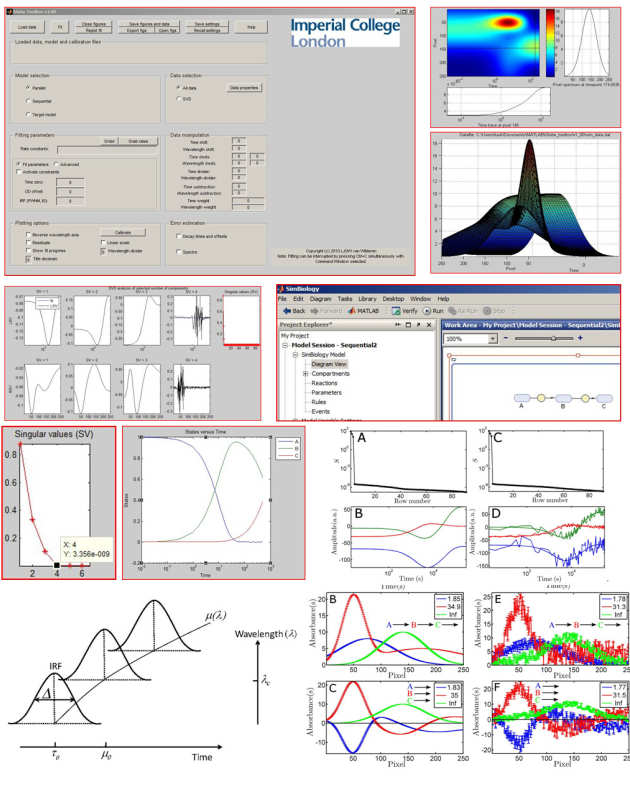
Professor Jasper van Thor is a faculty member at Imperial College London's Department of Life Sciences, part of the Faculty of Natural Sciences. He holds the title of Professor of Molecular Biophysics and leads the Ultrafast Spectroscopy Laboratory and Molecular Biophysics group. His research focuses on ultrafast molecular dynamics using techniques like femtosecond crystallography and spectroscopy, particularly studying light-sensitive proteins such as photoreceptors, fluorescent proteins, and photosynthetic systems. He has pioneered work on structural dynamics using X-ray free electron lasers (XFELs) and developed open-source software tools like the Ultrafast Spectroscopy Modelling Toolbox and PyLDM for data analysis. Education: MSc (1993) and PhD (1999) in Chemistry from the University of Amsterdam, followed by postdoctoral research at the University of Oxford under Dame Louise Johnson, supported by EMBO and HFSP fellowships. He joined Imperial College in 2007, establishing the Ultrafast Spectroscopy Lab. Research Interests: Ultrafast structural changes in proteins, photoactivation mechanisms, coherent vibrational dynamics, XFEL applications in biology, and theoretical modeling of population dynamics. His work bridges molecular biophysics, chemistry, and materials science, with contributions to understanding photosynthesis and protein signaling. Key Achievements: Director of Imperial's Frontiers of Ultrafast Measurement network and PI of the LUXD lab. Developed novel methods for femtosecond infrared crystallography and revealed mechanisms like the 'hula-twist' isomerization in fluorescent proteins. Authored influential papers on protein structural dynamics and spectroscopic analysis tools. Awards: EMBO Research Fellowship (2000), HFSP Long-Term Fellowship (2000), Royal Society University Research Fellowship (2002). Recognized for contributions to ultrafast structural biology. Grants & Labs: Active in XFEL collaborations globally (LCLS, SACLA, European XFEL). Oversees the Electron Microscopy Centre and Energy Futures Lab affiliations. His lab develops open-source software for data analysis, emphasizing reproducibility and accessibility.
Associate Professor Timothy Newsome is affiliated with the School of Life and Environmental Sciences at the University of Sydney. He leads research in virology, focusing on mechanisms of viral spread and host-pathogen interactions, particularly with vaccinia virus and SARS-CoV-2. His work integrates advanced microscopy, single-cell analysis, and molecular biology to understand viral dynamics. Key research themes include actin-based motility in viral dissemination, cytokine regulation during infections, and development of drug discovery strategies. He collaborates with The Centre for Drug Discovery Innovation to identify antiviral targets. Recent publications highlight innovations in high-throughput single-cell analysis of viral infections and the role of SMAD proteins in infection outcomes. His grants include projects on Mpox drug targets (2023) and evolution of Monkeypox virus (2022). Newsome’s career trajectory includes appointments as Lecturer (2007), Senior Lecturer (2012), and current role as Associate Professor since 2019. He contributes to both basic science and translational research in infectious diseases.