Dr. Alex Bigazzi is an Associate Professor and Associate Head (Undergraduate Program) in the Department of Civil Engineering at the University of British Columbia (UBC), with a joint appointment in the School of Community and Regional Planning. He leads the REACT Lab, focusing on active transportation, micromobility, and sustainable infrastructure design. His research emphasizes the intersection of physics, physiology, and behavior in active travel, particularly for pedestrians and cyclists, and addresses emissions reduction and equitable urban mobility. Bigazzi holds a B.M. in Jazz Saxophone from the University of Miami and a Ph.D. in Civil Engineering from Portland State University. His career includes academic and practical contributions, such as founding the REACT Lab and leading projects on e-bike incentives, air pollution exposure, and infrastructure design. His work has earned awards like the 2024 Wall Legacy Award for inclusive transport design and the 2023 Climate Action Award. He teaches courses on pedestrian/bicycle facility design and capstone projects, mentoring students through UBC’s Civil Engineering programs.
Shauna Brail is Professor and Director at the Institute for Management & Innovation, University of Toronto Mississauga, with cross-appointments at the Munk School of Global Affairs & Public Policy. As an economic geographer and urban planner, her research examines urban transformation through economic, social, and technological change, particularly focusing on platform economy impacts, mobility innovation, and governance shifts in 21st-century cities. Education: PhD in Geography (University of Toronto), MA in Urban Planning (University of British Columbia), BA in Urban Studies/Geography (University of Toronto). Leadership Roles: Former Associate Director of Mobility Network, Director of Urban Studies Program, Associate Director of Partnerships & Outreach at School of Cities, and Interim Director of Master of Urban Innovation. Her work appears in top journals across geography, urban planning, and urban studies . Recent publications analyze pandemic impacts on cities, platform economy regulation, public housing finance models, and autonomous vehicle governance. She advises governments and civic organizations on housing, transportation, and digital platform policy while serving on editorial boards for Applied Geography , Progress in Economic Geography , and Canadian Geographies . Academic partnerships include collaborations with researchers like Tara Vinodrai, Ben Donald, and international scholars. Her current projects examine post-pandemic urban recovery, mobility-as-a-service business models, and equitable transportation technology implementation across Canadian cities.
Laverne Jacobs, PhD, is a Full Professor at the University of Windsor's Faculty of Law where she holds the Research Chair in Disability Equality & Administrative Justice. She serves as the founder and Director of the Law, Disability & Social Change Project, a research and public policy center dedicated to fostering inclusive communities. Notably, Professor Jacobs was elected to the United Nations Committee on the Rights of Persons with Disabilities in 2022, becoming the first Canadian to serve on this UN Human Rights Treaty Body. She also serves as Co-Director of the Disability Rights Working Group at Berkeley Law's Center for Comparative Equality & Anti-Discrimination Law and previously held the position of Associate Dean (Research & Graduate Studies) for the Faculty of Law from 2018-2021. B.A. (Honours), McGill University, 1994 LL.B., McGill University, 1999 B.C.L., McGill University, 1999 Ph.D., Osgoode Hall Law School, York University, 2009 Professor Jacobs' research sits at the intersection of disability equality law and administrative law and justice, characterized by an interest in the everyday work of the administrative justice system and the lived experiences of people who use it, particularly persons with disabilities. Her work spans disability rights, administrative justice, human rights law, socio-legal theory, and empirical research methodologies. She has made significant contributions to understanding accessibility legislation, transportation inequality, post-secondary education access for students with disabilities, and the implementation of disability equality principles in administrative decision-making. Her scholarship bridges theoretical legal frameworks with practical applications, emphasizing citizen participation in policy development and the importance of inclusive design in legal systems. Analysis of Professor Jacobs' recent publications reveals a consistent focus on how administrative law can better serve persons with disabilities through inclusive design and accessible processes. Her work demonstrates growing attention to intersectional issues, particularly how women with disabilities experience administrative systems, and increasingly examines the implementation challenges of accessibility legislation across Canadian jurisdictions. She frequently employs empirical research methods to ground her legal analysis in real-world experiences of marginalized communities. Scientific Awards and Honors: Canadian Bar Association Touchstone Award (2021) Canadian Association of Law Teachers (CALT) Academic Excellence Award (2022) Hummingbird Award from the Disabled Women's Network of Canada (DaWN), 2022 Election to the United Nations Committee on the Rights of Persons with Disabilities (2022) Professor Jacobs has held significant leadership roles including service on the Board of Directors of the Income Security Advocacy Centre and the Canadian Institute for the Administration of Justice. Through her role as Director of the Law, Disability & Social Change Project, she has secured research funding to support policy-relevant scholarship on disability rights and administrative justice. Her work has influenced accessibility legislation development across Canada, particularly through her annotated version of the Accessible Canada Act. She provides expert consultation to government bodies and international organizations on disability rights implementation. The Law, Disability & Social Change Project serves as Professor Jacobs' primary research hub, bringing together interdisciplinary scholars, disability advocates, and policy makers to develop practical solutions for creating more inclusive legal and administrative systems. The project has produced numerous research reports, policy briefs, and public resources that translate academic research into actionable recommendations for improving accessibility and disability equality in Canadian society.
Janille Smith-Colin is the J. Lindsay Embrey Trustee Assistant Professor of Civil & Environmental Engineering at Southern Methodist University (SMU), where she leads the Smith-Colin Research Group. As a licensed Professional Engineer (P.E.) and Jr. Editor for the ASCE Journal of Infrastructure Systems, her work bridges infrastructure management with social equity. She serves on the Transportation Research Board Standing Committee on Transportation Planning Analysis and Application (AEP15). Her educational background includes: Ph.D. in Civil and Environmental Engineering from Georgia Institute of Technology Master of Science in Civil and Environmental Engineering from University of Wisconsin-Madison Bachelor of Arts in Engineering Studies from Lafayette College Smith-Colin's research centers on sociotechnical systems modeling to advance equity, sustainability, and resilience in transportation infrastructure. She employs system dynamics and spatial analysis to examine transportation as a social determinant of health, with emphasis on underserved communities. Her engineering education work integrates community-based participatory research and design thinking to develop inclusive pedagogical approaches. Recent publications reveal a strong trend toward data-driven equity assessment, utilizing social media mining, mobile trajectory data, and spatial analytics to investigate infrastructure deserts, micromobility access, and health impacts. She pioneers social return on investment (SROI) frameworks for transportation solutions, connecting civil engineering with public health and disaster resilience through interdisciplinary methodologies. Scientific recognition includes: Best Poster Award, International Conference on Transportation & Development (2023) Golden Mustang Teaching Award, SMU (2023) National Academies Gulf Coast Research Program Early Career Fellowship (2021) ASCE ExCEED Teaching Fellow (2019) Her research is funded by the National Academies of Sciences, Engineering and Medicine, with grants supporting equity-focused transportation projects. While student advisees aren't explicitly listed, her community-based research approach indicates active mentorship in solving civil engineering challenges for marginalized groups. She also contributes to transportation policy through regional collaborations. The Smith-Colin Research Group develops evidence-based tools for infrastructure equity, conducting spatial analysis of transportation systems and health outcomes. Current projects involve system dynamics modeling for social sustainability, Twitter-based crisis response monitoring, and partnerships with Dallas-area agencies to map infrastructure deficiencies and mobility barriers.
Dr. Páraic Carroll is a Lecturer in Transport Planning at the University of Melbourne's Faculty of Architecture, Building and Planning, with a concurrent Visiting Professorship at University College Dublin. His expertise combines policy analysis, behavioral modeling, and infrastructure planning, with recent focus on sustainable mobility transitions. Research examines travel behavior and decarbonization pathways, including: Equitable EV charging infrastructure deployment Agent-based modeling of mode-shift interventions Airport access policy optimization Energy-transport nexus in rural contexts Publications (2022-2025) highlight three themes: 1) Micromobility integration (30% of recent works), analyzing e-scooter adoption and first/last-mile solutions; 2) Rural transitions (25%), evaluating public transport expansion and EV microgrids; and 3) Behavioral interventions (20%), applying stage-based models to mobility change. He advises Irish climate policy through the Climate Change Advisory Council and consults for local governments on micro-mobility regulation. No awards or funded studentships are documented in available sources.
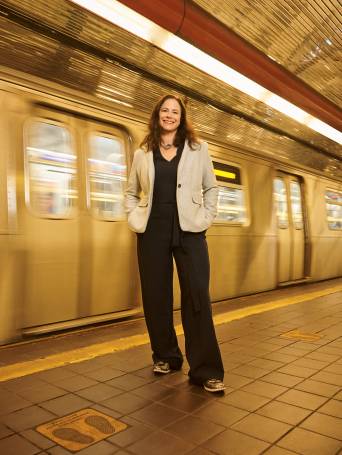
Sarah Kaufman serves as Director of the NYU Rudin Center for Transportation and Assistant Clinical Professor of Public Service at New York University's Wagner Graduate School of Public Service. Her work bridges academic research and practical policy solutions for urban transportation systems, with emphasis on equity, technology, and resilience. Her research spans transportation policy, urban planning, emergency management, and climate change adaptation. Key focus areas include mobility equity (notably the "pink tax" on transportation), micromobility systems, autonomous vehicle governance, and disaster response protocols. She investigates how technology and policy can create more inclusive and resilient urban mobility networks, with particular attention to gender disparities and climate vulnerabilities. Analysis of her 15 most recent publications reveals consistent themes in transportation equity, emerging technologies, and crisis management. Her work demonstrates methodological diversity—from agent-based modeling (MATSim-NYC) to policy analysis of scooter sharing—and maintains strong practical relevance through partnerships with transportation agencies. Notable trends include the evolution of micro-mobility regulation, gender-based mobility disparities, and transportation's critical role in pandemic and extreme weather response. As Director of the Rudin Center, she leads a multidisciplinary research team that produces policy-influential reports on congestion pricing, transit innovation, and sustainable mobility. The center serves as a hub for collaboration between government agencies, industry stakeholders, and community organizations, translating academic research into actionable transportation solutions for New York City and beyond.
Dr. Alexander Bigazzi is an Associate Professor in UBC's Department of Civil Engineering and Associate Member of the School of Community and Regional Planning. His work focuses on sustainable transportation systems, active travel behavior, and environmental impacts of mobility. He leads the REACT Lab, advancing research on pedestrian/cycling infrastructure, e-bike integration, and equitable urban design. Education: PhD in Civil Engineering (Portland State University, 2014), B.M. in Jazz Saxophone (University of Miami, 2001). Current roles include Associate Head of the Undergraduate Program in Civil Engineering. Teaching includes courses on transportation engineering, bicycle facility design, and urban systems. Research Highlights: Wall Legacy Award-winning project on inclusive transport design Climate Action Award-winning e-bike rebate program in Saanich Pioneering studies on air pollution exposure during active travel Collaborations: Interdisciplinary teams with psychology, kinesiology, and urban planning experts Key Focus Areas: Sustainable mobility transitions, human-centric infrastructure, and equity in transportation access Grants & Awards: Wall Research Award (2024), Community Energy Association Climate Action Award (2023), UBC Tenure & Promotion (2020). Current projects address BC's 2030 sustainability targets through participatory design methods. Labs/Teams: REACT Lab (Research on Active Transportation), collaborating with local governments and NGOs on applied transportation solutions.
Professor John Nelson is a Chair in Public Transport at the Institute of Transport and Logistics Studies (ITLS), University of Sydney. He holds a BA from Liverpool University, a PGCE from Durham, and a PhD from Newcastle University. He is a Fellow of the Institute of Highway Transport (FIHT) and the Royal Geographical Society (FRGS). Roles & Affiliations: Chair in Public Transport at ITLS, University of Sydney Member of The Net Zero Institute Series Editor for Routledge’s Transport and Mobility book series Former roles include Sixth Century Chair in Transport Studies and Director of the Centre for Transport Research at the University of Aberdeen Research Interests: Focus on applying new technologies to enhance transport systems, particularly public and shared transport solutions. His work addresses policy frameworks for sustainable mobility, funded by UK Research Councils, Innovate UK, and industry partners. Key themes include MaaS (Mobility as a Service), climate resilience, and transport equity. Grants & Projects: 2024: 'Shared micro-mobility and social inclusion' (Sydney) 2024: 'Investigation into the economy-wide implications of public transport fare trials' 2023: 'Community Self-Determination in Automated Delivery Systems' (ARC Discovery Project) Awards & Recognition: Honored as Scientific Director of the 2016 ITS European Congress and founder of MaaS Scotland. His work appears in high-impact journals like Transport Policy and Transportation Research Part A . Lab/Teams: Active in interdisciplinary teams at ITLS and collaborates with global networks like the RCUK dot.rural Hub. His research bridges academia, industry, and policy-making to advance sustainable transport systems.
Prof. Dr. Katja Rösler is a Professor of Automotive Engineering at the Institute of Mechanical Engineering, Ruhr West University of Applied Sciences since March 2012. Her career spans academic research and industrial development with key positions at TU Braunschweig, Volkswagen AG, and Fraunhofer Institute. Education: Industrial Mathematics degree completed under standard period Doctorate: Engineering (Driver Modeling) from TU Braunschweig, 2008 Her research focuses on automotive engineering with special emphasis on modeling/simulation, vehicle dynamics, driver assistance systems, accident research, alternative drives, and mobility concepts. She actively combines simulation with experimental verification and has significant involvement in Formula Student projects. Recent publications highlight her work in intelligent mobility systems (2018-2020), with particular attention to electromobility, accessibility solutions for elderly/disabled populations, and micromobility analysis. Earlier works established her expertise in driver modeling, vehicle measurement technology, and simulation-experiment correlation. Labs: Automotive Engineering Lab Teaching: Mechanics (Statics, Strength of Materials, Dynamics), Vehicle Dynamics, Driver Assistance Systems
Shaya Vosough is an Assistant Professor at Aalto University, focusing on the Built Environment . Her research bridges transportation engineering and urban mobility, with a strong emphasis on micromobility systems , dynamic traffic management , and environmental impact analysis . Current research interests include: Micromobility Adoption - Analyzing e-scooter usage patterns and policy impacts Seamless Multimodal Transportation - Developing frameworks for integrated urban mobility Reinforcement Learning Applications - Optimizing dynamic traffic incentives Emission Analysis - Geospatial modeling of transportation-related emissions Social Routing Behavior - Understanding driver decision-making with navigation apps Publications from 2024-2025 demonstrate expertise in E-scooter safety , reinforcement learning for traffic systems , and sustainable transportation policy . Key trends show strong focus on Helsinki case studies , emerging mobility technologies , and data-driven urban planning . Prior affiliations include collaborative work with the Micromove research group and international multidisciplinary teams.
Manuel Tuscher is a University Assistant (prae doc) at the Institute of Transport Economics and Logistics, Vienna University of Economics and Business (WU). He is currently pursuing a PhD in Economics and Social Sciences (since 2020), with prior academic qualifications including a Master's degree in Information Systems (2020) and a Bachelor's degree in Economics and Social Sciences - Business Administration (2018), all from WU. Research Interests: His work focuses on urban mobility, micromobility, traffic behavior, passenger traffic, and public transport. He investigates pandemic-related disruptions in freight transportation and the interplay between digital transformation and travel behavior. Publications: His recent publications highlight freight transportation resilience during crises, digital transformation trends, and public transport dynamics. These works span interdisciplinary domains including supply chain management and urban planning. Projects: He has contributed to projects analyzing taxi tariff regulations in Vienna and student mobility patterns during the COVID-19 pandemic.
Anna Borucka serves as an Assistant Professor at the Faculty of Security, Logistics and Management, Military University of Technology (WAT) in Warsaw, Poland. Her academic profile spans dual disciplines with equal focus: civil engineering, geodesy and transport (50%) and security studies (50%). With 189 publications, an h-index of 15 (Scopus), and a ministerial score of 9,765, she maintains significant scholarly impact in transport systems and national security domains. Her institutional affiliation includes active roles in research supervision and project leadership within Poland's premier military technical institution. Her research concentrates on transport logistics systems, military logistics, public security, and vehicle safety/reliability. Key interests include sustainable mobility transitions, military transport adaptation during geopolitical crises, road safety analytics using machine learning, and energy policy impacts on transport emissions. She investigates practical applications such as UAV deployment in prison services, military logistics during pandemics, and CO2 emission modeling across transport sectors, often contextualized within Polish infrastructure and policy frameworks. Analysis of her 15 most recent 2025 publications reveals dominant trends in sustainable transport decarbonization, military logistics adaptation to geopolitical disruptions, and advanced safety analytics. Her work increasingly integrates machine learning for traffic safety prediction while maintaining strong focus on Poland-specific case studies in energy transition and defense policy. The publications demonstrate interdisciplinary convergence between transport engineering, security studies, and environmental science. Professor Borucka has supervised 21 promoted theses and leads 4 active research projects, indicating substantial mentoring activity and grant acquisition capability. Her bibliometric profile shows consistent high-impact output with total CiteScore of 226.24 and SNIP of 56.458, reflecting significant influence in transport and security literature. She maintains active scholarly networks through multi-center publications and international database profiles (ORCID, Scopus, Web of Science).
Eray AKTEPE is an Associate Professor at Kastamonu University , Faculty of Economics and Administrative Sciences, Department of Political Science and Public Administration. He completed his PhD at Middle East Technical University (2015-2019) and postdoctoral research at Texas Tech University (2022-2023) on urban transportation sustainability. PhD: Urban Policy Planning and Local Governments, Middle East Technical University (2019) Master's: Liberal Studies, University of St. Thomas (2014) BA: International Relations, Kırıkkale University (2009) His research focuses on urban/local politics , urbanization policies , and local governments . Recent publications analyze e-scooter sustainability (2022), climate change governance (2024), and municipal service standardization (2024). He leads projects on digital public administration transformation (2023-2025) and green energy policies (2023-2024). Awardee of the Graduate Course Performance Award (METU 2017, University of St. Thomas 2014), he also served as thesis advisor for 7 master's students and contributed to COST working groups on climate resilience (2024-).
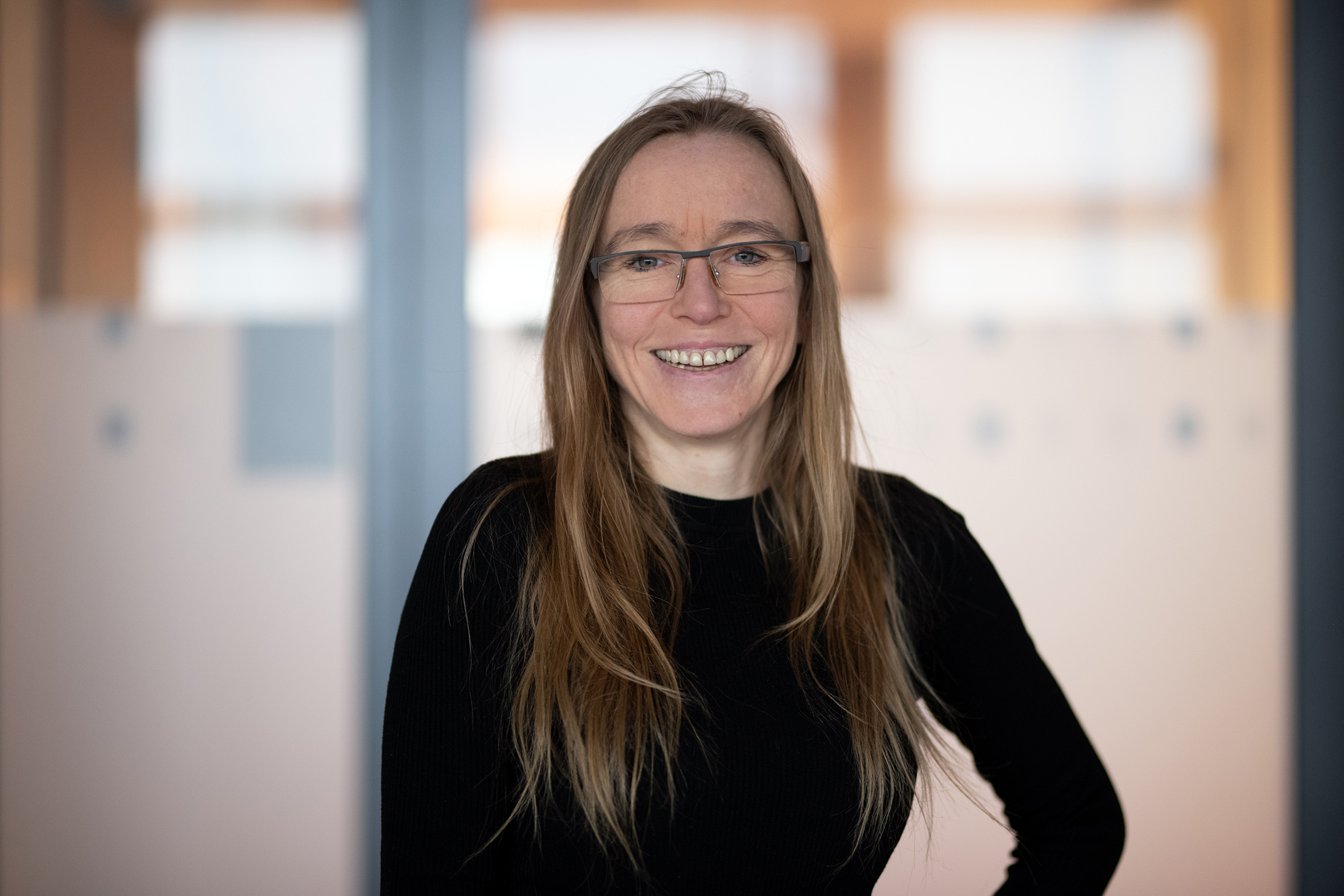
Fei Li is an Associate Professor and Graduate Program Director at the Urban Studies Institute, Georgia State University. Her work focuses on urban policy and transportation, particularly examining equity implications in housing, mobility, and technology integration. Education: Ph.D. in Public Administration from New York University (NYU Wagner) B.A. in Urban Planning and Art from Peking University M.Phil. in Geography from Hong Kong Baptist University Research Interests: Her research spans four key areas: (1) Transportation as a Social Determinant of Health (SDOH) and accessibility-related health disparities; (2) Shared mobility and micromobility (bikes, scooters) in post-pandemic urban systems; (3) Socio-spatial isolation through daily activity patterns; and (4) Mandatory inclusionary housing policies for wealth accumulation among low-income households. Publication Trends: Her 2011-2021 work shows persistent focus on urban segregation metrics, housing policy impacts, and transportation equity. Recent publications emphasize pandemic-era mobility shifts and virtual segregation analysis. Labs: Housing and Community Development Lab Micromobility Lab Sustainable Futures Lab
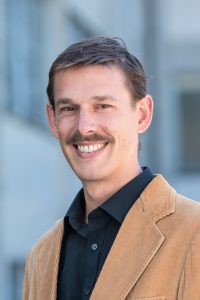
Associate Professor Paul Roberts is affiliated with the School of Psychological Science at the University of Western Australia, where he serves as Deputy Director of the Western Australian Centre for Road Safety Research. With over 25 years of academic experience, his expertise spans road safety, driver fatigue, distraction, and error. He holds a PhD in experimental psychology from UWA, focusing on implicit learning and memory. Roberts advises organizations globally on fatigue management and co-organizes the International Conference on Fatigue Management in Transport. He is a recognized expert on digital billboard safety impacts, leading numerous research and consulting projects. Education: PhD in Experimental Psychology, University of Western Australia. Research interests include human factors in road safety, driver behavior analysis, and infrastructure design. His work addresses real-world challenges like distracted driving, fatigue management, and infrastructure safety evaluations. Grants and projects include leadership in the ARC Training Centre for Automated Vehicles in Rural and Remote Regions, evaluations of the Black Spot Program, and studies on turbo roundabouts and diverging diamond interchanges. He collaborates with Main Roads Western Australia and industry partners to advance road safety solutions. Labs/Teams: Western Australian Centre for Road Safety Research, Planning and Transport Research Centre.



.jpeg?h=700&iar=0&w=700&hash=ECBB86D790E7934E1AF1CA57FF156948)