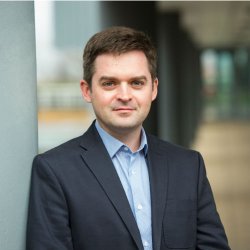
Ricardo Melo Czekster is a Lecturer in Software Engineering & Cybersecurity at Aston University's School of Computer Science and Digital Technologies. His research develops methods for securing critical infrastructure through formal modeling and threat intelligence. Education: PhD in Performance Evaluation, Pontifical Catholic University of Rio Grande do Sul (2010) MSc in Analytical and Environmental Chemistry, University of Benin (2009) BSc in Industrial Chemistry, Ambrose Alli University (2004) Research Focus: Czekster specializes in cybersecurity for cyber-physical systems, particularly smart grids and active buildings. His work develops STIX-based threat intelligence frameworks, attack path modeling with BDMPathfinder, and dynamic risk assessment methods. Recent projects address security in medical IoT and transportation systems. Teaching: Leads modules on Secure Programming, Security Governance, and Secure Software Delivery.
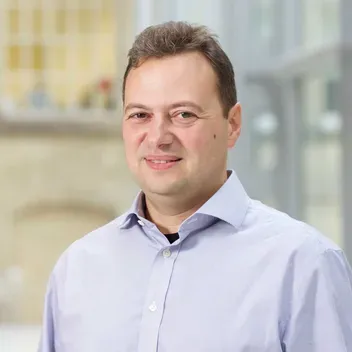
Professor Vassilios Angelidis is a distinguished academic in the field of Electrical Engineering, currently serving as a Professor at the Department of Electrical and Computer Engineering of Democritus University of Thrace. He joined the university in June 2024, bringing with him extensive international experience from prestigious institutions including the University of Glasgow, University of Sydney, University of New South Wales (UNSW), and the Technical University of Denmark. Professor Angelidis received his educational foundation with a degree in Electrical Engineering from Democritus University of Thrace, followed by a Master of Applied Science from Concordia University in Canada, and a PhD from Curtin University in Western Australia. He further enhanced his expertise with an MBA from Curtin Graduate School of Business. His research interests span Power Electronics, Renewable Energy Sources, Electrical Power Systems, and Autonomous Electricity Networks. Professor Angelidis has made significant contributions to the development of advanced power conversion techniques, grid integration of renewable energy sources, and the application of artificial intelligence in power system analysis and prediction. His work has been instrumental in advancing the field of smart grid technologies and sustainable energy systems. An analysis of his recent publications reveals a strong focus on power electronics applications in renewable energy integration, particularly in photovoltaic systems and electric vehicle charging infrastructure. His research demonstrates expertise in developing advanced algorithms for power system monitoring and control, with particular emphasis on frequency estimation, phase angle calculation, and power quality enhancement in modern grids with high penetration of distributed energy resources. Among his notable scientific achievements, Professor Angelidis has been recognized as an IEEE Fellow for his significant contributions to power electronics and the conversion and integration of renewable energy sources into power grids. He has also received the prestigious Advanced Research Fellowship for young researchers from the Engineering and Natural Sciences Council of the United Kingdom. Throughout his career, Professor Angelidis has secured research funding from various organizations across Australia, the United Kingdom, Denmark, China, India, and Malaysia, as well as industry partners with global reach. He has served on the International Councils of Beijing Jiaotong University and Universiti Tenaga Nasional (UNITEN), and currently holds the position of Vice President-elect of the IEEE Power Electronics Community. At Democritus University of Thrace, Professor Angelidis is affiliated with the Electrical Machines Laboratory within the Energy Systems Sector, where he leads research on Control and Diagnostic Methods of Electrical Machines. His current work focuses on advancing the integration of renewable energy sources into electrical power systems while maintaining grid stability and reliability.
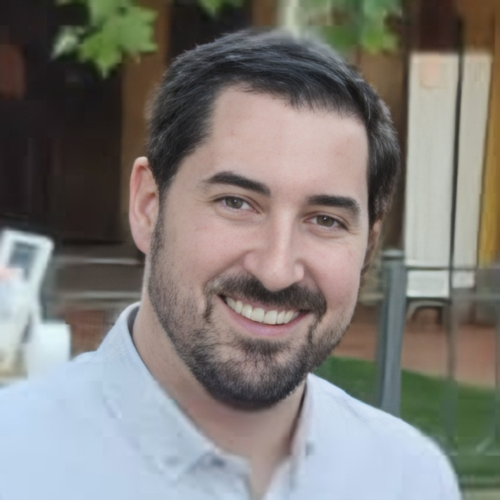
Frida Lind is an Assistant Professor at the Department of Supply and Operations Management, Chalmers University of Technology. Her work focuses on business networks, digital transformation, and sustainable logistics, with a particular emphasis on startups, resource renewal, and collaborative innovation. Research Themes : Digital-physical resource integration, circular economy, networked business models, and sustainable freight transport. Notable Contributions : Studies on university spin-offs, geofencing in urban logistics, and resource development in heavy industry networks. Recognition : Recipient of the Outstanding Article of the Year–2014 award in 2015. Frida's recent articles explore trends in circular product development, smart products, and renting models in the textile industry. Her work bridges digitalization with sustainability, emphasizing value creation through collaborative strategies. Contact: frida.lind@chalmers.se
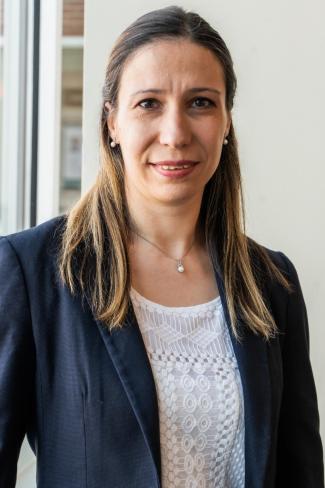
Prof. Sandford Bessler is affiliated with the Technische Universität Wien's Faculty of Informatics, specifically within the Compilers and Languages department. His research focuses 75% on Information Systems Engineering and 25% on Logic and Computation. He teaches courses such as Bachelor Thesis for Informatics and Business Informatics . His work emphasizes smart grids, electric vehicle management, scheduling algorithms, and distributed systems. Research interests include optimizing energy networks, resilience in power grids, and integrating renewable energy systems. He has contributed to projects like ARTE (2012–2017) , exploring disruption-tolerant vehicle-infrastructure communication. Supervised theses include Electric vehicles recharge scheduling with time windows and A service overlay network for telematic applications . Key projects involve improving grid resilience through demand-side management and collaborative frameworks. He collaborates with industry and academia on smart grid technologies and electric vehicle infrastructure.
Guangya Yang is an Associate Professor at the Department of Wind and Energy Systems, Technical University of Denmark (DTU), with expertise in power system stability, control, and protection of low-inertia systems, particularly in offshore wind applications. He has worked full-time as an electrical design and simulation specialist at Ørsted (2020-2021) and maintains active roles in IEEE, IEC standardization, and editorial work as lead editor for IEEE Access PES. PhD in Electrical Engineering (University of Queensland, 2008) Senior Member of IEEE Former expert member of European Technology & Innovation Platform for solar PV His research focuses on electromagnetic transient simulation, cyber-physical energy systems, and grid compliance for wind power plants. He leads the Horizon 2020 InnoCyPES project (€12m+ grants), training 15 early-stage researchers in cyber-physical energy systems. Key contributions include validating synchronous condensers for low-inertia systems and developing industry training programs on offshore wind control strategies. Coordinated Hardware-in-the-Loop test bench standards (IEC61400-21-5) Advances in grid-forming converter stability and fault ride-through assessment Developed digital twins for power grid validation Scientific Recognition: World’s Top 2% Scientists (Elsevier/Stanford, 2024) Advising & Grants: Supervises 5 PhD students in projects related to machine learning, digital twins, and predictive maintenance. Coordinates €12m+ in research grants, including Horizon 2020’s InnoCyPES. Labs & Collaborations: Works with Ørsted, industry partners, and international universities on offshore wind validation and digitalization.
Dr. Alfred Wong serves as Associate Professor in Finance and Economics at Charles Sturt University's Faculty of Business, specializing in sustainable finance and regional economic development. His research directly contributes to multiple UN Sustainable Development Goals through practical applications in ESG finance, healthcare economics, and renewable energy transition. Education: Masters in Financial Management, University of Queensland PhD in Finance, RMIT University Wong's research spans sustainable investments, ESG business valuation, renewable energy economics, regional petrol pricing, and healthcare economics with emphasis on rural/urban disparities. His work integrates financial theory with community wellbeing, particularly examining mental health impacts of crises and sustainable resource management. Current projects include Australian microgrid development and Parkinson's disease care economics. His 49 research outputs (2006-2025) show increasing focus on sustainability and wellbeing, with recent publications examining sociodemographic healthcare access, digital workplace transformation, and soil stewardship economics. The work demonstrates strong regional focus with practical policy applications. Key Awards: MRFF Rapid Applied Translation Grant (2024) for mental health research Vice Chancellor’s Research Award (2024) for Ageing Well project CSU Sustainability Research Seed Grant (2023) RED Award for Mental Health Research Team (2021) Health Innovation Awards Finalist (2020) Wong leads multiple collaborative projects including the Aspro Ageing Well Research Group and Regional Work and Organisational Resilience Sturt Group. His industry engagement spans health innovation (Mid North Coast Local Health District), Parkinson's disease advocacy, and renewable energy policy. Current grants include MRFF funding for cognitive remediation therapy translation and CSU seed funding for regional health projects. He maintains active industry connections through his Financial Risk Manager (FRM) certification and prior banking sector experience. Research infrastructure includes the Equally Well initiative and Regional Entrepreneurship Research Group, focusing on translating academic findings into community wellbeing improvements through partnerships with government agencies and health services.
Dr. Oleksiy Klymenko is a Senior Lecturer in Chemical Process Engineering at the University of Surrey, affiliated with the School of Chemistry and Chemical Engineering and the Institute for Sustainability. He holds a DPhil and specializes in model-based process design, mathematical modeling, and uncertainty quantification. Research Interests: Model-based design and optimization of process systems Mathematical modeling in natural and life sciences Uncertainty quantification, particularly global sensitivity analysis Teaching: Module leader for three M-level modules: ENGM071 Process and Energy Integration (MSc) ENGM214 Process Modelling and Simulation (MSc/Year 4 MEng) ENGM256 Technology, Business and Research Seminars (MSc/Year 4 MEng) Contributes to a Year 2 BEng/MEng module. Research Trends: Publications focus on antimicrobial technologies, energy systems optimization, and electrochemical simulations. Recent work includes 3D modeling of microbial dynamics, sustainable energy design, and the development of tools like KISSA software for electrochemical analysis. Advising & Grants: No explicit student advisees or grant details provided in texts. Research collaborations likely underpin his work in interdisciplinary areas like food safety and energy systems. Labs/Teams: Part of the Institute for Sustainability at Surrey, collaborating on projects aligning with sustainable development goals, particularly in energy and food systems.
Ridoan Karim is a Senior Lecturer at the Department of Business Law & Taxation, School of Business, Monash University Malaysia. His work bridges Business Law, International Trade Law, Environmental Law, Energy Law, and Technology Policy , with a focus on energy justice, AI ethics, blockchain applications, and legal frameworks for emerging technologies . Primary Research Areas: Energy Justice, AI Ethics, Blockchain Legal Issues, Privacy Law, and Sustainable Development Geographic Focus: Malaysia, Bangladesh, and broader Southeast Asian contexts Recent Research Trends His publications from 2018-2025 show consistent exploration of: Legal implications of AI integration in energy, healthcare, and manufacturing Blockchain technology for energy systems, health coverage, and financial transparency Energy justice frameworks across Southeast Asia and emerging economies Privacy law development in smart cities and digital environments Comparative legal studies between common law and Islamic/Shari'ah frameworks Scientific Awards No specific awards mentioned in available texts.
George Xydis is a Professor at the University of the Peloponnese, Department of Mechanical Engineering, and also holds a position at Aarhus University in Denmark. He previously served as an Associate Professor at Aarhus University from February 2017 until becoming a Full Professor in January 2023. His academic career spans multiple institutions across Europe and includes significant industry experience in the renewable energy sector. Dr. Xydis's research focuses on wind resource assessment, energy planning, techno-economics of renewable energy systems, and the energy-food nexus. His work bridges engineering, policy, and economics, with particular emphasis on practical applications of renewable energy technologies. He has developed more than 1700 MW of renewable energy projects, primarily wind, giving him extensive field experience that informs his academic work. His publication record shows a strong trend toward interdisciplinary research connecting renewable energy with environmental concerns, grid integration challenges, and novel applications like vertical farming and power-to-X technologies. Recent work demonstrates increasing focus on EU energy transition challenges, circular economy approaches, and the integration of multiple renewable technologies in complex systems. Dr. Xydis serves as Co-Editor in Chief of 'Cambridge Prisms: Energy Transitions' and as Associate Editor for several prominent energy journals. He leads multiple EU-funded research projects including TETHYS, JUSTGREEN, and JustWind4All, demonstrating his leadership in European energy research initiatives. He has supervised several PhD students working on topics including AI-based bird collision avoidance at wind farms, small-scale hydroponic systems, and portable hydrogen production systems. His research funding portfolio includes significant grants from Horizon Europe, Nordforsk, and other major European funding bodies.
Dr. Gulhan Bizel serves as Assistant Professor, Director & Chair of the Data Science Institute at Saint Peter's University, overseeing six MS/PhD programs. She holds a Ph.D. in Management from Maltepe University, an MBA from Yeditepe University, and a B.S. in Chemistry from Bogazici University. With extensive industry experience at Whirlpool, Indesit Company, and Kenwood, she brings practical insights to her academic work. Her research focuses on data science applications in marketing analytics, healthcare, social media trends, and business intelligence. She has published extensively on topics including COVID-19 impacts, social determinants of health, and digital marketing strategies. Dr. Bizel teaches courses spanning marketing principles, business operations, data analytics, and digital marketing at both undergraduate and graduate levels. Her scholarly contributions demonstrate strong interdisciplinary approaches combining data science with business applications. Awards & Certifications: NSF I-Corps Hub: Northeast Region NJIT Propelus Program Upsilon Pi Epsilon Society Membership IBM Skills Academy Instructor Badges (IoT, AI, Data Science, Quantum Computing) She actively serves on university committees including Faculty Senate and Enrollment Committee, and volunteers for SCORE Small Business Organization.
Kostas Galanakis is Professor (Chair) of Innovation, Entrepreneurship & Intrapreneurship at the School of Business, University of Dundee. He holds a PhD in Modelling Innovation Systems from the University of Warwick. His career includes roles as Professor at Burgundy School of Business, Associate Professor at Nottingham Business School, and Senior Lecturer at the University of Crete. Research focuses on Innovation Systems at enterprise, regional, and national levels, using Systems Thinking to analyze inter-actor relationships. Key sectors include automotive, food, biotechnology, and energy transition. He publishes in journals like Regional Studies and Technovation . Notable projects include coordinating the €4M Horizon2020 project Smart-BEEjS on sustainable energy districts. He advises the University of West Macedonia’s MATER lab and serves as an MSCA-ITN Evaluator for Horizon Europe. Teaching includes leading postgraduate programs in Innovation Management and supervising 11 PhD/DBA students. Previously led the MSc Entrepreneurship program at Nottingham Business School (2016-2020).
Miguel de Simón Martín is an Associate Professor in the Department of Electrical Engineering, Systems and Automation at the University of León, Spain, within the School of Industrial, Informatics and Aerospace Engineering. His research focuses on Renewable Energy, Electrical Power Systems, and Electrical Energy Management, with particular emphasis on solar energy, photovoltaic systems, and energy communities. His educational background includes: Doctorate from the University of Burgos (2015) with thesis on "Characterisation of solar diffuse irradiance on vertical surfaces" Industrial Engineering from the University of León (2009-2011) Mechanical Engineering from the University of Burgos (2006-2009) Professor de Simón Martín's research centers on sustainable energy systems, particularly renewable energy integration, microgrid management, and energy communities. His work spans from fundamental solar resource characterization to practical energy management systems for buildings and communities. He has made significant contributions to the understanding of solar energy potential on building facades, photovoltaic system performance, and the economic feasibility of renewable energy projects. His recent work increasingly focuses on the integration of energy storage, electric vehicles, and hydrogen technologies into sustainable energy systems, addressing both technical and economic aspects of the energy transition. His publication record shows a clear evolution from fundamental solar energy research toward integrated energy systems and energy communities. The most recent publications demonstrate a strong focus on practical applications of renewable energy technologies, with particular attention to economic viability, system resilience, and the integration of multiple energy vectors. His work often combines technical analysis with economic assessment, reflecting a holistic approach to sustainable energy systems. His notable scientific achievements include: 2022 Award for the Transfer of Research Results to Society, Consejo Social de la Universidad de León 2021 and 2019 1st Prizes in Open Data Competitions, Junta de Castilla y León 2016 Doctorate Extraordinary Award from the University of Burgos 2015 Award T-CUE Doctorate from the University of Burgos and Knowledge Transfer Office Professor de Simón Martín has supervised numerous theses and final projects in electrical engineering, with a focus on renewable energy applications. His teaching has been recognized with "Very Favorable" ratings in the University of León's Teaching Activity Evaluation Process. His research has been supported by multiple funding sources, including participation in collaborative projects focused on smart grids, energy communities, and renewable energy integration. He has been actively involved in the GISIGE research group (Sistemas Inteligentes de Gestión de la Energía) and has collaborated with international research teams on energy systems analysis. His laboratory work centers around the analysis and simulation of Smart Microgrids, with a flexible test-bed pilot facility for research purposes. He has been involved in the development of tools for high precision PV degradation monitoring and supervision, as well as software applications for optimizing solar tracking systems. His team's work bridges theoretical research with practical implementation, often collaborating with industry partners to ensure real-world applicability of their findings.
Anna-Sophie Liebender-Luc is a Doctoral Student and Research Fellow at the Max Planck Institute for Innovation and Competition , focusing on Digital Innovation , Artificial Intelligence , and Entrepreneurship . She is actively engaged in Innovation and Entrepreneurship Research , combining academic rigor with practical applications. Postgraduate Studies in Business Research (MBR) at LMU Munich (2020–present) Management Team Member at Centre for Digital Technology & Management (CDTM) (2020–2022) Her research examines the interplay between AI , human capital , and innovation policy . Recent work includes analyzing how GPU expertise drives AI patents and startups, and exploring AI’s role in climate change mitigation through robotics and IoT. Earlier projects address digital gender divides and elderly care technologies . Her publications span topics like neural networks , sustainable business models , and ocean economy forecasting . She has received accolades such as the Rachel Carson Center Best Idea Award (2013) and the Bronnbacher Scholarship (2010–2011). 2024: AI innovation policy and GPU expertise 2022: AI-driven climate action frameworks 2020: Elderly care technologies 2019–2018: Digital gender equality in education 2016: Ocean economy and sustainability
Dr. Anoop Singh is a Professor at the Department of Management Sciences, Indian Institute of Technology Kanpur (IITK). His work focuses on Power Sector Regulation , Renewable Energy Policy , and Energy Economics , with significant contributions to energy pricing , climate policy modeling , and cross-border energy cooperation . He founded the Centre for Energy Regulation (CER) and Energy Analytics Lab (EAL) at IITK. His research interests span power sector reforms, regulatory governance, energy pricing, renewable energy integration, project financing, and climate policy modeling. He has led initiatives in smart grid development , minigrid economics , and energy analytics , often contextualized within India's energy transition. Key Publications : 15+ works on electricity market reforms, renewable policy, and regulatory frameworks Projects : ADB-funded regional power exchange studies Scientific Awards include: Amity Academic Excellence Award (2013) Best Business Model Award, Asia Clean Energy Forum (2010) UNU/IAS and ADB Institute fellowships He served on the Planning Commission's Working Group on Power for the 11th and 12th Five-Year Plans and actively participates in global regulatory dialogues . His students and mentees engage in energy policy research with applications to sustainable development and infrastructure finance .
Tulay Flamand is an Assistant Professor of Business Analytics at the CU Denver Business School. She holds a PhD in Management Science from the University of Massachusetts Amherst and has expertise in retail analytics, optimization methodologies, and supply chain management. Her research focuses on business analytics applications to interdisciplinary areas, including retail analytics, sports analytics, and optimization in mining and renewable energy. She has published in top-tier journals like Operations Research , INFORMS Journal on Computing , and European Journal of Operational Research . She currently serves as an Associate Editor of INFOR . Flamand has received multiple awards, including the 2024 Outstanding Research Award and Excellence in Teaching Awards from the Colorado School of Mines. She has advised several PhD students in areas like supply chain optimization, sports team formation, and energy systems. Her grants include a NSF-funded project on modeling illicit gold supply chains in Peru. She has also contributed to teaching initiatives, including courses in business analytics, supply chain management, and operations research.