- Human Evolution
- Paleoanthropology
- Archaeology
- +۷ مورد دیگر
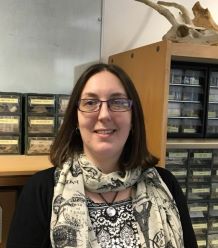
Miriam Belmaker is an Associate Professor in the Department of Anthropology & Sociology at The University of Tulsa, part of the Kendall College of Arts & Sciences. She also holds an associate curator position at the Steinhardt Museum of Natural History in Tel Aviv, Israel, reflecting her international academic engagement. Her academic journey includes a B.A. in prehistoric archaeology and ecology from Haifa University, followed by an M.Sc. and Ph.D. in Evolution and Ecology from the Hebrew University of Jerusalem. She completed a postdoctoral fellowship at Harvard University and a visiting position at the College of William & Mary before joining TU in 2012. Dr. Belmaker's research centers on paleoecology, zooarchaeology, and human evolution, particularly how environmental and climatic changes over the past 2 million years influenced hominin biological and cultural evolution. She uses fossil faunal remains to reconstruct ancient environments and interpret hominin behavior. Her fieldwork spans Israel, Jordan, the Caucasus, and Central and East Asia, with a focus on early Pleistocene sites. She is co-director of renewed excavations at the 'Ubeidiya site in Israel. Her recent publications reveal a strong trend in paleoenvironmental reconstruction using zooarchaeological and isotopic methods, with a focus on early human dispersals, climate variability, and faunal responses to ecological change. Her work integrates field data with modeling and comparative collections to address broad questions in human evolution. National Science Foundation Leakey Foundation Wenner-Gren Foundation Irene Levy Sala CARE Foundation Dr. Belmaker has successfully secured funding from prestigious organizations to support her research and fieldwork. She advises graduate students and leads the Belmaker Paleoecology and Zooarchaeology Lab at TU, where she also founded and directs the university’s comparative vertebrate collection—a key resource for training and research. She is actively involved in academic mentoring and continues to expand her research program through international collaborations, ongoing excavations, and interdisciplinary studies linking paleoecology with human evolutionary theory.