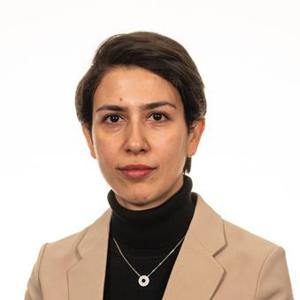
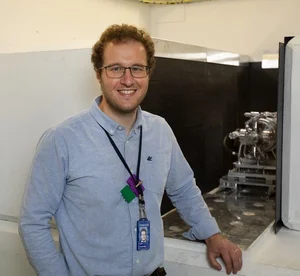
Eleni Stavrinidou serves as Senior Associate Professor and Head of Unit at Linköping University's Department of Science and Technology within the Faculty of Science and Engineering. She is Principal Investigator at the Electronic Plants research group within the Laboratory of Organic Electronics (LOE), where she leads groundbreaking research at the intersection of plant biology and electronics. Her educational background includes: Bachelor's degree in Physics (2008) from Aristotle University of Thessaloniki, Greece Master's degree in Nanotechnology (2010) from Aristotle University of Thessaloniki, Greece PhD in Microelectronics (2014) from École Nationale Supérieure des Mines de Saint-Étienne, France Stavrinidou's research focuses on developing bioelectronic devices for plant science with applications in sustainable food production and enhancing plant resistance to environmental stress. Her work explores the integration of electronic circuits within living plants, creating what she terms 'Electronic Plants.' She envisions technologies that enable new discoveries in plant biology while developing next-generation biohybrid systems that combine living and artificial components. Her research spans plant physiology, organic electronics, energy storage in biological systems, and sustainable technological concepts that harness nature's own processes. Her publications demonstrate a clear trend toward developing practical applications of plant bioelectronics, with recent work focusing on energy harvesting from plant motion, glucose-sensitive biohybrid roots, and molecular delivery systems within plants. These studies bridge plant science, materials engineering, and sustainable technology development. Notable scientific recognition includes: ERC Starting Grant (2021) Tage Erlander Prize for Natural Sciences and Technology (2023) L'ORÉAL-UNESCO For Women in Science prize (2019) Future Research Leaders grant from Swedish Foundation for Strategic Research (2020) Marie Skłodowska-Curie Fellowship (2016) Stavrinidou has secured significant research funding including a Swedish Research Council Starting Grant, an EU FET-OPEN grant (which she coordinated), and the ERC Starting Grant for her 4D-PhytoHybrid project. Her research group has developed innovative technologies such as implantable organic electronic ion pumps for hormone delivery in plants, electrically conductive 'soil' for hydroponics, and methods for storing energy in plant roots. She collaborates extensively with the Umeå Plant Science Center and participates in the EU's Horizon 2020 program through the HyPhOE initiative. As leader of the Electronic Plants group at the Laboratory of Organic Electronics, Stavrinidou directs research that follows two main avenues: incorporating electronic circuits into plants for energy storage applications, and developing bioelectronic devices to influence plant functions for greater environmental stress resistance. Her team has achieved notable breakthroughs including creating electronic circuits within rose vascular systems and developing methods to store energy in living bean plants.