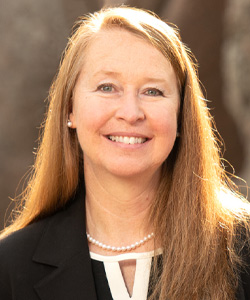
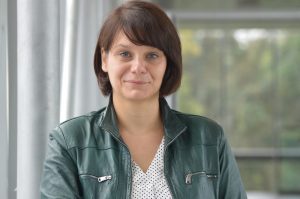
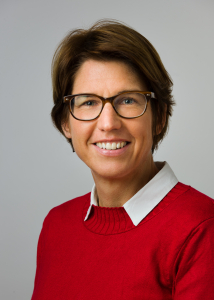
Rebeca Peacock is a Clinical Assistant Professor and COE Instructional Designer at the University of West Georgia's Department of Educational Technology and Foundations, College of Education. She holds an Ed.D. in Instructional Design & Technology from Idaho State University (2022), an M.Ed. in Instructional Technology (2012) from Wayne State University, and an M.S. in Library and Information Science (2008) from Syracuse University. Her research focuses on instructional design, online learning, accessibility in education, and academic libraries. Key themes include barriers to online library instruction, accessibility policies, and the evolution of educational technology practices. She has presented internationally and nationally on topics like microlearning and competency-based needs assessments. Peacock has authored or co-authored over 14 publications since 2011, emphasizing instructional design methodologies, accessibility standards, and library service innovations. Her work spans journals like TechTrends, The Journal of Academic Librarianship, and Reference Services Review, with a recent focus on online education challenges and professional development in libraries. Teaching responsibilities include courses such as MEDT-7464 (Design Tech Enhanced Instruction) and MEDT-7472 (Intro to Distance Education), reflecting her commitment to advancing educational technology pedagogy.
Hans Olav Geil is a Professor and Pro-dean at the Faculty of Engineering and Science , Aalborg University , Denmark, affiliated with the Department of Mathematical Sciences . He is actively engaged in research, academic leadership, and educational innovation, particularly in coding theory and engineering education. University: Aalborg University School: Faculty of Engineering and Science Department: Department of Mathematical Sciences Email: prodekan-eng-udd@aau.dk ORCID: 0000-0002-9666-3399 Website: http://people.math.aau.dk/~olav Geil's research centers on algebraic coding theory , with significant contributions to affine variety codes , quantum codes , network coding , and finite fields . His work bridges theoretical mathematics and practical applications in data transmission and cryptography. He has developed methods for code construction, decoding, and performance bounds, particularly using Gröbner bases and algebraic geometry. His recent publications (2020–2023) show a dual focus: (1) advanced coding techniques like Steane-enlargement of quantum codes and nested code pairs, and (2) educational research on project-based learning (PBL) , digital transformation, and microcredentials at Aalborg University. This reflects his leadership in both technical research and pedagogical innovation. The body of his work, including over 79 publications, demonstrates consistent contributions to IEEE Transactions on Information Theory , Designs, Codes and Cryptography , and Finite Fields and Their Applications . His research often involves collaborations with experts in coding and cryptography. Geil has supervised several PhD students and is involved in multiple research projects. Though no specific awards are listed in the text, his editorial roles and sustained publication record indicate recognition in the academic community. He leads initiatives like the Vision-in-Practice Project , aiming to transform engineering education through structured frameworks and continuous improvement. His work supports interdisciplinary, problem-based learning models central to Aalborg University’s educational philosophy.
Anne Strauch is a prominent researcher at the German Institute for Adult Education ( Deutsches Institut für Erwachsenenbildung ), where she has held the position of Deputy Head of the Department of Teaching and Learning since 2021. Her academic background includes a doctorate in Education (2007) and studies in vocational and adult education at the University of Duisburg-Essen (1997–2003). Research Priorities: Competency assessment/validation, digital learning technologies, professional development in adult education, microcredentials, and teacher training. Awards: No explicit scientific awards mentioned in the text. Her recent publications focus on microcredentials , digital competence in adult education, and competency models like GRETA. She actively contributes to educational policy and professional networks , including membership in the DIN Standards Committee (2022–) and DIE's Local Ethics Committee (2019–). Leadership & Committees: Strauch leads projects such as GRETA (since 2012) and co-edits the journal Weiterbildung . She participates in EU-funded initiatives like EPALE and UNESCO collaborations. Key Trends: Her work emphasizes the intersection of digital transformation and professionalization in adult education, with a focus on competency validation , portfolio assessment , and teacher training . The GRETA and TrainSpot2 projects highlight her contributions to educational tools and policy development .
Kate Dundas is a Lecturer at the School of Medicine and Public Health, University of Newcastle, with a focus on Health Behaviour Sciences. She has coordinated undergraduate and postgraduate public health courses since 2008, including 'Studies in Population Health and Health Promotion' and 'Foundations of Health Promotion'. Master of Nursing (Advanced Practice), University of Newcastle Diploma of Health Science (Nursing), University of Newcastle Bachelor of Nursing, University of Newcastle Graduate Diploma in Nursing (Advanced Practice), University of Newcastle Her research centers on pedagogical innovation in public health education, particularly experiental learning strategies like the 'This is Public Health' photo essay campaign and geocaching experiments. She also explores curriculum design for the Bachelor of Public and Community Health, a world-first degree integrating Big Picture Learning. Selected publications highlight her work on student engagement, technology integration, and critical appraisal tools. She has received multiple teaching awards for her contributions to public health education and curriculum development. 2018 Deputy Vice Chancellor Educator Innovation and Impact Award 2018 School of Medicine and Public Health Teaching award 2015 Public Health Teaching Award for Excellence 2012 Faculty Teaching and Learning Excellence Award She has secured grants for educational projects, including trials of innovative online lectures and peer-generated assessments. Her work spans collaborations with Big Picture Education and the Chronic Disease Management Project. Dundas also contributes to the 'This is Public Health' campaign and Indigenous curriculum indigenisation initiatives.
Professor Patsie Polly is a distinguished academic at the University of New South Wales (UNSW) Sydney, serving as Director and Fellow of the UNSW Scientia Education Academy. She holds a Professor position within the Department of Pathology in the School of Biomedical Sciences (SBMS), Faculty of Medicine & Health. With a dual focus on medical research and educational innovation, Professor Polly leads the Cancer Cachexia Mechanisms Research Group and serves as Convenor of 3rd-year Pathology (PATH3205) and Co-convenor of 2nd-year Pathology courses. Her educational background includes a BSc (Hons I) from UNSW's School of Pathology (1992) and a PhD from the Garvan Institute of Medical Research, UNSW (1997). She earned her Senior Fellowship with the Higher Education Academy, UK in 2018. Professor Polly's research interests span Medical and Health Sciences, Gene Expression, Cancer Research, Molecular Biology, and innovative educational approaches including Virtual Laboratories and ePortfolio Pedagogy. Professor Polly's scholarly work demonstrates significant impact across both medical research and educational innovation. Her medical research focuses on gene regulatory mechanisms underlying muscle wasting due to cancer cachexia, while her educational research pioneers adaptive e-learning approaches and virtual laboratory implementations. She has strategically integrated virtual and real laboratory experiences to create engaging learning environments that develop career-relevant skills for students. Her extensive publication record includes 73 publications (1993-2019) with an H-index of 19 (Scopus) and 21 (Google Scholar), reflecting substantial scholarly impact. Since 2008, she has generated 54 peer-reviewed publications on educational research and scholarly teaching approaches. Alexander von Humboldt Fellow (1997-1999) NHMRC Howard Florey Fellow (2000-2003) JSPS Short Term Visiting Fellow (2002) UNSW Teaching Fellow (2016-2017) Scientia Education Fellow (2017-2022) Senior Fellow Higher Education Academy UK (2018-Present) Multiple UNSW, Faculty, and National Teaching Awards Professor Polly has successfully secured substantial research funding, including $1.6 million in medical research project grants (1992-2013), $2.434 million in infrastructure grants (since 2008), and $5.16 million in higher education project grant funding (2012-2019). She has supervised numerous PhD students and serves as a sought-after collaborator in her field. Her leadership extends to chairing the AAEEBL ePortfolio Research special interest group and serving as an International Board Member for AAEEBL since 2019. Based in the Wallace Wurth EAST Building on UNSW's Upper Campus, Professor Polly leads a vibrant research group focused on cancer cachexia mechanisms while simultaneously driving educational innovation through the UNSW Scientia Education Academy. Her work bridges fundamental medical research with transformative educational practices, creating meaningful impact in both domains.
Ángel Bartolomé Muñoz de Luna is a Professor of Creativity at Universidad CEU San Pablo , focusing on interdisciplinary research at the intersection of artificial intelligence in education , transversal labor skills , and eSports studies . His work bridges academic innovation and practical applications, particularly in adaptive learning systems, ethical AI integration, and workforce readiness in the digital age.
Professor John Fletcher is a world-leading academic in electrical power engineering at the University of New South Wales' School of Electrical Engineering and Telecommunications. He serves as Director of the Digital Grid Futures Institute (appointed May 2022), UNSW's Director of the NSW Government's Electrification and Energy Systems Network, and leads the TRaCE-funded $2M Technology Translation Squad. His research portfolio totals $15 million with $4.7 million awarded since 2022. Fletcher's research focuses on electrical power engineering , with highly-cited works in HVDC and wind generation integration, multi-phase drive systems, and novel electrical machines. His expertise spans renewable energy integration, smart grids, power electronics, and electrical machines. He has made significant contributions to wind turbine technology, photovoltaic integration, and power semiconductors for energy applications. His publication record shows consistent high-impact output with 156 journal articles, demonstrating strength in renewable energy integration, power system stability, and advanced power electronics. His work shows increasing emphasis on practical implementation challenges of renewable energy systems and grid modernization. Fletcher has completed 56 PhD students throughout his career (12 in 2022-2025), making him the top professor in his school for PhD completions during that period. He has secured substantial funding including ARC Discovery Projects, DSTG Next Generation Technology Fund, CRC, CSIRO, ARENA, and CRC-P grants totaling $4.7 million. As an educator, he developed UNSW's first microcredential in Hydrogen engineering and manages a full teaching load with classes exceeding 380 students, receiving outstanding student feedback (myExperience scores 5.5 to 5.63). He also manages two VIP projects (Sunswift and Atomcraft). Fletcher actively engages with industry and government, representing UNSW's stake in electrification to high-level officials including Penny Sharpe, Grant King, Chris Bowen, Mary O'Kane, Paul Fletcher, and Victor Dominello, as well as presenting to the Board of the Climate Change Authority and delegations from AEMO, Pearcey Foundation, and CEFC.
Anders Sonesson is a Senior Lecturer and Office Director at Lund University, affiliated with the Department of Educational Sciences under the Joint Faculties of Humanities and Theology . He also serves as Assistant Head and Deputy Head of Department. Research Interests : Doctoral education, academic supervision, online education, boundary-work in higher education policy, and the impact of digitalization on teaching professions. Email : anders.sonesson@ahu.lu.se Phone : +46 46 222 19 95 Visiting Address : Instrumentmakaregränden 1, MNO-huset, Lund Research Trends : His work examines tensions in doctoral supervision, the role of examination committees, and challenges posed by neoliberal marketization and technosolutionism. Collaborations span medical education, interdisciplinary supervision networks, and Swedish higher education policy. Key Projects : ORCID profile highlights initiatives like ATLAS: Academic Teaching, Learning, and Supervision (2017–present) and The Art of Supervision: Interdisciplinary perspectives (2025–2026).
Professor Geoff Currie is a distinguished academic and researcher in Nuclear Medicine at Charles Sturt University's School of Dentistry and Medical Sciences, with an adjunct professorship in Radiology at Baylor College of Medicine in Houston, Texas. With over two decades of experience in academia, clinical practice, and research, Professor Currie has established himself as a global leader in medical radiation sciences and artificial intelligence applications in nuclear medicine. Professor Currie's educational background includes: BPharm (Bachelors Degree in Pharmacy) MMedRadSc(NucMed) (Masters in Medical Radiation Science - Nuclear Medicine) MAppMngt(Hlth) (Masters in Applied Management - Health) MBA (Masters in Business Administration) PhD (Doctor of Philosophy) Professor Currie's research spans multiple domains within medical radiation sciences, with particular emphasis on nuclear medicine, molecular imaging, artificial intelligence applications, and theranostics. His work bridges clinical practice with technological innovation, especially in the integration of AI and machine learning into nuclear medicine workflows. His research has significant implications for cancer diagnostics, cardiovascular imaging, and personalized medicine approaches, with recent focus on prostate cancer detection, theranostic applications, and addressing biases in AI-generated medical imagery. Professor Currie has received numerous accolades including the Member of the Order of Australia (AM) in 2020 for services to nuclear medicine, "Outstanding Educator" by SNMMI-TS in 2020, Editor's Choice Award for Best Educators Paper in 2023, and Fellow of the SNMMI-TS (USA) in 2023. Member of the Order of Australia (AM), 2020 Outstanding Educator Award, SNMMI-TS, 2020 Editor's Choice Award for Best Educators Paper, 2023 Fellow of the SNMMI-TS (USA), 2023 Australian Government Microcredentials in Higher Education Pilot grant, 2023 Commonwealth supported places under Nuclear-Powered Submarines Student Pathways program, 2024 As a dedicated educator and research supervisor, Professor Currie has mentored numerous doctoral, masters, and honours students. He has secured over $6.7 million in research funding and has been instrumental in developing innovative educational programs including professional portfolios for undergraduate students, internationalization programs in New Zealand, London and the USA, and pioneering evaluations of mobile learning technologies. He currently leads initiatives related to the AUKUS nuclear submarine project workforce development, creating microcredential pathways and new courses in nuclear science and safety. Professor Currie co-founded RAINS (Radiology Artificial Intelligence Network Society) and serves as International Consulting Editor for the Journal of Nuclear Medicine Technology (JNMT). He is also a member of the ANSTO Health Advisory board. His current research highlights include the NOBLE (Nobody Left Behind) international trial investigating prostate cancer detection using [99mTc]Tc-HYNIC-iPSMA SPECT imaging across 10 countries, where Charles Sturt University partners with TeleMed Health Services for the Australian arm.
Brianna Fortin is an Assistant Clinical Professor at the University of New England , affiliated with the Center to Advance Interprofessional Education and Practice (CAIEP). As the Dietetics Field Coordinator, she supports MSAN Dietetics Focus students in their academic and professional development. Specializes in outpatient nutrition care Focus areas: Intuitive Eating and eating disorders Board member of the Maine Nutrition Council Mentor for CAIEP's Interprofessional Honors Distinction Faculty mentor for Interprofessional Team Immersion (IPTI) cases Her research interests center on interprofessional education practices and clinical nutrition applications in non-traditional dietary frameworks. The Interprofessional Honors Distinction under her mentorship represents a nationally recognized microcredential for students engaging in collaborative healthcare learning.
Rachel Hogg is a Senior Lecturer in the School of Psychology at Charles Sturt University. She holds a PhD in Social and Sport Psychology (2015) and has been a faculty member since 2012. Her research focuses on human-animal relationships, gender studies, neurodiversity, and mental health in occupational contexts. She teaches courses on research methods, psychological testing, and industrial-organisational psychology. Education: Bachelor of Arts (Psychology) with First Class Honours (2008) PhD in Equestrian Psychology (2015) Graduate Certificate in Learning and Teaching (2016) UTS Microcredential in Indigenous Research Supervision (2022) Research Interests: Human-animal interaction (especially equine therapy), gender dynamics in sport and work, mental health in high-risk professions (e.g., veterinarians, paramedics), autism/ADHD neurodiversity, and digital media's psychological impacts. She also explores Indigenous access to mental health services and sustainability challenges in farming communities. Awards: CARE REDI Bronze Certification (2023) UTS Supervision Microcredential (2022) Teaching & Supervision: Coordinates the School of Psychology Honours Program and has developed courses like PSY115. Supervises research on topics including trauma resilience and neurodivergent identities. Collaborations: Member of the University of Queensland Animal-Assisted Interventions Alliance, ATL Animal Therapies Committee, and Australian Psychology Accreditation Council. Engages with organizations like the Grains Research Development Corporation and Murrumbidgee Local Health District. Labs/Teams: Workforce Wellness Research Unit, Regional Work and Organisational Resilience Sturt Group, Psychosocial Well-being of Rural Australians, and Children's Voices Centre.
Andrea Borowczak is a Professor and Director of the School of Teacher Education at the University of Central Florida (UCF), leading over 50 faculty members in advancing teacher education and research. She holds an Ed.D. from the University of Cincinnati, M.S. from Florida State University, and B.S. from UCF. Her expertise spans integrated STEM education, partnerships, and K-12 teacher development. Education: Ed.D. in Curriculum and Instruction (Science Specialization), University of Cincinnati, 2011 M.S. in Science Education, Florida State University, 1994 B.S. in Science Education/Biology, University of Central Florida, 1992 Research Interests: Integrated STEM education (including computer science), school-university partnerships, and K-12 teacher learning. Her work emphasizes bridging the digital divide, teacher preparedness, and authentic science experiences. She has published over 40 peer-reviewed articles, 11 book chapters, and secured $10.5M in grants. Awards: ASTE Award 1 (2021 Outstanding Science Teacher Educator of the Year) Advising and Grants: Guides graduate students in research on teaching and learning. Her grants focus on STEM partnerships and teacher training. She has led initiatives like the LIFT Project and cybersecurity microcredential programs. Labs/Teams: Collaborates with organizations such as ASEE and ASTE, serving as ASTE President (2023-2024). Leads editorial roles in journals like JSTE and CITE.
Irina Andreitz is a Researcher at the Institute for Teaching and School Development within Alpen-Adria-Universität Klagenfurt (AAU). She is actively involved in the research team and administration, contributing to initiatives like the Social skills & group dynamics program and the SCOL (School in resistance against cyberbullying) project. Her work focuses on educational sustainability, organizational learning, and teacher development. Key research interests include group dynamics, positive psychology applications in education, and combating cyberbullying through structured programs. She collaborates on projects such as 'Klagenfurt becomes climate neutral' and 'ECOLOG - Emotions in Environmental and Sustainability Education'. Her involvement extends to leadership development and curriculum design through platforms like the ICSE Academy and eLABoration Wood. Irina participates in interdisciplinary efforts including the Doctoral School Career Counseling for Teachers (CCT) and the UNESCO Biosphere Reserve research initiatives. She contributes to the University Garden ECOLOG project and has been part of the Teacher Student Assessment Austria (TEDCA) research group. Her professional network includes roles in the Coordination Office for Teacher Training, overseeing practical school training and curriculum development. She is also involved in organizing summer schools and equivalence lists for educational programs.
Andrea Frantz Pittner is a Researcher at the Institute for Teaching and School Development (IUS) within Alpen-Adria-Universität Klagenfurt. She is part of the research assistants team and contributes to various projects focused on educational innovation, teacher training, and organizational development. Her work integrates practical and theoretical approaches to address challenges in school environments and teacher professionalization. Key areas of focus include social skills development, group dynamics, organizational training, and sustainability in education. She collaborates on initiatives such as the UNESCO Biosphere Reserve research, 'Klagenfurt becomes climate neutral,' and the 'Science_Link' project, emphasizing environmental and sustainability education. Additionally, her work addresses cyberbullying in schools and the role of positive psychology in organizational learning. Andrea is involved in the coordination of programs like SCOL (Structured Continuing Teacher Education), which offers microcredentials and extension studies. She also participates in research groups such as the ICSE Academy (International Center for Sustainable Education) and the IMST (Innovative Methods in Science Teaching) initiative. Her contributions extend to leadership development and practical school training programs.
Christine Oschina is a Senior Scientist at the Institute for Teaching and School Development, Alpen-Adria University Klagenfurt. She holds a Magister degree in Business Education from Karl-Franzens-University Graz (2004) and completed primary school teacher training (1999). Her career includes roles in corporate purchasing, project management in IMST (2005–2021), and coordination of teacher training programs. She leads organizational management for continuing education and oversees regional networks in educational development. Research Interests: Social skills & group dynamics, organizational training, podcast-based education, and sustainability education. Her work focuses on teacher education, curriculum development, and practical implementation of educational strategies in schools. She contributes to initiatives like the ICSE Academy, Emotions in Environmental Education, and Positive Psychology in organizational learning. Current Roles: Coordinator for Secondary School Teacher Training (contact for Pedagogical Practical Studies) Manager of continuing education courses at IUS Lead in SCOL (School Development Program) and Microcredentials initiatives Team & Projects: Oversees research assistants and project staff in areas like teacher career counseling (CCT), environmental education, and curriculum innovation. Active in completed projects such as ‘Klagenfurt wird klimaneutral’ and UNESCO Biosphere research.