
Prof. Dr. rer. nat. Felix Hüning is a full-time professor at FH Aachen - University of Applied Sciences , affiliated with the College of Electrical Engineering and Information Technology . He teaches courses in Vehicle Systems and Fundamentals of Electrical Engineering and leads research in automotive electronics, microcontroller systems, and electromobility. Key Affiliations: Professor, Fachbereich 5 - Elektrotechnik und Informationstechnik Prodekan für Studium und Lehre Research Interests focus on: Embedded systems for automotive and IoT Microcontroller architectures In-vehicle bus communication Autonomous driving technologies Electronics for automation and propulsion Contact: huening@fh-aachen.de | Office: Room O05009, Hohenstauffenallee 10, 52066 Aachen
جستجوی استاد راهنمای دانشگاهی
برای مسیر پژوهشیتان، استاد راهنما، استاد دانشگاه و پژوهشگر مناسب را پیدا کنید و با آنها ارتباط بگیرید.
نمایش ۱۶-۳۰ از ۷۸ استاد راهنما
اطلاعات پروفایلها از صفحات عمومی دانشگاهها گرفته شده و ممکن است بهروز نباشد.
Benedict Diederich is a researcher at the Leibniz Institute of Photonic Technology , leading the Open-Source Instrumentation working group. His work focuses on democratizing advanced microscopy through affordable, reproducible hardware and software solutions. Develops open-source microscope systems (UC2 platform) Specializes in super-resolution and automated imaging Advocates for accessible lab automation Integrates 3D printing and consumer electronics Recent publications highlight innovations in structured illumination microscopy, portable ESPressoscope systems, and microfluidic particle sorting. His work bridges optical engineering, computational imaging, and open science principles. Key article trends include: Modular designs for microscopy upgrades Cost-reduction strategies (e.g., UC2, ESPressoscope) Integration of real-time feedback loops Reproducibility-focused documentation Applications in live-cell imaging and environmental monitoring Emphasis on accessibility for resource-limited settings
- Embedded Systems
- Cyber Physical Systems
- IoT Design
- +۳ مورد دیگر
Martin Streitenberger serves as a Professor in the Department of Electrical and Information Engineering at Hannover University of Applied Sciences and Arts, with his office located in room 1B.0.02 at Ricklinger Stadtweg 120, Hannover, and contactable via phone (+49 511 9296 1281) and email. His research expertise spans critical domains in modern engineering: Embedded Systems and Cyber Physical Systems integration IoT Design methodologies and implementation Digital Technology and Microprocessor Technology Microcontroller System Design and real-world applications No scientific awards were documented in the source material. Information regarding graduate student supervision, research funding, or laboratory affiliations was not provided in the available institutional profile.
- Automation
- Robotics
- Signal Processing
- +۵ مورد دیگر
Michael Kleer is a Professor at the College of Engineering, Saarland University of Applied Sciences. His academic focus lies in Automation and Robotics , with teaching responsibilities spanning courses such as Signal and Image Processing , Microcontrollers and Applications , and Industrial Robotics . Contact: Room 7206, Goebenstraße 40, 66117 Saarbrücken, Germany Phone: +49 (0)681 5867-216 Email: michael.kleer@htwsaar.de Office Hours: By appointment His research interests align with his teaching, emphasizing technical applications in: Automation systems Industrial robotics Microcontroller-based solutions Kinematic modeling
Andrey Chechulin is a Professor at the St. Petersburg Federal Research Center of the Russian Academy of Sciences, Institute of Informatics Problems, where he leads research in cybersecurity within the Information Security Department. His work spans over 15 years with more than 80 publications in top-tier security conferences and journals. Dr. Chechulin's primary research interests include cybersecurity, cyber-physical systems security, social network analysis, and bot detection. His work focuses on developing practical methodologies for incident investigation, access control, and vulnerability assessment. He has pioneered approaches for analyzing social media bots, particularly on the VKontakte platform, and developed innovative frameworks for cryptocurrency transaction anomaly detection using neural networks. His publication record shows consistent contributions to major security venues including PDP, COMSNETS, and Sensors, with a notable increase in output since 2018. Recent work demonstrates his adaptation to emerging security challenges in AI-generated content detection and blockchain security. Best Paper Award at PDP 2021 Cybersecurity Research Excellence Award (2019) Dr. Chechulin maintains strong collaborative relationships with Igor V. Kotenko (60 joint publications), Dmitry Levshun, and Maxim Kolomeets. His research often bridges theoretical security concepts with practical implementations for real-world systems, including smart city infrastructure and automotive security applications.
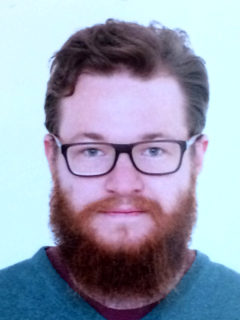
Christian Heidorn is a Researcher at the Chair of Computer Science 12 (Hardware-Software Co-Design) within the Department of Computer Science at Friedrich-Alexander University Erlangen-Nürnberg (FAU), Germany. He has held this position since 2018 and teaches "Fundamentals of Computer Engineering" regularly across multiple semesters. His educational background includes an M.Sc. in Medical Engineering (2015-2018) and a B.Sc. in Medical Engineering (2012-2016), both from FAU. Born in 1989 in Dachau, Germany, he maintains an office in Room 02.128 at Cauerstr. 11, Erlangen. Dr. Heidorn's research focuses on the Application of Deep Learning on Tightly Coupled Processor Arrays and Invasive Computing . His work bridges medical engineering with computer architecture, particularly emphasizing neural network deployment on specialized hardware. His research projects include OpTC and KISS Invasive Computing, which optimize neural networks for embedded systems and processor arrays. His recent publications demonstrate a strong trend toward efficient neural network deployment on embedded systems, with emphasis on automotive applications (AURIX microcontrollers), hardware-aware neural network pruning, and processor array optimization. His work spans both theoretical neural architecture search and practical implementations for real-world applications. His notable scientific contributions include: Development of the OpTC toolchain for neural network deployment on automotive microcontrollers Hardware-aware evolutionary filter pruning techniques for CNNs ALPACA: An accelerator chip design for nested loop programs Efficient mapping of CNNs onto tightly coupled processor arrays Dr. Heidorn has supervised numerous Master's and Bachelor's theses on topics ranging from neural network compression to robotic hand control using EMG data and processor array optimization. His advising reflects his dual expertise in medical engineering and computer architecture, with many projects focusing on practical embedded applications of deep learning. He is actively involved in research projects related to invasive computing and tightly coupled processor arrays, with a particular focus on making deep learning more accessible on resource-constrained devices for automotive and medical applications.
Samuel Zeitlerمشاهده پروفایل
پژوهشگر
Samuel Zeitler, M.Sc., is a Research Associate at the Chair of Automatic Control within the School of Engineering and Design at the Technical University of Munich (TUM). His work focuses on trajectory planning in automated driving and control engineering applications. He is based in Garching bei München, Germany, and contributes to teaching and research in systems theory and mechatronics. Education: M.Sc. in Munich (2024) B.Sc. at the University of Bayreuth (2021) Research Interests: Samuel specializes in control engineering, with a focus on automated driving systems, trajectory planning, and nonlinear control strategies. His work intersects with mechatronic systems and energy-based modeling techniques. Teaching Contributions: He supports lectures and practical courses at TUM, including "Modern Methods of Control Engineering 2," "Controller Implementation on Microcontrollers," and experiments like the "Multi-tank system" in the summer semester. Laboratory Affiliation: Samuel is part of the Chair of Automatic Control (Prof. Boris Lohmann) at TUM, which engages in advanced research topics such as parametric control, model order reduction, and port-Hamiltonian systems.
- Wireless Sensor Networks
- Mobile Systems
- Robotics
- +۴ مورد دیگر
Prof. Dr.-Ing. Mario Neugebauer is a faculty member at the Faculty of Computer Science/Mathematics at Dresden University of Applied Sciences (HTW Dresden). His teaching areas span fundamental programming, database systems, mobile networks, and communication technologies. Research Focus: Off-road navigation, wearable systems for production/logistics, localization systems, and mobile sensor devices. Thesis Topics: Image analysis for bird conservation, shadow detection on wind turbines, bat monitoring, and mission planning for autonomous robots. Technologies: Rust, ROS2, Kotlin/Spring Boot, Python, Raspberry Pi, C/C++ for microcontrollers, and IEEE 802.15.4 protocols. Teaching Responsibilities: Courses include Programming I/II , Mobile Networks , and Business Informatics and Digitization for Informatik, Medieninformatik, and Umweltmonitoring programs.

- Real-Time Systems
- Embedded Systems
- Virtualization
- +۴ مورد دیگر
Daniele Ottaviano is a Researcher at the Technical University of Munich (TUM) , affiliated with the Faculty of Mechanical Engineering and the Chair of Cyber-Physical Systems in Production Engineering . His work focuses on real-time virtualization , mixed-criticality systems , and embedded systems , particularly in optimizing memory hierarchies and managing heterogeneous processing elements including FPGA-based architectures . Education : Ph.D. in Fusion Science and Engineering (University of Padua & University of Naples Federico II, 2025), M.Sc. in Computer Engineering (University of Naples Federico II, 2021), B.Sc. in Computer Engineering (University of Naples Federico II, 2019). Prior Role : Visiting Researcher at Boston University's Cyber-Physical Systems Lab (2023-2024). His research investigates cache partitioning techniques , real-time virtualization for MPSoCs , and FPGA integration to enhance performance, isolation, and predictability in embedded systems. Publications highlight contributions to hypervisor optimization , container orchestration , and virtualization frameworks for mixed-criticality environments.
Christopher Ringhofer serves as a Researcher and PhD candidate at the Intelligent Embedded Systems department within the Faculty of Engineering and Computer Science at the University of Duisburg-Essen since April 2020. His work focuses on developing energy-efficient AI solutions for embedded platforms with current projects funded by the German Federal Ministry of Education and Research. He earned his BSc in Applied Informatics (2017) and MSc in Distributed Dependable Systems (2020) from the same institution, following three years of industry experience in IoT development at ithinx GmbH. His doctoral research centers on automated neural architecture search for signal processing on constrained devices. Ringhofer's research explores evolutionary algorithms for constructing latency-optimized neural networks targeting microcontrollers and embedded FPGAs, with primary applications in digital audio processing for studio/live environments. His work bridges hardware constraints with deep learning requirements through techniques like precomputed convolutional layers and hardware-aware NAS. He actively contributes to academic instruction through the Bachelor's course 'Embedded Systems' and specialized student projects on 'AI-based Neurosignal Processing', maintaining consistent teaching involvement since Winter Semester 2020/21. Current research projects include 'TransfAIr: Transfer Approaches for Artificial Intelligence in Industry' (since May 2024) and previous work on 'LUTNet' and 'KI-LiveS' initiatives. His technical contributions focus on the IoT Garage infrastructure and Elastic AI ecosystem development for pervasive computing environments.
Jürgen Teich is a Professor at the University of Erlangen-Nuremberg, Department of Computer Science. His research focuses on computer architecture, embedded systems, and hardware-software co-design, with particular emphasis on energy-efficient and sustainable computing. He leads projects involving FPGA-based accelerators, neural networks on microcontrollers, and real-time systems optimization. His work spans topics such as approximation computing, MPSoCs (Multiprocessor Systems-on-Chip), and IoT device architectures. Key contributions include methodologies for optimizing resource allocation in heterogeneous systems and developing energy-harvesting solutions for embedded systems. Teich has authored numerous publications in top-tier conferences and journals, including DATE, FPL, and ACM Transactions. His research often collaborates with industry partners, emphasizing practical applications and open-source hardware.
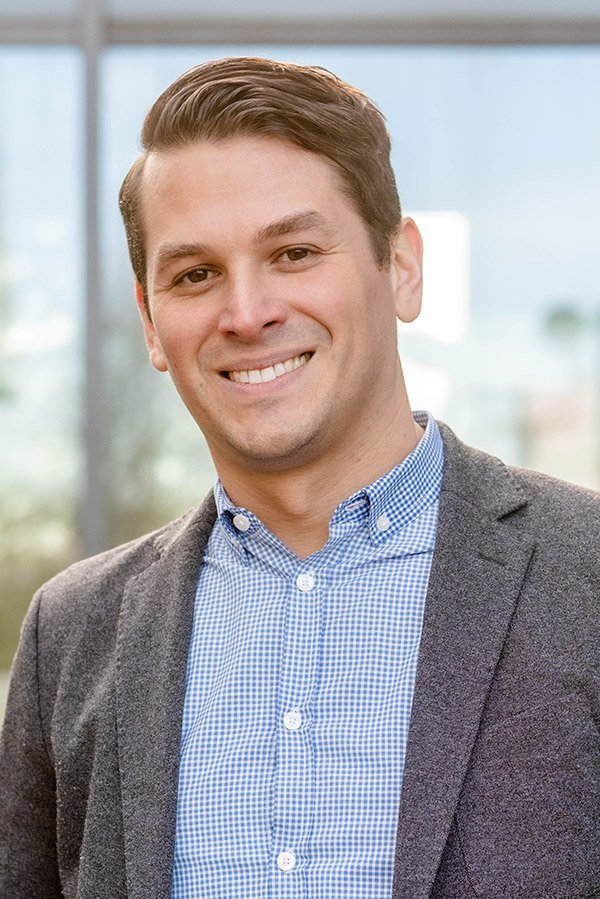
Prof. Christian Zenger is a Junior Professor at Ruhr University Bochum's Faculty of Electrical Engineering and Information Technology, leading the Secure Mobile Networking department. He co-founded PHYSEC GmbH in 2015, developing anti-tamper radio technology for IoT security, recognized with awards from MIT, BMWi, and ECSO. His academic roles include previous positions as a Lecturer and Post-Doc researcher at Ruhr University, alongside board memberships and advisory roles in cybersecurity and water management sectors. Education: PhD in Electrical Engineering (Ruhr University Bochum, 2013–2017) Research: Focuses on IoT security, wireless systems, nuclear disarmament, and start-up ecosystems. His work bridges academic research with industrial applications, highlighted by PHYSEC's commercial success. Publications: Over 30 peer-reviewed articles since 2013, emphasizing physical-layer security, 6G vulnerabilities, and tamper detection mechanisms. Notable recent work includes anti-tamper radio systems and reconfigurable intelligent surfaces. Awards: MIT Award (2023), BMWi Innovation Prize (2022), and ECSO Security Excellence Award (2021). Advisory Roles: Member of Competence Center Digital Water Management’s Advisory Board and Cube 5’s Technical Board, reflecting his interdisciplinary impact. His lab, Secure Mobile Networking, collaborates with the Horst Görtz Institute for IT Security and promotes start-up culture through academic mentorship.
- Computer Science
- Education Technology
- Informatics
- +۴ مورد دیگر
Jacqueline Anthes is a Lecturer and subject leader for computer science at RWTH Aachen University. She works within the Teaching and Research Area Team (Informatik 9 – Learning Technologies), located at the Informatikzentrum (Building E2, Room 6305, Ahornstr. 55, Aachen). Research Focus: Learning Technologies, computer science education, and digital tools for civic engagement. Key Projects: Development of 'AnimalSim' using microcontrollers and 3D printing for educational purposes; integration of informatics tools in democratic education initiatives. Contact: Phone +49 241 80 21938 | Email anthes@informatik.rwth-aachen.de
- Robotics
- Autonomous Systems
- Machine Learning
- +۳ مورد دیگر
Prof. Dr. Ulrich Schrader serves as a Professor in the Faculty of Computer Science and Engineering at Frankfurt University of Applied Sciences, where he has been affiliated since 1998. He is a core member of the FUTURE AGING Research Center dedicated to developing autonomous mobile assistance robots that empower elderly individuals and people with disabilities to live independently through advanced task execution systems. His research spans critical robotics domains with practical healthcare applications: Autonomous navigation in variable and unstructured environments Independent gripping and handling of objects using robot arms Intelligent sensors and image processing for environmental perception Learning systems and machine decision-making frameworks Human-robot interaction design principles Prof. Schrader teaches specialized courses including Autonomous Intelligent Systems, Embedded Intelligent Systems, Robotics and autonomous systems, and Microcontroller technology, directly translating his research into educational practice. His work emphasizes real-world implementation of robotic solutions for assisted living, focusing on unstructured environment adaptability and user-centered interaction design.

Prof. Michael Reke is a Professor at the Institute for Mobile Autonomous Systems and Cognitive Robotics (MASKOR) within Aachen University of Applied Sciences' Department of Electrical Engineering and Information Technology. He chairs the Audit Committee and teaches courses on vehicle software, digital technology fundamentals, and functional safety (ISO 26262). His research focuses on autonomous driving, mining automation, V2X communication, and sensor systems, with a strong emphasis on practical applications through projects like the modified KIA Niro autonomous vehicle. His work bridges academic research with industry needs, addressing challenges in safety, embedded systems, and real-world implementation. Research interests include autonomous vehicle navigation, fleet management in unstructured environments (e.g., mining), and the integration of advanced sensor technologies like LiDAR. He collaborates with industry partners such as ETAS GmbH and APIS Informationstechnologien to develop tools and methodologies for automotive software development. His teaching modules emphasize hands-on laboratory work, including model-based design, microcontroller programming, and functional safety protocols. Key publications from 2020-2024 explore topics like operational design domains, teleoperation systems, and lifelong mapping approaches for autonomous systems. His work addresses both technical and legal challenges in deploying autonomous vehicles, emphasizing practical solutions for industry adoption. No scientific awards are explicitly mentioned, though his contributions to automotive engineering education and research are highlighted through ongoing projects and curriculum development.