معرفی
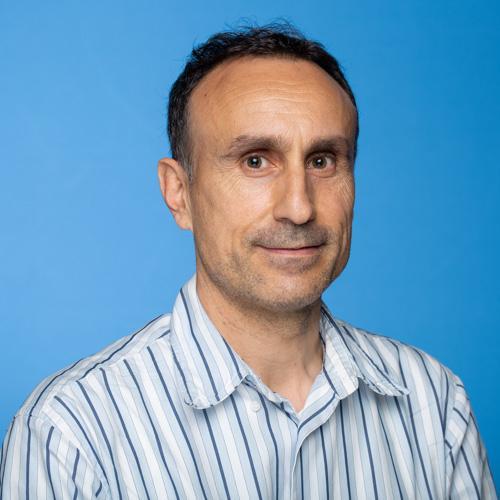
Christian Heidorn is a Researcher at the Chair of Computer Science 12 (Hardware-Software Co-Design) within the Department of Computer Science at Friedrich-Alexander University Erlangen-Nürnberg (FAU), Germany. He has held this position since 2018 and teaches "Fundamentals of Computer Engineering" regularly across multiple semesters.
His educational background includes an M.Sc. in Medical Engineering (2015-2018) and a B.Sc. in Medical Engineering (2012-2016), both from FAU. Born in 1989 in Dachau, Germany, he maintains an office in Room 02.128 at Cauerstr. 11, Erlangen.
Dr. Heidorn's research focuses on the Application of Deep Learning on Tightly Coupled Processor Arrays and Invasive Computing. His work bridges medical engineering with computer architecture, particularly emphasizing neural network deployment on specialized hardware. His research projects include OpTC and KISS Invasive Computing, which optimize neural networks for embedded systems and processor arrays.
His recent publications demonstrate a strong trend toward efficient neural network deployment on embedded systems, with emphasis on automotive applications (AURIX microcontrollers), hardware-aware neural network pruning, and processor array optimization. His work spans both theoretical neural architecture search and practical implementations for real-world applications.
His notable scientific contributions include:
- Development of the OpTC toolchain for neural network deployment on automotive microcontrollers
- Hardware-aware evolutionary filter pruning techniques for CNNs
- ALPACA: An accelerator chip design for nested loop programs
- Efficient mapping of CNNs onto tightly coupled processor arrays
Dr. Heidorn has supervised numerous Master's and Bachelor's theses on topics ranging from neural network compression to robotic hand control using EMG data and processor array optimization. His advising reflects his dual expertise in medical engineering and computer architecture, with many projects focusing on practical embedded applications of deep learning.
He is actively involved in research projects related to invasive computing and tightly coupled processor arrays, with a particular focus on making deep learning more accessible on resource-constrained devices for automotive and medical applications.