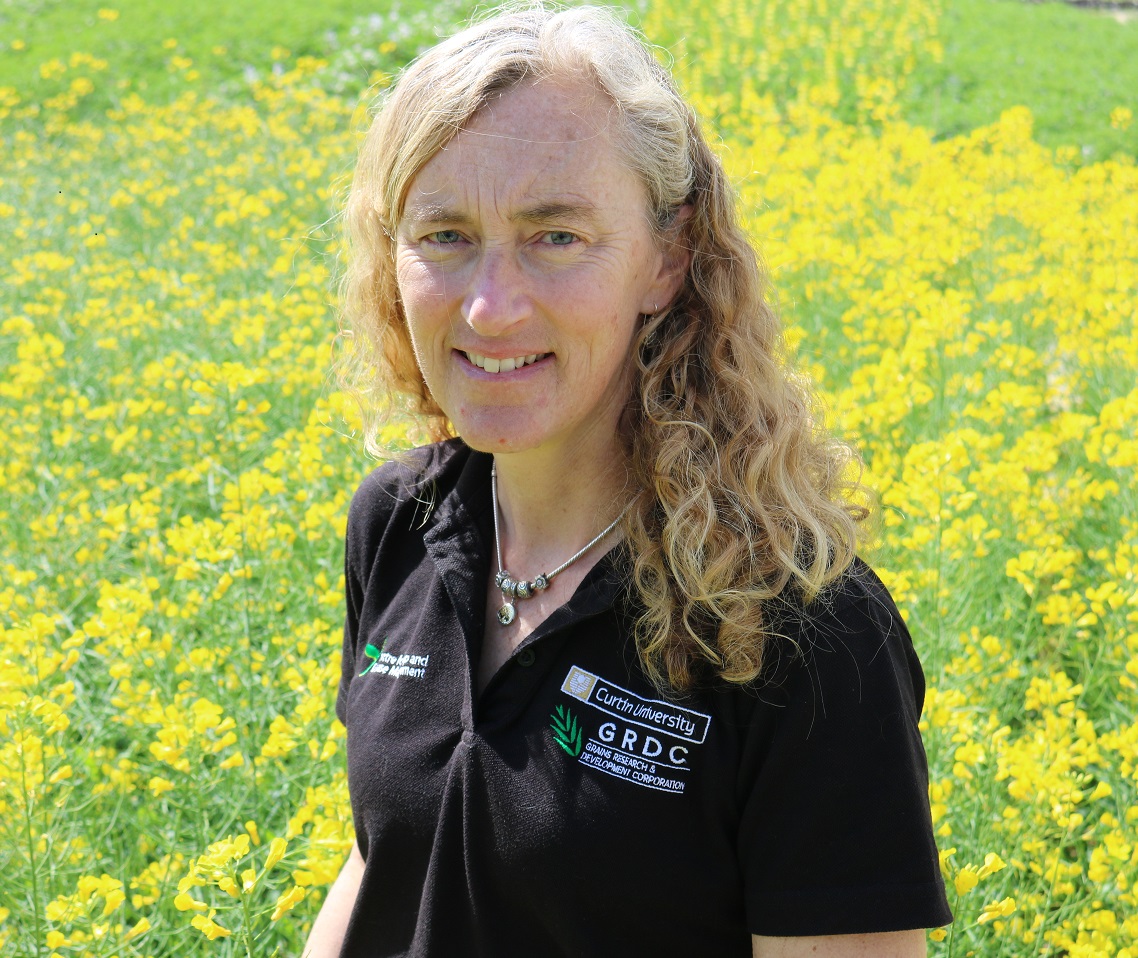
Leslie A. Weston is a Professor at Charles Sturt University (CSU) and a key figure at the Gulbali Research Institute, where she leads pioneering research in plant sciences, natural products chemistry, and sustainable agriculture. Elected as a Fellow of the Australian Academy of Science (FAA) in 2023, her work integrates chemical ecology, metabolomics, and plant physiology to understand plant-microbe-herbivore interactions in the rhizosphere. She leads major multidisciplinary projects, including the $270M Cooperative Research Centre on Marine Bioproducts, advancing applications in agrichemicals, nutraceuticals, and biocontrol. PhD in Horticulture and Natural Products Chemistry, Michigan State University, 1987 MS in Horticulture, Michigan State University, 1982 BS in Plant Sciences, Cornell University, 1980 Her research centers on secondary plant metabolites, allelopathy, and the biosynthesis and regulation of bioactive compounds in root exudates. She employs cutting-edge techniques like mass spectrometry and chemometrics to study plant defense mechanisms and microbial transformation of allelochemicals. Her work has led to the development of bioherbicides, competitive crop cultivars, and sustainable weed and pest management systems using biocontrol agents such as dung beetles. The most recent publications reflect a strong focus on metabolomic profiling of plant-microbe interactions, benzoxazinoid dynamics in wheat rhizospheres, volatile-mediated insect behavior, and economic modeling of weed-suppressive crops. These works highlight interdisciplinary trends combining analytical chemistry, agronomy, entomology, and data science to solve real-world agricultural challenges. Fellow of the Australian Academy of Science (FAA), 2023 Molisch and Grodzinsky Award for Outstanding Lifetime Research Achievement, 2005 NSW OMSR Life Sciences Research Fellowship, 2008–2012 Editor's Choice Article for The Year 2022, awarded 2023 Outstanding Publication Award, 2017 Professor Weston actively supervises HDR students and has served on examination panels for PhD theses on topics such as seed contamination in sheep and photosensitisation. She has secured significant research grants, including participation in the $270M Marine Bioproducts CRC. Her collaborations span Australia, the USA, France (Aix-Marseille University), and Poland (Warsaw University of Life Sciences). Her research contributes to UN Sustainable Development Goals related to responsible consumption, life on land, and zero hunger. She leads a dynamic research team focused on chemical and microbial diversity in the rhizosphere, bioherbicide development, and integrated pest management. The team includes collaborators such as Paul A. Weston, Gurusinghe, Rebetzke, Gurr, and Quinn, and works closely with industry partners and government agencies to translate research into practical farming solutions.