معرفی
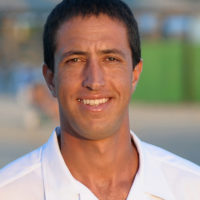
Eyal Frank is an Assistant Professor at the Harris School of Public Policy at the University of Chicago, where he works at the intersection of environmental economics and conservation. He is also an NBER Faculty Research Fellow, a CERP Research Affiliate, and an affiliated faculty member at the Energy Policy Institute (EPIC) at the University of Chicago. His research addresses three core questions: how natural inputs (particularly animals) contribute to production functions, how market dynamics reduce natural habitats and wildlife populations, and what the indirect costs of conservation policies are.
Frank's educational background includes a Ph.D. in Sustainable Development from Columbia University (2017), an M.A. in Economics from the Hebrew University of Jerusalem (2012), and a B.S.c. in Environmental Science & Economics from the same institution (2010). Prior to joining the University of Chicago in 2018, he was a postdoctoral research associate at Princeton University's Woodrow Wilson School (2017-2018).
His research employs natural experiments from ecology and policy combined with econometric techniques to estimate the social costs of biodiversity losses. His work has demonstrated significant connections between ecosystem disruptions and human welfare, including how bat population declines lead to increased pesticide use and infant mortality, and how vulture population collapses in India resulted in increased human death rates.
Frank's publications span top journals including Science, American Economic Review, and Science Advances, with recent work focusing on climate change impacts on dairy production, the effectiveness of conservation ballots, and the economic impacts of species protection policies. His research has garnered significant media attention globally, appearing in outlets such as The New York Times, The Washington Post, BBC, and The Guardian.
His work demonstrates that ecosystem disruptions have meaningful social costs that often extend beyond environmental concerns to affect human health, agricultural productivity, and economic outcomes. By quantifying these costs, his research provides critical evidence for optimal investments in species conservation and rehabilitation.