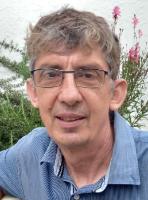
Brendan Wilhelmiمشاهده پروفایل
مدرس ارشد
- Aquaponics
- Biochemistry
- Microbiology
- +۵ مورد دیگر
Prof Brendan Wilhelmi is a Senior Lecturer in the Department of Biochemistry and Microbiology at Rhodes University, South Africa. With a career spanning over two decades, his expertise encompasses aquaponics, microbial ecology, enzyme-nanoparticle interactions, and environmental biotechnology. He previously held academic positions at the University of Fort Hare (2002), Technikon Witwatersrand (1999-2001), and the National Horseracing Authority of Southern Africa Laboratory (1997-1999, 1991-1993). Rhodes University (2009-present) University of Fort Hare (2002) Technikon Witwatersrand (1999-2001) National Horseracing Authority of Southern Africa Laboratory (1997-1999, 1991-1993) His research focuses on biochemical markers in soilless plant growth systems , utilizing metabarcoding and metabolomic approaches to study microbiome roles in aquaponics. Key projects include seasonal microbial diversity assessments, probiotic applications, and DNA barcoding for species identification. Publications emphasize aquaponic systems, nanoparticle-biochemistry interactions, and enzymatic studies in environmental and biomedical contexts. Recent publications highlight interdisciplinary trends in microbial community analysis , nanoparticle toxicity , and plant-fish ecosystem dynamics . He supervises active research on aquaponics microbiology and has graduated numerous MSc and PhD students specializing in topics spanning from nanoparticle neurotherapeutics to forensic entomotoxicology . He teaches core modules including Advanced Metabolism , Scientific Writing , and Biochemistry Building Blocks , while serving as Honours coordinator. Affiliations include Nelson Mandela Hall Fellow (2016-present) and leadership roles in departmental management (2013-2017 Head of Department of Biochemistry and Microbiology). Labs and teams: Leads research in aquaponics systems within the soilless plant growth research group, collaborating with microbiologists, chemists, and environmental engineers to optimize sustainable agricultural practices.