معرفی
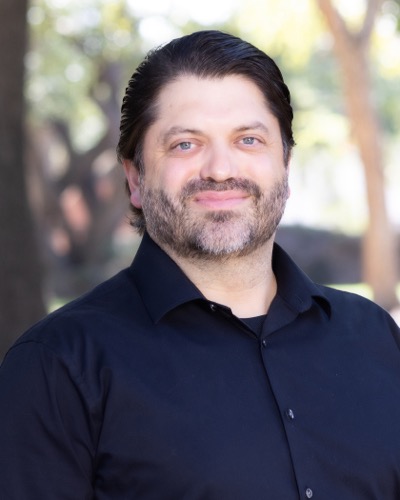
Henrik Krehenwinkel is a Full Professor (W3) in the Department of Biogeography at the University of Trier, Germany. His research integrates genomic tools with field and lab experiments to study biological responses to global environmental change, focusing on arthropod communities in Europe and Pacific islands, particularly Hawaii.
- Employment history: Full Professor at Trier (2022–present), Assistant Professor (2018–2022), Postdoctoral Researcher at UC Berkeley (2015–2018), and Max Planck Institute (2014).
- Education: PhD in Evolutionary Genetics (2013), Diploma in Biology (2009) from Ruhr University Bochum, and studies in Molecular Ecology at IISc Bangalore (2008).
Research Interests center on evolutionary adaptation, ecological community dynamics, and environmental DNA (eDNA) applications. Key project themes include retrospective biodiversity analysis, rapid field detection tools, agricultural pest monitoring, and eco-evolutionary responses of metaorganisms. His lab also investigates extreme sexual selection in spiders and invasive species biosecurity.
Publications highlight genomic approaches to biodiversity monitoring, including eDNA from archived herbaria, molecular gut content analysis, and third-generation sequencing for taxonomy. Awards include the Konrad Thaler Dissertation Prize (2016), DFG Postdoctoral Fellowship (2015–2017), and summa cum laude distinctions.
Teaching includes courses on Molecular Biogeography, Tropical Biodiversity Excursions (India/Hawaii), and Biology of Arachnids/Fishes. He leads environmental specimen bank projects and develops user-friendly eDNA detection systems for agricultural applications.