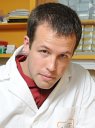
Dr. Rachel Rosenberg Goldstein is an Assistant Professor in the Department of Global, Environmental, and Occupational Health at the University of Maryland School of Public Health. She directs the WOW (Water quality, Outreach, and Wellness) Lab, conducting community-engaged research on water safety and environmental health equity. Research examines: Microbial safety of alternative water sources (rainwater harvesting) Health impacts of sanitary sewer overflows and septic failures Environmental justice dimensions of water infrastructure Science communication for community action As co-project director for CONSERVE Center, she develops extension strategies for sustainable water reuse in agriculture. Her interdisciplinary approach integrates microbiology, risk assessment, and participatory methods to address water contamination.
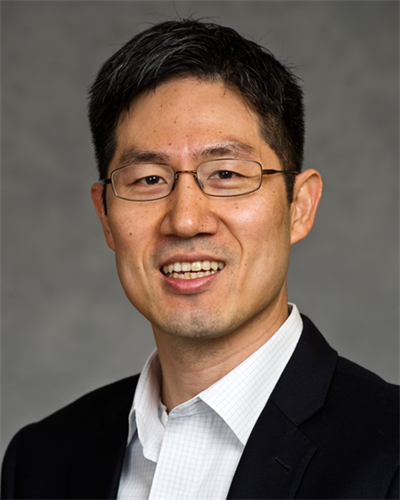
Stephen Brown is an Associate Professor at Queen’s University, jointly affiliated with the School of Environmental Studies and the Department of Chemistry. His expertise lies in developing innovative environmental analysis methods, particularly for detecting small organic contaminants in aqueous samples. He specializes in optical sensor technology and enzyme-based assays, focusing on sensitivity and selectivity in environmental monitoring. His research integrates instrument design, biochemical detection methods, and field applications to address real-world environmental challenges. Dr. Brown holds a B.Sc. (1985) from Dalhousie University, an M.Sc. (1988) and Ph.D. (1992) from the University of Toronto. His work emphasizes practical solutions for water quality assessment, including wastewater surveillance, microbial source tracking, and oil toxicity evaluation. Recent projects include analyzing groundwater contamination patterns, SARS-CoV-2 monitoring in wastewater, and risk assessments for private well users. His research trends reflect a focus on interdisciplinary approaches, combining big data analytics, machine learning, and environmental chemistry. Key themes include improving detection accuracy in dynamic systems, understanding microbial interactions in contaminated environments, and advancing sensor technology for field deployment. He also explores public health dimensions, such as consumer risk perception and behavioral responses to water quality issues. Dr. Brown’s contributions span academic publications, patents (e.g., on switchable ionic strength water and optical sensors), and collaborations with environmental agencies. His lab in Chernoff Hall develops cutting-edge tools for environmental analysis, including enzyme immobilization techniques and fiber-optic sensor systems. His work addresses critical challenges in environmental health and sustainability, with implications for policy and community resilience.
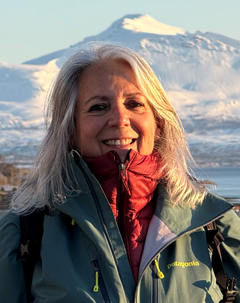
Mark van der Giezen is a Professor of Biological Chemistry at the University of South-Eastern Norway, affiliated with the Faculty of Science and Technology and the Department of Chemistry, Life Sciences and Environmental Technology. His research focuses on microbial interactions with hosts, particularly in gut environments, and their implications for human and animal health. Key areas include pathogen biology (e.g., Giardia, Entamoeba, Blastocystis), food security through livestock and fisheries pathogen studies (Aphanomyces, Fasciola hepatica), and collaborations with institutions like the National Lobster Hatchery and Cefas to study lobster microbiome health. He has published in high-impact journals such as Nature and Current Biology, with work on anaerobic adaptations and novel pathogens in crustaceans. Education details are not explicitly stated in the provided text. His research integrates biochemistry, genomics, and microbial ecology, addressing topics like anaerobic energy metabolism, host-microbe symbiosis, and the role of microbiomes in health and disease. Current projects include understanding microbial responses to low oxygen conditions and developing drug targets against gut pathogens. His work on crayfish plague (Aphanomyces astaci) and lobster pathogens has advanced diagnostic methods, while collaborations on microbiome influences on epigenetics and cardiovascular health highlight interdisciplinary approaches. He leads projects on the lobster gut microbiome and has discovered new pathogens affecting European lobster populations. Despite no explicitly listed awards, his contributions to microbial evolution and anaerobic biology are internationally recognized. Grant and advising details are not provided, but his lab’s focus on aquatic and terrestrial pathogen systems suggests active research funding. The lab collaborates globally, emphasizing applied microbiology for food security and environmental health.
Jojy John is a Post Doctoral Fellow at Clemson University's Department of Biological Sciences within the College of Science. He holds a Ph.D. in Microbial Ecology from SIST, Chennai, India, and has expertise in OMICs technologies and environmental microbiology. Education: Ph.D., Microbial Ecology, SIST, India (2021) M.Sc., Microbiology, MG University, India (2014) B.Sc., Microbiology, MG University, India (2012) Jojy's research focuses on microbial ecology, particularly how microbes interact with ecosystems through OMICs methods. Current work explores functional redundancy in microbiomes using multi-OMICS and mathematical modeling, with applications in marine environments, bioremediation, and extremophile adaptation. His recent publications highlight trends in microbial ecology across diverse areas: deep-sea biodiversity analysis (2025), microplastics in ocean sediments (2025), and halophilic bacterial applications in biotechnology (2020). Studies span environmental stress responses in aquatic organisms (2020, 2017), bioremediation of synthetic dyes (2020), and nitrogen pollution management (2020). Research Group: Collaborates with the Campbell Lab at Clemson University.
Summary Prof. Tim Kacprowski is a Professor and Head of Data Science in Biomedicine at the Peter L. Reichertz Institute for Medical Informatics (PLRI), jointly affiliated with TU Braunschweig and Hannover Medical School. His research focuses on integrating computational methods with biomedical challenges, particularly in network medicine, federated learning, and alternative splicing analysis. Key projects include the development of the NeDRex platform for drug repurposing and the FeatureCloud framework for privacy-preserving federated learning in healthcare. Research Interests His work spans multiple domains: Network Medicine: Leveraging molecular networks for disease module identification and drug discovery. Data Science: Advanced analytics for biomedical data, including ECG monitoring, microbiome studies, and flow cytometry. Federated Learning: Developing decentralized AI systems to protect patient data while enabling collaborative research. Alternative Splicing: Investigating splicing patterns in diseases like cancer and kidney disorders. Publications Trends Recent publications emphasize tools for drug repurposing (NeDRex-Web), ethical AI in clinical decision-making, and microbiome dynamics in chronic diseases. His work bridges computational methods with clinical applications, addressing challenges in precision medicine and healthcare technology. Labs & Collaborations As head of the Data Science group at PLRI, he leads interdisciplinary teams advancing biomedical informatics. Collaborations span institutions in Germany and internationally, focusing on translational research and AI-driven healthcare solutions.
Dr. Laura Leff is a Professor and Chair at Kent State University's Environmental Science and Design Research Institute. Her research focuses on microbial ecology in aquatic ecosystems, particularly bacterial responses to environmental stressors like urbanization, pollution, and habitat changes. She has held editorial roles for journals including *Applied and Environmental Microbiology* and *Microbial Ecology*, contributing to academic discourse in her field. Dr. Leff earned her Ph.D. from the University of Georgia. Her research projects include studying bacterial communities in acid mine-impacted streams, agricultural streams, and wetlands, using molecular biology and microscopy to explore microbial community structure and function. She investigates topics such as denitrification dynamics, microplastic colonization, and antibiotic resistance in urban stream biofilms. Dr. Leff has secured funding from NSF, NASA, and the EPA. Her work bridges microbiology and ecology, addressing pressing environmental issues like water quality and bioremediation. Recent studies highlight her focus on emerging contaminants, microbial interactions in biofilms, and the impacts of human activities on freshwater ecosystems. Key Affiliations: American Society for Microbiology, International Society for Microbial Ecology. Grants: NSF, NASA, EPA grants for projects on microbial ecology and bioremediation. Editorial Roles: *Applied and Environmental Microbiology* (2001–2011), *Microbial Ecology* (2001–2017).
Kathryn Docherty is a Professor in the Department of Biological Sciences at Western Michigan University. Her research focuses on microbial ecology and restoration ecology, particularly examining how human activities impact microbial community diversity and functionality. She leads projects on prairie restoration, soil carbon storage, and microbial processes in ecosystems. Her work integrates field sampling, sequencing, and rate measurements to guide land management practices. She advises graduate students through her lab group, accessible via her research website. Research Interests: Her studies emphasize microbial responses to environmental changes, including fire, nitrogen deposition, and climate shifts. She explores strategies to enhance soil health and ecosystem resilience through microbial restoration. Her lab also investigates airborne microbial dynamics and urbanization impacts. Publications: Recent work highlights microbial responses to prairie restoration, fire effects on soil communities, and collaborative frameworks for ecological observatories. Her articles address topics like soil carbon dynamics under climate change and microbial adaptation to environmental stressors. Advising & Grants: Docherty mentors students pursuing PhD/Master’s degrees in microbial ecology. Her lab collaborates on projects like the National Ecological Observatory Network (NEON), focusing on microbial roles in ecosystem processes. Labs/Teams: The Docherty Microbial Ecology Lab (docherty_microecolab) actively researches microbial ecology and restoration strategies, with findings published in journals like Microbiome and Global Change Biology .
Dr. Kendall Kahl is Assistant Professor and Extension Specialist in Sustainable Organic Agriculture within the University of Idaho's College of Agricultural and Life Sciences. Her research program examines soil biological communities and ecosystem functions to advance sustainable farming practices in Pacific Northwest dryland systems. Research investigates earthworm ecology as soil health indicators, fungal community responses to tillage regimes, and integrated weed management strategies for organic production. Extension activities translate findings to agricultural stakeholders through field demonstrations and soil health monitoring protocols.
Associate Professor Mohammad Katouli is an academic at the University of the Sunshine Coast (UniSC), Queensland, Australia, holding a position in the School of Science, Technology and Engineering and the Department of Microbial Ecology. He earned his PhD from the UK and a BSc from Tehran, Iran. His research spans medical microbiology, infectious disease pathogenesis, and microbial ecology, with a focus on E. coli, antibiotic resistance, and environmental health. He has supervised over 84 students (45 Honours, 39 PhD/Master's) and authored 169 peer-reviewed articles and 87 conference proceedings. Education: PhD in Medical Microbiology, United Kingdom BSc in Microbiology, Tehran, Iran Research Interests: Molecular pathogenesis of bacterial infections (e.g., E. coli sepsis, urinary tract infections) Probiotics' role in gut health and pathogen inhibition Microbial source tracking in surface waters Antibiotic resistance in clinical and environmental settings Host-microbe interactions in inflammatory diseases Notable Contributions: Developed a commercialized biochemical fingerprinting method for microbial epidemiology Established the Microbiology and Biotechnology program at UniSC Recipient of the 1st Prize for Best Original Article in Clinical Nutrition (2005) Advising and Grants: Supervised 45 Honours and 39 postgraduate students. Active in research grants related to microbial source tracking, probiotic efficacy, and hospital wastewater analysis. Labs and Collaborations: Member of the Centre for Bioinnovation at UniSC. Collaborates with national and international institutions on projects like microbial quality of surface waters and gut microbiota dynamics.
Yannick Tremblay is a Lecturer in the Department of Biochemistry, Microbiology & Immunology at the University of Saskatchewan's College of Medicine. His research focuses on bacterial biofilm formation in pathogens such as Clostridioides difficile and Actinobacillus pleuropneumoniae, emphasizing their roles in public health and veterinary medicine. He holds a PhD from Dalhousie University (2010), MSc and BSc from McGill University (2005 and 2003). Education: PhD in Microbiology and Immunology, Dalhousie University, 2010 MSc in Microbiology, McGill University, 2005 BSc (Agriculture) in Microbiology, McGill University, 2003 Research Interests: Prof. Tremblay investigates biofilm mechanisms in pathogenic bacteria, including environmental persistence, antimicrobial resistance, and vaccine development strategies. His work bridges microbiology, veterinary medicine, and public health, with a focus on understanding how biofilms influence pathogen behavior and treatment efficacy. Recent Research Trends: Recent publications highlight Clostridioides difficile biofilm dynamics, including bile salt-induced biofilm formation and metabolic adaptations. He also explores biofilm-derived antigens for vaccine design and the role of microbial interactions in biofilm persistence. Teaching & Mentoring: He has supervised 15 undergraduate and 1 graduate student projects, emphasizing student-led research. His teaching spans undergraduate, graduate, and professional programs in microbiology. Labs & Collaborations: Prior affiliations include the Institut Pasteur (Paris) as a Research Associate (2017–2020) and postdoctoral work at the Université de Montréal. His current lab focuses on biofilm biology and translational applications in infection control.
Kyongbum Lee is the Karol Family Professor and Dean of Engineering at Tufts University School of Engineering, where he also serves as Professor in the Department of Chemical and Biological Engineering. His research integrates metabolic engineering, tissue engineering, and systems biology to study cellular metabolism and develop technologies for biomedical applications. Dr. Lee directs a laboratory focused on host-microbe interactions, cell-based bioprocesses, and metabolic regulation in diseases like obesity. Education Ph.D., Massachusetts Institute of Technology, 2002 B.S., Stanford University, 1995 Research Focus Dr. Lee's group employs systems approaches combining experimental and computational methods to investigate how metabolites regulate cellular communication. Current projects examine gut microbiome interactions, metabolic flux in engineered tissues, and development of therapeutic strategies targeting metabolic disorders. The lab specializes in bioreactor systems, metabolomic profiling, and mechanistic studies of metabolite signaling pathways. Publication Trends Recent publications emphasize gut microbiota metabolism, microbial metabolite therapeutics, and engineered tissue models. Work consistently demonstrates translational focus—from computational prediction of metabolic pathways (e.g., flavonoid biotransformation algorithms) to preclinical validation of microbial metabolites in disease models (e.g., steatosis reduction via indole derivatives). Recurring themes include nuclear receptor modulation, HDAC/IFN-γ pathway regulation, and high-throughput screening platforms. Awards Karol Family Professorship (endowed position recognizing scholarly excellence) Research Operations The laboratory actively recruits postdoctoral researchers and graduate students through Tufts' Chemical and Biological Engineering program. Current projects are supported by specialized infrastructure for metabolomics, bioreactor systems, and 3D tissue culture. The team emphasizes interdisciplinary collaboration, particularly at the interface of engineering, microbiology, and translational medicine.
Dr. Diana Varela is a Professor and Associate Dean for Academic Advising at the University of Victoria, jointly affiliated with the School of Earth and Ocean Sciences and the Department of Biology. Her research program investigates marine primary productivity and nutrient cycling, with a focus on phytoplankton physiology and ecological responses to environmental changes in diverse oceanic regions. She holds a BSc from Universidad Nacional del Sur (Argentina), an MA from Boston University, and a PhD from the University of British Columbia. Dr. Varela's research examines phytoplankton utilization of nitrogen, silicon, and carbon in the context of climate change, particularly in polar ecosystems. Her work combines laboratory experiments with oceanographic fieldwork to understand biogeochemical cycles and diatom responses to stressors like ocean acidification and warming. Her publications reveal consistent themes in climate impacts on marine productivity, with recent work focusing on Arctic and Antarctic phytoplankton dynamics, silicon isotopic fractionation, and innovative methodologies for studying microbial communities. The research demonstrates interdisciplinary approaches spanning biogeochemistry, ecophysiology, and molecular ecology. Dr. Varela leads the Varela Lab, which provides research opportunities for graduate students and collaborators. Her team conducts field campaigns in challenging environments including Antarctic research stations.
Chenjuan Guo is an Associate Professor at the Department of Computer Science, Aalborg University, within The Technical Faculty of IT and Design. She is affiliated with the Data Engineering, Science and Systems group and the AI for the People initiative, and is part of the Daisy - Center for Data-intensive Systems. Her research focuses on machine learning, data engineering, spatio-temporal data analysis, and time series forecasting. Key projects include the Villum Foundation-funded 'Explainable AI for Complex Microbial Community Interactions and Predictions' (2021-2024) and the Astra project on time series analytics in spatial networks (2018-2021). Her research interests span representation learning, autoencoders, path representation, outlier detection, trajectory data analysis, and time series modeling. She has supervised 3 PhD students and contributed to over 60 publications, with a recent emphasis on transformer-based forecasting, neural architecture search, and continuous learning frameworks for spatio-temporal data. Her work bridges theoretical advancements with practical applications in environmental science, cloud computing, and urban mobility systems. Key achievements include developing frameworks like AutoCTS++ for automated time series forecasting and LightGTS for lightweight models. She actively collaborates internationally, contributing to conferences like ECML PKDD and CVPR. Her research is supported by grants from the Villum Foundation and other institutions.
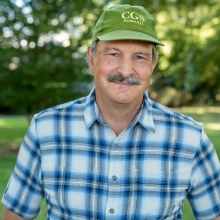
James Myers is a Professor and endowed faculty member in Horticulture at Oregon State University. He develops improved vegetable varieties adapted to the Pacific Northwest, with breeding programs focused on snap beans, peas, broccoli, tomatoes, peppers, and cucurbits. His research addresses crop adaptation to organic systems, nutritional enhancement, flavor improvement, and disease resistance through participatory plant breeding approaches. The program pioneered 'Indigo' high-anthocyanin tomatoes and contributes germplasm for organic production systems. Recent publications demonstrate diverse interests spanning genetics of disease resistance, organic breeding methodologies, domestication effects on plant-microbe interactions, and nutritional quality improvement. His work frequently employs genomic tools like GWAS and QTL mapping. Awards: No scientific awards reported Dr. Myers directs the Northern Organic Vegetable Improvement Collaborative and manages breeding programs supported by industry partnerships. His work engages farmers and chefs through participatory approaches.
Dr. Jennifer Gerke is a Researcher at the Institute of Organic Chemistry within the Faculty of Natural Sciences at Leibniz University Hannover. Her work focuses on microbial secondary metabolism, fungal development, and synthetic biology. She leads research in the Synthetic Biology Group and contributes to interdisciplinary projects in organic chemistry and molecular biology. Her research explores mechanisms of fungal adaptation, including secondary metabolite regulation, transcription factor networks, and plant-microbe interactions. Recent studies highlight novel biosynthetic pathways, pathogen virulence mechanisms, and applications in biotechnology such as fragrance production in yeast. Key contributions include discoveries in tropolone biosynthesis, velvet domain protein functions, and the role of Hülle cells in fungal survival. Her work bridges fundamental research with applied biotechnology, addressing topics from antibiotic discovery to metabolic engineering.