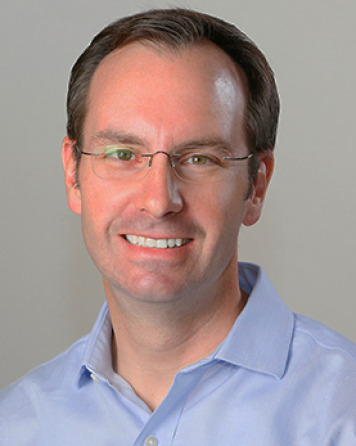
Sara Jordan is a Professor, Graduate Coordinator, and Program Director of the Couple and Family Therapy Program at the University of Nevada, Las Vegas. She is a licensed marriage and family therapist with a focus on advancing solution-focused brief therapy (SFBT) as an evidence-based practice. Research: Pioneering work in SFBT applications for substance abuse treatment, recognized by SAMHSA; expertise in microanalysis of face-to-face dialogue through systematic moment-by-moment examination of communicative behaviors. Scientific Recognition: Her SFBT research has been nationally acknowledged, and she co-founded the International Microanalysis Associates, solidifying her influence in therapeutic dialogue analysis.
Professor Tom Zega is a faculty member at the University of Arizona’s Lunar and Planetary Laboratory, where he has served since 2011. He directs the Planetary Materials Research Group and holds a primary appointment as Professor, leading federally funded investigations into the origin and evolution of the Solar System’s earliest solids. Education: Ph.D. in Geological Sciences, 2003, Arizona State University Research Focus: Dr. Zega couples ultrahigh-resolution ion- and electron-microscopy with computational thermodynamics to decode the chemical and physical histories of planetary materials. His current work concentrates on: Refractory inclusions—the first solids to condense from the solar nebula Sulfides that record nebular and parent-body processes Samples returned by JAXA’s Hayabusa missions to asteroids Itokawa and Ryugu NASA’s OSIRIS-REx samples from asteroid Bennu Astrobiology, examining organic–mineral associations at the nanometer scale Research Trends: Across his 2019-2025 publications, a clear trajectory emerges from fundamental microanalytical method development (e.g., single-standard quantitative EDS) to high-impact studies of pristine astromaterials. The body of work integrates (1) laboratory shock and irradiation experiments, (2) coordinated isotope-microstructure analyses of presolar grains, and (3) comprehensive petrographic surveys of CI- and CM-like Ryugu samples. Collectively, these studies illuminate nebular fractionation, parent-body hydrothermal alteration, and space-weathering pathways. Scientific Awards & Honors: No named awards are listed in the supplied text. Grants & Leadership PI, NASA Laboratory Analysis of Returned Samples (LARS) – Atomic-scale Analysis of Hayabusa Samples PI, NASA PSEF – The Kuiper-Arizona Laboratory for Astromaterials Analysis PI (with Co-Is K. Muralidharan & V. R. Manga), NASA – Characterizing the Role of Solutes and Defects in Refractory Planetary Materials Co-I, NASA New Frontiers – OSIRIS-REx Mission Co-I, Moore Foundation – Next-generation NanoSIMS for Planetary Materials Laboratory & Team The Planetary Materials Research Group operates the Kuiper-Arizona Laboratory for Astromaterials Analysis, housing FIB-SEM, TEM, and NanoSIMS instrumentation. Current staff scientists include Dr. Jerry Chang and Dr. Ken Domanik; former postdocs Jacob Bernal, Shaofan Che, Pierre Haenecour, Prajkta Mane, and Pierre-Marie Zanetta continue to collaborate on joint publications.
Dr. Hugo Dominguez Andrade is a Senior Research Associate at the Interface Analysis Centre, University of Bristol. Holding advanced degrees including an MSc from Vigo, an MSc from Bristol, and a PhD from Bristol, he specializes in materials science with a focus on surface phenomena, thermionic emission, and nuclear energy applications. His work intersects experimental physics, materials engineering, and extreme environment sensing technologies. Education: MSc (Vigo), MSc (Bristol), PhD (Bristol) Key Research Areas: Diamond-based sensors, thermionic energy conversion, plasma-material interactions Recent research outputs highlight his contributions to understanding radiation effects on materials and developing novel energy conversion devices. Active collaborations span nuclear engineering, materials testing, and diamond film technologies. Scientific Awards First Prize Poster Award (2016) Projects Radiation-powered sensors (2017-2021) Thermionic energy converters (2013-2016) Lithium breeding research (2023-2025)
Simon Bensnes serves as a Research Fellow at the Frisch Centre, affiliated with the University of Oslo's Faculty of Social Sciences and Department of Economics. His work bridges academic research and policy implementation through active collaboration with Norwegian government ministries and public institutions. His research focuses on labor market dynamics , social security systems , and education policy , with particular expertise in: Quantitative analysis of welfare reforms using Norwegian register data Gender pay gap decomposition across firms and family structures Pension system incentives and extended working life participation Youth employment interventions and evaluation methodologies Current projects demonstrate strong policy relevance: Leading analysis of the 2025 national pilot scheme for work deductions targeting young adults (20-35 years) Investigating pension reform impacts on public sector labor supply with Øystein Hernæs and Knut Røed Examining child welfare service effects using microdata.no platform Contributing to international research on gender-equal cultural transmission His methodological approach combines: Natural experiment designs using policy discontinuities Unconditional quantile regression for distributional analysis Large-scale register data from Norwegian administrative sources Randomized controlled trial frameworks for policy evaluation Research dissemination occurs through: Peer-reviewed publications in journals like Labour Economics and The Economic Journal Policy reports for Norwegian ministries and parliamentary committees Public engagement via podcasts and media commentary Collaboration with Nordic research networks on labor market issues
Glenn Bark is a Lecturer in the Department of Geosciences and Environmental Engineering at Luleå University of Technology (LTU), where he conducts research on climate change solutions with emphasis on geological carbon storage. He serves as operations manager for LTU's first university-level research infrastructure, the LUMIA (Luleå Material Imaging and Analysis) lab center, and acts as a spokesperson for the Researchers Desk network focused on climate and biodiversity crises. Dr. Bark's research primarily investigates geological storage of carbon dioxide in bedrock (CCS), assessing Sweden's potential for carbon storage in both bedrock formations and mine waste materials. His work involves international collaborations with research groups across Sweden, Iceland, Norway, the USA, and India. Prior to his current climate-focused research, he studied geological processes related to gold ore formation and the occurrence of critical metals in the Earth's crust. His research interests span multiple interconnected domains: Geological Carbon Storage and CCS technologies Ore geology and mineral deposit formation Critical metals and their geological occurrence Mineral carbonation processes Advanced material analysis using imaging techniques Trace metal geochemistry in ancient ecosystems Analysis of his publication record reveals significant contributions across geological sciences and climate change mitigation, with recent work connecting mineralogy with environmental applications. His research bridges fundamental geological understanding with practical climate solutions, particularly in mineral carbonation and waste material valorization. Dr. Bark is actively engaged in science communication, frequently appearing in media outlets like SR Studio One and SVT News to discuss climate solutions. He regularly provides guest lectures for schools and organizations about climate change and mitigation strategies, making complex scientific concepts accessible to diverse audiences. As operations manager for the LUMIA lab center, he oversees the development of advanced analytical capabilities at the university for investigating various materials. This infrastructure supports interdisciplinary research requiring sophisticated material characterization techniques, connecting his geological expertise with broader engineering and environmental applications.
Jean-Sébastien LECOMTE serves as a Research Fellow at LEM3 Laboratory (UMR CNRS 7239), a joint research unit operated by the University of Lorraine, CNRS, and Arts et Métiers. Based in Metz, France, he is affiliated with the IMPACT Department (Department 2) and maintains an active research position as evidenced by the March 2025 page update. His research centers on Materials Science and Mechanics, with specialized focus in Microscopy, Microanalysis, and Material Characterization. The LEM3 Laboratory employs advanced experimental techniques for studying material behavior, leveraging infrastructure co-financed by the European Union to support cutting-edge investigations in material properties and mechanical responses. LEM3 operates through three core departments (MMSV, IMPACT, T-PRIOM) and specialized platforms including MécaRhéo for mechanics/rheology, MicroMat for microscopy, Procédés for industrial processes, and Calcul intensif for high-performance computing. This integrated structure enables comprehensive research from fundamental material analysis to applied engineering solutions.
Rick Verberne is a Research Fellow at the Centre for Star and Planet Formation within the Globe Institute at the University of Copenhagen. His research focuses on advanced geochemical and mineralogical analyses using atom probe tomography to investigate trace element behavior in geological materials. His primary research interests include U-Pb geochronology, trace element mobility in minerals, dislocation structure analysis, and nanoscale mineral characterization. Verberne examines how crystal defects in rutile, monazite, and xenotime influence geothermometry and isotopic dating reliability, with direct applications to metamorphic and igneous petrology. Analysis of Verberne's 2021-2024 publications reveals a cohesive research trajectory centered on atom probe tomography methodology development and its geological applications. His work demonstrates how dislocation networks act as dual-function pathways (facilitating diffusion while trapping trace elements), significantly advancing understanding of U-Pb systematics and Zr-in-rutile thermometry in complex mineral systems. He operates within the Centre for Star and Planet Formation, leveraging specialized facilities for high-resolution mineral analysis and collaborating with international researchers including S.M. Reddy, D. Fougerouse, and D.W. Saxey.
Enza Fazio is a Full Professor in the Department of Mathematical and Computer Sciences, Physical Sciences and Earth Sciences at the University of Messina, specializing in experimental physics of matter and applications (SSD: PHYS-03/A). With over two decades of academic experience, she teaches across multiple degree programs including Physics, Biomedical Engineering, and Environmental Sciences, and serves on the Steering Committee of the Physics Degree Course and PhD Program. Her educational background includes: High School Diploma (1993) - Liceo Scientifico Statale Capo d'Orlando Degree in Physics (1999, 109/110) - University of Messina PhD in Physics (2003) - University of Messina Specialist in Technology Transfer and Innovation (2007) - Polytechnic University of Milan PhD in Advanced Technologies for Optoelectronics and Photonics (2013) - University of Messina Professor Fazio's research focuses on experimental solid-state physics, particularly laser ablation synthesis of nanostructured materials, optical spectroscopy diagnostics of thin films and nanostructures, biomedical applications of Raman spectroscopy, and analysis of failure mechanisms in microelectronic devices. She has developed modular systems for micro-Raman spectroscopy and nonlinear optical spectroscopy, and manages multiple research laboratories focused on optical spectroscopy, nonlinear optics, microanalysis, thin films, and nanomaterials. Her recent publications (2025) demonstrate a strong focus on nanomaterials for biomedical applications, laser processing technologies, environmental remediation, and advanced materials characterization. These works span multiple disciplines including nanotechnology, biomedicine, environmental science, and microelectronics, reflecting her interdisciplinary approach to research. Her notable scientific achievements include: Young Researchers Award from University of Messina (2008) Third place in Start Cup dello Stretto Innovation Award (2008) Italian Representative for IUVSTA in Surface Engineering (2019-2025) Ranked in the top 2% of the world's best researchers by Stanford University (2024) Professor Fazio has directed numerous research projects including the HIPPOCRATES project on micro and nanotechnologies for health, served as Task Manager for the H2020-WInSiC4AP project, and is currently involved in multiple European research initiatives. She holds a patent for 'Innovative biotechnological systems for the detection of cellular or molecular analytes' (2021), demonstrating her commitment to translating research into practical applications. She heads the Optical Spectroscopy Laboratory MNS and Nonlinear Optical Spectroscopy Laboratory at the University of Messina, and oversees the Microanalysis and Thin Film Laboratories and Nanomaterials Laboratory. Her research group collaborates extensively with national and international institutions including CNR-IPCF Messina, CNR-IMM Catania, Polytechnic University of Milan, and international partners in Berlin and Portugal.