معرفی
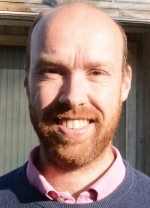
Glenn Bark is a Lecturer in the Department of Geosciences and Environmental Engineering at Luleå University of Technology (LTU), where he conducts research on climate change solutions with emphasis on geological carbon storage. He serves as operations manager for LTU's first university-level research infrastructure, the LUMIA (Luleå Material Imaging and Analysis) lab center, and acts as a spokesperson for the Researchers Desk network focused on climate and biodiversity crises.
Dr. Bark's research primarily investigates geological storage of carbon dioxide in bedrock (CCS), assessing Sweden's potential for carbon storage in both bedrock formations and mine waste materials. His work involves international collaborations with research groups across Sweden, Iceland, Norway, the USA, and India. Prior to his current climate-focused research, he studied geological processes related to gold ore formation and the occurrence of critical metals in the Earth's crust.
His research interests span multiple interconnected domains:
- Geological Carbon Storage and CCS technologies
- Ore geology and mineral deposit formation
- Critical metals and their geological occurrence
- Mineral carbonation processes
- Advanced material analysis using imaging techniques
- Trace metal geochemistry in ancient ecosystems
Analysis of his publication record reveals significant contributions across geological sciences and climate change mitigation, with recent work connecting mineralogy with environmental applications. His research bridges fundamental geological understanding with practical climate solutions, particularly in mineral carbonation and waste material valorization.
Dr. Bark is actively engaged in science communication, frequently appearing in media outlets like SR Studio One and SVT News to discuss climate solutions. He regularly provides guest lectures for schools and organizations about climate change and mitigation strategies, making complex scientific concepts accessible to diverse audiences.
As operations manager for the LUMIA lab center, he oversees the development of advanced analytical capabilities at the university for investigating various materials. This infrastructure supports interdisciplinary research requiring sophisticated material characterization techniques, connecting his geological expertise with broader engineering and environmental applications.