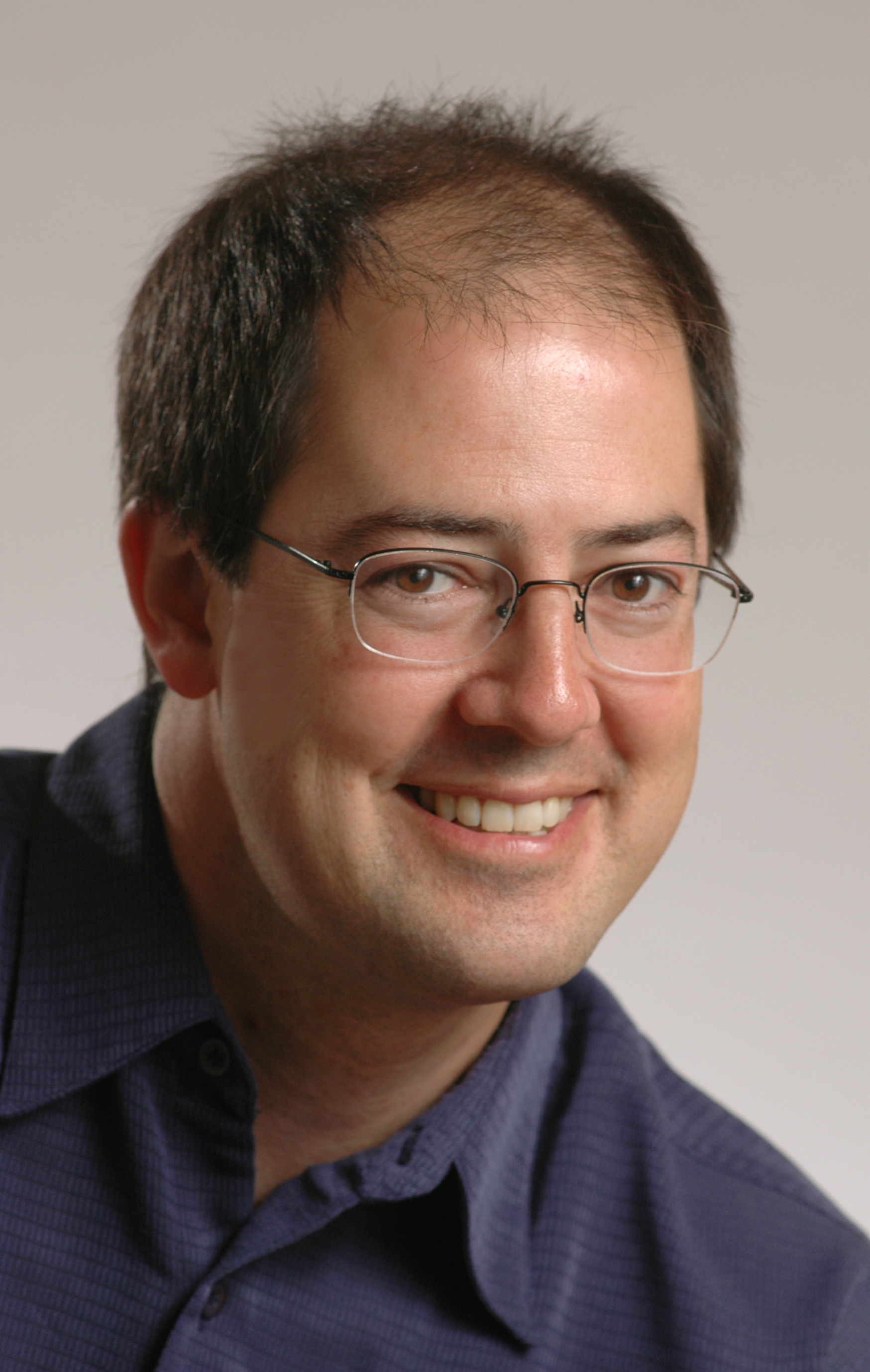
Kristofer Pister is a Professor in the Department of Electrical Engineering and Computer Sciences at the University of California, Berkeley. He co-directs the Berkeley Sensor and Actuator Center (BSAC) and the Ubiquitous Swarm Lab. His career spans groundbreaking innovations in Micro/Nano Electro Mechanical Systems (MEMS), Control Systems, and Low-Power Circuits, with a focus on Smart Dust and synthetic insects. Education: Ph.D. and M.S. in EECS from UC Berkeley (1992, 1989); B.A. in Applied Physics from UC San Diego (1986). His research areas include MEMS , Control Systems , Robotics , and Integrated Circuits , with recent work on self-powered micro-sensors, crystal-free radios, and interplanetary swarm networks. Key awards include the ISA Albert F. Sperry Founder Award (2009) , Alexander Schwarzkopf Prize (2006) , and the NSF CAREER Award (1996) . He has authored numerous influential publications in wireless sensor networks and microrobotics. His lab, Ubiquitous Swarm Lab , explores distributed robotics and swarm intelligence. Pister emphasizes open collaboration in research, ethical conduct in academia, and efficient resource utilization for graduate students.
Prof. Jürgen Rühe is a Full Professor of Chemistry and Physics of Interfaces at the Institute of Microsystems Technology, Albert Ludwigs University of Freiburg, within the Faculty of Engineering. He serves as Deputy Coordinator of Research Area C and Principal Investigator for Research Areas A, B, C, and D. His expertise spans polymers at interfaces, metamaterials, biomedical surfaces, and self-healing materials. He leads the Cluster of Excellence liv MatS, focusing on adaptive and energy-autonomous materials systems. Education: Not explicitly stated in text. His research emphasizes programmable materials, 4D printing, and bioinspired design, with projects funded by the German Research Foundation (DFG). Notable contributions include anti-fog coatings, magnetic microactuators for cell stimulation, and hygromorphic materials for adaptive architecture. He supervises doctoral and postdoctoral researchers, advancing fields like tribology and surface functionalization. Key scientific achievements include developing C,H-insertion cross-linking (CHic) for durable polymer networks and exploring smart materials for biomedical and environmental applications. His work bridges fundamental polymer chemistry with practical applications in energy, healthcare, and sustainable architecture. He advises over ten doctoral students and collaborates with industry partners. His lab, part of the Institute of Microsystems Technology, focuses on micro- and nanostructuring, with projects funded by the Cluster of Excellence.
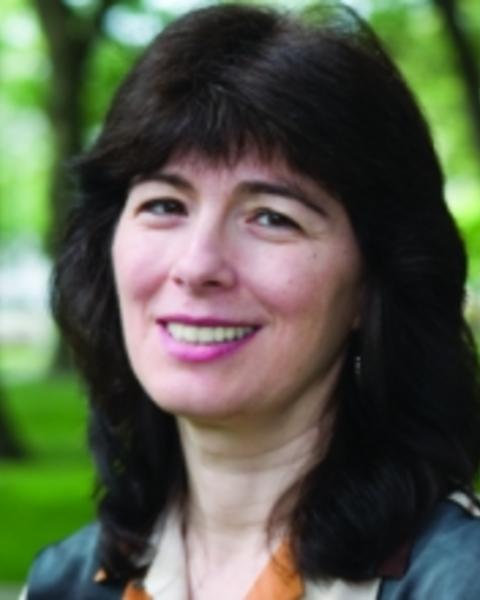
Joanna Aizenberg is the Amy Smith Berylson Professor of Materials Science and Professor of Chemistry and Chemical Biology at Harvard University’s School of Engineering and Applied Sciences (SEAS). She is a Core Faculty Member at the Wyss Institute for Biologically Inspired Engineering and Co-Director of the Kavli Institute for Bionano Science and Technology. Her research focuses on understanding biological architectures and applying these principles to develop advanced synthetic materials and devices. Current Positions: Amy Smith Berylson Professor of Materials Science, Harvard SEAS Professor of Chemistry and Chemical Biology, Harvard Core Faculty Member, Wyss Institute Co-Director, Kavli Institute for Bionano Science and Technology Research Interests: Joanna Aizenberg’s lab explores adaptive materials, biomineralization, surface science, bio-inspired optics, self-assembly, and bio-nano interfaces. The group investigates how biological systems economically design multifunctional, adaptive materials to inspire new synthetic routes and nanofabrication strategies. These advancements aim to impact fields such as architecture, energy efficiency, and medicine. Recent Article Trends: Her recent publications emphasize bio-inspired materials, catalysis, surface engineering, and fluid dynamics. Topics include superhydrophobic coatings, PdAu alloy catalysts, liquid crystal elastomers, and microbial contamination reduction. The interdisciplinary work integrates nanofabrication, computational modeling, and environmental applications. Research Group Members: Kathy Liu Gurminder Paink Haritosh Patel Atalaya Wilborn Garrick Lim
Klas Hjort is a Professor of Materials Science at Uppsala University's Ångström Laboratory , specializing in Microsystems Technology . He leads the microsystems technology program and has pioneered research in heterogeneous microsystems on stainless steel, flexible foils, and elastic substrates for biomedical applications and wireless sensor/actuator systems . Key projects: SSF robotic textiles , PERSIMMON smart patches Research themes: Microfluidic actuation , Liquid metal patterning , Stretchable electronics His recent publications focus on soft robotics , smart patches , and high-pressure microfluidic systems , with keywords spanning Microfluidics , Biomedical Engineering , and Stretchable Electronics . He collaborates extensively in robotic textiles , microvalve design , and liquid metal composites . Contact: klas.hjort@angstrom.uu.se
Dr. Ibrahim Tekin is a Professor at Sabanci University’s Electrical and Electronics Engineering Department. He holds a B.S. and M.S. from Middle East Technical University (1990-1992) and a Ph.D. from The Ohio State University (1997). His career spans research roles at Bell Laboratories (1997-2000) and academic teaching/research. His primary research interests include antenna design, smart antennas, propagation modeling, and geolocation algorithms. He teaches advanced courses like Electromagnetics II , Microwaves , and Antennas and Propagation for Wireless Communication , emphasizing practical applications in RF and microwave systems. Dr. Tekin’s work focuses on 5G mm-wave antenna arrays, full-duplex systems, and MEMS-based RF components. His recent research explores beamforming networks, low-actuation-voltage MEMS switches, and compact antenna designs for 5G applications. He has contributed to over 60 peer-reviewed publications, including journal articles in IEEE Transactions on Antennas and Propagation and Microwave and Optical Technology Letters . His research also addresses indoor positioning systems using GPS signals and RFIC integration challenges. Key technical contributions include innovative antenna array configurations, low-loss RF MEMS switches, and advanced full-duplex architectures. His work bridges theoretical electromagnetics with practical implementations in next-generation wireless communication systems.
Prof. Kwang W. Oh is a tenured Professor at the Department of Electrical Engineering and Department of Biomedical Engineering within the School of Engineering and Applied Sciences at University at Buffalo (SUNY at Buffalo) . He serves as the Director of Graduate Studies in Electrical Engineering and Director of SMALL (Sensors and MicroActuators Learning Lab) . His academic journey includes PhD and MS in Electrical and Computer Engineering from University of Cincinnati (2001, 1997) and BS in Physics from Chonbuk National University (1995). Prof. Oh's research expertise lies at the intersection of microfluidics , BioMEMS , and lab-on-a-chip technologies. His lab has pioneered vacuum-driven microfluidic devices , PDMS-based systems , droplet manipulation , and chemical-free fabrication techniques . His work enables point-of-care diagnostics , single cell analysis , and wearable medical sensors , with significant contributions to sample-to-answer nanosystems and world-to-chip interfacing . The scientific awards section highlights his excellence in teaching and research: SUNY Chancellor's Award for Excellence in Teaching (2020) Meyerson Award for Undergraduate Teaching (2019) Qualcomm Faculty Award (2019) Senior Teacher of the Year (2017) Royal Society of Chemistry's Emerging Investigators (2013) Samsung Electronics' CEO Honor (2003) His lab has produced numerous PhD and MS students including Dr. Anyang Wang (2020), Dr. Nikhila Nyayapathi (2020), Mr. Liam Christie (2021), and Dr. Domin Koh (2019). As a conference chair , he has organized symposia at NanoTech (2012-2026) and served as editorial board member for Sensors , Micromachines , and Biomedical Engineering Letters .
Dr. Ye Wang is an Assistant Professor at the Department of Microsystems , Mechanical Engineering School , Eindhoven University of Technology . Active in UN Sustainable Development Goals related to biomedical technology, their work focuses on magnetic artificial cilia for microfluidic applications. Academic Rank: Assistant Professor University: Eindhoven University of Technology School: Mechanical Engineering Department: Microsystems Research Interests : Fluid dynamics in microsystems, magnetic actuation, biomechanical stimuli response, and biomedical device development. Key areas include programmable artificial cilia, shear-thinning fluid transport, and biofouling prevention through microscale engineering. Scientific Trends : Recent works emphasize cilia-based microfluidic mixing, non-Newtonian fluid dynamics, and organ-on-chip platforms. Collaborative projects with Prof. J.M.J. den Toonder and P.R. Onck dominate current publications. Advising : Supervised multiple student theses on topics ranging from microrheology to microheater reliability. Graduate students include F.W. Boots , M.H.J. Dekkers , and Y.-T. Lan . Projects : Currently involved in Accelerating Innovation in Microfabricated Medical Devices (2020-2023) with focus on continuous monitoring and advanced diagnostics. Scientific Impact : 1231 citations (Scopus) with collaborative networks spanning fluid dynamics, magnetic actuation, and biomedical applications. Featured in PNAS and Lab on a Chip publications.
Ramses Martinez is an Assistant Professor in the Department of Industrial Engineering and Biomedical Engineering at Purdue University . He holds a B.A. in Applied Physics from Universidad Autonoma de Madrid (2004) and a Ph.D. in Physics and Materials Science from the Spanish National Research Council (CSIC) in 2009. Prior to joining Purdue, he conducted postdoctoral research in the lab of Prof. George M. Whitesides at Harvard University, focusing on nanofabrication, microfluidics, and soft robotics. Education B.A. in Applied Physics, Universidad Autonoma de Madrid (2004) Ph.D. in Physics and Materials Science, Spanish National Research Council (CSIC) (2009) His research bridges soft robotics , flexible electronics , and nanofabrication , with a focus on creating self-powered e-textiles , omniphobic paper-based devices , and programmable mechanical metamaterials . His work has led to over 25 publications and 9 patents, emphasizing practical applications in health monitoring and industrial automation . Notable projects include waterproof electronic decals for biofluid monitoring, smart bandages for chronic wound detection, and laser nanoforming methods for scalable metallic structures. His research has been recognized through the Fulbright Fellowship and the Marie Curie IOF Grant .
Prof. Kwang W. Oh is a Professor and Director of Graduate Studies in the Department of Electrical Engineering at the University at Buffalo (SUNY), with an adjunct appointment in the Department of Biomedical Engineering. He directs the Sensors and MicroActuators Learning Lab (SMALL), focusing on biomedical microfluidic devices, sensors, and actuators for applications in medical diagnostics and biological research. His educational background includes: PhD in Electrical and Computer Engineering from the University of Cincinnati (2001) MS in Electrical and Computer Engineering from the University of Cincinnati (1997) BS in Physics with summa cum laude from Chonbuk National University, Korea (1994) Prof. Oh's research centers on microfluidics and BioMEMS (Bio Micro Electro Mechanical Systems), with specializations in LOC (lab-on-a-chip), MicroTAS (Micro Total Analysis Systems), and SANS (Sample-to-Answer Nano/microfluidic Systems). His work develops practical microfluidic devices for medical diagnostics, including point-of-care blood testing, single cell manipulation, and nanobiosensors. His lab has pioneered innovative approaches like the "pysanky" wax-based technique for rapid prototyping of microfluidic devices and vacuum-driven micropumps for plasma separation from finger-prick blood samples. His recent publications reveal a strong trend toward practical medical applications of microfluidics, particularly in photoacoustic imaging test phantoms, point-of-care diagnostics, and nanoparticle synthesis for viral treatment. His research bridges engineering with clinical needs, focusing on making laboratory functions portable and accessible through microfluidic integration. Among his notable awards: The SUNY Chancellor's Award for Excellence in Teaching (2020) President Emeritus and Mrs. Meyerson Award for Distinguished Undergraduate Teaching and Mentoring (2019) Qualcomm Faculty Award (2019) Senior Teacher of the Year Award, SEAS, UB (2017) Emerging Investigators 2012, Lab Chip, Royal Society of Chemistry (2013) Honor of CEO, Samsung Electronics for development of a micro PCR system (2003) Prof. Oh has advised numerous graduate students including Dr. Anyang Wang, Dr. Nikhila Nyayapathi, and Dr. Domin Koh, who have gone on to successful careers in academia and industry. His research has been supported by significant grants, including a Qualcomm Faculty Award in 2019, which recognizes research that "inspires students and sparks new approaches in key technology areas." He actively participates in professional service as an editorial board member for several journals including Sensors and Micromachines. He directs the Sensors and MicroActuators Learning Lab (SMALL), which houses state-of-the-art facilities for microfluidic device fabrication and testing. The lab focuses on developing practical microfluidic solutions for medical diagnostics, with recent projects including test phantoms for photoacoustic imaging, vacuum-driven micropumps for point-of-care blood separation, and microfluidic devices for nanoparticle synthesis targeting viral treatments. The lab fosters interdisciplinary collaboration between engineering, medicine, and life sciences to translate microfluidic innovations into real-world medical applications.
Prof. Dr.-Ing. Martin Hoffmann is a Professor of Microsystems Technology at the Faculty of Electrical Engineering and Information Technology, Ruhr University Bochum. His academic career began at the University of Dortmund, where he earned his doctorate in high-frequency technology and later habilitated in microsystems technology (2003). He held roles as a private lecturer and industry researcher before becoming a university professor at TU Ilmenau (2006). He joined Ruhr University in 2017, specializing in cutting-edge microsystems research. His research focuses on MEMS, THz technology, microactuators, and nanoimprint lithography. Key projects include cooperative microactuator systems, THz biosensors, and energy-autonomous sensors. He collaborates with institutions like TU Ilmenau, Purdue University, and Nagoya University through international programs like Double Degree and Erasmus. His work spans academic advising, grants, and industry partnerships (e.g., HL Planartechnik GmbH, Silicon Manufacturing Itzehoe GmbH). Notable contributions include silicon grass nanostructuring, palladium-based gas sensors, and wafer-scale MoS₂ deposition. His lab develops micromechanical systems for biomedical, environmental, and defense applications.
Jaap M.J. den Toonder is a Professor in the Department of Microsystems at Eindhoven University of Technology (TU/e), where he chairs the Microsystems research section. His work bridges technology and biology through biologically inspired innovations. Current research focus: Microfluidics, Soft Microrobotics Notable funding: ERC Advanced Grant (2019) Affiliations: hDMT Institute, ICMS Core Member Academic Background: MSc in Applied Mathematics (cum laude), Delft University of Technology PhD in Mechanical Engineering (cum laude), Delft University of Technology Research Trends: Recent articles emphasize magnetic microactuation, particle manipulation, and organ-on-chip cancer models. Collaborative work spans biomedical devices, energy applications, and sustainable technology. Scientific Awards: ERC Advanced Grant recipient (2019) Netherlands Academy of Engineering Fellow (2023) Education & Outreach: Authored over 140 papers, 45 patents, and 60+ invited lectures. Founded and directs TU/e's Microfab/lab facility for advanced microsystem development.
Karl Böhringer is Professor of Electrical & Computer Engineering and Bioengineering at the University of Washington, where he also directs the Institute for Nano-Engineered Systems (NanoES). He holds an adjunct faculty position at the Paul G. Allen School of Computer Science & Engineering. With international academic engagements at institutions in Japan, Brazil, and Switzerland, his work focuses on interdisciplinary research bridging engineering and life sciences. Education Diplom-Informatiker, University of Karlsruhe (1990) MS in Computer Science, Cornell University (1993) PhD in Computer Science, Cornell University (1997) Postdoctoral training includes positions at Stanford University (1994-1995) and UC Berkeley (1996-1998). Research Focus Böhringer leads research in micro/nano-scale systems with applications spanning robotics, biotechnology, and computing. Key areas include: Design of microelectromechanical systems (MEMS) Precision manipulation from macro to nano scales Microfluidics for life science applications Autonomous microrobotics systems Convergence of photonics, nanotechnology, and biological computing Laboratory Leadership He directs the Böhringer Lab, developing innovations like parallel microactuator arrays, walking microrobots, and multi-batch self-assembling systems.
William G. Oldham is a Professor in the Department of Electrical Engineering and Computer Sciences at the University of California, Berkeley. He has held numerous leadership roles, including Director of the Electronics Research Laboratory, Director of the California SEMATECH Center of Excellence, and Director of the DARPA/SRC Research Network for Advanced Lithography. His academic career spans over four decades, with significant contributions to semiconductor manufacturing and integrated circuit design. PhD in Electrical Engineering (1963), MS (1961), BS (1960) from Carnegie Institute of Technology. Professor Oldham’s research focuses on semiconductor manufacturing processes, particularly in lithography technologies for integrated circuits. His work encompasses EUV lithography, maskless patterning systems, MEMS-based microactuators, and optical analysis of semiconductor fabrication techniques. He has pioneered advancements in micromirror arrays, optical modeling, and material stability under UV exposure. His publications highlight trends in advanced lithography, MEMS, and nanofabrication, with a strong emphasis on EUV and maskless technologies. These works bridge theoretical modeling with practical implementation in semiconductor manufacturing. IEEE Cledo Brunetti Award (2005) Berkeley Citation (2004) SIA University Research Award (2003) SRC Technical Excellence Award (1996) National Academy of Engineering Member (1986) IEEE Fellow (1981) Guggenheim Fellow (1985) Professor Oldham has advised numerous researchers through collaborative publications and directed major research initiatives. His work has been supported by grants from organizations including DARPA and SRC. He is associated with the Electronics Research Laboratory and the DARPA/SRC Research Network for Advanced Lithography.
Dr. Brian D. Jensen is a Professor and Department Chair in the Department of Mechanical Engineering at Brigham Young University (BYU). He holds a Ph.D. in Mechanical Engineering from the University of Michigan and has also worked as a micromechanism designer at Sandia National Laboratories. His research focuses on Microelectromechanical Systems (MEMS) , Compliant Mechanisms , and Carbon Nanotube Applications in biomedical and mechanical contexts. Education: B.S. and M.S. in Mechanical Engineering, Brigham Young University M.S. in Electrical Engineering, University of Michigan Ph.D. in Mechanical Engineering, University of Michigan Dr. Jensen's research spans MEMS design , carbon nanotube-based biofilm resistance , and compliant mechanism optimization . His work has been recognized with the BYU Young Scholar Award and the Utah Engineers Council Educator of the Year Award . He has supervised numerous graduate students and holds 12 U.S. patents in MEMS and compliant mechanisms. His recent publications analyze compliant mechanism design , biofilm inhibition via CNT coatings , and microscale manufacturing techniques . Key subfields include boundary condition modeling , antimicrobial surfaces , and miniature spring design . Scientific Awards: Best Paper Awards BYU Young Scholar Award Utah Engineers Council Educator of the Year Award Dr. Jensen teaches undergraduate and graduate courses such as Dynamic System Modeling (MeEn 335), Microelectromechanical Systems (MeEn 550), and mentors capstone teams in MeEn 475/476 . He has developed 12 U.S. patents in MEMS and compliant mechanisms.
Edwin Jager is a Professor and Head of Division for Sensor and Actuator Systems at the Department of Physics, Chemistry and Biology (IFM) at Linköping University. He holds a part-time visiting professor role at the University of Wollongong (2012–2020) and coordinates the MSCA-DN SOFTWEAR project. His research focuses on electroactive polymers, soft actuators, and textile-based technologies for biomedical and robotic applications. Education: M.Sc.Eng. (Applied Physics) from University of Twente (1996), PhD in Applied Physics from Linköping University (2001), and Docent (2014). He co-founded Micromuscle AB (later acquired by Creganna Medical) to commercialize polypyrrole actuator technology. Research interests include textile actuators, bionic systems, and soft microrobotics. Key projects involve EU-funded WEAFING (textile muscles) and collaboration with the Swedish School of Textiles. His work integrates materials science, robotics, and biomedicine to develop smart textiles and wearable exoskeletons. Awards include the JSPS fellowship (2015/2017) and leadership roles in EuroEAP. Recent advancements include glucose-powered actuators and textile-based haptic interfaces. Grants and collaborations span national (Erling-Persson Foundation) and EU funding (Horizon 2020/2024). His lab, Bionics and Transduction Science, pioneers innovations in responsive fabrics and biohybrid systems.