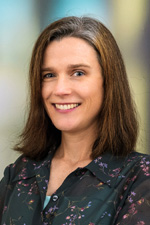
Kimberley Evason serves as Associate Professor of Anatomic Pathology in the Department of Pathology at the University of Utah School of Medicine and Adjunct Assistant Professor of Oncological Sciences. Her research program at the Huntsman Cancer Institute focuses on liver cancer mechanisms and therapeutic development, leveraging zebrafish models to address critical challenges in hepatocellular carcinoma treatment. Education: B.S. from University of Iowa M.D. and Ph.D. from Washington University School of Medicine Dr. Evason's laboratory investigates β-catenin-activated hepatocellular carcinoma (HCC), which accounts for 20-40% of human cases. Her team developed transgenic zebrafish models expressing hepatocyte-specific activated β-catenin that develop HCC, enabling chemical screening for targeted therapies. Key discoveries include JNK inhibitors and serotonergic antidepressants (notably amitriptyline) that suppress tumor growth, with amitriptyline showing efficacy in mouse models. Current research explores molecular mechanisms of drug action and identifies conserved genetic pathways through RNA-seq analysis and functional validation in zebrafish and human cell lines. Analysis of her 2015-2019 publications reveals a cohesive research trajectory centered on liver cancer biology using zebrafish models. Her work integrates chemical screening, genetic analysis, and translational validation across multiple systems (zebrafish, mouse, human cells), with strong emphasis on Wnt/β-catenin signaling pathways. Publications span molecular mechanisms, tumor microenvironment interactions, and diagnostic innovations, demonstrating consistent focus on bridging basic science discoveries to clinical applications in HCC treatment. Dr. Evason leads a multidisciplinary research team at the Huntsman Cancer Institute, utilizing core facilities for zebrafish husbandry and advanced imaging. Her collaborative network includes oncologists, geneticists, and pharmacologists across the University of Utah, facilitating translational research from bench to bedside. The laboratory's resources and institutional support enable high-throughput chemical screening and sophisticated molecular analyses central to her therapeutic discovery pipeline.