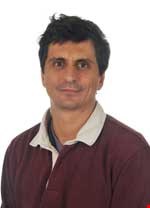
Prof. Dr. Kerstin Roeder serves as Professor of Applied Microeconomics at the University of Augsburg's Faculty of Business and Economics, leading the Chair of Applied Microeconomics. Her research integrates theoretical microeconomic modeling with behavioral insights to address critical issues in family economics and welfare state design. She teaches undergraduate courses in Insurance Economics and Behavioral Economics, and graduate courses in Microeconomics and the Political Economy of the Welfare State. Roeder's research program centers on two interconnected domains: intra-family dynamics (including child care arrangements, spousal labor and consumption decisions, and elderly parental care) and welfare state architecture (encompassing public health and long-term care systems, couple taxation, and incentive-based tax design). Her methodological approach combines positive and normative theoretical frameworks with behavioral economics to capture realistic decision-making patterns within households and policy contexts. Analysis of her publication record from 2011-2024 reveals consistent contributions to household bargaining theory, marriage taxation effects, child care policy evaluation, and long-term care financing mechanisms. Her work demonstrates particular strength in modeling how social norms interact with public policies to shape family behavior and welfare outcomes, with growing attention to political economy constraints in policy implementation. Scientific Awards: None documented in available sources As thesis supervisor, Roeder requires bachelor's candidates to complete either Insurance Economics or Behavioral Economics, while master's students must pass Microeconomics (Master) and the Applied Microeconomics seminar. Thesis proposals are submitted to designated email contacts at the chair, with detailed guidelines available through the university's Digicampus platform. The Chair of Applied Microeconomics actively contributes to the academic community, recently hosting the 22nd Bavarian Micro Day in June 2023. This event facilitates knowledge exchange among microeconomics researchers across Bavarian institutions, highlighting the chair's regional leadership in economic theory development and policy analysis.