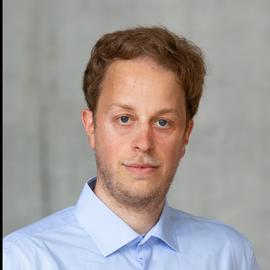
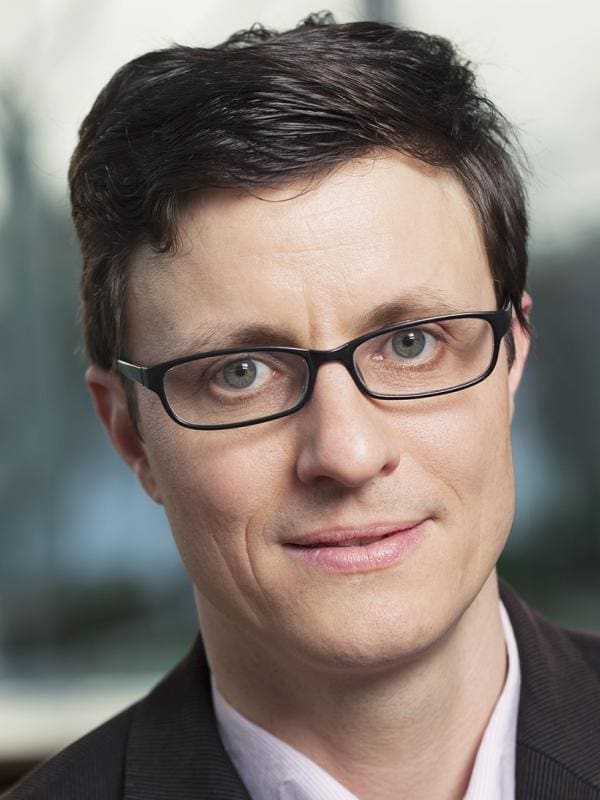
Bradley Setzler is the Strumpf Early Career Associate Professor of Economics at Pennsylvania State University (with tenure) and a Faculty Research Fellow at the National Bureau of Economic Research (NBER). His primary research focuses on labor economics and applied microeconomics, with secondary interests in industrial organization and international trade. He examines labor market power dynamics, wage inequality, firm-level effects, and the impacts of globalization on labor markets. His work has been published in top journals such as the American Economic Review and the Journal of Labor Economics. Key topics include labor market adjustment to trade shocks, firm-induced wage disparities, and the role of multinational firms in domestic labor markets. Setzler collaborates with prominent economists like David Autor and Magne Mogstad, contributing to influential studies on monopsony power and policy implications. He holds affiliations with NBER’s Labor Studies program and has presented research at leading institutions like MIT, Stanford, and the Federal Reserve. His methodologies emphasize large-scale data analysis, with contributions to software tools (e.g., textables, eventStudy) for econometric research.
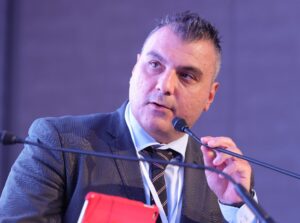
Velisav Marković , born 3 June 1969 in Valjevo, Serbia, is a Professor at Singidunum University , Faculty of European Legal and Political Studies (Fakultet za evropske pravno-političke studije). His career combines full-time teaching, prolific scholarly publishing, and practical legal expertise in Serbian labour, civil, and health-care law. Education PhD – Business and Civil Law, Faculty of European Legal and Political Studies, Singidunum University (2011) Master – Criminal Law, Faculty of Law, University of Novi Sad (1997-1999) Bachelor – Internal Affairs, Faculty of Law, University of Novi Sad (1988-1993) Research Interests Professor Marković’s research bridges several intersecting domains. He investigates labour law in the context of Serbia’s evolving employment relations, with special emphasis on overtime, termination, and collective bargaining. In health law , he analyses patient rights, medical malpractice liability, and the legal interfaces between public and private health-care provision. His work on business law ranges from the legal status of individual entrepreneurs to corporate insolvency and commercial contracts. Additional strands include transport law, copyright, public-private partnerships, and the procedural aspects of civil litigation. Across these areas he adopts an interdisciplinary lens, combining doctrinal legal analysis with empirical case studies (e.g., Valjevo General Hospital) and comparative perspectives, particularly referencing EU standards. Publication Profile From 2011 to 2025 Marković has authored or co-authored more than 40 peer-reviewed journal articles and 9 monographs, revealing a clear trajectory: early focus on representation and civil procedure broadened after 2016 toward labour law and health-care regulation. Since 2020, his output increasingly addresses pandemic-era legal challenges, equal-pay jurisprudence, and digitalisation of court processes. Books & Monographs Osnovi prava sa posebnim osvrtom na poslovno i turističko pravo (with Ž. Spalević, 2024, 2021) Uvod u zdravstveno pravo (2021) Prestanak radnog odnosa (2018) Privredno-finansijska regulativa (2017) Individualni preduzetnik – pravni okvir poslovanja (2016) Poslovno pravo (with I. Nikčević, 2014) Zastupanje i zastupnici privrednih subjekata (2012) Conference Contributions Marković is a regular contributor to national and international conferences, presenting on damages compensation, constitutional-court effectiveness, service-law regulation, and public-private partnerships. Selected proceedings include Causation of Damage, Damage compensation and Insurance (2024, 2023, 2022), Contemporary Legal Traffic and Services (2018), and NETSA (2015). Advising & Grants While specific grants are not detailed in the text, Professor Marković’s extensive applied-research portfolio (case studies of the Valjevo General Hospital, PPP health-care projects, litigation practice analyses) indicates ongoing collaboration with public institutions and professional associations. His advisory role is implicit in his authorship of practitioner-oriented manuals and frequent citation of current court practice. Contact E-mail: vmarkovic@singidunum.ac.rs
Tobias König is a Post-Doctoral Researcher in Economics at the Institute of Finance and Statistics, Department of Economics, University of Bonn. He is also affiliated with the Collaborative Research Center (CRC) TR 224, a major interdisciplinary research initiative focused on economic policy design and evaluation. Research Interests: His research lies at the intersection of macroeconomics and finance, with a focus on monetary policy, banking stability, financial frictions, and firm-level heterogeneity. He investigates how labor market dynamics interact with credit markets, the role of financial constraints in investment, and the historical patterns of systemic bank runs. The recent publications of Dr. König span both theoretical and empirical domains, contributing to our understanding of optimal monetary policy under financial frictions, the effectiveness of deposit insurance schemes in Europe, and the microeconomic foundations of aggregate financial shocks. His work often combines rigorous modeling with comprehensive data analysis, including newly constructed historical datasets on bank runs across 184 countries. Scientific Contributions: Developed a New Keynesian banking model with endogenous financial accelerator to study optimal monetary policy. Constructed a novel, globally comprehensive dataset on systemic bank runs from 1800 to 2023. Provided empirical evidence on the investment channel of monetary policy using Norwegian administrative data. Education: PhD in Economics, 2022, Humboldt University of Berlin MSc in Economics, 2016, Humboldt University of Berlin BSc in Economics, 2013, Humboldt University of Berlin Dr. König actively presents his research at international conferences and seminars, including the World Congress of the Econometric Society and the Bank of England. He maintains a personal website and shares datasets and working papers openly. He advises no students listed in the provided materials and has no scientific awards mentioned. He is based in Bonn, Germany, and can be contacted via email at tkoenig@uni-bonn.de.
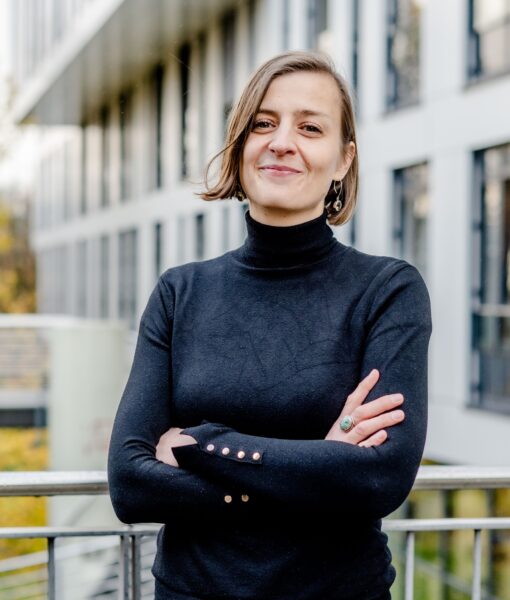
Kati Krähnert serves as Professor of Climate Change and Development at Ruhr University Bochum since 2023 and leads the Economic Policy Lab 'Climate Change, Development and Migration' at RWI - Leibniz Institute for Economic Research. Previously, she held research group leadership positions at Potsdam Institute for Climate Impact Research (2019-2023) and German Institute for Economic Research (2012-2019), including acting department head responsibilities, with earlier postdoctoral appointments at Yale University and DIW. Her academic credentials include: PhD in agricultural economics, Humboldt University of Berlin (2010) Magister in social anthropology and economics, Free University Berlin (1999-2005) Academic year abroad, Wake Forest University, US (2001-2002) Professor Krähnert's research investigates multidimensional climate change impacts on human well-being in the Global South, examining income, wealth, land ownership, nutrition, education, and health outcomes. She specializes in evaluating adaptation instruments through rigorous impact assessment, particularly weather index insurance for smallholder farmers and anticipatory humanitarian cash transfers during extreme weather events. Her methodological approach emphasizes primary household survey data collected through field collaborations in Mongolia, Kyrgyz Republic, Ghana, Senegal, and Vietnam. Recent publications demonstrate consistent focus on climate risk management, with 2024-2025 works analyzing land tenure security under weather shocks, index insurance demand determinants, and cash transfer effectiveness using mixed-methods field experiments. No scientific awards are documented in the provided materials. She currently directs multiple research initiatives including the 'Rigorous Impact Evaluation of Trigger-Based Agricultural Micro Insurance in Vietnam' and 'Understanding Climate Impacts and Adaptation in Rural Ghana', supported by grants enabling longitudinal household data collection across climate-vulnerable regions. The Economic Policy Lab under her leadership conducts policy-relevant research on climate migration linkages and adaptation financing mechanisms, maintaining active partnerships with local research institutions across Africa and Asia to co-design survey instruments and implementation protocols.
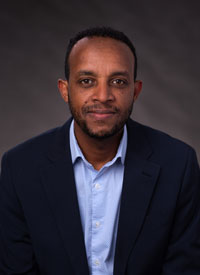
Seife Dendir is a development and applied micro-economist who has served on the faculty of Radford University’s Department of Economics since 2005. He teaches a full range of microeconomics, development, and managerial economics courses to undergraduate and MBA students. Education: Ph.D. & M.A. in Applied Economics, Western Michigan University B.A. in Economics, Addis Ababa University Research Interests: Dr. Dendir’s research lies at the intersection of economic development , applied microeconometrics , and education economics . He investigates intergenerational educational mobility, returns to schooling, intra-household resource allocation, and child labour in developing countries, notably Ethiopia and Sub-Saharan Africa. A secondary strand explores sports analytics and the effectiveness of online pedagogical tools in economics instruction. Across more than 20 peer-reviewed articles, his work exhibits three dominant themes: (i) rigorous empirical analysis of education, labour and health outcomes in developing economies; (ii) evaluation of teaching technologies and student performance in economics classrooms; and (iii) data-driven studies in soccer analytics. Recent publications (2022-2023) extend his development agenda to intergenerational mobility and COVID-19 mortality disparities, while simultaneously refining online-learning experiments. Scientific Awards: No awards or fellowships are listed in the provided sources. Advising & Grants: No graduate students, grants, or funded projects are mentioned in the supplied text. Labs & Teams: There is no indication of dedicated research labs or formal research teams.
Andreas Fagereng is a Professor of Finance at BI Norwegian Business School and a Senior Researcher at Statistics Norway. He serves as Co-director of the Centre for Household Finance and Macroeconomic Research (HOFIMAR) and is a member of the Research Policy Network on Household Finance at the Center for Economic Policy Research (CEPR). His academic career spans prestigious institutions including Statistics Norway, Norges Bank, and the European University Institute. Dr. Fagereng earned his PhD in Economics from the European University Institute in 2012 and his MSc in Economics from the University of Oslo in 2007. His research focuses on household finance and macroeconomics, particularly examining wealth inequality, consumption behavior, and the relationship between household financial positions and economic outcomes. His work frequently utilizes detailed Norwegian administrative data to investigate asset allocation patterns, investor behavior, and household responses to economic shocks. His extensive publication record reveals consistent themes in analyzing how households respond to income fluctuations, the heterogeneity in returns to wealth across different population segments, and the intergenerational transmission of economic advantage. Dr. Fagereng's research employs sophisticated methodologies including natural experiments, panel data analysis, and structural modeling to address fundamental questions in household finance. Among his notable recognitions is the prestigious ERC Starting Grant for his project 'Inequality in 3D – Measurement and Implications for Macroeconomic Theory (3D-In-Macro)' (2020-2025), which supports his innovative work at the intersection of micro-level household data and macroeconomic theory. Dr. Fagereng's research has significant policy implications for understanding wealth distribution dynamics, designing effective economic stabilization policies, and improving macroeconomic models that incorporate household heterogeneity. His collaborations with leading researchers worldwide have positioned him at the forefront of the growing field examining the connections between household financial decisions and broader economic outcomes.
Professor Bernard Wong is the Head of the School of Risk and Actuarial Studies at the University of New South Wales, Australia. As a Fellow of the Institute of Actuaries of Australia and a Fulbright Scholar, he has significantly advanced actuarial science through research and leadership. His academic credentials include a PhD from the Australian National University and a BCom (Hons) in Actuarial Studies from Macquarie University. PhD (Australian National University) BCOM (Hons) in Actuarial Studies (Macquarie University) His research focuses on AI/ML-enhanced actuarial methods and capital modeling under climate change , with applications to insurance and risk management. He co-leads the Innovations in Risk, Insurance, and Superannuation (IRIS) Knowledge Hub and serves as a chief investigator in the UNSW Institute of Climate Risk and Response. His work also drives the Business AI Lab’s actuarial innovations. Recent publications analyze data breach trends, stochastic loss reserving with neural networks, and multivariate count processes. He has secured substantial Australian Research Council grants , including projects on extreme value theory and claim dependencies. Awards include the Hachemeister Prize (2023, 2017), Taylor-Fry Silver Prize (2018), and Melville Practitioner Prize (2000). Professor Wong actively contributes to actuarial governance as a Board Member of ASTIN and former participant in the Actuaries Institute Data Analytics Practice Committee. His teaching encompasses actuarial data science and enterprise risk management courses.
Prof. Dr. Kerstin Roeder serves as Professor of Applied Microeconomics at the University of Augsburg's Faculty of Business and Economics, leading the Chair of Applied Microeconomics. Her research integrates theoretical microeconomic modeling with behavioral insights to address critical issues in family economics and welfare state design. She teaches undergraduate courses in Insurance Economics and Behavioral Economics, and graduate courses in Microeconomics and the Political Economy of the Welfare State. Roeder's research program centers on two interconnected domains: intra-family dynamics (including child care arrangements, spousal labor and consumption decisions, and elderly parental care) and welfare state architecture (encompassing public health and long-term care systems, couple taxation, and incentive-based tax design). Her methodological approach combines positive and normative theoretical frameworks with behavioral economics to capture realistic decision-making patterns within households and policy contexts. Analysis of her publication record from 2011-2024 reveals consistent contributions to household bargaining theory, marriage taxation effects, child care policy evaluation, and long-term care financing mechanisms. Her work demonstrates particular strength in modeling how social norms interact with public policies to shape family behavior and welfare outcomes, with growing attention to political economy constraints in policy implementation. Scientific Awards: None documented in available sources As thesis supervisor, Roeder requires bachelor's candidates to complete either Insurance Economics or Behavioral Economics, while master's students must pass Microeconomics (Master) and the Applied Microeconomics seminar. Thesis proposals are submitted to designated email contacts at the chair, with detailed guidelines available through the university's Digicampus platform. The Chair of Applied Microeconomics actively contributes to the academic community, recently hosting the 22nd Bavarian Micro Day in June 2023. This event facilitates knowledge exchange among microeconomics researchers across Bavarian institutions, highlighting the chair's regional leadership in economic theory development and policy analysis.
Marco van Leeuwen is a Professor of Historical Sociology/Social Science History at Utrecht University, affiliated with the Department of Sociology within the Faculty of Social and Behavioural Sciences. He holds an honorary research fellowship at the International Institute of Social History and an honorary doctorate from Umeå University (2017). His research focuses on global social solidarity and inequality since 1500, with special attention to INGOs/TSMOs, philanthropy, mutual aid, and social mobility trends. He leads projects like the ERC Advanced Grant 'Towards Open Societies' and contributes to initiatives such as HISCO and HISCLASS occupational classification systems. Key research themes include long-term social mobility patterns, colonial migration impacts, and historical social welfare institutions. Notable work includes studies on intergenerational mobility in Europe during industrialization, social homogamy in marriage, and the role of mutual insurance systems. He has advised organizations like the European Social Science History Conference and chairs its board. His research integrates demographic and historical methods to analyze structural social changes.
Maarten Lindeboom is a Full Professor of Economics at the Department of Economics, Vrije Universiteit Amsterdam (VU Amsterdam). He holds a PhD from Leiden University and is an Economics Research Fellow at Tinbergen Institute. As editor of the Journal of Health Economics , he contributes to academic discourse. His visiting roles include the Netherlands Visiting Professorship at the University of Michigan and the Benjamin Meaker Chair at the University of Bristol. Education: PhD in Economics (Leiden University) His research focuses on applied microeconomics in health, labor markets, and ageing. Key interests include healthcare policy, labor market dynamics, and the economic impacts of ageing populations. He teaches courses such as Microeconomics, Health Economics, and Applied Micro Econometrics at both undergraduate and graduate levels. Recent work examines disability insurance policies, famine effects on health, and retirement behaviors. His research combines econometric rigor with real-world policy implications. Grants: €500,000 Netspar grant (2009) for pensions/ageing research Awards: Recognized as a top global Health Economist (2012) He advises organizations like Health Econometrics and Data Group (HEDG), Monash University’s Centre for Health Economics, and the Royal Holland Society of Sciences. Active in policy circles, he contributes to the Socio-Economic Council of the Netherlands and advises on public welfare systems.
Dr. Charalampos Agiropoulos is an Assistant Professor of Economic Analysis at the Department of Economics, University of Piraeus. He holds a Ph.D. in Economics/Econometrics (2018) and has expertise in quantitative methods, computational finance, and econometrics. Prior roles include Postdoctoral Fellow at the University of Piraeus, Senior Researcher at Gnosis Research Center (Illinois Institute of Technology), and industry positions as CEO of TMEDE Microfinance Solutions and Chief Risk Officer at TMEDE Fund. Education: Ph.D. in Economics/Econometrics (2018), University of Piraeus M.Sc. in Applied Statistics (2007), University of Piraeus B.Sc. in Mathematics (2002), National and Kapodistrian University of Athens His research focuses on applied econometrics, computational finance, and labor/environmental economics. Current projects analyze the shadow economy's impact on EU competitiveness and machine learning in financial time-series. He has published in journals like International Journal of Finance and Economics and presented at global conferences. Teaching includes courses in quantitative methods, business analytics, and international economics. His work integrates practical industry insights with academic rigor, bridging theory and real-world applications.
Dr. Bettina Becker is an Associate Professor in Strategy & Innovation at Durham University Business School, specializing in innovation policy, environmental innovation, and the economics of innovation. She holds a PhD from Birkbeck College, University of London, an MSc from the London School of Economics, and a bachelor's from the University of Bonn with studies at the University of Cambridge. Previously, she worked as a Senior Researcher at the National Institute of Economic and Social Research in London. Affiliations: Member of the International Panel of Experts for the Flemish government, UKRI expert workshop participant, and academic advisor to The Behavioural Insights Team. Research Focus: Innovation policy effectiveness, green innovation strategies, and the impact of public R&D funding on firm performance. She employs micro-econometric methods to translate technical findings into policy-relevant insights. Her work has influenced policy institutions like the OECD, World Bank, and European Commission. Key publications include analyses of innovation spillovers in the UK and eco-innovation strategies among Spanish firms. She teaches Innovation Management and Business Economics, emphasizing responsible innovation and sustainability. Awards: Fellow of the Higher Education Academy (FHEA). Advising & Grants: Supervises PhD students researching innovation and policy. Engaged in evaluations of innovation support programs for governments and international bodies. Bettina collaborates in interdisciplinary research teams and has advised on projects such as the evaluation of the Flemish Policy Research Centre. Her work bridges academic research with practical applications in policy and industry.
Jeremy Marcel serves as an Associate Professor of Commerce and Area Coordinator for Management at the McIntire School of Commerce, University of Virginia. His research examines corporate governance and strategic leadership through the lens of social and political dynamics among organizational powerholders, with publications spanning top journals including Academy of Management Journal , Academy of Management Review , Strategic Management Journal , and Journal of Management . Professor Marcel's academic credentials include: Ph.D. in Business Administration from Georgia State University M.B.A. from Loyola University B.A. in Business Administration from Nicholls State University His research program systematically investigates boardroom behavior, executive decision-making, and competitive dynamics, emphasizing how emotional, cognitive, and political factors shape governance outcomes. Key contributions include theoretical frameworks for CEO severance agreements, board responses to shareholder activism, and the micro-foundations of competitive rivalry. This work bridges institutional theory with behavioral perspectives to explain why powerful actors make specific governance choices under uncertainty. Analysis of his 13 most recent publications reveals an evolving focus from foundational work on executive cognition (2004-2011) toward contemporary board dynamics (2014-2024). Recent scholarship examines emotional consequences of shareholder interventions and disruptive successions, while earlier work established critical links between TMT characteristics, COO appointments, and interim CEO usage. Collectively, his research demonstrates consistent attention to human elements within formal governance structures across two decades of scholarship.
David Mushinski is a Professor in the Department of Economics at Colorado State University (College of Liberal Arts). He holds a Ph.D. from the University of Wisconsin-Madison and a J.D. from the University of Virginia Law School. His research spans health economics, economic development, regional economics, and econometrics. He teaches graduate-level econometrics and undergraduate courses including Principles of Microeconomics and Health Economics. Education: Ph.D. in Economics, University of Wisconsin-Madison J.D., University of Virginia Law School Research interests emphasize public health economics, rural vs. urban labor markets, credit rationing mitigation in micro-enterprises, and cultural dimensions of economic development. His work frequently intersects with policy analysis, particularly in healthcare access and regional economic disparities. Recent studies include analysis of the Legionnaires’ Disease outbreak in Flint, Michigan, and the role of cultural institutions in indigenous economic development. His publications demonstrate a focus on empirical methods and policy relevance, with notable contributions to understanding geographic interdependencies in retail markets and welfare reform impacts on impoverished labor markets. Teaching includes both foundational courses and advanced econometric techniques.
Philipp Rehm is a Professor of Political Science at Johns Hopkins University's Krieger School of Arts & Sciences. Previously, he held positions at Ohio State University and a Postdoctoral Prize Research Fellowship at Nuffield College, Oxford University. His expertise spans Comparative Politics, political economy, and parties and political behavior. Education: Ph.D. in Political Science from Duke University Postdoctoral Fellowship at Nuffield College, Oxford University Research Focus: Rehm examines income dynamics (volatility, risk exposure, income loss) and their political consequences. At the micro-level, he studies how income fluctuations influence preferences for redistribution and social policies. Macro-level work analyzes labor market dynamics' impact on polarization, electoral coalitions, and welfare state sustainability. Recent interests include the welfare state's role in knowledge capitalism and the societal implications of big data. Publications Trends: His work bridges political economy and comparative politics, emphasizing socioeconomic risk, policy responses, and partisan realignments. Key themes include economic insecurity's political ramifications, welfare state adaptation to digital transformation, and the evolving electoral bases of social democratic parties. Grants & Advising: While specific grants aren't listed, his research has likely been supported through institutional and fellowship funding. No advisee names are provided in the text. Labs/Teams: Affiliated with the Johns Hopkins Department of Political Science, contributing to interdisciplinary work on economic security and political behavior through collaborations like the Economic Security Project.