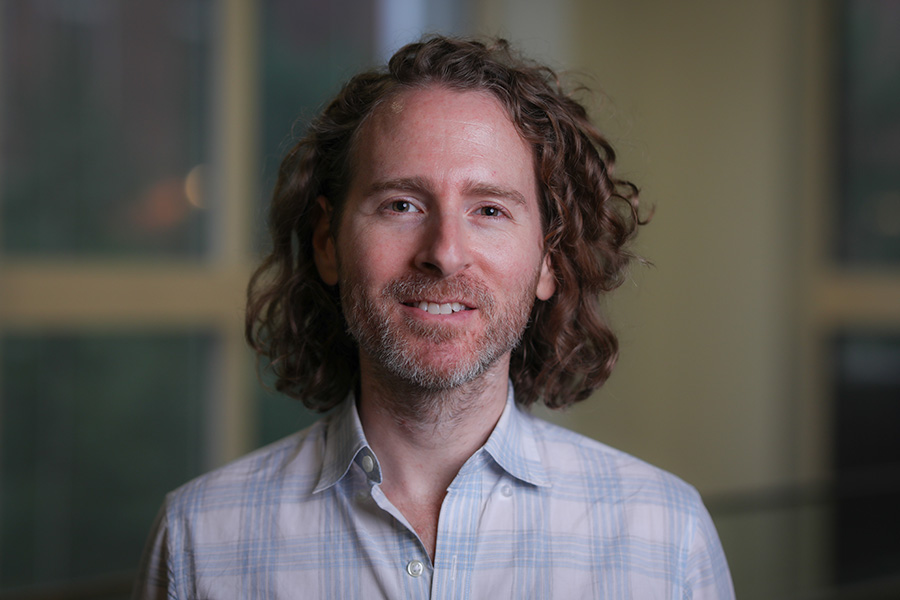
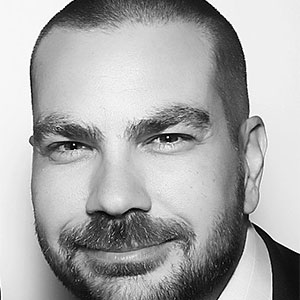
David S. March is an Assistant Professor in the Department of Psychology at Florida State University's College of Arts and Sciences. His research focuses on implicit cognition and threat processing, particularly how subconscious threat evaluation influences attitudes, prejudice, and behavioral responses. He actively recruits graduate students for Fall 2026 and oversees the March Research Laboratory. His research integrates social cognition, cognitive neuroscience, and behavioral psychology to challenge dual process models by introducing a speed-strength distinction between threatening and nonthreatening stimuli. Key areas include automacity of threat responses, racial bias mechanisms, and methodological advancements in mouse-tracking analysis. Dr. March's publications examine threat perception in contexts ranging from snake fear to police bias, contributing to understanding how implicit threat evaluations shape social behaviors and policy compliance. His work bridges evolutionary psychology with modern social issues like racial prejudice and pandemic health behaviors. Scientific Awards: Student Publication Prize by the Society for Personality and Social Psychology (2017)
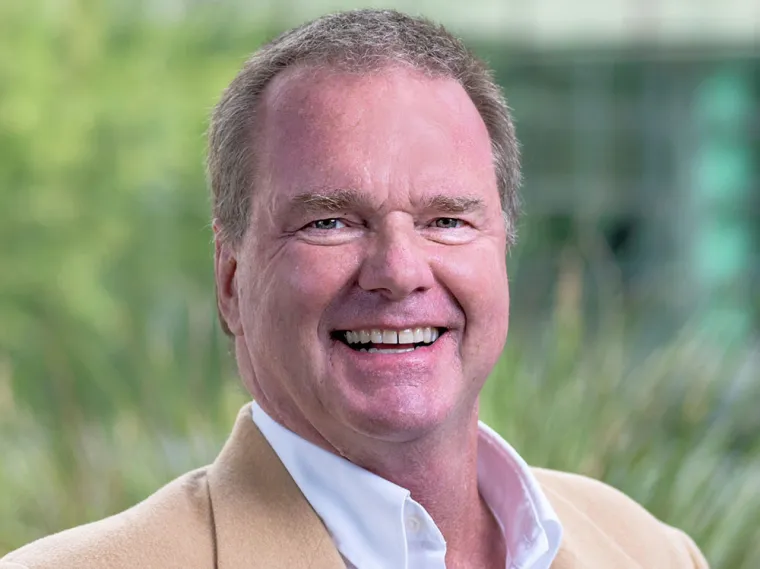
Jeffrey Schatzberg serves as Professor of Accounting and Frances McClelland Chair of Accounting at the University of Arizona's Eller College of Management, concurrently holding the position of Interim President for Executive Education. A Certified Public Accountant licensed in Arizona and Iowa, he maintains active membership in the American Institute of Certified Public Accountants, American Accounting Association, and Economic Science Association. His educational foundation includes a PhD in Business Administration from the University of Iowa (1987), preceded by professional experience as an audit and tax staff accountant at Peat, Marwick, Mitchell & Co. His scholarly trajectory demonstrates consistent engagement with experimental methodologies applied to core accounting questions. Professor Schatzberg's research program centers on auditing issues , behavioral accounting , and managerial/cost accounting , characterized by rigorous experimental designs investigating ethical decision-making, opportunistic behavior, and institutional influences. His work frequently examines how moral reasoning interacts with economic incentives in audit markets, while exploring budgetary processes and IPO-related auditor selection through controlled laboratory settings. This interdisciplinary approach bridges accounting theory with experimental economics to address real-world professional challenges. Analysis of his 15 most recent publications (1998-2024) reveals persistent focus on audit communication in private debt contracts, auditor pricing strategies under varying liability regimes, and behavioral responses to organizational incentives. The research consistently employs experimental economics frameworks to dissect auditor-client dynamics, with emerging attention to healthcare financing applications through his Center for Management Innovations in Healthcare affiliation. His scholarly contributions have been recognized through significant awards: McLaughlin Prize for ethics-focused accounting research (2003) Two-time recipient of MBA Faculty of the Year Award at Eller (1998, 2002) Arizona Society of CPAs Excellence in Teaching Award (1997) Professor Schatzberg maintains active research leadership through the Economic Science Laboratory, where he designs experimental protocols investigating market behaviors, while contributing to executive education initiatives through Eller Executive Education. His professional trajectory demonstrates seamless integration of academic scholarship, professional practice, and institutional leadership within the accounting discipline. He directs research activities through the Economic Science Laboratory and contributes to healthcare management innovation via the Center for Management Innovations in Healthcare, fostering cross-disciplinary collaborations that translate experimental findings into practical organizational applications.
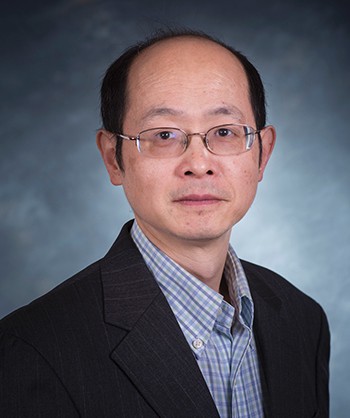
Zhijie Xiao is a Professor of Economics at Boston College, affiliated with the Morrissey College of Arts and Sciences. His expertise lies in econometrics and empirical finance, with a focus on quantile regression, financial markets analysis, and statistical inference. Xiao holds a Ph.D. from Yale University, along with multiple advanced degrees from Yale and the University of China. B.Sc., University of China M.Sc., University of China M.A., Yale University M.Ph., Yale University Ph.D., Yale University Xiao's research emphasizes methodological advancements in econometrics, particularly in quantile autoregression and tail risk modeling. His work bridges theoretical econometrics with practical applications in finance, addressing issues like market volatility and asset pricing dynamics. Key contributions include improving kernel estimation efficiency in nonparametric models and developing inference frameworks for quantile regression processes. Selected publications highlight his engagement with financial market tail risks and structural econometric modeling. Though no awards or grants are explicitly listed, his extensive publication record underscores sustained academic impact. Xiao teaches econometrics and contributes to the department’s research initiatives through collaborative projects.
Noah Weeth Feinstein is an Associate Professor in the Department of Curriculum & Instruction and the Department of Community & Environmental Sociology at the University of Wisconsin–Madison's School of Education. He also serves as Director of the Robert E. and Jean F. Holtz Center for Science and Technology Studies. His research explores how people engage with science in personal, social, and political contexts, with a focus on educational platforms like museums and schools. Feinstein holds a PhD in Science Education from Stanford University (2008) and an MS in Biological Sciences (2006). His work bridges Science and Technology Studies (STS) with education, examining issues such as environmental sociology, equity in science museums, climate change adaptation, and responses to the 'post-truth' era. He contributed to a National Academies report on science literacy and has studied how museums can become more equitable institutions. His recent publications emphasize equity in science education, climate adaptation strategies, and public engagement frameworks. Notable works include discussions on community-level environmental literacy, the paradox of public knowledge in sociology, and the role of education in addressing climate change. Feinstein frequently presents at conferences like the American Educational Research Association, focusing on topics such as racial equity in museums and structural racism in science centers. Feinstein’s research integrates theoretical frameworks from sociology, education, and STS to address practical challenges in science communication and institutional change. His work highlights the need for education systems to foster collective sensemaking rather than individual truth-seeking in a polarized society.
Miguel Roig is a Professor of Psychology at St. John's University, part of the Department of Psychology within the St. John's College of Liberal Arts and Sciences. He earned his Ph.D. in Cognitive Studies from Rutgers University in 1989. His research focuses on academic and research integrity, particularly plagiarism in sciences, responsible authorship, and publication ethics. He has published extensively on these topics and developed the Plagiarism Detective tool to aid in detecting text overlap between documents. Roig has held faculty positions since 1989, teaching courses like Scientific Inquiry and Experimental Psychology of Sensation & Perception. He emphasizes ethical writing practices and has authored guidelines for avoiding plagiarism. His work includes collaborations with student researchers, exploring issues like academic dishonesty, paraphrasing strategies, and institutional policies on cheating. Roig’s contributions extend to editorial standards, analyzing journal policies on plagiarism and advocating for editorial flexibility in textual reuse cases. He has presented at conferences worldwide, addressing research integrity, self-plagiarism debates, and cross-disciplinary ethics. His research also incorporates surveys on plagiarism perceptions across disciplines and countries, such as Brazil. Roig’s teaching philosophy stresses scholarly excellence, proper citation practices, and critical thinking. He has structured courses with rigorous grading criteria and utilizes online platforms for engagement. His syllabi emphasize avoidance of academic dishonesty, with strict policies against plagiarism and cheating.
Ben Faber is an Associate Professor in the Department of Economics at the University of California, Berkeley. His research focuses on the intersection of international trade and development economics, with particular emphasis on migration patterns, market integration, and policy interventions in rural and urban contexts. He joined UC Berkeley in 2013 and currently teaches courses on international economics and supervises doctoral students. His research explores topics such as the economic impacts of senior migration on local development, rural-urban migration dynamics, and the welfare implications of incomplete price data. He has also studied agricultural policy scalability, responsible sourcing practices in global supply chains, and the role of e-commerce in connecting rural regions. His work frequently integrates empirical evidence from case studies in Mexico, China, and the Democratic Republic of Congo. Faber’s recent publications analyze the effects of retail globalization on household welfare, the relationship between tourism and coastal economic development, and the challenges of artisanal mining in cobalt supply chains. His research methodologies often involve innovative use of scanner data, spatial analysis, and econometric modeling to address complex development questions.
Vinay Lal is Professor of History and Asian American Studies at the University of California, Los Angeles (UCLA), where he has been teaching since Fall 1993. He holds a joint appointment in the Department of History and the Asian American Studies Department. Born in Delhi and raised across multiple countries including India, Indonesia, Japan, and the United States, Lal brings a global perspective to his scholarship and teaching. His educational journey began at Johns Hopkins University, where he earned both his B.A. (1982) and M.A. (1982) from the Humanities Center with concentrations in literature, history, and philosophy. He then studied film in Australia and India on a Thomas J. Watson Fellowship before pursuing his Ph.D. at the University of Chicago's Department of South Asian Languages and Civilizations, which he completed with Distinction in 1992. His dissertation, 'Committees of Inquiry and Discourses of 'Law and Order' in Twentieth-Century British India', received the Marc Galler Award for the best dissertation in the Division of the Humanities at the University of Chicago. Lal's research spans an extraordinary breadth of intellectual interests, with primary focus on Indian history, historiography, public and popular culture in India, the Indian diaspora, colonialism, human rights, American politics, the architecture of nonviolence, Gandhi studies, and the global politics of knowledge systems. His work consistently challenges conventional disciplinary boundaries, engaging with topics ranging from the politics of religion and ethnicity in South Asia to the moral and political thought of Mohandas Gandhi, from the partition of India to the intersection of history and popular cinema. His scholarship reflects a deep commitment to decolonizing knowledge systems and exploring alternative epistemologies from the Global South. His publications reveal a scholar deeply engaged with both historical analysis and contemporary political issues. The 15 most recent articles demonstrate his consistent focus on South Asian politics, historical memory, nonviolence, and the politics of knowledge. His writing spans academic journals, major newspapers, and public intellectual platforms, with a distinctive voice that bridges scholarly rigor and public accessibility. His work on Gandhi, colonialism, and contemporary Indian politics forms a particularly strong thread throughout his recent publications. Fellow of the World Academy of Art and Science (elected February 2000) William R. Kenan Fellow, Society of Fellows in the Humanities, Columbia University (1992-93) Senior Fellowship from the American Institute of Indian Studies National Endowment for the Humanities Fellowship for University Teachers Fellowship from the Society for the Promotion of Science/Japan Area Studies Center Listed among the '101 Most Dangerous Professors in America' in David Horowitz's book Fulbright-Nehru Fellowship for Academic and Professional Excellence Fellow at the Stellenbosch Institute for Advanced Study (STIAS), South Africa (2024) Oxford University Press India Academic (Humanities) Delegate (2022-2028) As a dedicated mentor, Lal has supervised numerous PhD students who have gone on to prominent academic careers at institutions including CSU-Sacramento, UNC-Charlotte, O.P. Jindal University, UC Irvine, and the University of Pittsburgh. His teaching portfolio at UCLA is exceptionally broad, encompassing undergraduate courses on Indian Civilization, British India, contemporary South Asia, and world history, along with graduate seminars on Indian politics and religion, historiography of modern India, nationalism and colonialism, Indian cinema, and postcolonial theory. His lecture courses are available in their entirety on his academic YouTube channel, which has garnered over 3 million views and 36,000 subscribers. Lal has also served as University of California's Director of the Education Abroad Program in India and as Professor of History at the University of Delhi during 2010-11. Lal is a founding member of the Backwaters Collective on Metaphysics and Politics (2010-2020), which met annually in Kerala, and was associated with Multiversity, a group of scholars focused on decolonizing Western knowledge systems. His current work includes a four-book project titled 'The Genocide and Hope Quartet: Studies in the Architecture of Oppression and the Redemptive Possibilities of Nonviolence', examining Dandi, Auschwitz, Hiroshima, and Robben Island. He maintains an active public intellectual presence through his blog 'LAL SALAAM' and his academic YouTube channel, making scholarly content accessible to wider audiences.
Professor Nikolas P Lemos is a chartered forensic scientist and director of the Cameron Forensic Medical Sciences unit at Queen Mary University of London's William Harvey Research Institute. He holds academic affiliations with institutions in San Francisco, St Louis, and Athens, focusing on forensic toxicology, postmortem analysis, and drug-facilitated crimes. His career includes roles as Chief Forensic Toxicologist in San Francisco and Head of Forensic Toxicology at St George's University of London. His research emphasizes cannabinoids in forensic contexts, drug analysis in keratinous matrices (nails/fingernails), and forensic laboratory accreditation standards. He has co-authored over 85 peer-reviewed publications, including landmark studies on cannabinoid detection in postmortem toxicology and fingernail analysis. Professor Lemos is actively engaged in professional organizations, serving as Chair of the Toxicology Section of the American Academy of Forensic Sciences. He has provided expert testimony in over 325 criminal and civil cases globally, addressing forensic toxicology matters related to drug-facilitated crimes, driving under influence cases, and postmortem redistribution phenomena. Key achievements include designing forensic laboratory facilities in San Francisco, coordinating NAME/ABFT accreditations, and receiving a Congressional Proclamation of Achievement (2005) for contributions to community safety. His work bridges forensic science with legal systems, particularly in drug policy and toxicological evidence interpretation.
Alissa Ruth is an educational anthropologist and faculty member at Arizona State University's School of Human Evolution and Social Change, serving as Director of Strategic Initiatives. She focuses on improving educational access, student success, and innovative pedagogies. Her work includes research on undocumented immigrant youth, undergraduate research experiences (UREs), and critical pedagogy. She leads the Innovations in Social Science Instruction and Training Lab and directs education for the NSF Cultural Anthropology Methods Program (CAMP). Ruth has over 22 years of experience in higher education, including teaching, curriculum design, and mentoring students and community members. She co-edited The Handbook of Teaching Qualitative and Mixed Methods (2023) and contributes to journals like Social Science & Medicine . Her research projects address higher education equity, methods training, and social entrepreneurship pathways for underserved students. Affiliations: Director of Strategic Initiatives, ASU; Institute for Social Science Research; NSF CAMP. Education: Ph.D. Anthropology (ASU), M.S. Justice Studies (ASU), B.A. Anthropology (University of Florida). Research Interests: Critical Issues in Higher Education, First-Generation Students, Ethnographic Methods, College Student Wellbeing, Immigration Policy, and Pedagogical Innovation. Publications: Over 20 peer-reviewed articles and edited volumes, emphasizing methods training, UREs, and marginalized student success. Awards: None explicitly listed, but recognized through editorial roles and program leadership. Teaching & Advising: Teaches courses on cultural anthropology, ethics, and global health. Advises students through honors programs and internships. Leads initiatives like the Global Ethnohydrology Study and Methods4all.
Damani White-Lewis is an Assistant Professor of Higher Education at the University of Pennsylvania's Graduate School of Education (Penn GSE). His research focuses on racial inequality in academic careers, leveraging organizational behavior and social psychology frameworks. He examines mechanisms driving inequity in faculty hiring, promotion, retention, and the disproportionate DEI labor assigned to racially minoritized faculty. His work is funded by NIH and NSF, and has appeared in leading journals like Journal of Higher Education and American Educational Research Journal . Key projects include ethnographic studies on faculty hiring inequities, an NSF-funded examination of DEI work in tenure evaluations, and COACHE data analysis on faculty retention. He has received awards including the 2020 Outstanding Dissertation Award and recognition from multiple academic associations. As a public scholar, he advises institutions on systemic change, equity strategies, and DEI initiatives, frequently featured in Inside Higher Ed and Diverse: Issues in Higher Education . His research emphasizes actionable interventions to improve academic workforce equity, including rubric-based hiring, mentorship frameworks, and institutional policy reforms. He collaborates with universities and organizations to translate research into practice, addressing structural barriers in higher education systems.
Adam T. Smith is Distinguished Professor of Arts and Sciences in Anthropology at Cornell University, where he holds appointments in the Department of Anthropology, the Archaeology Program, and the Milstein Program in Technology & Humanity. He is a leading scholar in Eurasian archaeology, specializing in the South Caucasus, with a focus on the emergence of complex societies and the materiality of political authority. Smith is a co-founder of Project ArAGATS and leads Caucasus Heritage Watch, a pioneering initiative using satellite technology to monitor cultural heritage at risk. His educational background includes a Ph.D. and M.A. in Anthropology from the University of Arizona, an M.Phil. from the University of Cambridge, and a B.A. in Anthropology & Political Science from Brown University. Smith's research interests span archaeology, material culture, political and legal anthropology, heritage and museums, and the archaeology of sovereignty. His work combines theoretical inquiry with empirical fieldwork, exploring how objects, landscapes, and built environments shape political life from the Bronze Age to the present. He is particularly known for his work on the Urartian state, Bronze Age metaphysics, and the long-term political dynamics of the Armenian Highland. His recent publications reveal a strong trend in using archaeology to address contemporary issues of heritage destruction, collective memory, and cultural erasure, especially in conflict zones like Nagorno-Karabakh. The articles show a deep engagement with remote sensing, geophysical survey, and interdisciplinary methods to reconstruct past societies and protect endangered heritage. Fellow, Milstein Program in Technology and Humanity, Cornell University (2023–2025) Finalist, Falling Walls Science Breakthrough of the Year, Social Sciences and Humanities (2023) Certificate of Communal Partnership, St. James AME Zion Church, Ithaca NY (2023) John Simon Guggenheim Memorial Foundation Fellow (2010–2011) Fellow, Cornell University Society for the Humanities (2010–2011) Fellow, Howard Foundation (2006–2007) Fellow, Franke Institute for the Humanities, University of Chicago (2003–2004) National Endowment for the Humanities/American Councils for International Education Collaborative Research Fellow (2003) Fellow, Michigan Society of Fellows, University of Michigan, Ann Arbor (1997–1999) Smith advises graduate students, leads the Landscapes and Objects Laboratory, and directs major research initiatives including Project ArAGATS and the St. James AME Zion Community Excavations. His work has been supported by grants from the National Science Foundation, Wenner-Gren Foundation, National Geographic Society, and other leading institutions. He is actively engaged in public archaeology, policy advocacy, and community-based research, bridging academic scholarship with real-world impact.
Prateep Nayak is a Professor at the School of Environment, Enterprise and Development within the University of Waterloo. His academic focus combines political science, environmental studies, and international development through transdisciplinary research on human-environment connections. With expertise in commons governance, social-ecological resilience, environmental justice, and political ecology, he has taught courses like INDEV 100: Introduction to International Development SUSM 675: Governing the Commons INDEV 617: Environmental Change and Governance He has received prestigious awards including the Trudeau Scholarship, Harvard Giorgio Ruffolo Fellowship, Canada's Governor General Academic Gold Medal, and SSHRC Banting Fellowship. Professor Nayak's research explores social-ecological systems, emphasizing vulnerability-to-viability transitions in small-scale fisheries, gender dynamics in dried fish value chains, and multidimensional justice in coastal governance. His Google Scholar publications since 2017 highlight Asia-Africa comparative studies, marine protected areas, and policy frameworks for adaptive management. Article keywords reveal engagement with climate resilience, equity in resource access, and institutional pluralism in governance systems. Scientific awards include Trudeau Scholar Harvard Giorgio Ruffolo Fellow in Sustainability Science Canada's Governor General Academic Gold Medal SSHRC Banting Fellow His fieldwork experience includes development projects in India focusing on community-based governance of land, water, and forests at the research-implementation-policy interface. Current teaching aligns with his expertise in international development and environmental governance, while historical publications show long-term engagement with coastal systems analysis and regime shifts.
Karol Chrobak is an Assistant Professor in the Department of Sociology at Warsaw University of Life Sciences (SGGW). He holds the academic qualification of 'dr. hab.', indicating a post-habilitation doctorate, which is a senior academic title in the Polish system. His scholarly focus lies within the domain of sociology, with likely specializations inferred from his departmental affiliation, including social theory, political sociology, and qualitative research methodologies. While no recent publications or research trends are listed in the available text, his academic engagement appears centered on sociological inquiry within a higher education context. There are no listed scientific awards or honors in the provided information. Dr. Chrobak is involved in academic advising and research supervision, though specific students or grants are not mentioned. There is no information available about laboratories, research teams, or collaborative projects.
Professor Wai Fong Chua is a distinguished academic in accounting practices at the University of Sydney Business School. She holds a first-class honours degree and PhD from the University of Sheffield. Her research focuses on management accounting as a social practice, qualitative fieldwork methodology, and the impact of technology on organizational control. She has contributed extensively to top-tier journals like Accounting, Organizations and Society and serves as its Editor. Her work explores big data analytics, NGO accountability mechanisms, and the interplay between emotions and accounting systems. Education: Bachelor of Arts (Honours), University of Sheffield PhD in Accounting, University of Sheffield Research Interests: Her current research investigates the transformative role of technology in accounting practices, including big data's impact on organizational control, immersive technologies for NGO accountability, and the influence of 'passionate interests' on accounting systems. She collaborates internationally with institutions like Royal Holloway University of London and the University of Bristol. Publications & Recognition: Over 50 peer-reviewed articles and book chapters, including landmark works on gamification in management control and climate-related financial disclosures. She has received prestigious awards such as the Member of the Order of Australia (2012) and an Honorary Doctorate from the University of Jyvaskyla (2009). Grants & Leadership: Led projects on climate change sustainability strategies and reconciliation initiatives with Indigenous communities. Served on editorial boards of major journals and contributed to professional accounting bodies like CIMA and Chartered Accountants ANZ. Labs/Teams: Engaged in interdisciplinary research with the Sydney Business School's Accounting Foundation and collaborates with global networks in climate finance and digital analytics.
Assoc Prof Loh Ming Hui Dylan serves as an Associate Professor at the School of Social Sciences, Nanyang Technological University (NTU), Singapore, specializing in international relations and security policy with regional expertise in East and Southeast Asia. His academic credentials include: PhD in Politics and International Studies, University of Cambridge Graduate Research Fellow, Center of Rising Powers, University of Cambridge (2016-2018) Pre-Doctoral Fellow, Department of Political Science, University of Copenhagen (September 2018 - February 2019) Dr. Loh's research integrates Politics and Public Administration, Security Studies & Policy Issues, and Sociology to examine China's foreign policy evolution and small-state diplomacy. His work demonstrates methodological rigor in comparative foreign policy analysis and contributes significantly to understanding how regional powers navigate international order transitions. Recent publications in International Affairs, China Quarterly, and Pacific Review reveal consistent focus on Asian security architecture, with increasing emphasis on norm contestation in international institutions and China's institutional engagement strategies since 2020. His scholarly impact is recognized through: Honorable Mention in the ISA 2025 DPLST Book Award for 'China's Rising Foreign Ministry' (Stanford University Press, 2024) Nomination for International Affairs 2024 Early Career Prize Dr. Loh actively engages policy communities through media commentary for Bloomberg, Wall Street Journal, The Guardian, and Singaporean outlets including Channel 8 and The Straits Times, though student advisement details and research grants remain unspecified in available materials.