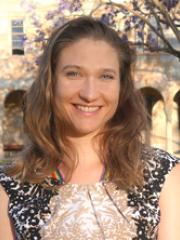
Laura Robinson is a Senior Lecturer at the School of Psychology , University of Wollongong. She holds a Doctor of Philosophy in Psychology and extensive teaching experience in behavioral sciences, statistics, and applied psychology. Education : PhD in Psychology (2017), Postgraduate Diploma in Psychology (2010), Bachelor of Psychology (2009), and Bachelor of Aviation (2004) Her research focuses on vulnerable populations, particularly women and youth, with expertise in substance use disorders, eating disorders, mental health comorbidity, and health equity. She has published extensively on residential treatment outcomes, continuing care interventions, and stigma reduction in mental healthcare. Recent publications highlight longitudinal analyses of psychological distress, weight stigma, and integrated approaches to substance use and physical health. She supervises PhD students on topics like veterans' mental health, methamphetamine use, and suicide prevention. Laura has received funding from internal and external sources, including grants for stimulant use interventions and health literacy studies. She serves on committees like the Australasian Professional Society for Alcohol and Drugs and contributes to peer-reviewed journals as a reviewer.
Patrick T. Dowling, M.D., M.P.H., is the Kaiser Permanente Endowed Professor of Community Medicine and Chair of the UCLA Department of Family Medicine. He holds dual degrees from the Medical College of Ohio (1974) and the University of Michigan School of Public Health. Dr. Dowling's career spans over four decades in family medicine, residency training, and health policy advocacy, with a focus on underserved populations. He has directed residency programs at Cook County Hospital, Brown University, and Harbor-UCLA Medical Center before leading UCLA's Family Medicine department since 1998. His research emphasizes health policy, chronic disease management, cross-cultural medicine, and integrating substance abuse treatment into primary care. He co-founded UCLA's IMG pathway program to train bilingual (English-Spanish) international medical graduates for underserved areas. Dr. Dowling has advised the National Health Service Corps and LA County Public Health Commission, and currently serves on Drew University's Board of Trustees. Publications highlight systemic barriers to healthcare access, physician practice location determinants, opioid epidemic responses, and community-based participatory research. His work bridges medical education innovation with socioeconomic health equity, reflecting lifelong commitment to universal healthcare access inspired by his early work with Cesar Chavez's United Farm Workers Clinics.
David J. Moore, Ph.D., is a licensed clinical psychologist and Professor of Psychiatry at UC San Diego Health. He co-directs the SDSU/UCSD Joint Doctoral Program (JDP) in Clinical Psychology and leads research at the HIV Neurobehavioral Research Program (HNRP). His work focuses on neurocognitive impairments in individuals with HIV, comorbid mental illness, and substance use disorders, with a special emphasis on technological interventions for medication adherence. Doctorate: Ph.D. in Clinical Psychology (SDSU/UCSD JDP, neuropsychology specialization) Postdoctoral Fellowship: UCSD (serious mental illness) Clinical Internship: West Los Angeles VA Dr. Moore’s research addresses: Neurocognitive complications of HIV infection Intersection of HIV and aging Technological interventions for medication adherence Impact of comorbid psychiatric/substance use disorders on functioning His publications span topics including HIV neurocognitive profiles, syndemic factors in sexual risk behavior, and aging with HIV. Current studies integrate metabolomics, neuroimaging, and behavioral data through NIH-funded grants.
Yaira Zoé Núñez is a Researcher in the Division of Human Genetics at the Yale School of Medicine. Her work focuses on genetic and epidemiological factors underlying substance use disorders, including cannabis, opioid, alcohol, and methamphetamine addictions. She collaborates extensively with the Gelernter Lab and other institutions on large-scale genomic studies. Research Interests: Genetic basis of addictive disorders Multi-ancestry genome-wide association studies (GWAS) Epidemiology of polysubstance use Clinical correlates of substance use disorders Key Collaborations: Works with Prof. Joel Gelernter, Renato Polimanti, and international teams. Recent studies include: Multicenter analysis of gambling disorder in methamphetamine users (2025) Multi-ancestry cannabis use disorder GWAS (2023) Genetic risk loci for opioid use disorder (2022) Labs/Teams: Core member of the Gelernter Lab, contributing to translational research bridging genetics and clinical addiction medicine. Active in collaborative networks analyzing large-scale biomedical data.
Amanda Fallin-Bennett, Ph.D., is an Associate Professor at the University of Kentucky College of Nursing , with affiliations in the Cancer Prevention and Control Research Program and the Markey Cancer Center. Her work focuses on substance use , harm reduction , and health equity , particularly for vulnerable populations. Education: Doctor of Philosophy (2011), University of Kentucky Master of Science in Nursing (2009), University of Kentucky Bachelor of Science in Nursing (2007), University of Kentucky Her research explores polysubstance use , recovery frameworks , and public health policy , with recent articles addressing fentanyl test strip utilization , recovery capital in justice-involved women , and reproductive health access for recovery communities. She emphasizes health equity in tobacco control and social justice in substance use prevention. Scientific Awards: Nursing Grant Scholars (2016) Research Protégé of the Year (2019) Vernon Johnson Recovery Advocate of the Year (2019) Scholar Award (2017) Research Award (2019) She actively leads grants like the UK Harm Reduction Hub and Smoke-Free Policy and Behavioral Health initiatives, collaborating with Vital Strategies and KY Cabinet for Health and Family Services. Her work spans opioid use disorder , tobacco cessation , and policy implementation in rural Southern states.
Maryam Kazemitabar is an Associate Research Scientist in the Department of Internal Medicine at Yale University's School of Medicine. She holds a Ph.D. in Psychometrics from the University of Tehran (2020). Her work bridges research and clinical practice to improve patient outcomes in pain management, opioid therapy, and substance abuse. She collaborates with multidisciplinary teams to develop evidence-based interventions, leveraging her expertise in psychometric evaluation. Education: Ph.D. in Psychometrics (Measurement and Evaluation), University of Tehran, 2020 Research Interests: Pain management strategies and opioid-related risks Substance use disorders and comorbid mental health conditions Psychometric validation of health assessment tools Health equity in marginalized populations Research Trends: Recent work focuses on opioid overdose epidemiology, disparities in healthcare for migrant populations, and psychometric rigor in cross-cultural mental health measurement. Key methodologies include latent class analysis, scale validation, and mixed-methods approaches. Advising & Grants: While specific grants are not listed, her collaborative projects imply institutional and federal funding support. No formal advisees are documented here.
Bao-Zhu Yang is a Researcher at Yale School of Medicine , specializing in the Department of Psychiatry . With a PhD from University at Albany (2001), his work focuses on genetic mechanisms underlying psychiatric disorders. Positions: Research Scientist in Psychiatry Labs: Gelernter Lab, Division of Human Genetics His research explores gene-environment interactions , admixture mapping , and comorbid substance use-depression using linkage/association methods. Supported by NIH K01 funding, he investigates genetic bases for conditions including childhood depression , alcoholism , and PTSD . Recent publications highlight: Microbiome studies in methamphetamine use disorder (2023-2025) Genetic polymorphism analyses in NGF and GABAergic pathways (2020-2024) Network approaches to nicotine-alcohol comorbidity (2019) Epigenetic research on child maltreatment effects (2020) Scientific Recognition: Young Investigator Award (2011) from NARSAD Brain and Behavior Research Foundation Active grant support includes NIH K01 career development award for gene-mapping in comorbid disorders. Collaborates with leading researchers including Joel Gelernter and Hongyu Zhao across 30+ joint publications. His work spans 15+ years with recent focus on integrative -omics approaches to addiction psychiatry. Based at 300 George St, New Haven, CT , Yang's laboratory work involves genetic epidemiology , transcriptomic integration , and neurogenetic mapping of substance use disorders.
Jessica A. Mong, PhD , is a Professor in the Department of Pharmacology & Physiology at the University of Maryland School of Medicine , where she also serves as Assistant Dean for Graduate & Post-Doctoral Studies and Director of Graduate Education for the Program in Neuroscience. Her research focuses on the neuroendocrine mechanisms underlying sex differences in sleep circuitry and the estrogenic modulation of sleep-wake cycles. Primary Appointment: Pharmacology & Physiology Administrative Title: Assistant Dean for Graduate & Post-Doctoral Studies Laboratory Director: Program in Neuroscience Research Interests: Dr. Mong's work investigates how ovarian steroids influence sleep-wake behavior through sexually differentiated neuroanatomical substrates. Key areas include: Mechanisms of estrogenic modulation in the median preoptic nucleus (MnPN) Developmental programming of sex differences in sleep sensitivity Translational studies using rodent and nonhuman primate models of menopause Functional significance of hormonal influences on sleep quality and recovery Scientific Trends: Her recent publications (2023-2025) emphasize: Role of KCNMA1 channelopathy in sleep regulation Adenosinergic signaling in MnPN Translational menopause models Estrogen's protective effects against noise-induced hearing loss Sex-dependent responses to kynurenine pathway challenges Awards & Appointments: NIH BIRCWH Scholar (Building Interdisciplinary Research Careers in Women's Health) Co-Chair, Society for Women’s Health Research Interdisciplinary Research Network on Sex-Differences in Sleep Health NIH/NHLBI R01 HL129138 grant recipient Education & Training: B.S., Biology, Gettysburg College (1987-1991) Ph.D., Neuropharmacology, University of Maryland Baltimore (1994-2000) NIH Postdoctoral Fellowship in Endocrinology, Rockefeller University (2000-2003)
Dr. Alison Beck is a Postdoctoral Research Fellow and Clinical Psychologist at the School of Psychology, University of Wollongong , where she works on improving psychosocial interventions for addictive behaviors and mental health conditions. Email: alison_beck@uow.edu.au Certifications: Fellow of the College of Clinical Psychologists (Australian Psychological Society), Registered Psychologist (Clinical Practice) Research Focus: Her work emphasizes: Addiction recovery programs (SMART Recovery) Mental health interventions for substance users Family and peer support systems Implementation science in behavioral health Rural health disparities Digital mental health platforms Key Publications: Recent work covers gender differences in opioid treatment, virtual support groups, methamphetamine addiction interventions, and long-term cancer patient outcomes. Scientific Involvement: She serves on the MRFF Alcohol and Other Drugs Grant Assessment Committee and the AH&MRC Ethics Committee. Supervision: Currently supervises PhD projects on: Social identity changes in residential treatment Family experiences in addiction care Women's opioid treatment journeys
Antonio Verdejo-Garcia is a Professor (Research) in the School of Psychological Sciences and the Turner Institute for Brain and Mental Health at Monash University. He holds an NHMRC Leadership Fellowship and serves as Co-Chair of the Neuroscience Interest Group at the International Society of Addiction Medicine. He has an Adjunct Honorary Appointment at Turning Point (Eastern Health). His academic journey includes a PhD from the University of Granada (2006) and postdoctoral training at Johns Hopkins University, University of Cambridge, and Institut Hospital del Mar d'Investigacions Mediques. Before joining Monash in 2012, he held roles as Lecturer, Senior Lecturer, and Associate Professor at the University of Granada. Research interests center on cognitive and neural mechanisms of executive control, decision-making, and their implications for addiction, compulsive eating, and obesity. He has authored over 290 peer-reviewed articles, edited a book on Cognition & Addiction, and secured continuous national/international research funding. His work has garnered over 17,000 citations. He serves on editorial boards for journals like Addiction , PLoS One , and Current Addiction Reports . Key projects include the AAT-APP Trial for alcohol use disorder, decoding drivers of food choices for obesity management, and neurocircuitry studies in addiction. Recent articles (2023–2025) focus on impulsivity, telehealth interventions for eating disorders, and neuropharmacological comparisons between MDMA and methamphetamine users. Scientific achievements include NHMRC Leadership Fellowship and contributions to clinical translation of cognitive rehabilitation. He advises on grants and mentors students in addiction neuroscience. Current projects involve psilocybin treatment for anorexia nervosa and cortical control of feeding circuits.
Katherine Thorson is an Assistant Professor at Barnard College , affiliated with the Department of Psychology . Her research focuses on interpersonal interactions , intergroup dynamics , and physiological responses in social contexts. B.A. in Psychology from Bates College M.A. and Ph.D. in Psychology from New York University Thorson’s work explores how stereotype threat affects gender dynamics in STEM, physiological synchrony in romantic and professional settings, and methodological innovations in dyadic and longitudinal data analysis. Her research often bridges social psychology and health outcomes . Recent trends in her publications include studies on intellectual humility in guided conversations, physiological linkage in diverse contexts (e.g., doctor-patient interactions, group therapy), and mindfulness in social engagement. Society for Experimental Social Psychology Dissertation Award finalist Funded by the Society for the Psychological Study of Social Issues She applies dyadic data analysis and multilevel modeling to examine how social environments shape psychological experiences and physiological outcomes .
Dr. Zoe Walter is a Senior Lecturer at the School of Psychology, The University of Queensland, with affiliations to multiple research centers including the National Centre for Youth Substance Use Research, Social Identity and Groups Network (SIGN), and the Centre for Health Outcomes, Innovation and Clinical Education (CHOICE). PhD in Psychology (UQ, 2017) Bachelor (Honours) of Psychological Science (UQ, 2011) Her research focuses on substance use disorders, trauma-informed care, social identity theory, and mental health interventions for university students and homeless populations. She has developed innovative programs like Sharper Minds for student mental health and trauma-informed models for residential treatment facilities. Recent work analyzes polysubstance use patterns, pandemic impacts on student mental health, and social network interventions to reduce alcohol consumption. She explores how social identification enhances therapeutic outcomes and informs public health strategies. UQ Knowledge Exchange & Translation Fund (2023) Australian Rotary Health Research Fund (2019-2021) Commonwealth Department of Social Services (2017-2018) Dr. Walter supervises PhD candidates in topics including loneliness in rural cancer survivors, PIED use determinants, and psychosocial recovery after brain injury. She contributes to open data policy critiques and mental health demonstration projects.
Isaac T Schiefer is a Professor in the Department of Medicinal and Biological Chemistry at the University of Toledo College of Pharmacy and Pharmaceutical Sciences. He serves as Director of the Center for Drug Design and Development (CD3) and Associate Director of the Shimadzu Laboratory for Pharmaceutical Research Excellence. Research Focus : Neuropharmacology, drug design, nitric oxide mimetics, zebrafish models, and gut-brain axis interactions Key Techniques : Photoaffinity labeling, LC-MS metabolomics, neurobehavioral analysis His recent work examines: Allosteric modulation of M1 receptors in zebrafish neurotoxicity Impact of gut bacterial short chain fatty acids on cardiovascular function Hybrid NO mimetics for neurodegenerative diseases SPC toxicity mechanisms using zebrafish models Pharmacokinetics of brain-penetrant compounds Publications demonstrate expertise in: Drug metabolism via sulfotransferases Neuroprotective agent development Pharmaceutical microbiome interactions Calpain inhibition for Alzheimer's disease
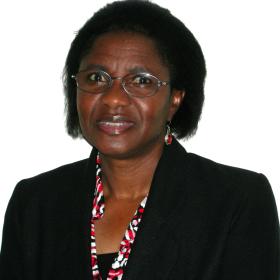
Comfort B. Asanbe is a Professor of Psychology and Chair of the Psychology Department at the College of Staten Island, part of the City University of New York (CUNY) system. She is a licensed psychologist in New York State and serves as a representative of the American Psychological Association (APA) at the United Nations with designation to the Department of Global Communication. Dr. Asanbe also holds a research fellowship at the University of Pretoria, South Africa, and volunteers with the New York City Medical Reserve Corps. Dr. Asanbe earned her PhD from Tennessee State University, with additional graduate degrees (MA and Med) from Austin Peay State University, and her BA from the University of Ilorin in Nigeria. Her international academic background informs her cross-cultural research perspective. Her research focuses on three interconnected themes: identifying factors threatening children's psychological health (particularly related to parental drug use), studying pre-and post-natal drug environments and child outcomes, and assessing psychological health and coping resources of orphans and vulnerable children due to parental HIV/AIDS. Dr. Asanbe has made significant contributions to understanding at-risk children in rural and difficult-to-reach communities, addressing a gap in existing literature. Her work bridges clinical psychology, public health, and international development, with particular attention to low-resource settings in Africa. Analysis of Dr. Asanbe's recent publications reveals a consistent focus on vulnerable children in challenging circumstances, with increasing emphasis on HIV/AIDS impact in rural South Africa. Her research demonstrates a methodological progression from studying drug-affected communities in rural Tennessee to international work in Africa, showing adaptability in addressing similar psychological challenges in different cultural contexts. The publications span multiple disciplines including clinical psychology, developmental psychology, cross-cultural psychology, and public health. Dr. Asanbe has served in numerous leadership roles including as Co-Chair of the 2021 Psychology Day at the UN event with participants from 97 countries, member of the CSI Foundation Board of Directors, and Chair of the Soroptimist International Live Your Dream Scholarship Committee. She has presented her research at international conferences across multiple continents and has served on various boards and committees addressing mental health, HIV/AIDS, and community development. She directs the Psychological Assessment Lab at CSI (located in 4S-110), which focuses on mental health and psychological functioning with emphasis on externalizing behaviors, internalizing behaviors, addiction, and adaptive functioning. The lab provides training for students interested in applied psychology and has conducted research on the impact of COVID-19 on immigrant college students.
Dr. Meredith K. Ginley is a researcher and Principal Investigator of the Prevention Education and Treatment of Addiction Learning (PETAL) Lab at East Tennessee State University (ETSU). She holds a PhD from the University of Memphis, completed clinical internships at the University of Mississippi Medical Center and G.V. Montgomery VA Medical Center, and a postdoctoral fellowship at the University of Connecticut School of Medicine. Her research focuses on addiction treatment, behavioral addictions, and substance use disorders, with a particular interest in improving evidence-based interventions and dissemination. She collaborates with the Tennessee Institute for Gambling Education and Research (TIGER), leading efforts to reduce gambling-related harms across Tennessee through clinics and research initiatives. Dr. Ginley’s work spans prevention, treatment, and education, aiming to identify risk and resilience factors in addiction progression. Her lab supports numerous graduate and undergraduate students, including PhD candidates Hannah Mitchell, Thalia Sullivan, and Shelby King, who contribute to projects on opioid use, first responder trauma, and gambling disorder. She has secured grants from the Tennessee Department of Mental Health and Substance Abuse Services to expand access to addiction care. Her research emphasizes psychometric assessment and biostatistics, ensuring rigorous methodologies in understanding addiction mechanisms and treatment efficacy. Dr. Ginley’s collaborations include the TIGER team at the University of Memphis, focusing on gambling disorder treatment and prevention. The PETAL Lab also engages in interdisciplinary projects with ETSU’s College of Public Health to address regional substance use challenges. Her work highlights a commitment to addressing health disparities and improving outcomes for marginalized communities through tailored interventions and accessible care.