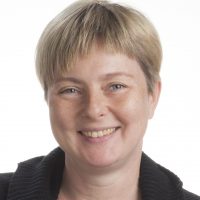
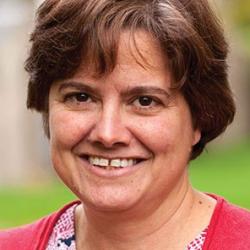
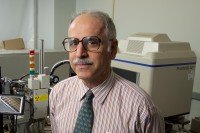
Alex Liu is a Researcher at the Department of Earth Sciences within the University of Cambridge. He specializes in palaeobiology , focusing on the origin and early evolution of animals, particularly the Ediacaran biota (~579–539 million years ago), and their co-evolution with Earth's environment. Research Focus: Refines understanding of animal body plan evolution, taphonomy, sedimentology, and macroevolutionary trends. Methodologies: Combines fieldwork, experimental studies, petrology, phylogenetics, and big-data analyses. Collaborations: Works with international museums and research teams on fossil sites in Namibia, Canada, and Brazil. Additional Interests: Explores meiofaunal evolution, paleogeography, paleoclimate, and conservation paleobiology. He supervises Cambridge NERC Doctoral Landscape Awards (DLA) projects and welcomes student contributions to taxonomic, paleoecological, and analytical studies.
Eric W. Schmidt is a Distinguished Professor of Medicinal Chemistry at the University of Utah, with adjunct appointments in Biological Sciences and Chemistry. His research focuses on natural products chemistry, biosynthesis, synthetic biology, and pharmaceutical applications of marine animal microbiomes. University of California, San Diego (BS, PhD) Research areas include: Biosynthesis in animals and their microbiomes Synthetic biology approaches to chemical engineering Drug design from marine natural products Metagenomic analysis of symbiotic relationships Neuroactive compound discovery Antibiotic development against resistant pathogens His lab has pioneered methods for: Biosynthetic gene cluster identification Heterologous expression in E. coli Enzymatic modification of peptides Chemical analysis of marine invertebrates Recent publications highlight discoveries in: Marine animal chemical defense mechanisms Evolution of biosynthetic pathways Antibiotic resistance profiling Ionic channel-targeting compounds Peptide macrocyclization techniques Lipid-polyketide biosynthesis continuum Email: ews1@utah.edu Honors include: Distinguished Professor recognition
Carole S. Hickman is a Professor at the University of California, Berkeley. Her research integrates theoretical, constructional, evolutionary, and developmental morphology to understand the diversity of structure and function in living and fossil organisms, with a focus on molluscs. She explores macroevolutionary trends through phylogenetic trajectories in design spaces and investigates taphonomic assembly in shell beds linked to global climate change during the Cenozoic Era. Primary Research Organisms: Molluscs Key Tools: Design spaces, ecospaces, ethospaces, developmental spaces Current Projects: Community architecture responses to climate change, microbial-metazoan interactions in extreme environments Her publications highlight interdisciplinary approaches to evolutionary morphology, with recent work emphasizing gastropod larval development and biomineralization changes at metamorphosis. Students in her laboratory prioritize independent research questions while utilizing molecular tools and shared evolutionary methodologies.
John Rouse is a Professor and Scientific Programme Leader (MRC) of Chromosome Biology at the MRC PPU. His research focuses on DNA repair mechanisms, chromatin structure, and genome maintenance. He leads projects funded by the Medical Research Council (MRC) and other institutions, including collaborative efforts on chromatin remodelling and DNA interstrand crosslink repair. Key roles: MRC QQR Programme Leader (2018–2024), Investigator on multiple collaborative grants. Research interests: Chromosome biology, DNA damage response, histone chaperones, and kinase signaling pathways. His work contributes to understanding genome integrity and has implications for cancer therapy and neurodegenerative diseases. Notable projects include the study of NEK1 kinase in ALS and the development of targeted cancer therapies using PROTAC technology. John has been involved in public engagement activities, such as the Discovery Days 2012 event, promoting science outreach.
David Weisblat is a Professor in the Department of Molecular and Cell Biology at UC Berkeley's College of Letters & Science. His research focuses on developmental and evolutionary processes in glossiphoniid leeches (e.g., Helobdella ), particularly their segmentation mechanisms and molecular phylogeny within Lophotrochozoa. He leads studies integrating embryological, genomic, and genetic approaches to understand how developmental pathways evolved across bilaterian animals. Research Interests: Weisblat’s work addresses how cell fates and signaling pathways (WNT, NOTCH, TGFβ) shape leech development, with emphasis on the evolutionary origins of segmentation. His lab combines microinjection techniques, transcriptome analysis, and CRISPR mutagenesis to explore stem cell dynamics and conserved developmental programs. Key Projects: Current efforts investigate grandparental stem cell divisions in segmentation and intercellular signaling during early embryogenesis. The lab’s genomic resources—including BAC libraries and EST databases—facilitate comparative studies across Lophotrochozoan taxa. Lab Contributions: The Weisblat lab pioneered Helobdella as a model organism, enabling breakthroughs in Evo-Devo. Their findings bridge developmental plasticity and evolutionary innovation, particularly in annelids versus arthropods/deuterostomes.
Jean-Claude Labbé is Full Professor in the Department of Pathology and Cell Biology, Faculty of Medicine, Université de Montréal, and Principal Investigator of the “Cell Division and Differentiation” research unit at the Institute for Research in Immunology and Cancer (IRIC). Recruited in 2005, he leads an internationally recognized program that exploits the nematode C. elegans to decipher the molecular logic governing stem cell division, polarity and tissue organization. Education & Training: PhD in Biochemistry, Université de Montréal (supervisors: Luis A. Rokeach & Siegfried Hekimi) Postdoctoral Fellow, Department of Biology, University of North Carolina at Chapel Hill, USA (with Bob Goldstein) Postdoctoral Fellow, Institute of Biochemistry, ETH Zurich, Switzerland (with Monica Gotta) Research Focus: His laboratory investigates how germline stem cells balance self-renewal and differentiation through oriented divisions that maintain contact with the distal tip cell niche, and how syncytial germline architecture is established, expanded and maintained. These studies integrate advanced live-cell imaging, quantitative image analysis, genetics and biochemistry, and provide fundamental insights relevant to mammalian development, tissue regeneration and cancer. Funding & Awards: Canada Research Chair in Cell Division and Differentiation (2006–2016) CIHR New Investigator Award (2005–2006) Ongoing operating grants from CIHR, NSERC and the Cancer Research Society Team & Mentorship: He currently mentors several graduate students (Mohamed Réda Zellag, Kimia Zarnani, Léa Lacroix) and research associates within a vibrant, collaborative environment at IRIC.
Matthew Ronshaugen is a Senior Lecturer in the Division of Developmental Biology & Medicine (L5) at the Faculty of Life Sciences, University of Manchester. He has held academic positions since 2007 as a Manchester Fellow, followed by Lecturer (2012-2017), and Senior Lecturer since 2017. 1991-1995: Bachelor of Arts in Philosophy and Linguistics, University of Nevada, Las Vegas 1995-1997: Master of Science in Systematics, University of Nevada, Las Vegas 1997-2002: Doctor of Philosophy in Cell and Molecular Biology, University of California, San Diego 2003-2007: Ruth L. Kirschstein NIH Postdoctoral Fellow at University of California, Berkeley His research focuses on non-coding RNAs (ncRNAs), particularly their roles in gene expression and developmental differentiation. His lab investigates how ncRNA evolution contributes to metazoan body plan diversification, centering on the Hox complex—a conserved genomic region rich in ncRNAs. He uses tiling microarrays and fluorescent in situ hybridization to analyze ncRNA dynamics in Drosophila, Tribolium, and Parhyale. Recent publications highlight his work on miRNA functions in embryonic development, aging-related changes in myeloid cells, and comparative transcriptomics across arthropods. His team employs genetics tools to dissect ncRNA roles in transcriptional regulation, epigenetic control, and silencing mechanisms. Scientific Awards: Ruth L. Kirschstein NIH Postdoctoral Fellow Manchester Fellow He supervises research on developmental transcriptomes and contributes to datasets on piRNA expression and Hox complex analysis. Collaborations span immunology, genomics, and evolutionary development, with outputs cited in fields like RNA interference, transgenics, and wound healing.
Maja Adamska is an Associate Professor and ARC Future Fellow at the Australian National University (ANU) in the Research School of Biology. She serves as Associate Director of Education and Head of the Biology Teaching and Learning Centre. Her primary research affiliation is with the Division of Biomedical Science and Biochemistry, where she leads the Adamska Group focused on the genomic and evolutionary basis of animal development. She is based in Room 2.022, Level 2, Linnaeus Building at ANU. Dr. Adamska studied biology with a focus on embryology and evolutionary biology at Jagiellonian University in Krakow, Poland. She completed her PhD in Germany working with Eva Bober and Thomas Braun on homeobox genes in inner ear development using vertebrate models from medaka fish to mice. Her postdoctoral work included research at the University of Michigan in Miriam Meisler's laboratory studying mouse mutants for limb patterning, followed by work at the University of Queensland with Bernie Degnan analyzing developmental signaling pathways in the sponge Amphimedon queenslandica. She was a group leader at the Sars International Centre for Marine Molecular Biology in Bergen, Norway from 2007-2015 before joining ANU in 2015. Her research addresses fundamental biological questions about how complex animals develop from single cells and how the first multicellular animals evolved from single-cell ancestors. She uses calcareous sponges to investigate the evolutionary origins of key developmental processes including germ layer segregation and axial patterning. Her work spans multiple areas including evolutionary developmental biology, comparative genomics, and the study of major transitions in animal evolution such as the emergence of multicellularity and morphological complexity. Her research has revealed surprising similarities between sponge and higher animal embryonic development, challenging traditional views of animal evolution. Analysis of Dr. Adamska's recent publications shows a strong focus on sponge and coral biology, with increasing attention to conservation and sustainability issues related to marine ecosystems. Her work combines molecular, genomic, and evolutionary approaches to understand fundamental biological processes, with particular emphasis on gene regulatory networks, developmental signaling pathways, and the genomic basis of morphological complexity in early-branching animals. ARC Future Fellow (since 2017) h-index of 32 with 3,990 citations according to Scopus Multiple research grants including ARC Centre of Excellence for Integrated Coral Reef Studies (2014-2021) Dr. Adamska supervises research on multiple projects including coral regeneration, molecular mechanisms of developmental signaling pathways in sponges, identification of target genes for developmental transcription factors, skeleton formation in corals and sponges, and sponge and coral microbiomes. She also serves as Convenor for BIOL2174 and has developed innovative educational approaches including the Digital Marine platform for blended learning in marine biology. Her research group, the Adamska Group, focuses on the genomic and evolutionary basis of animal development, using calcareous sponges as model organisms to gain insights into the evolutionary origins of complex developmental processes. The group collaborates with international researchers across multiple institutions to advance understanding of early animal evolution and development.
Albert Erives is an Associate Professor in the Department of Biology at the University of Iowa , specializing in regulatory genomics, evolutionary genomics, and the evolution of metazoans. His research focuses on decoding gene regulatory logic in DNA sequences, particularly during animal embryogenesis, using comparative genomics to identify regulatory modules driving phylogenetic transitions. PhD from University of California, Berkeley His work spans eukaryotic gene regulation, integrating biochemistry, molecular genetics, and computational biology to uncover principles of organismal evolution. Recent studies include viral nucleosome structure, Notch signaling pathway evolution, and enhancer organization in model organisms like Drosophila and Ciona . Notable scientific awards include the NSF CAREER Award (2012, 2010) . He actively seeks graduate students and postdoctoral researchers for his laboratory, which utilizes core facilities such as the Carver Center for Genomics.
Associate Professor Maja Adamska is a Group Leader and Associate Professor in the Research School of Biology at the Australian National University (ANU). She leads Program 3 in the ARC Centre of Excellence for Coral Reef Studies and has held previous roles as a Group Leader at the Sars International Centre for Marine Molecular Biology in Norway. Her research focuses on the evolutionary origins of developmental processes in animals, particularly using calcareous sponges as model systems. Adamska's work bridges developmental biology, genomics, and evolutionary biology, investigating topics such as germ layer segregation, axial patterning, and major transitions in animal evolution like the emergence of multicellularity. Education & Career: Bachelor's/Master's in Biology at Jagiellonian University (Kraków, Poland) PhD in Developmental Biology at the University of Cologne (Germany) Postdoctoral research at the University of Michigan and University of Queensland ARC Future Fellow at ANU since 2017 Research Interests: Genomic basis of morphological complexity Evolutionary origins of developmental processes Sponge and coral genomics Regeneration mechanisms in marine organisms Key Contributions: Discovered conserved developmental pathways in sponges Advanced understanding of sponge-metazoan divergence Contributed to the Amphimedon queenslandica genome project Awards: ARC Future Fellowship (2017–present) Lab & Collaborations: Adamska Group (Genomic and Evolutionary Basis of Animal Development) Collaborations with global marine biology networks
Julie Ahringer is Professor of Genetics and Genomics at the University of Cambridge and Director of the Wellcome Trust/Cancer Research UK Gurdon Institute. She leads a research group investigating chromatin structure and gene regulation using C. elegans as a model system. Her work integrates genomics, super-resolution microscopy, and computational approaches to understand epigenetic controls in development and disease. She holds fellowships from the Royal Society (FRS) and Academy of Medical Sciences (FMedSci). Research Focus: Her laboratory studies chromatin regulation mechanisms including heterochromatin formation, Polycomb domain function, genome architecture, and enhancer/promoter interactions. Key approaches include single-cell multiomics, high-throughput genomics, and super-resolution microscopy to analyze developmental trajectories. Research areas span: H3K27me3 domain formation and Polycomb repression Constitutive heterochromatin organization Regulatory element characterization 3D genome architecture via ARC-C technology Single-cell resolution developmental mapping Awards & Honors: Fellow of the Royal Society (FRS) Fellow of the Academy of Medical Sciences (FMedSci) Wellcome Senior Research Fellowship Academic Leadership: She mentors PhD students and postdoctoral researchers, with funding from Wellcome, MRC, and CRUK. Her lab develops open-source bioinformatics tools (VplotR, periodicDNA) and maintains the genome-wide C. elegans RNAi feeding library. Lab & Collaborations: The Ahringer Lab is based at the Gurdon Institute and collaborates widely on chromatin dynamics, nuclear organization, and developmental genomics projects across model organisms.
Dinshaw Patel is a Professor at the Structural Biology Program of Memorial Sloan Kettering Cancer Center (MSKCC), holding the Abby Rockefeller Mauzé Chair in Experimental Therapeutics. He has affiliations with Columbia University, The Rockefeller University, and Weill Cornell Medicine through collaborative research projects. PhD in Photochemistry, New York University Postdoctoral training in Biochemistry and Biophysics 17 years at AT&T Bell Laboratories Professor at Columbia University-Health Sciences His research focuses on structural biology of macromolecular recognition systems, particularly CRISPR-Cas surveillance complexes, cGAS-STING pathways, Structure Maintenance of Chromosomes (Smc5/6, MRX) complexes, and epigenetic regulation via histone/DNA modifications. His work spans RNA-mediated processes (siRNA/piRNA pathways), molecular chaperones, and riboswitches/ribozymes. Recent projects include structural characterization of bacterial antiphage defense systems (Lamassu, Kiwa), small molecule inhibitors targeting SARS-CoV-2 RNA capping machinery, and complexes involved in leukemias/lymphomas. Publications highlight structural elucidation of CRISPR-Cas systems using cryo-EM and x-ray crystallography, DNA repair mechanisms, and RNA-protein interaction dynamics. Key collaborations include Luciano Marraffini (Rockefeller), Xiaolan Zhao (MSKCC), and Thomas Tuschl (Rockefeller). National Academy of Sciences member AAAS member AT&T Bell Labs Distinguished Technical Staff Award New York University Distinguished Alumnus Award FEZANA Excellence in Profession Award Lifetime Achievement, American Association of Indian Scientists in Cancer Research Students and trainees benefit from his expertise in structural biology techniques (NMR, crystallography, cryo-EM), biochemical assays, and biophysical approaches. His lab participates in the Tri-Institutional PhD Program in Chemical Biology and maintains affiliations with multiple institutions including Beijing Advanced Innovation Center for Structural Biology and ETH Zürich.
Erik Sperling is an Associate Professor of Earth and Planetary Sciences at Stanford University, affiliated with the Stanford Doerr School of Sustainability. He is also a Senior Fellow at the Woods Institute for the Environment and holds a courtesy appointment as Associate Professor in the Department of Oceans. His research focuses on Earth’s environmental and biological evolution, particularly the interplay between atmospheric oxygen levels, marine redox conditions, and the emergence of complex life during the Neoproterozoic and Paleozoic eras. Research interests include paleoceanography, geochemical analysis of sedimentary records, early animal evolution, and the biogeochemical drivers of mass extinctions. He integrates fieldwork, laboratory geochemistry, and computational modeling to explore topics such as Ediacaran-Cambrian transitions, the role of oxygenation in metazoan diversification, and modern organismal responses to environmental stressors. His work spans geological time scales, from studying Precambrian shales and stromatolites to analyzing the physiological limits of marine organisms under deoxygenation scenarios. Recent studies emphasize the long-term oxygenation history of oceans, the ecological consequences of hypoxia-temperature interactions, and the application of novel geochemical proxies to reconstruct ancient environments. Laboratory activities include the Sperling Lab, which develops innovative methods for trace element analysis and integrates multi-proxy datasets to address questions in Earth’s history. Collaborations with institutions worldwide focus on global sedimentary geochemical databases and field projects in regions like the Yukon, Brazil, and Australia.
Gerald H. Thomsen is a Professor in the Department of Biochemistry and Cell Biology at Stony Brook University, where his research focuses on molecular mechanisms of embryonic development using Xenopus frogs and Nematostella vectensis sea anemones. His laboratory investigates growth factor signaling pathways, ubiquitin-mediated protein degradation, and transcriptional regulation during early development. His primary research areas include TGFß superfamily signaling (specifically Vg1/nodal/activin and BMP pathways), ubiquitin ligase function in cell differentiation, and evolutionary developmental biology through comparative studies of vertebrates and cnidarians. Current projects examine Smad-interacting factors, Smurf ubiquitin ligases, and the molecular basis of regeneration in sea anemones, with implications for understanding human developmental disorders and birth defects. Dr. Thomsen's publications reveal consistent focus on developmental signaling mechanisms across diverse model organisms, with recent work emphasizing CRISPR/Cas9 applications in Xenopus and evolutionary conservation of developmental pathways. His laboratory maintains active collaborations with researchers at the University of Florida and University of Hawaii, particularly on Nematostella vectensis functional genomics and regeneration studies, as evidenced by co-authored publications on cnidarian developmental mechanisms.
Dr. David Goode is a Senior Lecturer and head of the Cancer Bioinformatics and Tumour Evolution group at Monash University's Department of Biochemistry & Molecular Biology, affiliated with the Monash Biomedicine Discovery Institute. His research focuses on applying bioinformatics, molecular evolution, and population genetics to understand tumor evolution and therapy resistance in solid tumors like prostate and brain cancers. He has published 59 peer-reviewed articles (H-index 24) and led pioneering projects in cancer genomics and computational modeling. Key projects include 'GLIMMER' (glioma liquid biopsy monitoring), radiotherapy advancements using microbeams, and bipolar androgen therapy for prostate cancer. His work contributes to UN Sustainable Development Goals related to health and innovation. Dr. Goode holds significant fellowships, including a Victorian Cancer Agency Mid-Career Fellowship (2018-2023) and NHMRC Early Career Fellowship (2013-2016). Research interests: Cancer bioinformatics, spatial transcriptomics, tumor evolution, gene regulatory networks Collaborations: Global network spanning oncology, genomics, and computational biology