معرفی
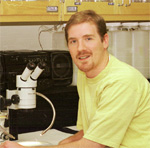
Gerald H. Thomsen is a Professor in the Department of Biochemistry and Cell Biology at Stony Brook University, where his research focuses on molecular mechanisms of embryonic development using Xenopus frogs and Nematostella vectensis sea anemones. His laboratory investigates growth factor signaling pathways, ubiquitin-mediated protein degradation, and transcriptional regulation during early development.
His primary research areas include TGFß superfamily signaling (specifically Vg1/nodal/activin and BMP pathways), ubiquitin ligase function in cell differentiation, and evolutionary developmental biology through comparative studies of vertebrates and cnidarians. Current projects examine Smad-interacting factors, Smurf ubiquitin ligases, and the molecular basis of regeneration in sea anemones, with implications for understanding human developmental disorders and birth defects.
Dr. Thomsen's publications reveal consistent focus on developmental signaling mechanisms across diverse model organisms, with recent work emphasizing CRISPR/Cas9 applications in Xenopus and evolutionary conservation of developmental pathways. His laboratory maintains active collaborations with researchers at the University of Florida and University of Hawaii, particularly on Nematostella vectensis functional genomics and regeneration studies, as evidenced by co-authored publications on cnidarian developmental mechanisms.