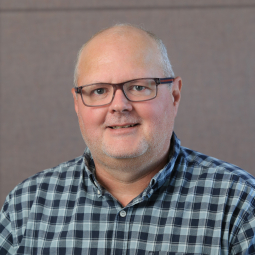
Jeffrey Alt is Research Professor and Lecturer in the Department of Earth and Environmental Sciences at the University of Michigan. His research focuses on geochemical processes in oceanic crust and subseafloor environments, examining microbial-mineral interactions, isotope fractionation, and element cycling. Alt investigates hydrothermal systems, subduction zone geochemistry, and the deep biosphere through field studies and laboratory analyses. Research interests include geomicrobiology of subseafloor environments, stable isotope applications in geochemical systems, and alteration processes in oceanic crust. Current projects examine carbon cycling in altered basalt, microbial communities in ancient seamounts, and metal transport in hydrothermal systems. Publications consistently address fluid-rock-microbe interactions in marine environments, with recent emphasis on oceanic core complexes, subduction recycling, and isotopic tracers of geochemical processes. Articles integrate field observations from drilling expeditions with laboratory geochemical analyses. Alt teaches courses in geochemistry and geomicrobiology, guiding graduate research on geobiological processes in subsurface environments. His work involves collaborations with international ocean drilling programs and geomicrobiology consortia.
Jessica Stanley is an Assistant Professor in the Department of Earth and Spatial Sciences at the University of Idaho, College of Science. She holds a PhD in Geological Sciences (2015, University of Colorado at Boulder), M.S. and B.S. in Earth and Planetary Sciences from MIT (2009 and 2008). Her research focuses on tectonics, topography, and thermochronology, particularly exploring continental dynamics, landscape evolution, and geodynamic processes. She leads the T³ (Tectonics, Topography, Thermochronology) research group, emphasizing collaboration and equity in academia. Key projects include investigations of Yellowstone Hotspot influences, southern African Plateau uplift, and climate-tectonic interactions in Patagonia. Education: PhD in Geological Sciences, University of Colorado Boulder, 2015 M.S. in Earth and Planetary Sciences, MIT, 2009 B.S. in Earth, Atmospheric, and Planetary Sciences, MIT, 2008 Research Interests: Combines thermochronology, field observations, and landscape modeling to address continental-scale questions. Recent work examines Yellowstone Hotspot-driven exhumation, climate-driven sedimentation in Patagonia, and uplift mechanisms in southern Africa. The T³ group prioritizes interdisciplinary approaches and community engagement. Awards: Marie Morisawa Award (2024) Grants & Funding: Active in securing NSF collaborative grants for hotspot-related studies and landscape evolution projects. Her work integrates multi-proxy datasets (thermochronology, sediment flux, topography) to model geodynamic processes. Labs/Teams: Leads the T³ research group at the University of Idaho, fostering a supportive environment for graduate students and postdocs. Collaborates internationally on projects linking surface processes to deep Earth dynamics.
Barbara Carrapa is a Professor at the University of Arizona specializing in sedimentary geology and low-temperature thermochronology. Her research focuses on mountain-building processes, tectonic-climate interactions, and the evolution of orogenic systems in regions like the Andes, Pamir, and Himalaya. She employs multidisciplinary methods combining thermochronology, geochronology, and sedimentary basin analysis to investigate erosion rates, basin formation mechanisms, and paleoenvironmental conditions. Carrapa teaches courses in Historical Geology, Sedimentology, Basin Analysis, and Field Methods, actively involving students in collaborative research projects. Her work integrates field data with numerical modeling to address questions about continental deformation and the interplay between surface processes and deep Earth dynamics. Current research priorities include the mid-Pleistocene erosion shifts in the Himalaya-Karakoram, the role of climate in shaping Andean orogenic wedges, and the application of monazite fission-track thermochronology in low-magnitude cooling studies. She leads the Trans ANdean Great Orogeny (TANGO) seismic project examining Central Andean crustal structure through advanced seismological techniques. Collaborations span global tectonic systems, with fieldwork in North America, South America, and Asia. Her teaching emphasizes hands-on field training and cutting-edge analytical methods, preparing students for careers in academic and applied geosciences. Recent studies highlight the influence of Miocene climatic shifts on Andean topography and the interplay between foreland basin subsidence and mantle dynamics in the Central Andes.
Simon Cuthbert is an Associate Professor at AGH University of Science and Technology's Faculty of Geology, Geophysics and Environmental Protection , affiliated with the Department of Mineralogy, Petrography and Geochemistry. His research focuses on tectonic processes, eclogite-facies metamorphism, and environmental geochemistry. Current Position: Associate Professor, AGH University of Krakow Research Themes: Ultrahigh-pressure rocks, Caledonian orogeny, gold mineralization, halogen geochemistry Key publication trends include: U-Pb zircon dating of Scandinavian Caledonides rocks Hydroxyl content analysis in eclogitic minerals Environmental impacts of potentially toxic elements Tectonic implications of gold mineralization in collision zones Laboratory collaborations include the Orogen Dynamics Team , with extensive work in Norway's Western Gneiss Region and Scotland's Caledonian belt.
Shaocheng Ji is a Full Professor in the Department of Civil, Geological and Mining Engineering at Polytechnique Montréal . He holds a B.Sc. from Nanjing, M.Sc. from Beijing, and Ph.D. from Montpellier, France. Research Interests: Structural geology and tectonics, focusing on crustal deformation mechanisms Seismic anisotropy and wave propagation in geological materials Rheology of rocks under high-pressure and high-temperature conditions Tectonophysics with emphasis on lithospheric dynamics and mantle processes Rock mechanics applications to earthquake fault zones and orogenic belts Recent Publications: His work spans structural geology, seismic properties, and tectonic modeling. Notable trends include 3D numerical simulations of microboudinage, analysis of pseudotachylyte-induced fault weakness, and studies on auxetic behavior in sandstones. Research frequently integrates field data with experimental and theoretical frameworks. Advising: Supervised 5 Ph.D. and 1 Master’s student, with thesis topics covering seismic anisotropy, rock deformation, and tectonic implications of mineral fabrics.
John Platt is a Professor of Earth Sciences at the University of Southern California's Dornsife College of Letters, Arts and Sciences. His research focuses on the mechanics of crustal deformation, particularly on convergent plate boundaries and in collisional orogens. He is affiliated with the Southern California Earthquake Center and has made significant contributions to structural geology and geodynamics through more than 100 publications. Ph.D. Geology, University of California, Santa Barbara, 1973 B.A. Geology, Oxford University, 1969 Postdoctoral Training: University Research Fellow, University of Adelaide, 1975-1976 Professor Platt's research interests center on the mechanics of crustal deformation, particularly on convergent plate boundaries and in collisional orogens. His research tools include field-based structural geology, integrated with the mechanical analysis of large-scale dynamic systems such as thrust belts and collisional plateaux. This is supported by microstructural analysis to elucidate deformation mechanisms, rheology, and crustal strength; thermobarometry and geochronology; and paleomagnetism to determine rotational history. His recent publications (2017-2020) demonstrate a continued focus on shear zone mechanics, subduction zone processes, and the tectonic evolution of key regions including the Franciscan Complex of California, the Alborán Domain in the western Mediterranean, and the Betic-Rif arc system. His work integrates field observations with mechanical modeling to understand crustal deformation across multiple scales. Wollaston Fund, Geological Society of London, 1998 Best Paper Award in Structural Geology and Tectonics, Geological Society of America, 1989 Nuffield Science Research Fellowship, 1984-1985 Professor Platt has secured substantial research funding from the National Science Foundation, United States Geological Survey, and the Southern California Earthquake Center. His funded projects include studies on the deep structure of lithospheric fault zones, geological constraints on subduction zone interfaces, and collaborative research through the PICASSO program investigating the Alboran Sea system. His research has involved collaborations with scientists from multiple disciplines including petrology, geochronology, and geodynamics. Professor Platt is affiliated with the Southern California Earthquake Center, where he contributes to research on fault systems and seismic hazards in Southern California. His work often involves collaborative field studies and integrates multiple analytical techniques to understand complex tectonic systems.
Laurent Godin is a Professor in the Department of Geological Sciences and Geological Engineering within Queen's University's Faculty of Engineering and Applied Science, where he directs the Queen's Tectonics Research Laboratory. His work investigates mountain belt dynamics through integrated structural geology, geochronology, and numerical modeling approaches. Research focuses on structural and thermal evolution of continental crust in orogenic systems, emphasizing how pre-existing structures influence seismicity and mountain building. The laboratory examines fault reactivation mechanisms and tectonic inheritance across diverse geological settings using field studies, thermochronology, and computational simulations. Recent publications reveal patterns in crustal deformation from the Himalayas to the Canadian Arctic, highlighting how basement structures control surface processes and seismic hazards in intraplate regions. Dr. Godin mentors multiple graduate students including PhD candidate Taylor (NSERC award recipient) and MSc candidate Michelle Pearce (Ontario Graduate Scholar). The laboratory maintains active collaborations on projects spanning tectonic evolution, geodynamic modeling, and seismic risk assessment in structurally complex terrains.
Laurent Jolivet is a Professor of Earth Sciences at Pierre and Marie Curie University (UPMC-Paris 6) since September 2017. Previously, he served as Professor at the University of Orleans (2009-2017) where he was also a Senior Member of the Institut universitaire de France (IUF), and held professorial positions at UPMC-Paris 6 (1998-2009) and University of Cergy-Pontoise (1995-1998). His academic career began as an Assistant Professor at the Ecole Normale Supérieure de Paris (1985-1995). Professor Jolivet's research focuses on structural geology, tectonics, and geodynamics, with particular expertise in Mediterranean and Asian geology. His work examines subduction processes, exhumation of high-pressure metamorphic rocks, backarc extension, and the formation of mountain ranges. He has made significant contributions to understanding the geodynamic evolution of the Mediterranean region, including the Messinian salinity crisis and the tectonic processes behind continental deformation. Analysis of his recent publications reveals a consistent focus on Mediterranean tectonics, particularly the interactions between Africa and Eurasia. His research combines field observations with geophysical data and modeling to understand crustal deformation, subduction processes, and the formation of geological structures. He has pioneered work on the role of eclogitization in continental subduction and the mechanisms behind the exhumation of high-pressure rocks. 1994 CNRS Bronze Medal 1997 Prize Hall, Fallot-Jérémine, Jacob - Académie des Sciences 2003 Prize P. Pruvost - Société Géologique de France 2011 Stephan Mueller Medal (European Union of Geosciences) Member of Institut universitaire de France (IUF) 2012 ERC Advanced Research Grant RHEOLITH (E. Burov co-PI) Professor Jolivet has secured significant research funding, including the ANR project EGEO (2007-2010, 500 K€) and the ERC Advanced Research Grant RHEOLITH (2012-2017, 2.645 M€). He has held numerous administrative positions including Director of the Tectonics Laboratory at UPMC (1999-2006), Director of the Earth Sciences Department (2006-2007), and Director of Master STUE at the University of Orleans (2011-2014). He leads research in the Tectonics Laboratory (UPMC, UMR CNRS 7072) which focuses on structural geology, tectonics, and geodynamics, with emphasis on Mediterranean and Asian regions. The laboratory conducts field studies, petrological analyses, and geodynamic modeling to understand crustal deformation processes.
Béatrice Luais is a CNRS Researcher at the Centre de Recherches Pétrographiques et Géochimiques (CRPG), a joint research unit of CNRS and Université de Lorraine in Vandœuvre-lès-Nancy, France. Her work focuses on isotope geochemistry with applications in planetary science and cosmochemistry. Her research interests center on isotope fractionation processes , particularly germanium, iron, and cadmium isotopes, applied to meteorites, magmatic systems, and ore deposits. She investigates nebular condensation , core formation , fluid-rock interactions , and ore genesis mechanisms through high-precision mass spectrometry techniques including MC-ICPMS and SIMS. Analysis of her publication record (1983-2024) reveals consistent focus on isotope systematics across diverse geological contexts, with recent work emphasizing Cd isotopes in hydrothermal systems and Ge isotopes in meteorites . Her research bridges cosmochemistry and economic geology through innovative analytical approaches. Luais has mentored numerous doctoral and postdoctoral researchers, with asterisked co-authors in her publications indicating supervisees. Her collaborative work spans institutions in France, China, Switzerland, and the United States. She contributes significantly to analytical methodology development, particularly in SIMS and MC-ICPMS applications for isotope measurements in complex matrices. Her 2017 review on germanium isotope geochemistry remains a key reference in the field.
Professor Nathan Daczko is a distinguished metamorphic petrologist at Macquarie University's School of Natural Sciences, Department of Earth and Planetary Sciences, and a key member of the ARC Centre of Excellence for Core to Crust Fluid Systems. With a BSc in Computer Science and PhD in Geology from the University of Sydney, he has established himself as a leading researcher in crustal evolution and metamorphic processes. His work spans multiple scales from microstructure to large orogenic systems, with fieldwork conducted in New Zealand, Central Australia, Italy, and Antarctica. Professor Daczko's research focuses on the microstructural and microchemical changes that occur during melt-rock interaction, examining how mass transfer occurs through the deep crust. His work crosses discipline boundaries to explore igneous/structural mechanisms of melt migration and metamorphic processes. Field aspects of his research explore exposed lower crustal plumbing systems in ancient magmatic arcs (Fiordland, New Zealand), intracontinental orogens (Central Australia), extensional periods of the New England Orogen, and the Italian Alps (Ivrea-Verbano Zone). His publication record shows consistent high productivity, with numerous articles in top journals like Journal of Metamorphic Geology , Lithos , and Geology . His recent work demonstrates increasing focus on experimental approaches to melt-rock interaction and expanding geographical scope to include Antarctic research. The research themes consistently center on understanding melt migration pathways, deformation mechanisms in the deep crust, and the tectonic implications of these processes. 2022 – VC's Learning and Teaching Awards, Educational Leader Award 2021 – Faculty of Science and Engineering Awards, Excellence in Learning Innovation 2020 – Stillwell Award (Geological Society of Australia) 2018 – Earth and Planetary Sciences HDR Supervision Award 2010 – E.S. Hills Medal (Geological Society of Australia) 2006 – Australian Institute of Political Science NSW/ACT Young Tall Poppy Award Professor Daczko has supervised over 40 research students including PhD, Master's, and Honors candidates, with many completing their theses on topics related to melt-rock interaction, crustal deformation, and metamorphic processes. His research has been supported by more than 40 grants totaling millions of dollars from ARC, Macquarie University, Australian Antarctic Division, and other funding bodies. His work often involves collaboration with international researchers and utilizes advanced analytical facilities including synchrotron radiation and laser ablation systems. He maintains active involvement in professional societies including the Geological Society of Australia (1997-current), Geological Society of America, and American Geophysical Union (2002-current), as well as the Australasian University Geoscience Educators Network. His research continues to advance understanding of crustal evolution through innovative field and laboratory approaches to studying metamorphic processes.
Mike Searle is a Professor of Earth Sciences at the University of Oxford, affiliated with Worcester College. His research focuses on tectonic processes in orogenic belts and ophiolite complexes, combining field geology with geophysical and geochemical analyses. He collaborates internationally, including with Khalifa University in Abu Dhabi on projects in Oman/UAE and Myanmar. Research emphasizes SW England Tectonics, Himalayan and Tibetan Tectonics, Aegean Metamorphic Core Complexes, and East Asian Ophiolites Utilizes U-Pb geochronology, thermobarometry, and seismic imaging techniques Active in projects related to continental collision processes, subduction zone dynamics, and rapid crustal exhumation Teaching areas include advanced structural geology and tectonics. His work spans field-based studies in 8 countries including Oman, Nepal, Myanmar, and Greece.
Peter Copeland is a Professor in the Earth and Atmospheric Science department at the University of Houston . His research focuses on geochemistry and tectonics , with a particular emphasis on the geological evolution of the Himalayas and Andes mountains. Key research areas : Uplift mechanisms, crustal deformation, thermochronology, and sedimentary basin analysis. Methodological expertise : Isotope geochemistry, structural mapping, and geochronological techniques like U-Pb and 40Ar/39Ar dating. His publications span from 1987 to 2017, covering topics such as collisional tectonics , magmatic processes , orogenic lifespan variability , and sediment budget modeling . Recent work (2016–2017) examines relationships between source area dynamics and Laramide orogeny longevity. Peter Copeland has collaborated extensively with leading geoscientists including T. Mark Harrison (UCLA), Michael A Murphy (University of Houston), and P.G. DeCelles (University of Arizona). His work is frequently published in high-impact journals such as Science , Geology , and Tectonics .
Summer Brown is a Lecturer in the Department of Earth & Environmental Sciences at the University of Kentucky's College of Arts & Sciences. Her work bridges geoscience education, science communication, and natural hazards research. She teaches large introductory courses (EES 110, 180, 190) and specialized courses for majors (EES 230, 235), while also contributing to the UK Next Generation Scholars program for high school students. Her research focuses on geohazard resilience and outreach, including NSF-funded projects like the Enviropods program (middle/high school geoscience education) and the Southern Appalachian Flood Resilience Incubator. She has conducted extensive fieldwork on the Teton fault system, investigating paleoseismicity and climate records. Notably, her team discovered potential recent earthquakes on the Teton fault through lake seismic and core analysis. Her professional experience includes designing educational programs, managing EES social media, and organizing community events. She emphasizes visually communicating complex earth science challenges to non-experts. While she does not advise graduate students, her teaching and outreach efforts aim to democratize STEM access. Scientific contributions span structural geology, thermochronology, and fault dynamics, with publications on the Teton Range's uplift history, Scottish Caledonides orogeny, and Yellowstone hotspot interactions. Her work blends field observations with lab-based geochronological techniques to address both academic and societal challenges.
Dr. Douglas K. Tinkham is a faculty member at the Harquail School of Earth Sciences, Laurentian University. He joined the university in 2005 and specializes in metamorphic geology, particularly applying thermodynamic calculations and geochronology to study metamorphic processes. His research focuses on the pressure-temperature-time evolution of metamorphic rocks, effects of metamorphism on hydrothermal alteration zones in VMS systems, partial melting mechanisms, and lithogeochemistry of hydrothermally altered rocks. He develops thermodynamic algorithms and quantitative X-ray mapping software for mineral analysis. Education: B.Sc., Rocky Mountain College M.Sc., University of Illinois Ph.D., University of Alabama Research Interests: Metamorphic phase equilibria and P-T-t path modeling Metamorphism of hydrothermal alteration zones and economic mineralization Partial melting in high-grade metamorphic rocks Lithogeochemistry of volcanic rocks Structural controls on ore deposits LA-ICP-MS imaging and mineral chemistry His recent articles analyze low-pressure/high-temperature metamorphism, Zr-Hf decoupling in anatexis, and the impact of garnet zoning on pseudosections. These studies emphasize Sudbury Igneous Complex, VMS deposits, and the interplay of equilibrium/kinetics in metamorphic processes. Scientific Awards: None explicitly mentioned. Advising & Grants: Currently supervises 1 PhD student and 4 MSc students. Past students include Dr. Taus Jørgensen (PhD) and Craig Fitchett (MSc). Research supported by grants from the Ontario Geological Survey, CFREF Metal Earth, Detour Gold Corp., and NSERC. Labs/Teams: Active contributor to the Harquail School’s research themes in Mineralogy and Petrology , Structure & Tectonics , and Ore Deposits and Mineral Exploration . Collaborates with the Metal Earth Research Centre (MERC) on high-grade metamorphic studies and mineral exploration projects.
Mihai Ducea is a full Professor of Geology at the University of Arizona since 2009, with courtesy appointments at the University of Bucharest (2011–2015). He received his PhD in Geology from Caltech (1999) after a postdoc at Florida International University (1999–2000). Research Interests: Tectonics and petrology of orogenic regions, crustal thickness evolution via geochemical proxies, subduction zone dynamics, magmatic arc architecture, delamination processes, and thermal evolution of plateaus. Lab Facilities: Oversees trace elemental geochemical and radiogenic isotopic labs (ICP-MS, TIMS) for analyzing magmatic and metamorphic rocks. Scientific Contributions: Published over 400 works with 135,289 reads and 17,435 citations (h=33, i10=69). Key areas: quantifying magmatic fluxes, tracking crustal recycling, and regional studies in Western N. American Cordillera, Andes, Pamirs, Carpathians, and Tibet.