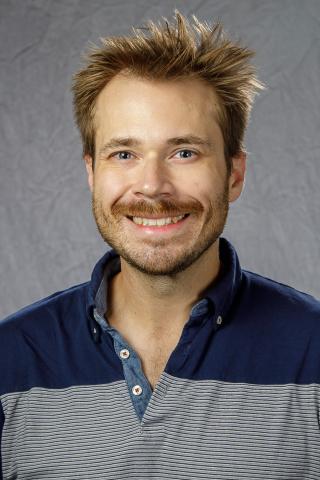
Peggy C. Stephens is a Professor in the College of Public Health at Kent State University, specializing in substance abuse prevention and treatment. She holds a Ph.D. in Sociology from the University of Akron (1999) with additional degrees in Education and Sociology. Her research applies quantitative methods to examine health and social problems associated with substance abuse, including multi-site evaluations of prevention programs. Current work addresses opioid crisis interventions, program fidelity measurement, and social determinants of substance use. Publications demonstrate expertise in adolescent substance abuse prevention, prescription drug misuse among juvenile offenders, and disaster impacts on youth mental health. Recent methodological contributions include frameworks for synthesizing moderation effects across clinical trials.
Dr. Graham Smith is a Senior Lecturer in Psychology at the University of Northampton, affiliated with the Centre for Psychological and Sociological Sciences. He holds BPS chartered status and has been teaching since 1999. His roles include Deputy Subject Leader for Psychology, coordinating modules like PSY2003 and PSYM080, and teaching courses on philosophy of psychology, perception, cognitive neuropsychology, and research methods. His research focuses on statistical cognition, visual thinking, consciousness studies, and visual perception, with particular emphasis on lucid dreaming and connectionist theory. He supervises students exploring meditation and lucid dreaming. His work has been published in journals like Dreaming and Consciousness and Cognition . He actively contributes to media commentary, including analysis of royal events and social issues. Education: PhD Psychology (University of Plymouth, 1998) – Thesis: 'The priming of visual feature integration and illusory conjunctions' BSc (Hons.) Psychology (University of Plymouth, 1992) Teaching Specializations: Research methods, quantitative/qualitative analysis, philosophy of psychology, cognitive psychology Smith's research interests bridge theoretical and applied psychology, with a focus on enhancing critical thinking through visual tools like argument mapping. His recent work emphasizes statistical cognition and the practical implications of meta-analytic techniques in understanding lucid dreaming phenomena. He has collaborated with researchers like Dr. Daniel Saunders and Prof. Christopher Roe on sleep-related studies. Media contributions include analyses of societal issues linked to monarchy and mental health. While no formal grants are explicitly listed, his academic output reflects sustained engagement with interdisciplinary research themes. He has supervised undergraduate and postgraduate dissertations on topics ranging from consciousness to moral reasoning.
Tyler Lefevor is an Associate Professor in the Department of Psychology at Utah State University (USU), affiliated with the Emma Eccles Jones College of Education and Human Services. He specializes in counseling psychology, focusing on LGBTQ+ mental health, religion/spirituality, and research methods. He holds a PhD from the University of Miami (2016), followed by a postdoctoral fellowship at Stanford University (2016–2017) and teaching at Rhodes College (2017–2020). His research examines how religiousness intersects with health outcomes among sexual and gender minorities, emphasizing three key areas: health disparities among religious minorities, religious influences on health, and translating findings into clinical and policy contexts. He maintains a private practice serving LGBTQ+ clients with conservative religious backgrounds and supervises doctoral students in the Sexual and Gender Minority Services practicum. Bilingual in English and Spanish, he integrates clinical work with research via a scientist-practitioner model. Education: PhD in Counseling Psychology, University of Miami, 2016 Postdoctoral Fellowship, Stanford University, 2016–2017 Research Interests: His work explores health disparities, religious/spirituality dynamics among LGBTQ+ populations, and the application of research to therapy and policy. Key themes include minority stress theory extensions, faith-based identity conflicts, and interventions for marginalized groups. He publishes widely on topics like clergy counseling of LGBTQ+ individuals, religious de-identification, and mental health outcomes in conservative religious contexts. Advising & Grants: Supervises doctoral students in clinical/counseling specializations, emphasizing training in LGBTQ+ mental health. No grants explicitly listed in the texts provided. Maintains a lab focused on religious and sexual minority health intersections. Labs/Teams: Leads research initiatives on LGBTQ+ mental health and religion, collaborating with interdisciplinary teams to bridge clinical practice and academic research.
Dr. Amanda Lee is a Senior Lecturer in the Faculty of Health and Education at Manchester Metropolitan University. Her research focuses on health psychology, public health interventions, and qualitative methodologies, with particular emphasis on mental health, equity in healthcare, and social determinants of health. She investigates complex health challenges through mixed-methods approaches that center community voices and lived experiences. Her research examines: Mental health disparities in marginalized populations Innovations in health communication and education Structural barriers to healthcare access Critical analysis of health systems Community-based participatory research Analyzing her recent publications reveals strong thematic focus on: healthcare equity during crises, pedagogical innovations in health education, and applications of critical theory to health disparities. Her work demonstrates consistent methodological rigor through systematic reviews, qualitative studies, and mixed-methods designs exploring understudied populations. She actively mentors postgraduate researchers and contributes to curriculum development in health psychology. Her research group collaborates with healthcare providers and community organizations to translate findings into practice.
Hanamori Skoblow is a Research Fellow at the Center for Family Policy and Research, University of Missouri, with a PhD in Human Development and Family Science. Her research examines biopsychosocial factors in aging, including social ties, cognitive functioning, and caregiving dynamics across the life course. Education : PhD in Human Development & Family Science, University of Missouri (2024) MS in Human Development & Family Science, University of Missouri (2021) BA in Psychology, Beloit College (2014) Dr. Skoblow's work integrates quantitative methods to investigate how early-life socioeconomic factors, relational dynamics, and self-perceptions of aging influence late-life health outcomes. Her research employs dyadic modeling, meta-analytic techniques, and longitudinal datasets to uncover mechanisms linking psychosocial resources to cognitive resilience. Her publications explore diverse aspects of gerontology including caregiver stress allocation, couples' health behaviors, inflammation pathways, and socioeconomic determinants of cognitive aging. Methodological strengths include structural equation modeling and meta-regression. Awards and Honors : P.E.O. Scholar Award (2023) Gerontological Society of America Policy Intern (2022) Marilyn Coleman Outstanding Graduate Student Scholarship University Medal (supervised student, 2023) Dr. Skoblow mentors students in the Families in Later Life Lab and collaborates on NIH-funded projects examining social determinants of health. She maintains affiliations with the Gerontological Society of America and International Association for Relationship Research.
Alexandr Chernyavski is a Visiting Assistant Professor in the Department of Mathematics at the University at Buffalo. He specializes in applied mathematics with a focus on nonlinear waves and PT-symmetric systems. His research combines analytical and numerical methods to study real-world applications in quantum mechanics, nonlinear optics, and material science. Education: Ph.D. in Mathematics, McMaster University, Canada B.Sc. in Information and Computer Science, Moscow Institute of Electronic Technology, Russia Postdoctoral Fellowships: University of Victoria (Canada) and University of Cape Town (South Africa) Research Interests: Chernyavski explores soliton stability, PT-symmetric systems, and convex optimization techniques. His work addresses applications such as quantum computing memory development, novel optical devices, and meta-material design. He employs sum-of-squares programming and Lyapunov function analysis to study nonlinear differential equations. Awards: None listed. Advising/Grants: No specific grants or advisees listed, though his research involves collaborations in computational physics and applied mathematics. Labs/Teams: Engaged with interdisciplinary teams studying nonlinear systems and PT-symmetry applications. Active on Google Scholar and maintains a personal academic website.
Shelby A. Rinehart is an Assistant Professor in the Department of Biodiversity, Earth and Environmental Science at Drexel University, where she bridges community and ecosystem ecology to investigate animal-mediated nutrient cycling processes in coastal and arid ecosystems. Her educational background includes: PhD in Ecology from San Diego State University and University of California, Davis Joint Doctoral Program (2018) BS in Biological Sciences from the University of Rhode Island (2013) Dr. Rinehart's research integrates multiple ecological disciplines with strong emphasis on: Species interactions and bioturbation mechanisms Ecosystem-level carbon and nitrogen cycling Restoration ecology in marine, coastal, and dryland habitats Development of ethical frameworks for environmental field research Her experimental work utilizes model invertebrate systems across global sites including Gulf of Mexico salt marshes and Negev Desert drylands. Current projects focus on burrowing crab impacts on sediment dynamics, snail-mediated soil processes, and nature-based coastal resilience solutions. Analysis of her 15 most recent publications (2022-2025) reveals a dominant research trajectory in tidal marsh restoration ecology, with increasing emphasis on meta-analytical approaches, global biogeochemical datasets, and ethical considerations in field methodology. Key thematic clusters include crab-mediated sediment engineering, nitrogen cycling in aquatic systems, and standardized assessment of restoration success metrics. Dr. Rinehart actively develops mentorship programs for underrepresented ecologists through the Ecological Society of America and advocates for LGBT+ representation in STEM fields. Her Bio-Funk Lab operates as a collaborative hub connecting academic researchers with resource managers and restoration practitioners to advance both ecological theory and practical conservation outcomes in watershed habitats worldwide.
David Hureau is an Associate Professor at the University at Albany, State University of New York, jointly appointed in the School of Criminal Justice and Rockefeller College of Public Affairs & Policy, and serves as Director of the Center for Policy Research. His work applies ethnographic and qualitative methods to the study of urban violence, policing, street gangs, and community-based interventions. Education: Ph.D. in Sociology & Social Policy, Harvard University, 2016 Research Interests: Professor Hureau’s scholarship sits at the intersection of criminology and urban sociology, focusing on how social inequality shapes violent crime and how criminal justice policy responds to it. He employs ethnographic and qualitative techniques to explore street gangs, gun violence, hot-spots policing, and the lived experiences of both offenders and violence-intervention workers. Across his recent publications (2023-2025) he interrogates the role of street outreach in public-safety infrastructure, evaluates gang-intervention programs, and examines the psychological toll on front-line violence interrupters. Earlier work (2018-2022) concentrates on illicit gun markets, the spatial concentration of gun violence, and rigorous meta-analytic assessments of hot-spots policing effectiveness. Scientific Awards: No awards or fellowships are listed in the provided material. Advising & Grants: No specific doctoral students, grants, or sponsored projects are detailed in the source text. Labs & Teams: Hureau directs the Center for Policy Research at the University at Albany, a hub for collaborative interdisciplinary work on public safety and social policy.
Frank Marino is Professor in Medicine and Director of Graduate Programs at Charles Sturt University's School of Rural Medicine. He holds a PhD from Charles Sturt University, MEd (Merit) from University of Sydney, and Specialist Certificate in Neuroscience from University of Melbourne. Research examines thermoregulatory responses during exercise in extreme environments, hydration impacts on cognitive performance, and evolutionary biology of human endurance. Publications integrate neurophysiological, immunological, and anthropological frameworks. Recent work analyzes fatigue induction methods and hydration-neurocognition relationships. Awards include dual Spitfire Memorial Defence Fellowships and research excellence recognition. Editorial roles include Journal of Thermal Biology and Journal of Science and Medicine in Sport.
David G. Renter is a Professor of Epidemiology at Kansas State University's College of Veterinary Medicine , where he serves as Director of the Center for Outcomes Research and Epidemiology and holds the Dr. Robert MacDonald Professorship in Veterinary Medicine . With a BS in Biological Sciences (1994, University of Nebraska at Kearney) , DVM (1998) , and PhD in Veterinary Microbiology (2002) from Kansas State University, his career focuses on applying epidemiological principles to enhance animal health, food safety, and human health intersections. Academic background in biological sciences, veterinary medicine, and microbiology Leadership role in veterinary outcomes research Teaching focus on epidemiology and evidence-based practice Industry-aligned research with beef production systems His research emphasizes experimental/observational epidemiology in feedlot cattle, addressing complex issues like bovine respiratory disease , antimicrobial stewardship , economic modeling , and food safety . A Fellow of the Conference of Researchers in Animal Disease , he has published extensively on feedlot management , statistical disease modeling , and veterinary decision analytics . Recent publications (2022-2025) demonstrate a pattern of economic risk modeling in cattle operations, antibiotic metaphylaxis outcomes , weather-disease correlations , and structural equation modeling for feedlot data. His work bridges statistical rigor with practical agricultural applications . 2025: Economic modeling of feedlot interventions 2024: Causal inference frameworks in veterinary research 2023: Anthelmintic refugia strategy validation 2022: Vaccine efficacy testing in neonatal calves As a continuing education developer and graduate training architect , he mentors DVM, MPH, MS, and PhD students while directing population health initiatives. The Center for Outcomes Research under his leadership implements data-driven strategies for livestock sustainability and economic viability in animal health systems.
Dr. Michael Shekelyan is a Lecturer (Assistant Professor) in Computer Science at Queen Mary University of London (2023–present), part of the School of Electronic Engineering and Computer Science. He holds a PhD in Computer Science from the Free University of Bozen-Bolzano (2018) and a Diploma in Media Informatics from Ludwig Maximilian University of Munich (2014). Previously, he worked as a Research Associate at King's College London (2021–2023) and a Research Fellow at the University of Warwick (2018–2021). His academic journey includes roles as a Meta-Reviewer for NeurIPS and ICDT Proceedings Chair (2024), with extensive service as a reviewer for top conferences like ICML, NeurIPS, ICLR, and journals such as TKDE and IEEE T-IFS. Research Interests: Focuses on algorithms and data structures for managing large/sensitive datasets, including differential privacy, random sampling (e.g., Hidden Shuffle Method), and multidimensional data summarization (e.g., DigitHist). His work bridges theoretical guarantees with practical applications in data management and machine learning. Notable contributions include privacy-preserving top-k selection, efficient sampling over joins, and error-bounded data summaries. Publications: Over 15 peer-reviewed articles in top venues including SIGMOD, ICDE, EDBT, AISTATS, and PVLDB. Key works include 'Streaming Weighted Sampling over Join Queries' (EDBT'23), 'Sequential Random Sampling Revisited' (AISTATS'21), and 'Sparse Prefix Sums' (Information Systems'19, which won an ADBIS award). Grants/Awards: Received the ADBIS'17 Award for Sparse Prefix Sums. Active in organizing conferences and mentoring early-career researchers through reviewing roles. Current projects include a PhD studentship on privacy-preserving algorithms for medical data sharing. Labs/Teams: Leads the Privacy-Preserving Algorithms initiative at Queen Mary, collaborating with international research networks in database systems and data privacy.
Pietro Belloni is a Researcher (RTDa) at the Department of Statistical Sciences, University of Padua, Italy. His primary role involves advancing statistical methodologies for drug safety and public health research through interdisciplinary projects like the Age-IT initiative. He holds a PhD in Statistics from the University of Padua, completed under Professors Giovanna Boccuzzo and Nicholas P. Tatonetti, with visiting research at Columbia University's Department of Biomedical Informatics. His academic journey includes a Master’s and Bachelor’s in Statistical Sciences from the University of Padua, complemented by an Erasmus exchange in Mathematics and Statistics at Århus University. Belloni’s research focuses on epidemiology, medical statistics, and social statistics, with particular emphasis on text mining, spatial epidemiology, and composite indicators for public health assessment. He actively contributes to research teams such as GLASS (a young Italian social statistics laboratory) and the Age-IT project addressing aging society challenges. Teaching responsibilities span epidemiology, medical statistics, and data analysis methods at both University of Padua and H-Farm College. His software contributions include R libraries like perla for mortality cluster analysis and MARMoT for statistical balancing techniques. Belloni’s work bridges theoretical statistics with practical applications in healthcare and social sciences, with publications in journals like Statistical Methods & Applications and Acta Otorhinolaryngol Italica , and book chapters on pharmacovigilance and text mining. His research has addressed topics ranging from cancer staging through NLP to pandemic sentiment analysis during the first wave of the COVID-19 crisis.
Dr. David Gilani serves as Head of Access and Participation at Middlesex University, where he leads student engagement initiatives and alumni relations within the School of Education & Student Experience. He holds a PhD in student belonging from the University of York and founded the Student Publication Association (2012). Gilani also chairs AHEP’s Student Experience and Engagement Network, promoting cross-institutional collaboration in UK higher education. His research focuses on student belonging , retention strategies , and equity in higher education . Gilani investigates how universities can foster inclusive environments through evidence-based interventions like agentic belonging workshops and peer-support systems. His meta-analytical work on student communications establishes best practices for institutional engagement. Key research trends from his recent publications include: Innovative methodologies for measuring belonging without researcher interference Critical analysis of deficit models in underrepresented student support Quasi-experimental validation of social belonging interventions Systematic reviews of belonging's relationship with retention Gilani actively translates research into policy through Wonkhe commentaries and institutional consultations. He maintains ORCID (0000-0003-1099-7118) tracking extensive research outputs with over 1,100 views.
Christopher Shepard is an Assistant Professor in the Department of Plant and Soil Sciences at the University of Kentucky's Martin-Gatton College of Agriculture, Food and Environment. He holds a Ph.D. in Soil, Water and Environmental Science from the University of Arizona (2018), complemented by M.S. (2014) and B.S. (2011) degrees in Environmental Science. Research focuses on pedology and soil formation processes, with emphasis on fragipan genesis, mineral-organic interactions, and topographic influences on soil properties. His work employs advanced spectroscopic techniques and geospatial analysis to understand soil health in agricultural and natural systems. Award recognition includes multiple graduate research prizes from the Soil Science Society of America. Recent publications examine phosphorus cycling, mineral weathering, and karst landscape soil variability, frequently utilizing Kentucky's diverse geological settings as model systems.
Gyrd Thrane is an Associate Professor in Physiotherapy at The Arctic University of Norway. His research focuses on physical activity interventions in clinical populations, particularly after cardiac events and stroke, using mHealth approaches. Recent work includes studies on smartwatch-based atrial fibrillation detection post-cardiac surgery, machine learning prediction of post-stroke fatigue, and mobile health interventions for physical activity in intellectual disability populations. Publications demonstrate expertise in rehabilitation outcome measurement, longitudinal recovery patterns, and digital health innovation in physiotherapy.