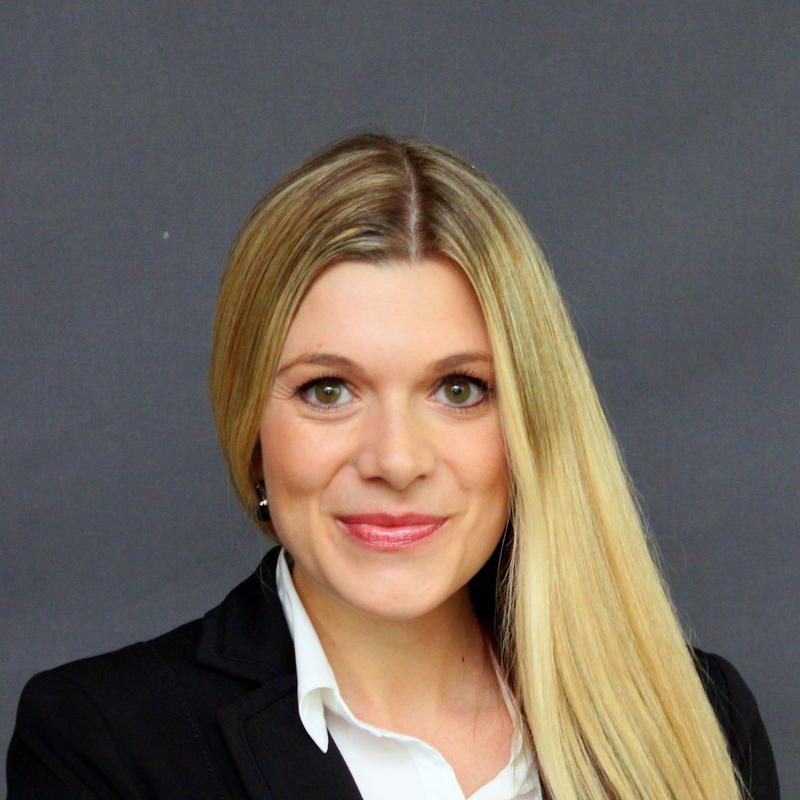
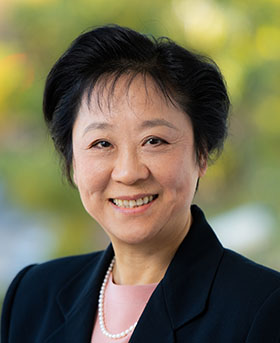
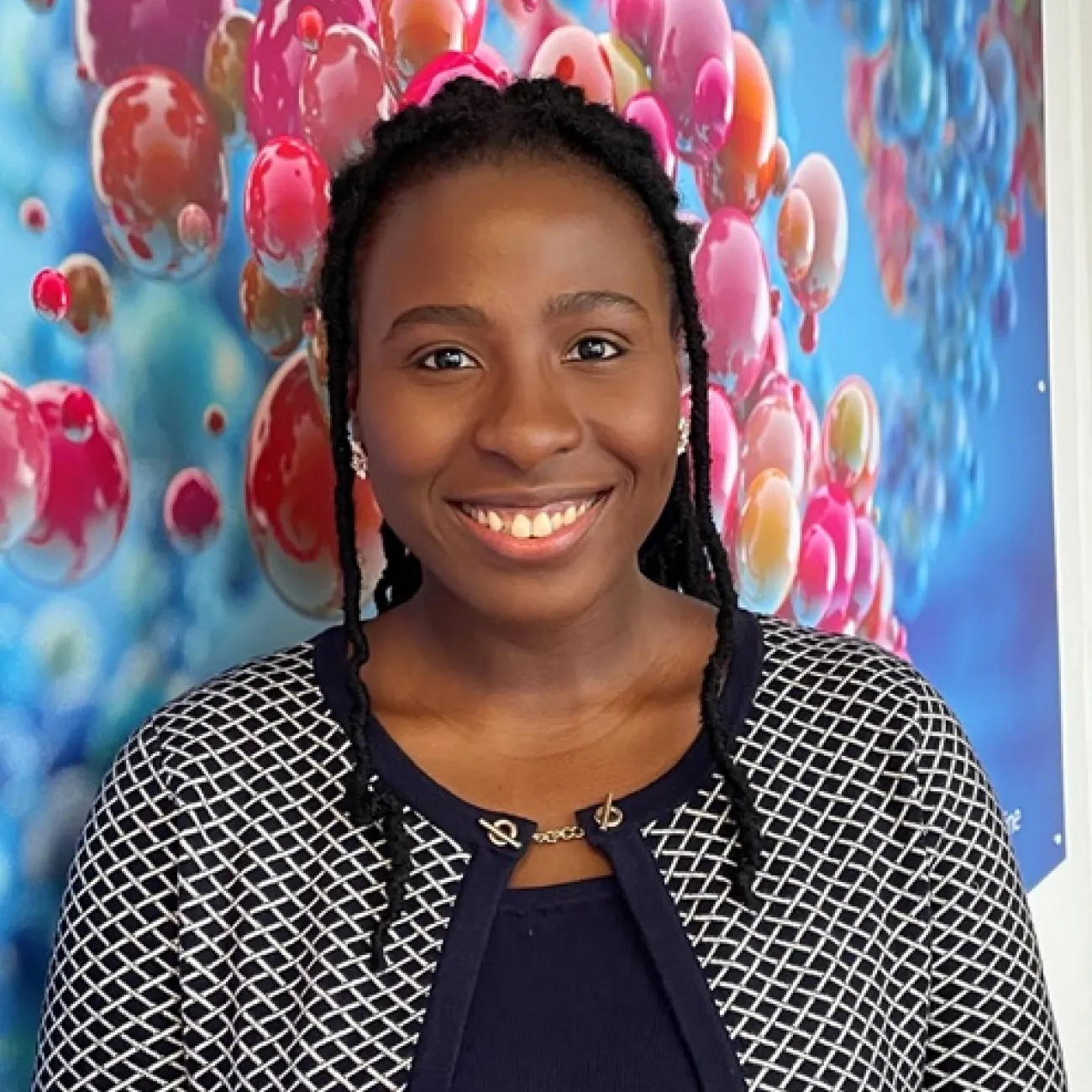
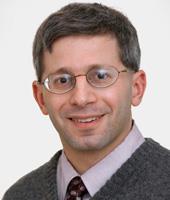
Dr. Melissa Young is an Associate Professor in the Hubert Department of Global Health at Emory University, specializing in maternal and child nutrition, anemia, and public health program evaluation. Her work integrates epidemiology, community nutrition, and applied economics to address global health challenges. She holds a BS from Iowa State University and a PhD from Cornell University. Her research focuses on the first 1000 days of life, emphasizing nutrition's lifelong impacts. Key areas include breastfeeding practices, micronutrient deficiencies, and program implementation. Dr. Young leads the BRINDA project, a global initiative analyzing anemia determinants and hemoglobin cutoffs. She teaches courses on maternal and child nutrition and capstone research. Dr. Young has secured external grants and published widely. Her work bridges clinical and population-level research, aiming to improve global nutrition policies. She collaborates on studies in India, Malawi, Ethiopia, and Vietnam, addressing migration impacts, infant feeding, and healthcare access disparities. Her contributions include advancing methodologies for inflammation-adjusted micronutrient assessments and evaluating frontline health worker interventions. Dr. Young advocates for evidence-based strategies to reduce maternal and child malnutrition globally, emphasizing equity and scalability.
Dr. Julia Pearce is Reader in Social Psychology and Security Studies at King's College London's Department of War Studies. Her research examines psychological and behavioral responses to extreme events including terrorism and pandemics, with particular focus on vulnerable groups. Research challenges assumptions about public panic during crises, demonstrating under-response can be as problematic as over-response. Current projects include risk communication strategies for diverse communities during health emergencies and university responses to radicalization. Significant contributions include the "Run, Hide, Tell" firearm attack guidance evaluation and COVID-19 vaccine communication for ethnic minorities. Serves as Honorary Public Health Academic Consultant at UKHSA and contributed to SAGE during the pandemic. Directs research within the NIHR Health Protection Research Unit in Emergency Preparedness and Response.
Dr. Jin Li is Professor of Education and Human Development at Brown University, specializing in cross-cultural studies of learning beliefs and child development. Her research bridges Western and East Asian perspectives on education, with a focus on how cultural contexts shape children's learning beliefs, parental socialization, and academic achievement across diverse populations including Chinese, Taiwanese, Chinese American, and European American families. Educational Background: B.A. in German from Guangzhou Institute of Foreign Languages (1982) First Ed.M. in Education from University of Pittsburgh (1988) Second Ed.M. in Administrative Planning and Social Policy from Harvard University (1991) Ed.D. in Human Development and Psychology from Harvard University (1997) Dr. Li's research focuses on East Asian virtue-oriented and Western mind-oriented learning models and their impact on children's development across the lifespan from early childhood through college. Her work examines how cultural values shape learning beliefs, parental socialization practices, and educational outcomes. She has conducted extensive comparative research across China, Taiwan, the United States, and other international contexts, revealing fundamental differences in how children from different cultural backgrounds conceptualize learning, achievement, and self-development. Her recent publications demonstrate a continued evolution from studying basic cultural differences in learning models toward more complex examinations of immigrant adaptation, parental socialization strategies, and the philosophical underpinnings of self-concept in Eastern and Western traditions. The research increasingly integrates psychological, educational, and philosophical perspectives to provide a comprehensive understanding of how culture fundamentally shapes human development. Notable Awards and Honors: The President's Award for Excellence in Faculty Governance, Brown University (2024) Xiaojia Ge Lifetime Achievement Award from the SRCD Asian Caucus (2021) Erin Phelps Award from the Society for the Study of Human Development (2017) Inaugural Fellow at Center for Advanced Study in the Behavioral Sciences, Stanford University (2015-2016) Young Scholars Award from the Foundation for Child Development (2006-2008) Dr. Li has secured significant research funding from major foundations including the William T. Grant Foundation, Spencer Foundation, Foundation for Child Development, and Chiang Ching-Kuo Foundation. Her longitudinal studies have followed children from diverse backgrounds across multiple developmental stages. She has mentored numerous doctoral students and collaborated with researchers internationally, particularly focusing on how low-income immigrant families navigate educational systems while maintaining cultural values. Her work extends beyond traditional academic settings through collaborations with institutions like Tsinghua University's Schwarzman College and presentations to international audiences across a dozen countries. Dr. Li's research has practical implications for educators seeking to understand and support culturally diverse learners.
Ariadna Matamoros Fernandez is a Senior Lecturer in Digital Media at the School of Communication, Queensland University of Technology (QUT), and a Chief Investigator at QUT's Digital Media Research Centre (DMRC) and the ARC Centre of Excellence for Automated Decision-Making and Society. Her research explores the intersection of digital platforms and systemic inequality, focusing on memes, hate speech, content moderation, and platform governance through cross-disciplinary collaborations with law and data science scholars. Education: PhD in Digital Media (QUT, 2018), MA in Digital Methods Initiative (University of Amsterdam), BA in Journalism (Autonomous University of Barcelona) Her research spans sociocultural controversies on social media, platform governance frameworks, and algorithmic culture on TikTok. She has led studies on digital blackface, covert discrimination on Facebook, and YouTube's ranking algorithms, contributing to journals like Information, Communication & Society and First Monday . She supervises PhD projects on political meme subcultures and digital platform social responsibilities. Her recent work includes policy submissions to Australian parliamentary committees on AI adoption and social media regulation, and analyzing meme-based persuasion in political campaigns. She teaches units on social media, platform power, and digital media projects at QUT's School of Communication.
Prof. Margitta B. Beil-Hildebrand is a full professor at the Paracelsus Medical University (PMU) in Salzburg, Austria, specializing in Qualitative Social Research and Health Management within the Institute of Nursing Science and Practice. She holds a Ph.D. from the University of Edinburgh and additional qualifications in Nursing Management and Higher Education. Her research critically examines managerial initiatives in healthcare contexts through a structuralist lens, focusing on topics such as healthcare reform, nurse absence causes, corporate culture evolution, and architectural influences on hospital operations. She has contributed to policy analysis, palliative care transitions, and rural dementia care studies. Beyond academia, she is an avid classic Porsche enthusiast and has published on automotive history in German. Education: Ph.D., University of Edinburgh M.Sc. in Nursing Management PG Cert. in Higher Education Registered General Nurse (RGN) Research Interests: Prof. Beil-Hildebrand’s work integrates structural analysis with contemporary healthcare challenges. Key areas include: Critical evaluation of managerial policies in healthcare Impact of architectural design on hospital functionality Comparative healthcare systems analysis Ethical leadership in nursing Longitudinal studies on corporate culture change Grants & Projects: Lead PI on the 8-year 'Corporate Culture Change' study (2014–2024) International nursing ethics study across 5 countries Labs/Teams: Active in PMU’s Nursing Science research group, collaborating with interdisciplinary teams on healthcare governance and policy implementation.
Dr. Gail Austen is the Leverhulme Space for Nature Doctoral Scholars Support Officer at the University of Kent, affiliated with the Durrell Institute of Conservation and Ecology (DICE). She holds a PhD in species identification accuracy and has conducted post-doctoral research on the RELATE project linking biodiversity to human wellbeing. Her work focuses on understanding how biodiversity components influence wellbeing and improving species identification methods through interdisciplinary approaches. Her current research includes a collaborative project with the Woodland Trust exploring woodland biodiversity's impact on human wellbeing across socioeconomic gradients. She has contributed to developing the BIO-WELL wellbeing scale and investigating sensory interactions with nature (e.g., colors, smells, sounds). Her research spans participatory data methodologies, public perception of biodiversity, and conservation communication challenges. Dr. Austen has published widely on biodiversity-wellbeing linkages, conservation policy, and species identification accuracy. Her work emphasizes integrating ecological and social dimensions to address conservation challenges. She actively participates in the Kent Reptile and Amphibian Group and contributes to biological recording efforts in the region.
Tonya Dodge is an Associate Professor in the Department of Psychology at The George Washington University, Washington DC. Her research integrates applied and theoretical approaches to examine how social context influences health-related attitudes, decision-making, and behavioral outcomes. Educational Background: Ph.D. in Psychology, University at Albany (2003) Dr. Dodge’s work bridges health psychology and behavioral science, focusing on physical activity’s role in substance use (alcohol, marijuana, steroids), attitude formation, and health disparities among marginalized populations. She has developed and evaluated the "Step It Up" mobile health application to improve cardiovascular health in resource-limited communities, emphasizing tailored messaging and community engagement. Recent Research Trends Her recent publications highlight interdisciplinary applications of psychological theories to public health challenges, including obesity stigma, self-determination theory in substance abuse treatment, and the impact of environmental factors on digital health app engagement. Studies often employ multilevel interventions, behavioral tracking, and tailored communication strategies. Scientific Awards No scientific awards were explicitly mentioned in the provided texts.
Miss Olatundun Gafari is a Lecturer in Public Health and EDI Research Fellow at the NIHR Southampton Biomedical Research Centre (BRC), University of Southampton. She holds an associate registration with the UK Association for Nutrition and specializes in maternal and child health, nutrition, and community engagement in underserved populations. Her research focuses on improving public health outcomes for ethnic minority communities, particularly regarding physical activity, nutrition, and pandemic response messaging. She teaches on MSc Public Health programs, leading modules on Nutrition and Health and supervising students. Research Interests: Maternal and child health and nutrition Health equity in underserved communities Public health messaging strategies Ethnic minority health disparities Teaching: Deputy module lead for Nutrition and Health (MSc Public Health/Global Health) Deputy assessments lead for MSc Public Health Personal Academic Tutor for MSc Public Health students Labs/Teams: Member of Population Health Sciences, Active Living groups, and the Southampton BRC.
Smriti Nepal is a Research Fellow at the Sydney School of Public Health , Faculty of Medicine and Health, University of Sydney. She joined the Poche Centre for Indigenous Health in July 2023, focusing on improving eating disorder services for First Nations people. Education: PhD in Alcohol Policy and Epidemiology (University of Newcastle) Research interests center on Aboriginal health, alcohol and drug prevention, epidemiology, alcohol policy, culturally safe healthcare, and mental health. Her work often addresses health disparities among culturally and linguistically diverse populations. Scientific awards: No awards explicitly mentioned in the text Teaching and supervision include alcohol epidemiology, culturally safe healthcare, and healthcare worker mental health. She is a member of the Australian Health Promotion Association.
Professor Brent Ritchie serves as Head of School at the School of Business, University of Queensland, where he has been employed since June 2008. His distinguished academic career spans multiple institutions including the University of Canberra and the School of Service Management at the University of Brighton UK. He earned his PhD from the University of Otago, New Zealand, in 2000, establishing a foundation for his expertise in tourism management and risk assessment. Professor Ritchie's research centers on tourism risk management, examining risk from both individual and organizational perspectives. His work explores how organizations develop risk attitudes and response strategies to effectively respond and recover from crises and disasters. He has conducted extensive research on tourist attitudes to risk and risk reduction behavior across diverse contexts including beach safety, Australian outbound travel, and travel to regions like the Middle East and Indonesia. His research on sustainable tourism, particularly carbon offsetting behavior in aviation contexts, has been supported by an ARC Discovery Grant and an ARC Linkage grant. Professor Ritchie's methodological approach integrates social and organizational psychology theories to understand the formation of risk attitudes and behaviors, often combining qualitative and quantitative research methods. His publication record reveals a consistent trajectory of scholarly contribution, with recent work showing increased emphasis on environmental conservation issues, particularly regarding the Great Barrier Reef, while maintaining his core expertise in tourism disaster management. His interdisciplinary research spans tourism management, environmental science, psychology, and conservation policy, with recent studies incorporating physiological measures and experimental designs to assess risk communication effectiveness. This evolution reflects the growing intersection between tourism, environmental sustainability, and crisis management in an era of climate change. Professor Ritchie has made significant editorial contributions, having served as former editor of the Journal of Hospitality and Tourism Management and currently serving on the editorial boards of six international journals, including the prestigious Journal of Travel Research. His academic leadership extends to supervising 22 PhD students to completion, although he is currently unable to advise new doctoral candidates. His international recognition is evident through his position as Visiting Professor at Wakayama University's Center for Tourism Research in Japan and as an Affiliate of the Tourism Crisis Management Institute at the University of Florida, USA. With over twelve keynote speeches delivered at international conferences, Professor Ritchie has established himself as a leading authority in tourism risk management research globally.
Marko Klasnja is the Provost's Distinguished Associate Professor at Georgetown University, holding dual appointments in the Edmund A. Walsh School of Foreign Service and the Department of Government. He earned his Ph.D. in Political Science from New York University. His research focuses on political corruption, electoral behavior, and the intersection of wealth and politics. Key themes include voter reactions to politicians' wealth, the role of charismatic leaders in democratic erosion, and the dynamics of anticorruption efforts in democracies. He also explores how economic inequality shapes policy preferences and electoral accountability. His work bridges comparative politics and political economy, with studies on topics like corruption traps, electoral manipulation, and the disciplinary role of political parties. Recent articles highlight trends in public perceptions of political wealth, sanctions against corrupt politicians, and gendered pathways to political office. Klasnja has been recognized with the Provost's Distinguished Associate Professor title. His research spans empirical studies of democratic institutions, elite behavior, and the political economy of development. He contributes to both theoretical and applied questions in international political economy and comparative democratization.
Professor Phil Trinder is a Professor of Computing Science at the University of Glasgow's School of Computing Science. He leads the Glasgow Parallelism Group (GPG) and is a member of the Glasgow Systems Section (GLASS) and the Scottish Programming Languages Seminar (SPLS). His research focuses on parallel and distributed programming models, functional programming, and applications in computational algebra. Trinder holds a DPhil from Oxford University and has over 100 publications. He has led 12 major research projects as Principal Investigator and coordinated EU projects. Collaborations include Ericsson, Maplesoft, Microsoft, and Motorola. His work emphasizes scalable distributed systems, actor-based platforms, and reliable computation. Notable contributions include the SymGridPar framework for computational algebra and research on Erlang scalability. He also explores IoT architectures and tierless programming languages. Key projects include improving Erlang's network scalability and developing frameworks for exact combinatorial search (YewPar). He has supervised numerous researchers and contributed to high-performance systems like HPC-GAP.
Tao Yang is a Professor in the Department of Computer Science at the University of California, Santa Barbara, where he has been a faculty member since 1993. His research spans web search and mining, database and information systems, machine learning and data mining, parallel and distributed systems, and cloud computing. He serves as an active educator, teaching courses including CS170 Operating Systems (Spring 2024), CS291A Neural Information Retrieval (Fall 2024), and CS140 Parallel Computing (Winter 2025). PhD in Computer Science, Rutgers University ME in Artificial Intelligence, Zhejiang University MS in Computer Science, Rutgers University BS in Computer Science, Zhejiang University Professor Yang's research focuses on advancing the field of information retrieval with particular emphasis on neural approaches to search and ranking. His recent work explores neural document ranking, privacy-aware search systems, and versioned data search. He has led significant projects including Neptune clustering infrastructure, Sorrento self-organizing storage cluster, and TMPI for MPI execution optimization. His research bridges theoretical advances with practical implementations, particularly in scaling search architectures to handle billions of documents while maintaining relevancy, performance, and freshness. His publication record shows a clear evolution from foundational work in parallel and distributed systems toward contemporary research in neural information retrieval. Recent publications demonstrate expertise in optimizing both sparse and dense retrieval methods, with particular focus on efficiency improvements for multi-vector representations. His work consistently addresses real-world challenges in search scalability and privacy preservation. Faculty Research Award, Google Research Research Initiation Award, NSF (1994) UC Regents' Junior Faculty Award (1994) Computer Science Faculty Teacher Award (1995) CAREER Award, NSF (1997) Noble Jeeviant Award, AskJeeves (2002) Professor Yang has supervised numerous graduate students, many of whom have gone on to prominent positions at companies like Google, Apple, and Coursera, or academic positions at universities worldwide. His industry experience as Chief Scientist for Ask.com (2001-2010) and founding Chief Scientist for Teoma (2000-2001) has informed his research direction and provided valuable practical context for his academic work. He has served on program committees for major conferences including WWW, SIGIR, KDD, WSDM, CIKM, ECIR, and EMNLP. His research group maintains active projects in neural information retrieval, privacy-aware search, similarity computing, and parallel computing systems. The group collaborates closely with industry partners, particularly in the search technology space, and has developed systems that power major search engines serving over 100 million users.
Michael Etter is a Reader in Entrepreneurship and Digitalization at King's Business School, King's College London. His academic journey includes a PhD in Organization Studies from the University of St. Gallen, Switzerland, and prior roles as an Assistant Professor at Copenhagen Business School and a Marie Curie Research Fellow at Cass Business School. His research focuses on organizational reputation, legitimacy in the digital economy, corporate social responsibility, and social media's impact on strategy and judgment. Education: PhD in Organization Studies and Cultural Theories, University of St. Gallen, Switzerland Postdoctoral roles at Copenhagen Business School and Cass Business School Research Interests: Construction of social evaluation for firms in the digital age Strategies for organizational reputation in new media landscapes Role of digital communication technologies in business strategy Crisis communication and fake news mitigation Awards and Grants: Multiple teaching and research excellence awards British Academy Research Grant (2018–2020) Recipient of the KingsCAT Project Award 2024 Advising & Grants: Accepting new PhD students in entrepreneurship and digitalization Primary investigator for the Media Coverage and Employees’ Judgments of CEOs project Labs/Teams: Co-developer of KingsCAT, an interdisciplinary social media research toolkit at King's College London.
Michael Siegel is a Professor in the Department of Public Health and Community Medicine at Tufts University School of Medicine. Previously, he spent 26 years at Boston University's School of Public Health. His research focuses on firearm violence, alcohol, tobacco, and racial inequities, with an emphasis on corporate influences on health through advertising and marketing. He also examines structural racism's role in health disparities. Teaching areas include public health advocacy, social and behavioral sciences, health communication, and social marketing. He has served as an expert witness in litigation against tobacco, chemical, and pharmaceutical industries. Education: Master of Public Health (1992), UC Berkeley School of Public Health Doctor of Medicine (1990), Yale University School of Medicine Research Interests: Firearm violence prevention, alcohol and tobacco policy, structural racism analysis, health communication strategies. His work bridges corporate influence analysis and public health advocacy, with recent emphasis on racial inequities' systemic roots. Grants: Funded by 97 Percent Org Inc. (2022-2022) for gun safety policy research Robert Wood Johnson Foundation grant (2021-2021) on firearm policy communication Multiple NIH grants analyzing firearm policy efficacy and racial disparities Teaching: Courses include Public Health Advocacy, Social Marketing, Health Communication Theory, and Strategies for Public Health Advocacy. Recent teaching spans 2022–2025 with focus on practical public health interventions and advocacy.