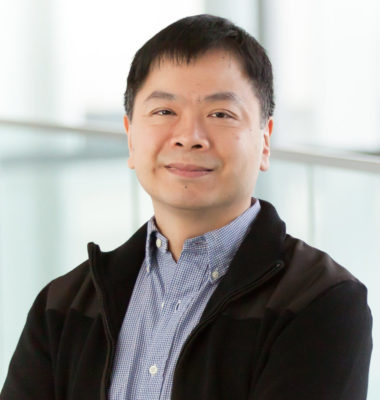
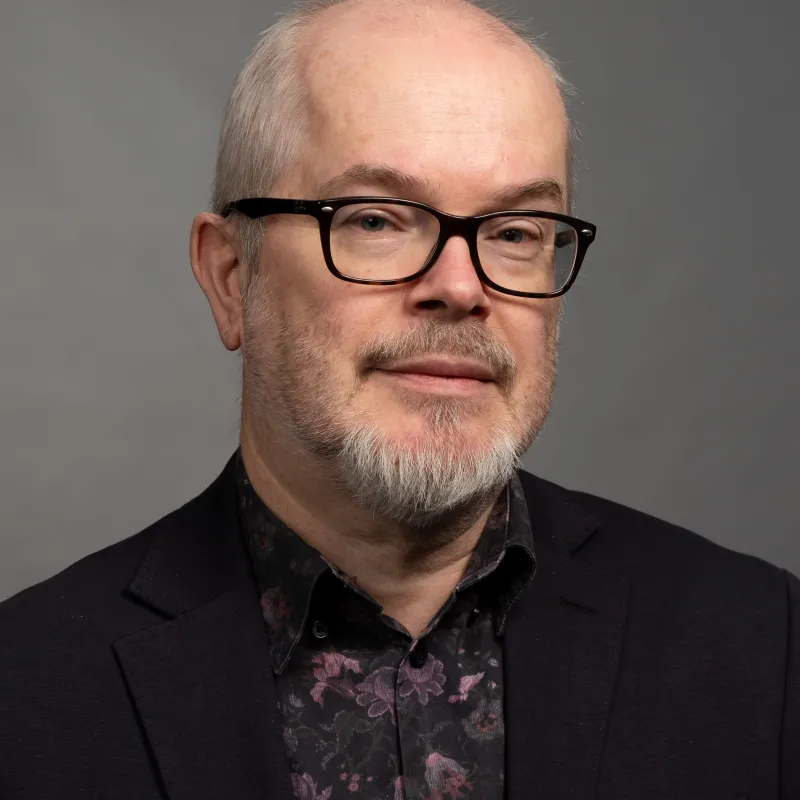
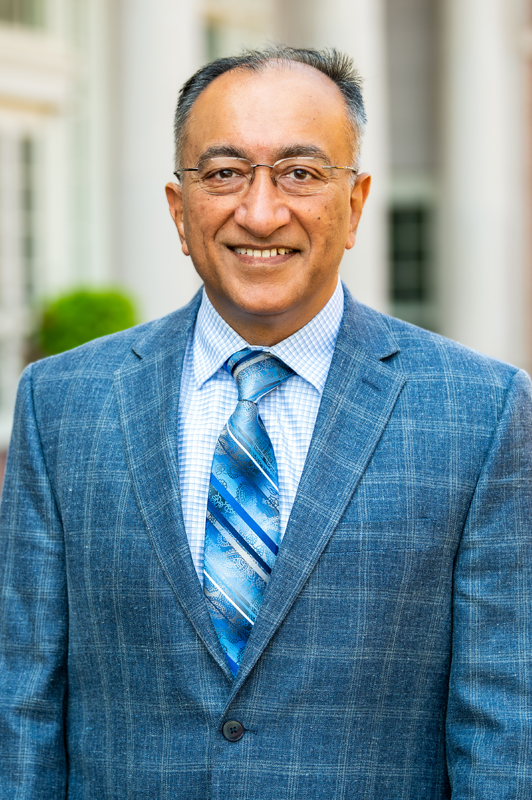
Roger Tam is an Associate Professor in the School of Biomedical Engineering (SBME) at the University of British Columbia (UBC), with a joint appointment in the Department of Radiology. He is also the Associate Director of Graduate Studies. His research focuses on machine learning and computer vision applied to medical imaging, particularly in personalized medicine and quantitative image analysis. Tam earned his PhD in computer science from UBC in 2004, specializing in computational geometry and visualization. Education: PhD in Computer Science, UBC (2004) MSc in Computer Science BSc (Honors) Research Interests: Medical imaging biomarkers Machine learning applications in healthcare Quantitative image analysis Personalized medicine His work bridges computer science and clinical medicine, emphasizing translational approaches to improve diagnostic accuracy and patient outcomes. Recent Research Trends: Focus on myelin content analysis in neurological disorders (e.g., multiple sclerosis) Development of efficient machine learning models for medical image classification Impact of physical activity on white matter health Labs & Programs: Directs the Engineers in Scrubs program, which integrates engineering principles into biomedical education. Active in collaborative research initiatives like the Centre for Brain Health and the Canadian Prospective Cohort Study (CanProCo).
Dr. Chenhao Chu is a Professor at ETH Zürich, holding the Professur für Elektronik (Professorship for Electronics). He specializes in RF/mm-Wave circuits, AI-driven design methods, and advanced power amplification technologies. His research focuses on energy-efficient, wideband systems, antenna-in-package solutions, and GaN-based applications for 6G and beyond. Education: Ph.D. in Electronic Engineering, University College Dublin (2022) M.Sc. in Electronic Information Engineering, City University of Hong Kong (2017) Research Interests: His work bridges AI and hardware design, emphasizing reconfigurable circuits , high-linearity power amplifiers , and mm-Wave phased arrays . Key areas include: AI-assisted rapid design synthesis III-V/Si co-design for mm-Wave Efficient antenna integration Dynamic load modulation techniques Awards: Award-winning researcher with distinctions including the First Place Best Student Paper Award (2022 Royal Irish Academy Colloquium) and multiple HEPA-SDC Competition Awards (2021-2022). Recognized for innovations in PA efficiency and design automation. Advising & Grants: Leading projects on 6G PA architectures and AI-driven RF design. Active in IEEE with contributions to conferences like IMS and ARFTG. No explicitly stated grants mentioned but widely cited in industry-academia collaborations. Labs & Teams: Associated with ETH Zürich's Electronics Laboratory, focusing on next-generation wireless systems. Collaborates internationally on 5G/6G infrastructure and mm-Wave innovations.
Professor Adrian Bingham is a leading historian of modern Britain, specializing in political, social, and cultural history. He holds the position of Head of the School of History, Philosophy and Digital Humanities at the University of Sheffield, where he is also Professor of Modern British History. Bingham earned his B.A. and D.Phil. from the University of Oxford. His research focuses on democratic engagement, popular media, gender, and sexuality, with notable works including Everyday Politics, Ordinary Lives (2024) and United Kingdom (2022). He co-edits the journal Gender & History and the Bloomsbury series A Cultural History of Media . His academic contributions span over 20 books and 50+ articles, addressing topics like press coverage of child sexual abuse, gender in interwar media, and the role of newspapers in shaping British society. Bingham has advised governmental inquiries, including those related to the Jimmy Savile scandal, and contributed to public policy debates on press regulation and historical accountability. He supervises numerous PhD students and teaches modules on media history, political culture, and public history. Education: B.A. (Oxford), D.Phil. (Oxford) Key Publications: Everyday Politics, Ordinary Lives: A New History of British Democracy, 1918–1992 (Oxford UP, 2024) United Kingdom: A Modern History (Polity, 2022) Tabloid Century: The Popular Press in Britain, 1896 to the Present (Peter Lang, 2015) Professional Roles: Co-Editor, Gender & History Senior Associate, History & Policy Bingham’s research bridges academic and public spheres, emphasizing historical context for contemporary issues like media ethics, gender norms, and democratic participation.
Charlotte Baskerville is a postgraduate researcher at the University of York (School of Arts and Creative Technologies) and Head of Choral Music at Warwick School. Her PhD research explores placemaking through composition, focusing on community engagement and shared musical identity. She holds a BA from Christ’s College, Cambridge (2015) and a master’s thesis on music cognition under Prof. Ian Cross. Her work bridges composition, choral performance, and community projects with groups like dementia care groups and schools. A prize-winning clarinetist and choral scholar, she actively performs with choirs in Cheltenham, Gloucester, and Tewkesbury. Her research interests center on creative placemaking via collaborative composition processes, leveraging local musical heritage to foster community identity. Her compositional output spans liturgical works, seasonal carols, and secular choral pieces, emphasizing accessibility and communal participation. Recent publications reflect her dual focus on sacred music traditions and innovative community-driven projects. Education: Bachelor of Arts in Music, Christ’s College, Cambridge (2015) Master’s thesis on music cognition under Prof. Ian Cross Sir Jack Lyons Research Scholar, University of York Awards: Christ’s College Charles Blackham Memorial Recital Competition (2016) Professional Roles: Head of Choral Music at Warwick School Clarinetist with multiple ensembles Active choral singer in multiple locations Her compositional output emphasizes collaborative creation with communities, particularly through workshops and participatory performances. Current projects involve primary/secondary schools, professional choirs, and dementia groups, aiming to strengthen communal bonds through shared musical experiences.
Margaret Greenwald serves as Associate Professor and Ph.D. Coordinator in the Department of Communication Sciences and Disorders (CSD) within Wayne State University's College of Liberal Arts and Sciences. Previously department chair (2014-2020), she is a Licensed and Certified Speech-Language Pathologist (CCC-SLP) recognized in 2022 as Wayne State's Outstanding Graduate Mentor in the health sciences. Her academic credentials include: M.A. in Speech-Language Pathology (University of Florida) Ph.D. in Communicative Sciences and Disorders (University of Florida) Post Doctoral Research Training in Cognitive Neuropsychology (University of Maryland, Department of Neurology) Dr. Greenwald's research centers on adult neurogenic communication disorders , specializing in aphasia, traumatic brain injury, and stroke rehabilitation through cognitive neuropsychology. Her work employs Magnetoencephalography (MEG) to map brain-behavior relationships during language and musical processing tasks, revealing critical insights for rehabilitation. She actively bridges clinical practice with neuroscience to develop evidence-based interventions. Analysis of her recent publications shows consistent focus on neuroimaging applications for understanding language disorders, with growing emphasis on telepractice implementation and the cognitive effects of musical training. Her work demonstrates strong translational value, connecting basic neuroscience to clinical rehabilitation protocols while maintaining rigorous methodological standards. Her scientific recognition includes: Outstanding Graduate Mentor in the Health Sciences, Wayne State University (2022) As an educator, Dr. Greenwald teaches graduate courses in aphasia, neuromuscular speech disorders, research methods, and doctoral seminars, plus undergraduate speech-language pathology instruction. She supervises doctoral research as Ph.D. coordinator and mentors students through clinical research projects. Her teaching integrates current neuroscience findings with clinical practice standards. She maintains active professional engagement through memberships in the American Speech-Language Hearing Association (ASHA), Academy of Aphasia, and International Neuropsychological Society, contributing to both clinical guidelines development and research community advancement.
Dr. Ahmet Atay is a Professor of Global Media and Communication at the College of Wooster. He holds a Ph.D. from Southern Illinois University-Carbondale. His research focuses on diasporic experiences, queer and immigrant identities, new media technologies, and critical communication pedagogy. He is the author of Globalization’s Impact on Identity Formation: Queer Diasporic Males in Cyberspace and co-editor of numerous volumes on digital media, intercultural communication, and postcolonial studies. His work bridges media studies, cultural analysis, and queer theory. Education : Ph.D., Southern Illinois University-Carbondale Research Interests : Atay explores transnational queer digital networks, postcolonial communication, autoethnographic methodologies, and the intersection of technology with diasporic identity. He critiques globalization’s impact on cultural and gendered identities, particularly through media representation. Recent work examines pandemic-era pedagogical shifts and service-learning in higher education. Publications Trends : His 2022 articles emphasize critical pedagogy and media narrative evolution, while 2021 works focus on queer digital spaces and decolonial frameworks. Earlier studies (2020–2019) analyze Italian cinema, autoethnography, and international faculty experiences. His writing consistently links digital media to identity politics across transnational contexts. Awards : 2021 Top Three Finalist, ASHE CIHE Award for Research on International Higher Education Advising & Grants : No listed advisees, but his collaborative edited volumes suggest extensive mentorship in academic publishing. No grants explicitly mentioned. Lab/Teams : No dedicated lab mentioned, but his work involves global academic networks through co-edited books and interdisciplinary research partnerships.
Robert France is an Associate Professor at Dalhousie University's Department of Plant, Food, and Environmental Sciences, part of the Faculty of Agriculture. He focuses on watershed management, environmental restoration, and the intersection of ecology with urban planning. His research spans aquatic ecosystems, land-use impacts, and climate change adaptation. He has authored numerous books and articles on topics like wetland design, restoration ecology, and the socio-cultural dimensions of environmental ethics. France has held positions at Harvard University and consulted globally on projects such as the Abu Dhabi Urban Planning Council’s master plans and Taiwan’s Aogu Ecotourism Park. His work emphasizes integrating ecological principles with human-centric design to address environmental challenges. Education: PhD in Ecotoxicology (University of Toronto), MSc in Zoology (University of Manitoba), BSc (First Class Honours, University of Manitoba) Research interests include riparian forestry impacts, urbanization effects on aquatic systems, and the ethical dimensions of environmental stewardship. He has pioneered studies on crayfish ecology, lake acidification, and stable isotope analysis to trace ecological interactions. Key contributions include books like Environmental Restoration and Design for Recreation and Ecotourism and edited volumes on regenerative landscape design. His recent work explores cryptozoological interpretations as historical indicators of environmental issues, linking folklore to ecological change. France has organized international conferences on watershed technology and urban agriculture, and his consultancy work spans North America, the Middle East, and Asia. He is a Series Editor for CRC Press' environmental series and a retained advisor for Cambridge, Massachusetts' stormwater management.
Speer Morgan is a Professor in the Department of English at the University of Missouri and Editor of The Missouri Review. He holds a B.A. from the University of Arkansas and conducted graduate studies at Stanford University. His expertise lies in creative writing and fiction, with a focus on historical narratives and regional American literature. He has authored five novels and multiple short story collections, including works recognized with awards such as the American Book Award and NEA Fellowships. Morgan's research interests span creative writing pedagogy, narrative techniques, and interdisciplinary approaches to literature. He has served on prestigious panels like the National Endowment for the Arts Literature Panel and the Library of Congress Prize for American Fiction committee. His editorial work at The Missouri Review has highlighted both fiction and poetry, featuring works by notable writers. He has also contributed to literary conferences and workshops, including the Sewanee Writers Conference from 2000 to 2023. Education: B.A., University of Arkansas; Graduate Studies at Stanford University Awards: American Book Award, NEA Fellowship, Foreword Magazine Silver Award Key Contributions: Editor of The Missouri Review for 34+ years, author of seven books Professional Roles: Visiting Writer at Universities of Texas and Arkansas, member of literary prize committees
Sarah Carton is a Teaching Professor in the Psychology Department at Rutgers University, part of the School of Arts and Sciences. She joined Rutgers in Fall 2019 after earning her Ph.D. in the Cognition & Perception Program at New York University (2008). Her research focuses on developmental psychology, visual perception, and cognitive development in infants and young children. She teaches courses such as Introductory Psychology, Drugs & Behavior, Sensation & Perception, and Cognition, with upcoming courses like Perception of Color (PSY 2xx). Dr. Carton’s research interests include object recognition, visual illusions, perceptual categorization, infant development, and eye-tracking methodologies. Her work explores how infants perceive impossible figures, haptic exploration of objects, and transitional saccades in response to visual stimuli. She investigates foundational questions about how infants distinguish possible from impossible objects and develop spatial and dimensional understanding through multisensory interactions. Her teaching portfolio includes undergraduate courses at both Livingston and New Brunswick campuses. She actively contributes to educational initiatives in psychology, emphasizing evidence-based pedagogy. Dr. Carton’s current research trends span perceptual development, cognitive differentiation in infants, and the role of visual and haptic modalities in forming conceptual categories. Dr. Carton’s work has been published in leading journals, with recent studies examining young children’s understanding of object coherence and infants’ visual responses to paradoxical stimuli. Her research integrates behavioral experiments and eye-tracking technology to unravel early perceptual and cognitive processes.
Charles Spence is Professor of Experimental Psychology at the University of Oxford and Fellow of Somerville College, where he heads the Crossmodal Research Laboratory. His work bridges cognitive neuroscience with real-world applications in multisensory design, spanning food science, human-computer interaction, and environmental psychology. Spence's research centers on how the brain integrates sensory inputs (sight, sound, touch, taste, smell) to form unified perceptual experiences. This foundational work drives innovations in sensory marketing, product design, and human factors engineering, with significant implications for optimizing everyday interactions with technology and environments. His approach combines rigorous laboratory experimentation with industry collaborations to translate theoretical insights into practical solutions. Recent publications demonstrate a clear trajectory toward applied crossmodal research, particularly in consumer contexts. His 2025 output reveals growing emphasis on digital commerce environments, nature-food perception interactions, and multisensory flavor enhancement—showcasing how sensory cues can be strategically deployed to influence behavior in retail, dining, and digital platforms. His major recognitions include: 10th Experimental Psychology Society Prize British Psychology Society Cognitive Section Award Paul Bertelson Award (Young European Cognitive Psychologist of the Year) Friedrich Wilhelm Bessel Research Award 2008 IG Nobel Prize for Nutrition (for 'sonic crisp' research) Spence maintains extensive industry partnerships, having consulted for Toyota on multisensory warning systems, ICI on environmental psychology, and Heston Blumenthal's Fat Duck restaurant on culinary innovation. His research attracts significant commercial funding through these collaborations, though specific grant details aren't publicly itemized. The Crossmodal Research Laboratory operates as an interdisciplinary hub where psychologists, neuroscientists, and industry partners investigate sensory integration mechanisms. Current projects focus on optimizing driver alert systems, designing immersive food experiences, and understanding how built environments affect cognitive performance—maintaining Spence's legacy of translating basic science into tangible human benefits.
Heikki Handroos is a Full Professor of Mechanical Engineering at LUT University, leading the Laboratory of Intelligent Machines since 1993. He holds a DSc (Technology) from Tampere University of Technology and has served as Vice-Dean of the Faculty of Technology (2007-2009) and currently chairs the Collegiate Body of LUT University. His research focuses on mechatronics, robotics, control systems, and fluid power, with over 300 publications and 2,400+ citations. He has supervised 34 doctoral theses and 150+ MSc projects, managed R&D projects exceeding €20M, and co-founded four tech startups. His work spans industrial collaborations, digital twin applications, and innovative robotics for nuclear energy (e.g., DEMO reactor maintenance systems). He has held visiting professorships in the U.S., Japan, and Russia, and actively contributes to academic editorial roles and professional societies like ASME and IEEE.
Hossein Valavi is a Lecturer and Assistant Director of Undergraduate Studies at Princeton University, contributing to advancements in computer architecture and hardware acceleration. His research focuses on in-memory computing, neural networks, and energy-efficient systems, with notable work in reconfigurable architectures and mixed-signal processing. He has received multiple teaching awards, including recognition for innovative pandemic-era Car Lab courses and collaborative work honored by the Edison Patent Award. His academic contributions span academic positions since 2018, emphasizing both research and pedagogical excellence. Key technical areas include scalable in-memory computing systems, analog neural network accelerators, and low-power matrix factorization algorithms. His work addresses critical challenges in data movement reduction and hardware-software co-design for modern computing systems. Awards: Teaching Excellence Awards (2021, 2023), Edison Patent Award (2023) Grants & Projects: Leading developments in in-memory computing accelerators and embedded microprocessor designs Research teams under his guidance have produced impactful IP in semiconductor layouts, CNN accelerators, and programmable architectures, aiming to bridge theoretical computer science with practical hardware implementations.
Dr. Yiran Chen is the John Cocke Distinguished Professor at Duke University's Department of Electrical and Computer Engineering, leading the NSF AI Institute for Edge Computing (Athena) and the Duke Center for Computational Evolutionary Intelligence (DCEI). A global leader in neuromorphic computing, emerging memory systems, and edge AI, he holds prestigious roles including IEEE Fellow and Editor-in-Chief of IEEE Transactions on Circuits and Systems for AI. His research spans machine learning accelerators, security-hardened hardware, and co-design of EDA tools with LLMs. With over 700 publications and 96 patents, he has been awarded 15 paper awards and 17 nominations, including rare Technical Achievement Awards from IEEE societies. He advises over 60 PhD students and 4 postdocs, many of whom hold academic positions worldwide. His work bridges academia and industry, contributing to startups and venture capital through his board roles. Education: B.S. (Tsinghua, 1998) → M.S. (Tsinghua, 2001) → Ph.D. (Purdue, 2005). Career path: Assistant/Associate Professor at University of Pittsburgh (2010–2014) → Duke since 2014. Awards include the ACM SIGDA Outstanding New Faculty Award (2014), NSF CAREER Award (2013), and the Stansell Family Distinguished Research Award (2022). Research focuses on innovations in: (1) Non-volatile memory architectures for AI acceleration, (2) Hardware-software co-design for edge computing, (3) Security in neuromorphic systems, and (4) Large-scale ML for EDA. His group pioneered ReRAM-based accelerators like ReBNN and MARC, and introduced novel edge AI frameworks like Ecco and Prosperity. These works address scalability, energy efficiency, and real-time performance challenges. Key initiatives include the NSF IUCRC for Alternative Sustainable & Intelligent Computing (ASIC), advancing sustainable computing through novel materials and architectures. His leadership in standard-setting bodies like the IEEE Circuits and Systems Society ensures cutting-edge research translates into industry practices. Grants: Lead PIs for multiple NSF AI Institutes and industry partnerships. Labs: Directs the Athena Institute and DCEI, fostering collaboration between academia and industry. Current projects include quantum computing placement algorithms (QPlacer), federated learning frameworks (FedGPT), and neuro-symbolic architectures.
Michelle MacLeod is a Professor of Gaelic and Head of the School of Language, Literature, Music and Visual Culture at the University of Aberdeen, where she has been a faculty member since 2004 and was promoted to Personal Chair in 2019. She is currently Dean for Impact and Engagement and leads research and teaching in Scottish Gaelic language, literature, and identity. Education: M.A. (Hons), PhD (University of Aberdeen) Her research centers on modern Gaelic literature, Gaelic drama, language planning, and the sociolinguistics of minority languages. She is deeply engaged in questions of Gaelic identity, adult language acquisition, and community language policy. Her work bridges academic scholarship and public policy, particularly through her role on Bord na Gaidhlig. The most recent publications show a strong focus on Gaelic cultural expression, language policy critique, and sociolinguistic analysis of new speakers and family language use. Her work increasingly integrates interdisciplinary methods, including digital pedagogy and motivational psychology in language learning. Scientific awards include: Donald Meek Prize for best non-fiction Gaelic book (2021) AHRC Future of Languages Research Fellow (2022) Students' Union & University of Aberdeen Prize for Most Inspirational Lecturer (2024) She supervises PhD students in Gaelic studies and linguistics and collaborates with institutions like Sabhal Mòr Ostaig and Comunn na Gàidhlig. Her leadership extends to national language planning and knowledge exchange, reflecting her commitment to the revitalization of Gaelic as a living community language. Michelle MacLeod is a key figure in the Gaelic academic community, leading both institutional and scholarly efforts to sustain and develop Scotland’s indigenous language through research, teaching, and policy engagement.
Pradeep Lall is the MacFarlane Endowed Distinguished Professor and Alumni Professor in the Department of Mechanical Engineering at Auburn University’s Samuel Ginn College of Engineering. He serves as Director of the Auburn University Electronics Packaging Research Institute (EPRI) and holds a joint courtesy appointment in the Department of Electrical and Computer Engineering. A leader in flexible hybrid electronics and harsh environment systems, Dr. Lall has built a world-renowned research program focused on additive manufacturing, electronics reliability, and sustainable materials. Ph.D. in Mechanical Engineering, University of Maryland M.B.A. in Finance and Strategy, Northwestern University M.S. in Mechanical Engineering, University of Maryland B.E. in Mechanical Engineering, Delhi College of Engineering Dr. Lall’s research centers on Flexible Hybrid Electronics (FHE) , Harsh Environment Electronics , Semiconductor Packaging , and Prognostics Health Management . His work leverages additive manufacturing techniques such as Aerosol-Jet, InkJet, and screen printing to develop conformal, robust, and sustainable electronic systems. His innovations include the Flexible Biometric Band for monitoring workers in hazardous environments and additively printed antennas for aerospace applications. His recent focus includes eliminating PFAS from electronics and developing water-based inks for eco-friendly manufacturing. The 15 most recent publications reflect a strong trend toward sustainability , additive manufacturing , and real-world applications in defense, aerospace, automotive, and healthcare. His work bridges fundamental research with industrial realization, particularly through partnerships with NextFlex and federal agencies. Themes include reliability under shock and vibration, sensor development for extreme environments, and workforce training in advanced manufacturing. Dr. Lall has received numerous scientific honors, including: SMTA Founder’s Award (2024) SEMI FlexTech R&D Achievements Award (2023) ASME Avram Bar-Cohen Memorial Medal (2022) IEEE Biedenbach Outstanding Engineering Educator Award (2020) IEEE Sustained Technical Contributions Award (2018) NSF Alex Schwarzkopf Prize (2016) Fellow of ASME, IEEE, NextFlex, and Alabama Academy of Science Dr. Lall has secured over $2 million in annual research funding from SRC, NSF, and NextFlex, leading large-scale projects on sustainable electronics and workforce development. He mentors numerous graduate and undergraduate students and leads the NSF-CAVE3 Center. As founding faculty advisor of the SMTA student chapter, he promotes student engagement in electronics manufacturing. His lab, EPRI, features a full prototyping line for additive electronics and collaborates with industry and government to advance domestic manufacturing capabilities. EPRI, under Dr. Lall’s leadership, partners with the Auburn University Research and Technology Park, the Office of Economic Development, and multiple colleges to drive technology commercialization and workforce education in electronic packaging. The institute is at the forefront of the national effort to reestablish U.S. leadership in semiconductor packaging and advanced electronics manufacturing.