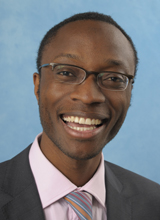
Douglas A. Nitz is Professor and Chair of Cognitive Science at UC San Diego. His research program explores neural mechanisms underlying spatial navigation, memory formation, and decision-making processes across cortical and hippocampal circuits. Research Approach: Combines electrophysiological recordings, behavioral analysis, and computational modeling to decipher how distributed brain networks represent spatial information and support memory-guided behaviors. Current Focus: Neural coding principles in parietal-hippocampal networks during navigation tasks, with emphasis on path integration, landmark encoding, and route planning mechanisms.
Jennifer Gandhi is the Howard Wang ’95 Professor of Global Affairs and Political Science at Yale University, and Deputy Dean of the Jackson School of Global Affairs. Her research focuses on authoritarian regimes, political institutions under dictatorship, and transitions to democracy. She holds a B.A. from Columbia University and a Ph.D. in Political Science from New York University. Her work includes the award-winning book Political Institutions under Dictatorship (Cambridge University Press, 2008) and key articles in leading journals like the American Journal of Political Science and Journal of Politics. Her current projects explore electoral autocracies, data manipulation in authoritarian states, and institutional effects on democratization. Dr. Gandhi has advised numerous students and has been recognized for her contributions to comparative politics. She collaborates widely, with co-authors such as Ora John Reuter, Milan Svolik, and Jane Lawrence Sumner. Her research bridges theory and empirical analysis, examining how authoritarian institutions stabilize or destabilize regimes.
Dilian Gurov is a Professor in Computer Science at KTH Royal Institute of Technology, associated with the Digital Futures Faculty and the Division of Theoretical Computer Science. He also coordinates the Doctoral Programme in Computer Science at the CSC school. Before joining KTH in 2002, he earned a Ph.D. from the University of Victoria, Canada (1998), and worked at the Swedish Institute of Computer Science (1997-2002). His research focuses on software specification and verification, including contracts, program models, logics, and tools, as well as multi-agent strategic planning involving knowledge-based strategies in imperfect information settings. Key contributions include the CAV Distinguished Paper Award 2023 for 'Automatic Program Instrumentation for Automatic Verification' and an EASST award for 'Checking Absence of Illicit Applet Interactions: A Case Study' (2004). He leads projects funded by VR (SEFROS, ContraST) and Vinnova (AVerT2) and collaborates with industries like Scania on formal verification of C programs. His service roles span over 30 conference committees and organization roles, including PC memberships for iFM, TAP, and ISoLA. Teaching responsibilities include courses such as 'Formal Methods,' 'Program Semantics and Analysis,' and 'Knowledge in Games with Imperfect Information.' His work emphasizes practical applications of formal methods, bridging academic research with industry needs through collaborations and tool development (e.g., CVPP, ProMoVer, TriCo).
Dr. Christopher R. Jones is a Senior Lecturer in the School of Physical and Chemical Sciences at Queen Mary University of London. He holds a MSci in Natural Sciences from the University of Cambridge (2005) and a PhD in Organic Chemistry under Prof. Martin D. Smith (2009). He was a Junior Research Fellow at the University of Oxford (2009–2013) and joined Queen Mary as a Ramsay Memorial Research Fellow in 2013. He received an EPSRC Early Career Fellowship in 2015. His research focuses on developing sustainable organic synthesis methodologies, particularly leveraging aryne chemistry and functional carbon nanomaterials. Key areas include aryne-mediated C(sp³)-H bond functionalization, biologically active heterocycles, and applications in green chemistry. Current research grants include EPSRC funding for catalytic reactive intermediate studies (2015–2021), RSC grants for aryne synthesis (2018–2025), and a PAK UK Education Gateway Mobility Partnership (2023–2024). Dr. Jones supervises multiple PhD students, including co-supervision with Prof. Stellios Arseniyadis. His work has led to publications in high-impact journals like Nature Chemistry and Chemical Science , emphasizing innovations in organic synthesis and materials chemistry.
Eduardo Gildin is a Professor of Petroleum Engineering and Associate Department Head for Graduate Studies at Texas A&M University's College of Engineering. He holds the L.F. Peterson '36 Professorship and directs the university's graduate studies in petroleum engineering. His research focuses on reservoir modeling, control optimization, model reduction techniques, and CO2 sequestration. Gildin has pioneered data-driven approaches for reservoir simulation, integrating machine learning and physics-based models to enhance efficiency and accuracy. Education: Ph.D. in Aerospace Engineering, University of Texas at Austin (2006) M.S. in Mechanical Engineering, University of São Paulo, Brazil (1998) B.S. in Mechanical Engineering, Faculdade de Engenharia Industrial, Brazil (1995) Research Interests: Model reduction of large-scale dynamical systems Control and optimization of reservoir operations CO2 storage and geological carbon sequestration Machine learning applications in reservoir engineering and drilling automation Geomechanics and compaction damage evaluation Key Awards: 2020: William O. and Montine P. Head Memorial Research Award 2017-2018: Dean of Engineering Excellence Award 2013-2019: Energi Simulation Chair in Robust Reduced Complexity Modeling 2021: Distinguished Membership in Society of Petroleum Engineers Grants and Advising: Gildin has secured major funding for projects on reservoir simulation, drilling automation, and CO2 storage. He advises graduate students on topics such as surrogate modeling and reinforcement learning applications in petroleum systems. His lab collaborates with industry partners to translate research into practical tools for reservoir management and subsurface operations. Labs and Teams: He leads the Reservoir Simulation and Control Lab, focusing on advanced computational methods for reservoir optimization. His team develops open-source drilling models and collaborates globally on projects like the DREAMS (Drilling and Extraction Automated System) initiative.
Dr. Andrey Molotnikov is an Associate Professor in Additive Manufacturing and Director of the RMIT Centre for Additive Manufacturing at RMIT University's School of Engineering. His expertise spans additive manufacturing, computational materials science, and multi-material 3D printing. He leads a research team of 8 academics, multiple postdocs, and 10 PhD students, focusing on innovations like multi-material printing, high entropy alloys, and in-process quality assurance. Key research themes include architectured materials, computational modeling of solidification processes, and fatigue analysis of additively manufactured components. His work has resulted in over 80 publications (h-index 29) and several patents, with industry collaborations driving technology adoption. Recent publications (2022–2025) emphasize advancements in laser-based processes, defect detection via machine learning, and biomedical applications of additive manufacturing. He actively supervises research projects on topics such as hierarchical lattice structures and hybrid materials, supported by ARC grants and industry partnerships. Dr. Molotnikov’s labs and teams prioritize cross-disciplinary collaboration, aiming to bridge computational modeling with practical manufacturing solutions. His research addresses challenges in material compatibility, process optimization, and structural integrity of AM components.
Professor Gunter Kuhnle is a leading academic at the University of Reading, specializing in nutritional epidemiology and dietary assessment. He holds roles including Module Convenor for 'Nutritional Epidemiology and Dietary Assessment,' Undergraduate Research Project Coordinator, and Director of the Chemical Analysis Facility (CAF). He is affiliated with the Hugh Sinclair Unit of Human Nutrition, a research center focusing on human nutrition science. Education: Diplom Biochemiker (University of Leipzig), Doctor Rerum Naturalium (University of Leipzig), Postgraduate Certificate in Academic Practice (PGCAP) His research interests are centered on three key areas: developing objective measures of dietary intake and exposure to food bioactives, polyphenol metabolism and health outcomes, and investigating the association between red/processed meat consumption and cancer risk. He advocates for biomarker-based research to address biases in dietary studies. Recent work includes studies on dietary flavanols' cognitive benefits in older adults, nitrate's impact on cardiovascular health, and the role of genetic factors in lipid metabolism. His publications address methodological challenges in nutrition research and emphasize evidence-based guidelines for dietary bioactives. Awards: Fellow of the Higher Education Academy (FHEA) Professor Kuhnle's contributions extend to interdisciplinary collaborations, including the PHYTOME project to reduce dietary nitrosamine exposure through natural compounds. His work bridges basic science, clinical applications, and public health policy.
Deborah Stein is a distinguished faculty member in the Department of Theatre and Dance at the University of California, San Diego (UCSD), where she teaches playwriting and theatrical collaboration. She is also Co-Artistic Director of Stein | Holum Projects (SHP), a collaborative laboratory for creating innovative performances. Her work bridges academic scholarship and professional theatre, with national commissions and festival premieres. BA, Swarthmore College MFA, Brown University (studied with Paula Vogel) Her research and creative practice focus on playwriting, experimental performance, and interdisciplinary collaboration . She explores narrative innovation through devised theatre, often working with ensembles and MFA students to create original works that challenge traditional forms. Her work emphasizes emotional depth, physicality, and social themes. The 15 most recent creative projects reflect a strong trend in collaborative, experimental, and socially engaged theatre . They span festival productions, commissioned works, and student collaborations, often developed in residency settings. Keywords include immersive storytelling, devised creation, and political resonance, with subfields ranging from physical theatre to identity exploration. Deborah has received numerous honors and grants supporting her artistic research: Drama Desk Award Nomination (CHIMERA) National Theatre Project Award (2015) NYSCA Grant Bush Artist Fellowship Two Jerome Fellowships McKnight Advancement Grant Alumna, New Dramatists She actively mentors MFA students, having co-created THE BITTER GAME with Keith Wallace and MOVERS + SHAKERS with graduate students. Her advising integrates creative development with academic rigor. She has secured external funding from NEFA, ArtsEmerson, and foundations to support collaborative projects. Her work has been developed in partnership with institutions such as Playwrights’ Horizons, HERE, and La Jolla Playhouse. Deborah leads creative research through Stein | Holum Projects, which functions as a performance laboratory. This collective has developed work at major venues including FringeArts, the Playwrights’ Center, and Perry-Mansfield, fostering a national network of experimental theatre makers.
Gerardo Boto Varela is an Associate Professor in the Department of History and Art History at the University of Girona, where he has been a faculty member since 1995 and holds the title of 'Professor Titular d'Universitat'. He earned his PhD in Art History from the Universitat Autònoma de Barcelona in 1998 and currently serves as Director of the School of Doctoral Studies. His academic affiliations include the Institute of Historical Research and the Research Group in Cultural, Artistic, and Political Studies (9th–21st centuries). His research focuses on medieval religious architecture, particularly Romanesque cathedrals and monastic cloisters in the Iberian Peninsula. He investigates spatial organization, visual programs, liturgical practices, and memorial discourses, combining architectural archaeology with theological and historical analysis. His work emphasizes materiality, perception, and the symbolic function of sacred spaces. Boto Varela's recent publications and edited volumes explore themes such as cathedral urban contexts, episcopal memory, emerging naturalism in sculpture, and the ritual use of space. His research is supported by major grants from the Spanish Ministry of Economy, La Caixa, and the European Union (Marie Curie Project), and he leads the recognized research group 'Edificis i escenaris medieval de la Corona d'Aragó'. He is a leading figure in medieval art scholarship, serving as scientific editor of Codex Aquilarensis. Revista de Arte Medieval and on the editorial boards of several international journals. He has organized numerous international conferences and collaborative research initiatives across Europe. Scientific Editor, Codex Aquilarensis Member, Scientific Committees of Medievalista , Quintana , Cahiers de Saint Michel de Cuxa , and others Principal Investigator, TEMPLA Research Team Principal Investigator, SGR 110 Research Group Member, Catalan Society of Liturgical Studies Boto Varela has supervised interdisciplinary research projects involving scholars from Spain, France, the Netherlands, and beyond. He promotes knowledge transfer through public engagement, digital documentation (3D scanning, georadar), and the integration of technology in heritage studies. His work bridges academic research and cultural preservation, contributing significantly to the understanding of Europe’s shared medieval architectural heritage.
Marie Carlén is a Professor of Neuronal Networks at the Department of Neuroscience, Karolinska Institutet, where she leads the Neural Circuits of Cognition research group. Her work focuses on the prefrontal cortex (PFC), a brain region central to cognitive functions such as attention, decision-making, working memory, and goal-directed behavior. She employs cutting-edge techniques including optogenetics, large-scale electrophysiology, calcium imaging, and circuit tracing in rodent models to unravel the cellular and circuit mechanisms underlying cognition and their disruption in psychiatric disorders. Her academic journey began with a Ph.D. in medicine from Karolinska Institutet in 2005, followed by postdoctoral training at MIT’s Picower Institute under Professor Li-Huei Tsai. She returned to Karolinska Institutet in 2010 and was promoted to full Professor in 2022. She is also a Docent (2017) and has held prestigious fellowships including ERC Starting Grant and Wallenberg Scholar (2019, 2024). Marie Carlén's research spans systems and cellular neuroscience, with a strong emphasis on inhibitory interneurons (especially parvalbumin-expressing cells), neural oscillations, and PFC-striatum interactions. Her recent publications reveal a consistent focus on decoding prefrontal circuit dynamics, the role of specific neuron types in cognition, and comparative brain architecture. She collaborates extensively with her partner, Konstantinos Meletis, also a KI researcher. She has been recognized with numerous scientific honors: Member, Nobel Assembly at Karolinska Institutet (2025–) Member, The Royal Swedish Academy of Sciences (2024–) Wallenberg Scholar (2024, 2019) ERC Starting Grant (2013) Wallenberg Academy Fellow (2012) NARSAD Young Investigator Awards (2010, 2008) She actively mentors students and researchers, with open applications welcomed to her lab. Her work is supported by major grants, including from the Knut and Alice Wallenberg Foundation, enabling high-risk, high-reward research in brain function and disease. Her lab investigates the functional definition of the prefrontal cortex across species, develops novel tools for neural recording, and explores circuit imbalances in conditions like autism and schizophrenia. She is a strong advocate for ethical animal research and promotes gender equality in science.
Dr. Julia Mierau is a researcher at the Institute of Movement and Neuroscience, German Sport University Cologne. She is actively involved in projects related to digitalization in sports teacher education, cognitive performance, and exercise neuroscience. Her work bridges pedagogy and neuroscience, with a strong focus on EEG, motor performance, and digital learning tools. Institution: German Sport University Cologne Department: Institute of Movement and Neuroscience Email: j.mierau@dshs-koeln.de Phone: +49 221 4982-8613 Her research interests include electroencephalography, cognitive performance, exercise psychology, sports pedagogy, and digital media in education. She investigates how physical activity influences brain function and learning, particularly in educational contexts. The recent publications reflect a strong trend in digital innovation in sports education, EEG-based monitoring of exercise effects, and cognitive performance in athletes and children. Her work combines experimental neuroscience with practical pedagogical applications. Scientific Awards: ECSS Young Investigators Award (2011) Fellowship for Digital Higher Education Innovation (2019) Graduiertenstipendium (2007) Reisestipendium (2011, 2014) Dr. Mierau has been principal or co-investigator in multiple externally funded projects, including ComeSport, ComeIn, and S.P.O.R.T.S., focusing on digital competence development in teacher training. She also served as co-editor of the Journal for Study and Teaching in Sports Science in 2021 and 2022, demonstrating academic leadership. She collaborates extensively with researchers such as Jens Kleinert, Heiko Strüder, and Andreas Mierau, contributing to a robust network in sports neuroscience and pedagogy.
Job Dekker is a Professor holding the Joseph J. Byrne Chair in Biomedical Research at UMass Chan Medical School, where he serves as faculty across multiple departments including Systems Biology, Biochemistry and Molecular Biotechnology, and Bioinformatics and Integrative Biology. His work bridges the T.H. Chan School of Medicine and Morningside Graduate School of Biomedical Sciences, with significant contributions to understanding the three-dimensional organization of genomes. Utrecht University, Utrecht, Netherlands: MS Biology Utrecht University, Utrecht, Netherlands: PhD Physiological Chemistry Dekker's research focuses on the fundamental question of how chromosomes are organized in three-dimensional space and how this organization influences gene regulation. As a pioneer in chromosome conformation capture technologies (particularly Hi-C), his laboratory investigates long-range gene regulation, higher-order chromosome organization, and the mechanisms of chromatin folding. The lab employs a multidisciplinary approach combining cell culture, protein biochemistry, microscopy, genomics, and computational modeling to address these questions. Analysis of Dekker's recent publications reveals a continued focus on the structural principles governing chromosome organization, with particular emphasis on mitotic chromosome formation, loop extrusion mechanisms, and the role of cohesin and condensin complexes. His work spans multiple model systems and has increasingly incorporated multi-omics approaches to understand how 3D genome architecture relates to cellular function in both normal and disease states. Member, National Academy of Sciences (2022) Member, National Academy of Medicine (2021) EMBO Associate Member (2020) International Award of the Biochemical Society (2018) Novitski Prize of the Genetics Society of America (2018) Investigator, Howard Hughes Medical Institute (2015) Fellow, American Association for the Advancement of Science (2014) As Principal Investigator of the Dekker Lab within the Program in Systems Biology, Dekker has secured substantial funding including his HHMI Investigator position, which supports his research into chromosome organization. His laboratory offers multiple rotation projects for graduate students focusing on long-range gene regulation and chromosome organization using high-throughput genomics technologies. Dekker's work has been instrumental in developing and refining chromosome conformation capture techniques that are now widely used across the genomics field. The Dekker Lab is a leader in the 4D Nucleome field, contributing significantly to our understanding of how chromosomes fold in three-dimensional space and how this organization changes over time (the fourth dimension). His research group continues to push the boundaries of chromosome conformation capture technologies, developing new methodologies to investigate genome architecture at increasingly higher resolutions and across diverse biological contexts.
Professor Okeoghene Odudu is the Herchel Smith University Senior Lecturer in Law at the University of Cambridge, Faculty of Law, and a Fellow of Emmanuel College. He is Co-Director of the Centre for European Legal Studies (CELS) and affiliated with the Centre for Law, Medicine and Life Sciences (LML). His academic work focuses on competition law, EU law, and the legal regulation of healthcare systems. MA (Cantab), Law, Sidney Sussex College, Cambridge MA (Keele), Criminology, funded by ESRC DPhil (Oxon), Aspects of Article 101 TFEU, supervised by Professor Paul Craig His research interests lie at the intersection of competition law and public services, particularly in the healthcare sector. He has extensively published on the application of EU competition law to NHS institutions, hub-and-spoke collusion, state aid, and the public/private distinction in EU law. His work combines doctrinal legal analysis with policy-oriented inquiry, often addressing contemporary regulatory challenges such as NHS privatization and crisis-driven competition law relaxation during the pandemic. His recent publications show a strong trend toward analyzing competition law in public service contexts, especially healthcare, and exploring doctrinal nuances in EU antitrust enforcement. He frequently contributes to high-impact legal journals and edited volumes on EU law and competition policy. Kennedy Memorial Trust Scholarship British Academy Mid-Career Fellowship (2011–2012) AHRB Doctoral Funding ESRC MA Funding Professor Odudu has served on the editorial boards of the European Competition Journal , Cambridge Yearbook of European Legal Studies , and Concurrences . He has supervised doctoral research and contributed to major research projects, including a British Academy-funded study on competition law in the NHS. His work is supported by prestigious fellowships and institutional affiliations. He is actively involved in the Centre for European Legal Studies and the Centre for Law, Medicine and Life Sciences, where he collaborates on interdisciplinary research on law, health, and regulation.
Professor Bettina Kraus is a prominent architect and academic currently serving as Professor of Design in the Department of Architecture at the State Academy of Fine Arts Stuttgart, where she also chairs the Department of Architecture and serves as a Member of the Senate. Her academic career spans multiple prestigious institutions including TU Berlin, BTU Cottbus, and UdK Berlin, alongside an active architectural practice in Berlin. Her research and teaching focus on the elasticity of existing structures and their potential to adapt to changing programmatic or climatic conditions. Kraus explores how the morphology of architectural types and objects is influenced by context, function, and construction. Her methodology involves transformation strategies based on associative thinking and constructive action, integrating existing and new structures while questioning traditional notions of beauty and perfection. This approach allows her to reinterpret existing structures for contemporary and future requirements while reflecting local cultural identity. Kraus's architectural work demonstrates a consistent focus on transformation, adaptive reuse, and the integration of historical and contemporary elements. Her recent projects include residential buildings in Berlin (Lindenstraße 34-35, Brunnenstraße 19), cultural spaces, and urban interventions that have received numerous awards including the Berlin Architecture Prize (2023) and the Iconic Architecture Award (2019). Berlin Architecture Prize, Award 2023 (Lindenstraße 34.5) Berlin Architecture Prize, Prize 2023 (Malplaquetstraße 19) Iconic Architecture Award, Winner 2019 (Spreestudios) German Design Award 2014 (Medienhaus Schwäbischer Verlag) Architecture Prize Amsterdam, Prize 2010 (4 Towers Osdorp) As an educator, Professor Kraus has mentored numerous award-winning students including Theresa Weigand (ABK Stuttgart), Tom Seeger, and Ralf Hinrichs. Her academic research centers on two key parameters: Program and Typology (examining the Nolli Plan as a typological archive), and Difference and Interface (exploring material properties and surface experiments). Her work has been published extensively in architectural journals and as book chapters, with her most recent publication 'False Friends' currently in progress. Professor Kraus maintains an active architectural practice (Kraus Fischnaller Architects Partnership) in Berlin while contributing to the Board of the Berlin Architecture Prize since 2025.
Katrin Vogt is a Group Leader at the University of Konstanz and an Affiliated Scientist at the Max Planck Institute of Animal Behavior. She serves on the IMPRS Board and Faculty, focusing on behavioral neuroscience in Drosophila larvae. Her research explores how social context and internal states (e.g., hunger) modulate neural circuits and behavior, utilizing genetic tools like optogenetics, RNAi, and CRISPR. Key Research Areas: Behavioral flexibility under internal state changes Neural integration of sensory and state signals in the antennal lobe Role of serotonin (CSD neuron) in modulating output pathways Computational modeling of state-dependent circuit dynamics Notable Achievements: Discovered state-dependent olfactory valence switching (e.g., geranyl acetate shifts from aversion to attraction under food deprivation) Elucidated glutamatergic inhibition mechanisms in picky local interneurons Identified 5-HT7 receptor's role in upregulating uniglomerular projection neuron activity Recent Publications: 2025: PLoS Biology on multimodal sensory neurons 2024: Current Biology commentary on behavioral neuroscience 2023: Current Biology on multisensory memory merging Academic Affiliations: University of Konstanz (Group Leader, Department of Collective Behavior) Max Planck Institute of Animal Behavior (Affiliated Scientist) IMPRS for Organismal Biology (Faculty Member) Scientific Awards: DFG Research Fellowship (Project No. 345729665) Students & Collaborators: PhD students: Hari P. Narayanan, Akhila Mudunuri Research assistants: Nora Tutas, Julius Klein, Constantin Dyroff DAAD summer student: Élyse Zadigue-Dubé Recent graduates: Amelie Edmaier (BSc 2023), Constantin Dyroff (BSc 2023)