Jeff Coleman, PhD, is a Researcher in the Department of Cell Biology at Yale School of Medicine, affiliated with the Rothman Lab. His research focuses on molecular mechanisms of synaptic vesicle release, membrane protein organization, and SNARE complex assembly. He holds a BA from the University of California, Berkeley (1989) and a PhD from the University of Melbourne (2002). Coleman collaborates extensively with researchers like Shyam Krishnakumar and Frederic Pincet, investigating calcium signaling, membrane fusion, and protein oligomerization. His work employs advanced techniques such as single-molecule imaging and native mass spectrometry to study synaptic processes. Recent studies include roles of diacylglycerol in synaptic vesicle priming and the structural dynamics of synaptotagmin oligomers. Education: PhD, University of Melbourne (2002); BA, UC Berkeley (1989) Key Research Themes: SNARE complex assembly, membrane protein oligomerization, calcium-dependent exocytosis, synaptic vesicle trafficking Publications highlight his contributions to understanding molecular determinants of complexin function and the development of novel platforms like the 'plasma membrane-on-a-chip' for single-molecule studies. Coleman’s work bridges biochemistry and neuroscience, with implications for neurodegenerative diseases and cellular signaling.
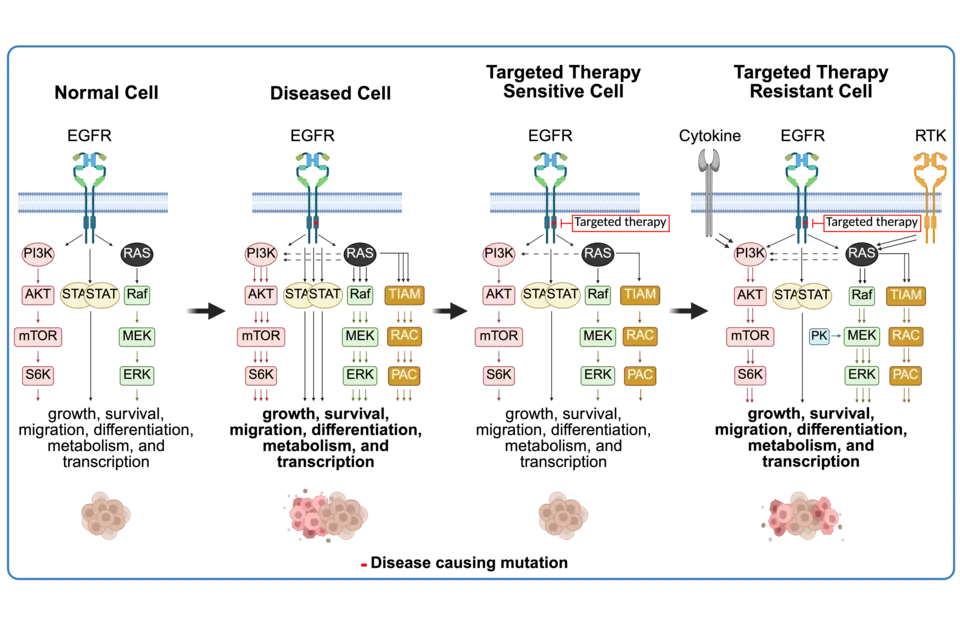
Tikvah Katheryn Hayes is an Assistant Professor in the Department of Molecular and Medical Pharmacology at the University of California Los Angeles (UCLA) School of Medicine. Her research focuses on oncogene dependency, signal transduction, and therapeutic strategies for cancers, particularly pancreatic and lung tumors. She leads the Hayes Lab, which investigates molecular mechanisms of cancer progression and drug resistance. 2024: Author Correction on EGFR extracellular domain mutants and TKI sensitivity 2023: Study on lung cancer evolution in Nature 2021: ERK-autophagy combination therapy for pancreatic cancer in Cell Reports 2020: Research on KRAS epigenetics and RAS protein interactions 2019: NRAS-mutant melanoma drug resistance landscape 2015: ERK inhibition effects on KRAS pancreatic cancer Her work spans DNA repair pathways, RAS biology, and genome instability, with collaborations across institutions like UCSD and USC. Key methodologies include functional genomics, protein interaction analysis, and preclinical cancer modeling.
Dr. Raphael Ledermann is a Post-Doc Researcher at the University of Oxford, affiliated with the Rhizosphere Group. His research focuses on the molecular mechanisms underlying Rhizobium-legume symbioses, particularly how bacteria and plants coordinate metabolism and physiology to establish mutualistic nitrogen-fixation interactions. His work addresses symbiosis adaptation, environmental stress responses, and microbial community dynamics in plant-associated niches. Contact details include his email raphael.ledermann@biology.ox.ac.uk and professional profiles on ResearchGate (Orchid ID: B-4301-2018). His research portfolio spans microbiology, plant biology, and systems approaches to understand symbiotic relationships and bacterial adaptation strategies. Key research themes include nitrogen fixation mechanisms, bacterial stress responses (osmotic/salt), microbial community assembly, and symbiotic signaling pathways. His recent findings highlight roles of metabolic enzymes, hopanoids, and chemical chaperones in enabling symbiotic success under environmental challenges. Publications (2014-2025) reflect interdisciplinary approaches combining molecular genetics, biochemistry, and systems biology to elucidate symbiosis at cellular and ecological scales. While no awards are explicitly listed, his work contributes foundational insights to legume-microbe symbiosis research.
Apollo Stacy, PhD, is an Assistant Professor of Molecular Medicine at the Cleveland Clinic Lerner College of Medicine and Assistant Staff in the Cardiovascular & Metabolic Sciences Department at the Cleveland Clinic Lerner Research Institute. He is also a Member of the Center for Microbiome & Human Health at Cleveland Clinic since 2022. Dr. Stacy leads the APOLLO (Analysis of POLymicrobial-host Language in the Oral cavity) Lab, which focuses on deciphering microbiota-host metabolic communication in the oral cavity, particularly in the context of gum disease and its comorbidities. Washington University in St. Louis (B.A. Biology and Earth & Planetary Sciences, 2006-2010) The University of Texas at Austin (Ph.D. Microbiology, 2010-2017) National Institute of Allergy & Infectious Diseases (Postdoctoral Fellowship, 2017-2022) Dr. Stacy's research centers on the metabolic dialogue between host and microbiota, investigating how host-derived metabolites shape the ecological balance between commensal and pathogenic bacteria in the oral cavity. His work specifically examines periodontitis, one of the most prevalent inflammatory diseases worldwide, and its systemic connections to conditions like diabetes and oral cancer. Current projects fall under two main themes: Training Commensals (exploring how inflammation-induced metabolites like nitrate can nourish commensal bacteria to mitigate periodontitis) and Targeting Pathogens (investigating how pathogens exploit metabolites like formate under inflammatory conditions and whether selenium depletion can target pathogen metabolism). Analysis of Dr. Stacy's publication record reveals a strong focus on host-microbe metabolic interactions, particularly how host-derived metabolites influence microbial community composition and function. His work spans from fundamental mechanisms of bacterial metabolism to translational applications in inflammatory diseases. A notable trend is the progression from studying basic microbial interactions to understanding how these interactions translate to human health outcomes, with increasing emphasis on therapeutic applications. Finalist for NOSTER Science Microbiome Prize (2022) CIMER Trained Mentor (completed mentorship training curriculum) Dr. Stacy actively mentors postdoctoral fellows and graduate students, welcoming individuals interested in polymicrobial-host interactions, bacterial metabolism, genomics, and barrier immunity. His lab accepts students from Case Western Reserve University, Cleveland State University, and Kent State University. The APOLLO Lab's research has implications for developing microbiota-directed therapies that could mitigate periodontitis and its systemic complications without the broad-spectrum effects of traditional antibiotics. The APOLLO Lab employs an interdisciplinary approach combining bacterial genetics, genomics, animal models, immune profiling, and human samples to characterize polymicrobial-host interactions within the oral cavity. The lab's work bridges basic science with clinical applications, aiming to translate discoveries about host-derived metabolites into novel therapeutic strategies for microbiota-driven diseases.
Richard Strasser is an Associate Professor at the University of Natural Resources and Life Sciences Vienna, affiliated with the Faculty of Life Sciences and the Institute of Applied Genetics and Cell Biology (IAGZ). His work focuses on plant biotechnology and cell biology, particularly in glycobiology and protein engineering. Research Interests: Glycobiology of plant cell systems Engineering plant glycoproteins for therapeutic use ERAD machinery and protein quality control Transient expression systems in Nicotiana benthamiana Glycan-dependent vaccine development Article Trends: His recent publications highlight advancements in plant-produced therapeutic antibodies (e.g., ACE2-Fc decoys, SARS-CoV-2 IgA), glycan engineering for viral antigen stability, and molecular insights into ERAD pathways. Key themes include N- and O-glycosylation optimization, glycoprotein structural analysis, and applications in mucosal immunity. Teaching: Authorized to teach cell biology at the university level. Labs: Leads the iIPBT Plant Biotechnology and Cell Biology group, driving innovation in plant glycoengineering.
Johnson Mak is Professor at Griffith University's Institute for Biomedicine and Glycomics, specializing in HIV assembly and viral-host interactions. His research career began with a PhD at McGill University studying tRNA packaging in HIV, followed by positions at the Burnet Institute, Monash University, Deakin University, and CSIRO. Mak is recognized as a Fellow of the American Academy of Microbiology and Australian Society for Microbiology. His research examines virus attachment and assembly mechanisms across HIV, animal retroviruses, flaviviruses, and coronaviruses. Key discoveries include glycan-glycan interactions functioning as molecular Velcro during HIV infection and calcium-regulated trafficking for virological synapse formation. Mak's publications focus on HIV assembly dynamics, membrane interactions, and glycan-mediated binding. Recent work characterizes host glycocalyx capture of HIV and IRSp53's role in particle assembly. He currently supervises doctoral projects on novel diagnostic methods and HIV treatment strategies. His laboratory receives funding from NHMRC, NIH, and private donors for projects including SARS-CoV-2 antibody development and glycan-based viral binding inhibition.
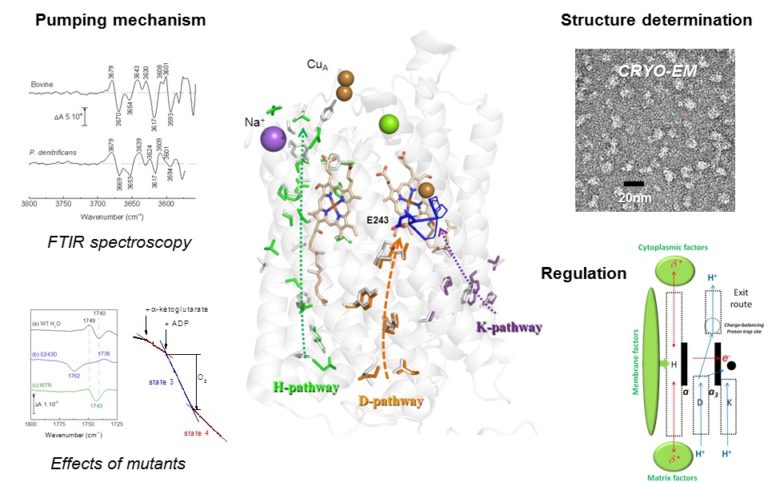
Amandine Marechal is a Professor of Biochemistry and Bioenergetics at University College London's School of Natural Sciences, affiliated with the Institute of Structural Molecular Biology (ISMB). She holds a PhD from Université Paris Sud (2007) and a Magistère in Chemistry from École Normale Supérieure Ulm (2004). Her research focuses on mitochondrial respiratory chain supercomplexes, cytochrome c oxidase mechanisms, and FTIR spectroscopy applications. Key projects include MRC-funded studies on proton-coupled electron transfer and Royal Society-funded work on cytochrome c oxidase catalytic cycles. Research interests span bioenergetics, enzyme catalysis, and structural biology. Notable awards include the MRC Transition Support Award (2021) and Career Development Award (2015). She teaches modules like 'Research Methods in the Biosciences' and supervises PhD students in her areas of expertise. Postdoctoral staff include Dr. Thomas Gruhl. Her lab explores mitochondrial dysfunction and structural biology using advanced imaging and spectroscopic techniques.
Michael Reese is a Professor in the Department of Pharmacology at UT Southwestern Medical Center, where he has been since joining in 2013. He holds a B.S. in Molecular Biophysics & Biochemistry from Yale University (1998) and a Ph.D. in Biophysics from UCSF (2006), with postdoctoral training at Stanford University under John Boothroyd. His research focuses on understanding how the parasite Toxoplasma gondii manipulates host cell signaling networks, employing techniques from genetics, cell biology, biophysics, and structural biology. Key areas include pseudokinase function, host-pathogen interactions, and parasite virulence mechanisms. Education: B.S., Molecular Biophysics & Biochemistry, Yale University, 1998 Ph.D., Biophysics, University of California, San Francisco, 2006 Research Interests: Dr. Reese's lab investigates Toxoplasma gondii's strategies to hijack host cellular machinery, particularly focusing on pseudokinases, membrane dynamics, and immune evasion. Recent work highlights the role of MAPK pathways and protein kinase signaling in parasite survival and pathogenesis. His studies integrate structural biology with functional genomics to uncover novel antiparasitic targets. Labs/Teams: Reese Lab at UT Southwestern focuses on cutting-edge research into parasitic mechanisms, with active projects on Toxoplasma's molecular biology and host interactions. The lab maintains a website dedicated to their research findings and resources.
Jared E. Toettcher is the Associate Professor of Molecular Biology and Deputy Director of the Omenn-Darling Bioengineering Institute at Princeton University. He holds additional faculty affiliations with the Department of Chemical and Biological Engineering and the Lewis-Sigler Institute for Integrative Genomics. Education: B.S. in Bioengineering, University of California, Berkeley (2004) Ph.D. from Massachusetts Institute of Technology (2009) Research Focus: The Toettcher Lab investigates how cells decode spatial and temporal signaling information to make critical decisions about growth, differentiation, and migration. Their work combines optogenetic tools (Phytochrome B/PIF6 system), high-resolution microscopy, and systems biology to study: Dynamic signal encoding in Ras/Erk pathways Spatiotemporal control of developmental processes Phase separation as a mechanism for cellular memory Cancer-related signaling pathway disruptions Synthetic control of metabolic and developmental systems Key Publication Trends: Recent work focuses on light-regulated systems for controlling signaling pathways (2023-2025), with particular emphasis on interferon receptors, embryonic symmetry breaking, and prime editing techniques. Earlier studies (2013-2018) established foundational optogenetic tools for studying Erk dynamics and metabolic flux control. Scientific Recognition: NSF CAREER Award (2018-2023) NIH New Innovator Award (2016-2021) Cancer Research Institute Fellow (2010-2013) MIT Presidential Fellow (2004) UC Berkeley Regents' Scholar (2000) Laboratory and Collaborations: The Toettcher Lab at Princeton University operates at the intersection of quantitative cell biology and engineering, with active collaborations across bioengineering, genomics, and developmental biology disciplines.
Dr. Sebastien Poget is an Associate Professor at the College of Staten Island (CSI), CUNY. His research focuses on membrane proteins, particularly ion channels and their interactions with animal peptide toxins, using nuclear magnetic resonance (NMR) spectroscopy. He develops NMR methodologies to study these systems and investigates toxin-channel interactions to understand channel modulation for potential drug development. His work spans structural biology, biophysics, and toxinology. Education: Ph.D. in Chemistry (University of Cambridge, 2001) and Diploma in Chemistry (University of Basel, 1997). His lab, the Poget Lab, is active in toxin discovery from venoms and studies their structural and functional effects on ion channels. Key research areas include potassium/sodium channel physiology, venom peptide mechanisms, and NMR methodology advancements. His publications (2017–1999) cover receptor structures, toxin-channel interactions, and membrane protein dynamics. No awards are explicitly mentioned, but his work contributes to understanding neurological disorders and drug design.
Lothar Jänsch is a Professor and Research Group Leader at the Helmholtz Centre for Infection Research (HZI) , jointly appointed with the Technical University of Braunschweig . His work bridges proteomics and infection biology , focusing on pathogen-host interactomes and immune response regulation. Studied biology at the Free University of Berlin (diploma 1995), earned his doctorate in 1998 (IGF Berlin/University of Hanover) Postdoc at GBF (now HZI) since 2000, led projects on virulence factors (2003-2006), and established the Cellular Proteomics group in 2009 Appointed to the W2 professorship for Proteomics in Infectious Processes in 2011 Research emphasizes translational projects with academic, medical, and industrial partners, particularly on: Pathogen-host interactomes (e.g., Pseudomonas aeruginosa , Clostridioides difficile , Listeria monocytogenes ) Immune response control mechanisms in infection models (MAIT cells, NK cells, Tregs) Proteomic characterization of extracellular vesicles, biofilms, and subcellular structures Drug discovery targeting bacterial virulence factors (e.g., quinoxalinediones for α-hemolysin) Recent publications highlight interdisciplinary approaches combining mass spectrometry , kinome analysis , and phosphoproteomics to study: Bacterial virulence regulation (PqsE chaperone activity, NirS-DnaK-FliC complex) Lipid signaling (nSMase2, sphingomyelinase) Drug mechanisms (aminoratjadone, salinilactones) Stress response pathways (PerR mutation in C. difficile)
Erik Reimhult is a Professor in Nanobiotechnology for Supramolecular Materials at the University of Natural Resources and Life Sciences, Vienna , leading the Institute of Colloid and Biointerface Science . His research spans colloidal assembly, biointerfaces, nanoparticle interactions, and biofilms, with applications in biomedical engineering and sustainable materials. He has held leadership roles, including Head of the Department of Bionanosciences since 2022 and Deputy Chairman of the Senate (2016–2019). Education: PhD in Physics (Chalmers University of Technology, 1999–2004), Master of Science in Physics (Cornell University, 1998–1999). His work focuses on biomedical nanoparticles , bacterial interactions , and thermoresponsive polymer systems , with over 185 publications and 27 projects funded by organizations like the Austrian Science Fund (FWF) and European Commission. Recent research includes biofilm-responsive drug delivery, holographic sensing, and nanocomposite food packaging. His 15 most recent articles highlight advancements in biofilm modeling, magnetically triggered release systems, and plasmonic biosensors. Scientific accolades include an ERC Consolidator Grant (2012) and multiple best-paper awards. He has supervised numerous theses and lectures globally, emphasizing bionanosciences and grant acquisition strategies.
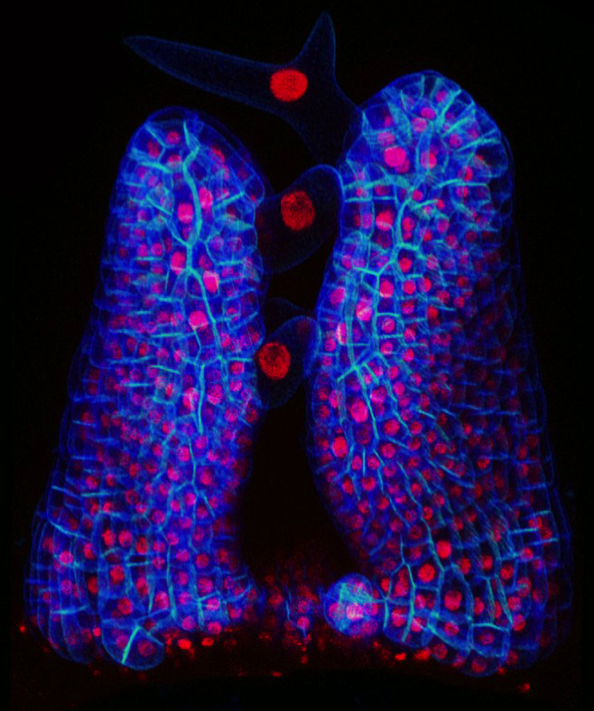
Associate Professor Marcus Heisler is a developmental biologist at the School of Life and Environmental Sciences, The University of Sydney, where he leads the Heisler Lab focused on plant developmental patterning. He is also a member of the Sydney Institute of Agriculture and has established an international reputation for his work on plant morphogenesis, particularly in understanding how plant organs are positioned and shaped. Dr. Heisler completed his undergraduate studies at the University of Melbourne, earned his PhD at Monash University studying flower development, and conducted postdoctoral research at Caltech with Elliot Meyerowitz. He served as a Senior Research Associate at Caltech before becoming the first Australian group leader at the European Molecular Biology Laboratory (EMBL) in Heidelberg, Germany. He returned to Australia in 2017 to join the University of Sydney as an Associate Professor. During his time at EMBL, he was awarded a prestigious European Research Council (ERC) starting grant worth 1.5M Euros over five years. His research focuses on developmental patterning in plants, particularly how plant organs such as leaves and floral structures are positioned and shaped. His lab emphasizes high-resolution imaging to study cellular and tissue-level processes combined with fine-scale perturbation techniques. Current research centers on understanding and re-engineering the floral ground plan through the RESYDE project, which in 2024 received a $17M ERC Synergy grant with collaborators in Germany, the UK, and Sweden. His work spans molecular biology, genetics, and computational approaches to plant development. Dr. Heisler's recent publications (2024-2017) show consistent focus on plant developmental mechanisms, with particular emphasis on cell polarity, auxin transport, gene regulatory networks, and organ positioning. His research integrates live imaging, molecular perturbation, and quantitative analysis to understand fundamental mechanisms of plant morphogenesis across multiple scales from cellular to tissue levels. European Research Council (ERC) starting grant (1.5M Euros) ERC Synergy grant ($17M over six years) for the RESYDE project Dr. Heisler currently leads the Heisler Lab which conducts research on cell-cell signaling in cell polarity and dorsoventral boundaries in plant morphogenesis. He collaborates extensively with international researchers and has secured multiple grants including ARC Discovery Projects and LIEF funding. The lab maintains state-of-the-art facilities for live imaging of plant development and molecular perturbation studies, with a focus on understanding the fundamental mechanisms that govern plant form and structure.
Xiche Hu , Ph.D., is an Associate Professor in the Department of Chemistry & Biochemistry at the University of Toledo, affiliated with the College of Natural Sciences and Mathematics. His research spans computational and theoretical chemistry, focusing on Modeling membrane protein structures X-ray crystallography methods Chemical reaction dynamics Molecular recognition mechanisms Education: B.S. (1982) and M.S. (1985) from Wuhan University Ph.D. (1991) from Wayne State University Postdoctoral work at UC Irvine (1992-1994) and UIUC (1994-1998) Research Interests: Dr. Hu's work combines quantum chemical methods with computational biology to study energy transfer in photosynthetic systems, molecular recognition in protein-drug interactions, and reaction dynamics in enzyme mechanisms. He has developed ab initio molecular replacement techniques for membrane protein structure determination. Scientific Contributions: His publications from 1988-2021 reflect expertise in X-ray crystallography Quantum mechanical modeling Classical trajectory simulations Structure-function relationships Photobiology Computational enzymology Laboratory: Based in Bowman-Oddy Laboratories (Room BO 2022), his team investigates light-harvesting complexes and protein-ligand interactions through computational approaches.
Henrik Nielsen is an Associate Professor at the Department of Bioinformatics, Technical University of Denmark, specializing in protein sorting prediction and signal peptide analysis. His research leverages deep learning and protein language models to advance subcellular localization and secretion pathway studies. Department of Bioinformatics, DTU Focus on signal peptides, protein targeting, and computational methods His recent work includes SignalP 6.0 , DeepLoc 2.1 , and SpanSeq , highlighting the integration of protein language models for multi-label localization prediction and sequence data splitting. Collaborations span projects in pathogenic eukaryotes, vaccine development, and structural bioinformatics. Notable contributions include: Development of SignalP: a cornerstone tool for signal peptide cleavage prediction Creation of DeepLoc for membrane protein type classification Advancing SpanSeq to optimize deep learning model assessment He has supervised PhD candidates in protein sorting, bioinformatics, and sequence analysis, with a focus on improving vaccine design and pathogen characterization through computational approaches.