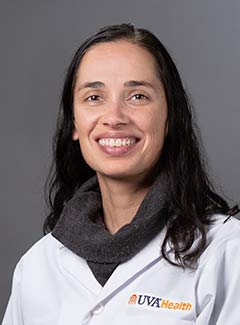
Mattias Rantalainenمشاهده پروفایل
مدرس ارشد
- Bioinformatics and Computational Biology
- Cancer Precision Medicine
- Computational Pathology
- +۵ مورد دیگر
Mattias Rantalainen is a Senior Lecturer and Docent at Karolinska Institutet's Department of Medical Epidemiology and Biostatistics, where he leads the Predictive Medicine research group. His work focuses on applying statistical machine learning, artificial intelligence, and big data analytics to medical research, with particular emphasis on computational pathology and cancer precision medicine. The research group maintains over 300,000 whole slide images for population-based studies, primarily focused on breast, prostate, and colorectal cancer. Dr. Rantalainen completed his PhD at Imperial College London developing multivariate pattern recognition methods with applications in metabonomics. He previously held a research fellowship (2009-2013) with joint affiliation at the Department of Statistics and the Wellcome Trust Centre for Human Genetics at the University of Oxford, where he was awarded the MRC Centenary Early Career Award (2012-2013) and a Medical Research Council Special Training Fellowship in Biomedical Informatics (2009-2012). He holds an undergraduate degree in Engineering Biology (combined BSc/MSc) from Umeå University in Sweden. His research interests span computational pathology, cancer precision medicine, and AI-driven medical research. The Predictive Medicine group develops and applies AI and machine learning methodologies for predictive modeling in biomedical applications. Their mission is to transform large biomedical datasets into clinically relevant predictions at the individual level, with a particular focus on precision pathology applications where the goal is to predict patient outcomes. Their work integrates comprehensive molecular profiling (DNA- and RNA-sequencing), clinical information, and medical imaging data. Analysis of his recent publications reveals a strong trend toward developing and validating deep learning models in computational pathology, particularly for breast cancer applications. His work focuses on risk stratification, histological grading, and gene expression prediction from histopathology images. There's a clear progression from method development to clinical validation and implementation, with increasing emphasis on real-world applicability and comparison with established clinical assays. His research bridges the gap between computational methodology and clinical practice in cancer diagnostics. MRC Centenary Early Career Award (2012-2013) Medical Research Council (MRC) Special Training Fellowship in Biomedical Informatics (2009-2012) Dr. Rantalainen serves as main supervisor for PhD students Philippe Weitz and Abhinav Sharma, and as co-supervisor for several other doctoral candidates including Dusan Rasic, Sandra Kristiane Sinius Pouplier, and Tewodros Yalew. He coordinates the Swedish AI Precision Pathology (SwAIPP) consortium, which focuses on translation and implementation of AI-based pathology. His group has received significant funding, including a recent 120 million SEK grant to the Department of Medical Epidemiology and Biostatistics from Swedish funding agencies. The Predictive Medicine group operates within the Department of Medical Epidemiology and Biostatistics at Karolinska Institutet, coordinating several national and international initiatives including the CHIMES study (www.chimestudy.se), ABCAP (www.abcap.org), and the Swedish AI Precision Pathology consortium (www.swaipp.org). The group has developed numerous AI-based tools that improve cancer diagnosis and risk prediction, with several projects advancing toward clinical implementation as regulatory-approved medical devices. Their work represents a significant contribution to the field of precision pathology and AI-driven cancer diagnostics.