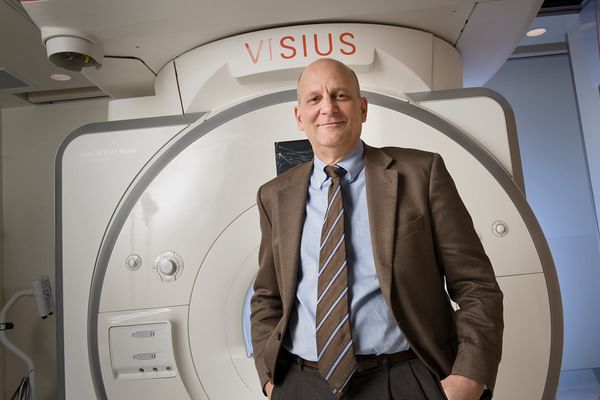
Dr. Daniel R Obaid is a Clinical Associate Professor and Consultant Cardiologist at Swansea University Medical School , specializing in Biomedical Sciences . His clinical academic work at the Morriston Regional Cardiac Centre and ILS 2 Clinical Imaging Facility focuses on advanced cardiovascular imaging and interventional cardiology. Expertise in Interventional Cardiology , Cardiac CT , and Atherosclerotic Plaque Imaging Significant contributions to patient safety and human factors in cardiovascular procedures Recipient of the Young Investigator Prize from the Society of Cardiovascular CT, USA His research integrates invasive and non-invasive imaging techniques to identify vulnerable plaques, with publications spanning atherosclerosis , clot microstructure , and AI applications in cardiology . Current studies include virtual TAVR simulations and biomechanical analysis of plaque stress . Recent collaborative work explores low-dose radiation protocols , LDL transport modeling , and anti-inflammatory effects of GLP-1 agonists , reflecting interdisciplinary approaches to cardiovascular risk mitigation. Available for postgraduate supervision , Dr. Obaid has contributed to undergraduate medical professionalism and cardiovascular physiology modules (PM-241F, PM-266).
Adam Woźniak is a Professor and Vice-Rector for Development at Warsaw University of Technology (WUT), holding positions at the Faculty of Mechatronics and the Institute of Metrology and Biomedical Engineering. He earned a PhD in 2002, D.Sc. (habilitation) in 2011, and was promoted to full professor in 2017. His research focuses on advanced geometrical measurement techniques, coordinate metrology, quality engineering, and reliability of mechatronic systems. He has authored 2 books and over 130 scientific publications, including work on probing accuracy, X-ray CT applications, and dynamic error analysis in manufacturing systems. Notably, he served as Director of the Institute of Metrology and Biomedical Engineering (2012–2020) and later as Dean of the Faculty of Mechatronics (2020). He received the Polish Prime Minister’s Prize for Scientific Achievements (2012) and multiple scholarships from the Foundation for Polish Science. Education: PhD (2002), D.Sc. (2011), Warsaw University of Technology; Visiting Professor at École Polytechnique de Montréal (2005–2006). Research interests include coordinate measuring machine (CMM) performance, probing system accuracy, and industrial CT applications. His work addresses dynamic error identification, probe error compensation, and precision measurement techniques. Recent projects involve high-density point cloud correction, scanning probe validation, and pediatric growth measurement systems. His articles analyze topics like probe reliability, CNC machine tool errors, and X-ray CT threshold optimization. Awards also include recognition for leadership in standardization bodies, including roles in Poland’s Council for Metrology and Standardization. He has supervised 6 PhD students and numerous master’s candidates, contributing to over a dozen funded research projects. His lab, the Virtual Manufacturing Research Laboratory, integrates metrology, mechatronics, and biomedical engineering for advanced measurement solutions.
Keith D. Paulsen is the MacLean Professor of Engineering at Dartmouth College’s Thayer School of Engineering and holds the title of Professor of Radiology & Surgery at the Geisel School of Medicine. He serves as Scientific Director of the Center for Surgical Innovation at Dartmouth-Hitchcock Medical Center and Co-Director of the Translational Engineering in Cancer Research Program at the Norris Cotton Cancer Center. His roles emphasize interdisciplinary collaboration between engineering, medicine, and oncology. Paulsen earned a BSc in Biomedical Engineering from Duke University (1981), followed by MS (1984) and PhD (1986) degrees in Engineering Sciences from Dartmouth College. His research focuses on biomedical imaging, cancer therapeutics, and image-guided surgery, with particular expertise in optical and electromagnetic methodologies. He has pioneered technologies such as fluorescence-guided surgery, quantitative scatter imaging, and non-linear image reconstruction techniques, aiming to enhance surgical precision and cancer diagnosis. His awards include fellowships from OSA, SPIE, AIMBE, IEEE, and the National Academy of Inventors. Paulsen’s work has led to startups like CairnSurgical (where he serves as CTO) and InSight Surgical Technologies, translating research into clinical tools. Key projects include intraoperative imaging systems for brain and spine surgery, microwave imaging for breast cancer, and optical molecular imaging for real-time surgical guidance. Paulsen teaches advanced computational methods (ENGS 205, 105) and courses on medical device innovation (ENGM 189.1/2). His lab, part of Dartmouth’s Optics in Medicine cluster, collaborates with radiology, surgery, and oncology departments to develop clinical technologies funded by NIH, NCI, and DoD grants.
Gökhan Alcan is an Assistant Professor in Robotics and Machine Learning at the Automation Technology and Mechanical Engineering Unit of Tampere University, Finland. He leads the Advanced Learning, Control and AutomatioN (ALCAN) Research Group, focusing on safe model predictive control, constrained optimal control theory, reinforcement learning, and their applications to dynamical systems. His research addresses challenges in robotic manipulation, safe navigation, and human-robot collaboration through projects like the Aurora initiative on automated and connected machines. Education: B.Sc., M.Sc., and Ph.D. in Mechatronics Engineering from Sabanci University (2008–2019). Postdoctoral research at Sabanci University (2019) and Aalto University (2020–2024). Research Interests: Robotics, control theory, system identification, autonomous systems, and machine learning applied to robotic manipulation, autonomous vehicles, and safety-critical systems. Notable work includes trajectory optimization for hybrid systems, magnetic manipulation for medical applications, and sim-to-real gap analysis in cloth manipulation. Awards: Third Place in Aalto Open Science Award 2023, Elginkan Foundation Technology Award (2016), and multiple scholarships. Advised Ph.D. student David Blanco Mulero, who defended his thesis on robotic manipulation of deformable objects. Labs/Teams: ALCAN Research Group, former roles in Aalto University's Intelligent Robotics Group and Sabanci University's Control, Vision, and Robotics (CVR) Group.
Mia Liljeström is a Staff Scientist at the Department of Neuroscience and Biomedical Engineering, Aalto University. She holds a Doctoral Degree in Engineering and Technology from Aalto University (2010) and a Master's Degree in Engineering and Technology from Helsinki University of Technology (2002). Doctoral Degree: Aalto University, 2010 Master's Degree: Helsinki University of Technology, 2002 Her research focuses on Magnetoencephalography (MEG) , Functional Connectivity , and Brain Networks . She explores Transcranial Magnetic Stimulation (TMS) , Functional MRI , and Neural Networks to map language-critical brain areas and study cortical dynamics. Recent work includes automated speech artefact removal from MEG data and test-retest reliability of brain connectivity metrics. Mia actively participates in conferences like MEG Nord and has presented invited talks on language processing and large-scale brain networks. Her publications emphasize MEG-informed TMS, cortical beta modulation, and brain stimulation precision. She contributes to the UN Sustainable Development Goal of Quality Education through neuroimaging research.
Andrew Fielding is an Associate Professor in the School of Chemistry & Physics at Queensland University of Technology (QUT), Faculty of Science. His research and teaching focus on medical physics, particularly in radiation therapy, medical imaging, and Monte Carlo dosimetry techniques. He is the Course Coordinator for the Graduate Diploma and Master of Applied Science in Medical Physics programs at QUT. He holds a PhD in Physics from the University of Portsmouth and a B.Sc. (Hons) from the University of Surrey. He completed postdoctoral research at the Institute of Cancer Research / Royal Marsden Hospital and the University of Liverpool before joining QUT in 2004. His academic progression includes Lecturer (2004–2008), Senior Lecturer (2008–2022), and Associate Professor (2023–present). His research interests lie in medical imaging, radiation therapy, image-guided radiotherapy, Monte Carlo techniques for dosimetry, and radiation oncology physics. He emphasizes translating research into clinical practice to improve cancer care. His recent publications reflect a strong focus on Monte Carlo simulations, small-field dosimetry, preclinical irradiation, and the integration of AI and simulation in radiotherapy education and treatment verification. His scientific achievements are recognized through professional memberships including Fellow of the Institute of Physics (FInstP), Chartered Physicist (CPhys), and Member of the Australasian College of Physical Scientists and Engineers in Medicine (MACPSEM). Fellow of the Institute of Physics (FInstP) Chartered Physicist (CPhys) Member of the Australasian College of Physical Scientists and Engineers in Medicine (MACPSEM) Andrew Fielding actively supervises PhD and research master’s students in areas such as Monte Carlo dosimetry, tumor motion tracking, and radiotherapy optimization. He has secured competitive research grants, including Australian Competitive Grants for projects on tumor motion monitoring and in-vivo dosimetry verification. His teaching philosophy emphasizes authentic, clinically aligned learning using simulation, virtual reality, and real-world applications. He leads or teaches several core medical physics units, including Radiation Physics, Radiotherapy, Medical Imaging Science, and Research Methodology. He is involved in developing and evaluating innovative tools such as 3D volumetric outlining systems and immersive simulation environments for radiotherapy training. His work bridges physics, clinical application, and education, contributing significantly to the advancement of medical physics both in research and pedagogy.
Frans N. van de Vosse is a full Professor at the Department of Biomedical Engineering , Eindhoven University of Technology. He leads the Cardiovascular Biomechanics research group, focusing on computational and experimental analysis of cardiovascular systems, medical devices, and clinical applications. Academic Background: MSc in Applied Physics (1982), PhD in Numerical Carotid Artery Flow Analysis (1987) from TU/e Professional Affiliations: Full Professor (since 2001), Lecturer in Fluid Mechanics (1987–2001) Research Interests span cardiovascular biomechanics, including Blood in Motion , Heart at Work , and Vessels under Stress . His work emphasizes computational models, experimental techniques, and medical devices for clinical diagnosis and intervention. Key Article Trends include fetal hemodynamics, virtual patient cohorts for coronary disease, abdominal aortic aneurysm progression, and fluid-structure interaction studies in heart valves. Many publications align with UN Sustainable Development Goals related to health and well-being. Media and Public Engagement highlights his contributions to artificial womb technology discussions and clinical device validation studies. His research has been featured in Professional Commentary and PR Activities in cardiovascular engineering.
Dr. Kathy Fuller is an Associate Professor of Translational Oncology at The University of Western Australia, serving in the School of Biomedical Sciences within the Pathology and Laboratory Science department. She holds the position of Head of Discipline for Pathology and Laboratory Science and serves as Scientific Lead in the Translational Cancer Pathology Laboratory (TCPL). Dr. Fuller earned her PhD from The University of Western Australia for research into the effects of post-surgical nutrition on gut immunity. Her academic journey includes postdoctoral research at Thrombogenix at Monash University and leadership roles in flow cytometry facilities at UWA, where she developed the Sperm Chromatin Structure Assay (SCSA) for diagnostic use. Her research focuses on developing imaging cytometry protocols for diagnosis and prognosis in haematological malignancies. She investigates megakaryocyte dysregulation in Myeloproliferative Neoplasms and biomarkers for colorectal carcinoma metastasis. Dr. Fuller is particularly known for co-inventing 'immuno-flowFISH,' a patented automated flow cytometry method that detects chromosome signals inside immunophenotyped cells. Her recent publications demonstrate a strong emphasis on applying advanced cytometry to detect chromosomal abnormalities across various leukemias, with multiple 2025 publications showing the ongoing impact of her methodological innovations in cancer diagnostics. Dr. Fuller has received significant recognition including: Australian Museum ANSTO 2018 Eureka Prize for Innovative Use of Technology Queen's Trust for Young Australians Award WA Young Australian of the Year Award (Science and Technology) Raine Medical Research Foundation grant She actively mentors PhD students and has secured substantial funding from NHMRC, Cancer Council WA, Channel 7 Telethon Trust, and Perpetual Philanthropic Services. Her current projects focus on leukemia prevention, novel blood tests for myeloproliferative neoplasms, and improving outcomes for blood cancer patients. Dr. Fuller leads the Translational Cancer Pathology Laboratory where her team develops diagnostic methods with direct clinical applications, particularly in hematological malignancy diagnostics and minimal residual disease detection.
Dr. Yanjun Zhang is an Honorary Research Fellow at the School of Electrical Engineering and Computer Science, The University of Queensland. His research focuses on privacy-preserving technologies, federated learning, cybersecurity in IoT systems, and machine learning security. He holds a PhD in Privacy-Preserving Sharing for Genome-Wide Analysis from The University of Queensland (2021). Education: PhD in Information Technology, School of Information Technology and Electrical Engineering, The University of Queensland (2021) Research Interests: Designing secure collaborative machine learning frameworks Defending against adversarial attacks in cyber-physical systems Privacy preservation in distributed genomic and medical data analysis Compliance and ethics in virtual personal assistant applications Key Contributions: Developed privacy-preserving federated learning frameworks (AgrAmplifier, PrivColl) Conducted foundational studies on evasion attacks in IoT systems Created datasets for analyzing malicious browser extensions and Alexa skills Labs/Teams: Active contributor to UQ Cyber initiatives, including the 2021-2022 Seed Funding project on federated deep learning for medical imaging.
Eliana M.F. Vieira is an Assistant Researcher at the Center for Microelectromechanical Systems (CMEMS) within the School of Engineering at the University of Minho (UMinho), Portugal. She is also an integrated member of the LABBELS Associate Laboratory. Her research is conducted in the Department of Industrial Electronics, where she contributes to both R&D and teaching. PhD in Physics (2013), University of Minho BSc in Education of Physics and Chemistry (2008), University of Minho Dr. Vieira's research focuses on the development and application of nanomaterials for energy harvesting and sensing technologies. Her work emphasizes thermoelectric generators, self-powered photodetectors, and magneto-optical sensors, with a strong interest in the relationship between nanostructure and material properties. She investigates thin films, quantum dots, and flexible composites for enhanced micro and nanodevices. Her recent publications highlight advancements in screen-printed thermoelectrics, MEMS-based atomic vapor cells, and pyro-phototronic effects in oxide heterojunctions. These works reflect a strong trend toward flexible, scalable, and self-powered electronic systems with applications in wearable sensors, biomedical imaging, and sustainable energy. 4 awards for best student during BSc Micro&NanoFabs@PT project award (NORTE-01-0145-FEDER-022090) Dr. Vieira has supervised multiple graduate students and currently mentors two MSc and two PhD candidates funded by FCT. She has secured significant research funding, including grants from FCT and EU programs, and has led strategic projects such as CMEMS and NanOx4EStor. She has served as a scientific reviewer, thesis arguer, and evaluator for national fellowship programs. She leads research in the CMEMS-UMinho lab, particularly in thin-film deposition and device fabrication, and collaborates extensively with international institutions in France, Italy, Spain, and the UK.
Melanie Campbell is a Professor at the University of Waterloo, cross-appointed to the School of Optometry and Department of Systems Design Engineering. Her research focuses on the optical properties of the eye, developing imaging systems for diagnosing Alzheimer's disease and diabetic retinopathy through polarization techniques and adaptive optics. PhD in Physics from Australian National University (1982) MSc in Physics from University of Waterloo (1977) BSc in Chemical Physics from University of Toronto (1975) Research interests include: Retinal amyloid detection for Alzheimer's diagnosis Adaptive optics for high-resolution imaging Polarimetry in ocular pathology Presbyopia and ophthalmic corrections Her publications (2012-2019) demonstrate interdisciplinary applications of optics in neuroscience and diabetes research, with key contributions to: Retinal polarization imaging Two-photon therapy systems Cone photoreceptor analysis Animal models of neurodegeneration Scientific honors include: 2019 Laird Lecturer 2014 CAP-INO Medal 2004 Rank Prize in Optoelectronics Fellow of Optical Society of America As director of Campbell Labs, she leads research on retinal imaging techniques and their applications in neurological disease diagnosis.
Ramses Martinez is an Assistant Professor in the Department of Industrial Engineering and Biomedical Engineering at Purdue University . He holds a B.A. in Applied Physics from Universidad Autonoma de Madrid (2004) and a Ph.D. in Physics and Materials Science from the Spanish National Research Council (CSIC) in 2009. Prior to joining Purdue, he conducted postdoctoral research in the lab of Prof. George M. Whitesides at Harvard University, focusing on nanofabrication, microfluidics, and soft robotics. Education B.A. in Applied Physics, Universidad Autonoma de Madrid (2004) Ph.D. in Physics and Materials Science, Spanish National Research Council (CSIC) (2009) His research bridges soft robotics , flexible electronics , and nanofabrication , with a focus on creating self-powered e-textiles , omniphobic paper-based devices , and programmable mechanical metamaterials . His work has led to over 25 publications and 9 patents, emphasizing practical applications in health monitoring and industrial automation . Notable projects include waterproof electronic decals for biofluid monitoring, smart bandages for chronic wound detection, and laser nanoforming methods for scalable metallic structures. His research has been recognized through the Fulbright Fellowship and the Marie Curie IOF Grant .
Sedat Nizamoğlu is an Associate Professor at the Department of Electrical and Electronics Engineering , Koç University , Istanbul. His research focuses on bioelectronics, optoelectronics, and nanotechnology with applications in neuroengineering and implantable devices. Education : PhD (2011), MSc (2007), BS (2005) from Bilkent University Research Interests include: Bio/Nano/Molecular/Quantum Communications Optical Control of Brain Functions Micro/Nanofabrication for Biomedical Devices Scientific Awards : ERC Starting Grant ERC Consolidator Grant First Science Diplomacy Award by YÖK Aziz Sancar Incentive Award He has contributed to developments in transient optoelectronics and optofluidic systems , with funding from European Research Council grants. His work bridges nanotechnology, photonics, and biomedical engineering.
Pratip K. Bhattacharya, Ph.D. , is an Associate Professor in the Department of Cancer Systems Imaging and the Department of Imaging Physics at The University of Texas MD Anderson Cancer Center, with a joint appointment in the Graduate School of Biomedical Sciences at The University of Texas Health Science Center. He is a principal investigator leading the Bhattacharya Laboratory, dedicated to advancing magnetic resonance imaging (MRI) through hyperpolarization techniques for applications in cancer and cardiovascular diseases. His research focuses on developing real-time metabolic and molecular imaging methods using hyperpolarized 13 C and 15 N-labeled compounds and silicon nanoparticles. These innovative probes significantly enhance MRI sensitivity, enabling non-invasive assessment of tissue metabolism and targeted imaging. His lab's work spans three primary areas: real-time metabolic MR imaging, targeted molecular MR imaging with functionalized silicon nanoparticles, and high-resolution MR metabolomics. These efforts are aimed at improving disease diagnosis and therapy monitoring. Analysis of his recent publications reveals a strong and consistent focus on hyperpolarized MRI, particularly using silicon particles and metabolic tracers like succinate, to visualize cancer metabolism and cardiovascular conditions in vivo. His research integrates physics, chemistry, and biomedical engineering to create novel imaging tools with direct clinical translational potential. PHIP Hyperpolarization Dynamic Nuclear Polarization (DNP) Hyperpolarized Silicon Nanoparticles Real-Time Metabolic Imaging Cancer and Cardiovascular Imaging Theranostic Applications Dr. Bhattacharya actively mentors graduate students and postdoctoral fellows, including Saleh Ramezani, Jose Enriquez, Dontrey Bourgeois, and Kang-Lin Hsieh. He collaborates closely with physician-scientists, radiologists, and oncologists to ensure his imaging science innovations address critical clinical needs. His laboratory is supported by grant funding, facilitating the development of cutting-edge imaging technologies. The Bhattacharya Laboratory is a key component of the Division of Diagnostic Imaging at MD Anderson, fostering a collaborative environment for interdisciplinary research. The lab focuses on translating fundamental discoveries in hyperpolarization physics into practical tools for improving cancer care.
Craig A. Chin is an Associate Professor in the Department of Electrical Engineering at Kennesaw State University. He holds a Ph.D. and M.S. in Electrical Engineering from Florida International University (2006, 2001) and a B.S. in Electrical and Computer Engineering from the University of the West Indies (1995). Research Interests: Digital Signal Processing for Biomedical Applications Machine Learning in Biomedical Signal/Image Analysis Wireless Body Area Networks (WBANs) for Healthcare Network Security in Resource-Constrained Environments Biometric Authentication for Wireless Sensor Networks Innovations in Engineering Education (Cooperative/Active Learning, Humanities Integration) Article Trends: His publications (2001–2019) focus on Biomedical Signal Processing (EMG/Eye-Gaze Integration, Stress Detection), WBANs for mHealth , and Engineering Education Pedagogy . Recent work (2013–2019) emphasizes Cooperative Learning Strategies and Wireshark-based Network Security Labs . Academic Contributions: Craig has taught courses such as Biometrics, Data Communications, Biomedical Instrumentation, and Medical Electronics. He actively explores future research on biometric-driven security for Body Area Sensor Networks and active learning strategies in online education.