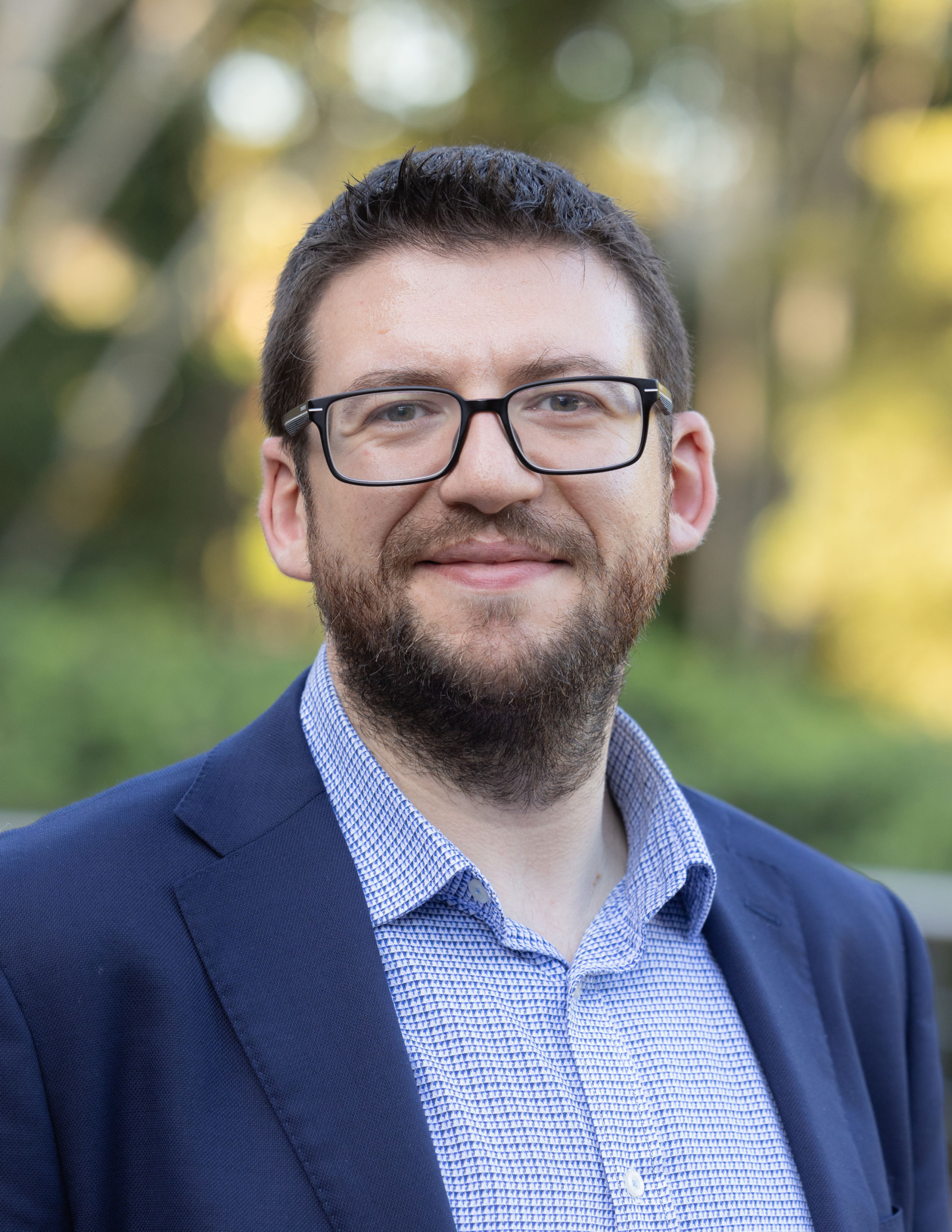
Hossein Dehghani Tafti is a Research Fellow at the Department of Electrical, Electronic and Computer Engineering, University of Western Australia. His work focuses on grid integration of renewable energy systems, photovoltaic technologies, and power electronics. He holds a PhD from Nanyang Technological University (2018) and has held research positions at NTU and UNSW. His expertise includes photovoltaic inverter control, energy storage systems, and microgrid operations. Education: B.Sc. (Amirkabir University, 2009), M.Sc. (Amirkabir, 2011), PhD (Nanyang Technological University, 2018) Research interests span grid-integrated renewables, multilevel converter design, and sustainable energy solutions. His recent work emphasizes flexible power point tracking algorithms and grid stability under partial shading conditions. He contributed to the book Advanced Multilevel Converters and Applications in Grid Integration (Wiley, 2018). He leads a grant-funded project on renewable microgrids for gravitational wave facilities (ARC, 2022–2024), demonstrating expertise in applied research and interdisciplinary collaboration.
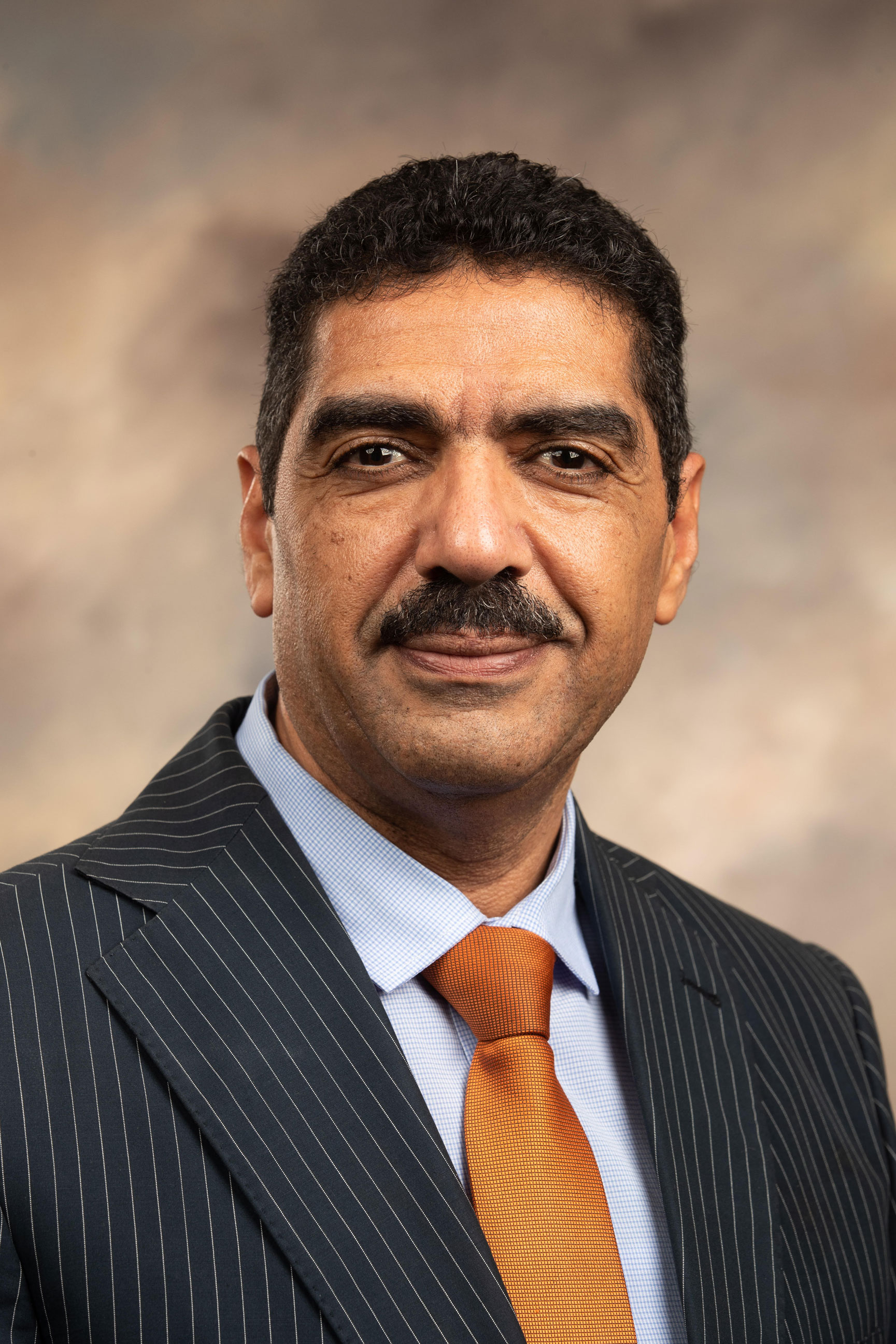
Tarek Kandil is an Assistant Professor at Western Carolina University's College of Engineering and Technology, where he has been since August 2022. He holds a B.Sc. and M.Sc. from Cairo University (Egypt) and a Ph.D. in Electrical & Computer Engineering from the University of Alberta (Canada). With over 19 years of experience, his expertise spans teaching and research in renewable energy systems, AI applications, energy management, hybrid energy systems, and microgrid protection. Education : Ph.D., University of Alberta, Edmonton, Canada (2004) M.Sc., Cairo University, Egypt (1999) B.Sc., Cairo University, Egypt (1993) Research Interests : His current projects focus on AI-driven resilient energy systems, microgrid protection, and hybrid energy systems. Notable areas include enhancing low-voltage ride-through (LVRT) capabilities in wind systems, optimal control of distributed energy resources, and energy conservation in healthcare microgrids. Publications : Recent work emphasizes renewable energy integration, AI-based emissions prediction, and advanced control techniques for power systems. His articles highlight innovations in DC-link voltage control, microgrid stability, and hybrid optimization algorithms. Awards : No scientific awards explicitly mentioned in the provided text. Advising & Grants : No advisees or grant information listed in the text. Labs/Teams : No specific lab or team affiliations explicitly stated.
Georgios Konstantinou is an Associate Professor in Energy Systems at the School of Electrical Engineering and Telecommunications, University of New South Wales (UNSW) Sydney. He leads the Real-Time Simulations Laboratory (RTS@UNSW), which hosts the largest Real-time Digital Simulation Laboratory in Australia. Dr. Konstantinou is also an ARC Future Fellow (FT240100038, 2025-2029) for the project "Integration and Stability of Power Electronics Defined Low Inertia Grids," and previously held an ARC Early Career Research Fellowship (DE170100370) focused on High-voltage DC grids. Dr. Konstantinou's educational background includes: PhD in Electrical Engineering from the University of New South Wales (UNSW), Sydney, Australia (2012) Thesis: "Harmonic Elimination Pulse Width Modulation of Modular and Hybrid Multilevel Converter Topologies" Diploma of Electrical Engineering (5-year degree, equivalent to Masters) from Aristotle University of Thessaloniki, Greece (2007) Graduate Diploma in University Learning and Teaching from UNSW (2015) His research focuses on power electronics and energy systems, with particular expertise in HVDC transmission systems, multilevel converters, real-time digital simulations, and hardware-in-the-loop testing. Dr. Konstantinou's work addresses critical challenges in grid integration of renewable energy and energy storage systems, with an emphasis on stability and control of power electronics-defined grids. His research bridges theoretical advancements with practical applications through close collaboration with industry partners including CSIRO and AGL. Analysis of Dr. Konstantinou's recent publications reveals a strong focus on grid-forming converters, digital twin technologies, and advanced control strategies for power systems with high renewable penetration. His work increasingly integrates artificial intelligence and machine learning techniques with traditional power system engineering to address stability challenges in low-inertia grids. Key themes include real-time simulation methodologies, fault analysis in HVDC systems, and innovative control approaches for power electronics interfaces. Dr. Konstantinou's scientific recognition includes: ARC Future Fellow (FT240100038, 2025-2029) ARC Early Career Research Fellow (DE170100370) Australia-China Young Scientist Exchange Program participant (2015) Next Steps Initiative Grant awardee (2016) Associate Editor for IEEE Transactions on Power Electronics Dr. Konstantinou actively supervises research students in areas including multilevel power electronics converters, HVDC systems, modular multilevel converters, and grid integration of large-scale renewable energy systems. His current research is supported by multiple grants totaling over $1.5 million, including an ARC Future Fellowship ($1,066,000), CSIRO Global Power System Transformation Initiative grants ($365,000 each), and various international collaboration grants. These projects focus on real-time simulation, grid integration of renewables, and stability of power electronics-defined grids. As the leader of the Real-Time Simulations Laboratory (RTS@UNSW), Dr. Konstantinou oversees Australia's largest Real-time Digital Simulation Laboratory with extensive capabilities in HVDC networks, multiterminal DC grids, power system protection relay testing, renewable energy systems, and smart grids. The laboratory serves as a critical resource for both academic research and industry collaboration, providing hardware-in-the-loop testing capabilities for next-generation power system technologies.
Szymon Barczentewicz, PhD, Eng., serves as a Lecturer at AGH University of Science and Technology within the Department of Power Electronics and Automation of Energy Conversion Systems, Faculty of Electrical Engineering, Automatics, Computer Science and Biomedical Engineering. His academic position and research activities confirm active faculty status in Poland's leading technical university. Dr. Barczentewicz's research concentrates on Power Electronics , Power Quality , and Smart Grid technologies, with particular expertise in harmonic analysis, islanding detection for distributed generation systems, and voltage fluctuation compensation. His work bridges theoretical development with experimental validation, frequently utilizing phasor measurement units (PMUs), hardware-in-the-loop simulations, and advanced signal processing techniques to address grid stability challenges in renewable-rich environments. Analysis of his 15 most recent publications reveals consistent focus on grid integration challenges: 60% address islanding detection and prevention, 40% cover power quality monitoring (including supraharmonics), and 30% explore data compression for smart grid applications. His 2025-2024 work demonstrates increasing emphasis on AI-enhanced grid management and experimental validation of control systems for renewable integration. Collaboration with industry partner Enea Operator features prominently in his research program, particularly in power quality monitoring and energy balancing projects. As an active member of AGH's Energy Quality Team ( Zespołu Jakości Energii ), he contributes to experimental developmental research and educational initiatives in electrical power delivery systems.
Jean Pierre David is a Full Professor in the Department of Electrical Engineering at Polytechnique Montréal. He has been with the institution since January 2006, was promoted to Associate Professor in June 2013, and became a Full Professor in June 2021. His research focuses on digital systems design, reconfigurable systems, and hardware implementations of artificial intelligence applications. David received his Electrical Engineering degree (specializing in electronics) from the University of Liège (Belgium) in 1995. He completed his Ph.D. in June 2002 at the Catholic University of Louvain, with research focused on reconfigurable systems (FPGAs). Before joining Polytechnique Montréal, he was a professor at the University of Montreal from August 2002 to January 2006. Jean Pierre David's research spans several key areas in electrical engineering and computer science. His primary focus is on digital systems design, configuration, and programming, with particular expertise in reconfigurable systems such as FPGAs and microcontrollers. He has made significant contributions to Hardware Description Languages (HDL), developing methodologies for fast, safe, and simple design of digital architectures. His work extends to Hardware-in-the-Loop (HIL) simulation, Deep Packet Inspection (DPI) for high-speed communications (10GBE, 40GBE, 100GBE), and applications of digital systems in artificial intelligence, particularly neural network implementations. David's recent research has increasingly focused on energy-efficient AI hardware, RISC-V processor design for neural network acceleration, and specialized architectures for low-precision computation. His publication record shows a clear evolution from foundational work in digital system design and FPGA implementation toward increasingly sophisticated applications in artificial intelligence and neural network acceleration. The most recent publications demonstrate expertise in creating specialized hardware for efficient AI computation, with a strong emphasis on low-precision and binary neural networks that can run efficiently on resource-constrained devices. His work bridges computer architecture, electrical engineering, and artificial intelligence, creating practical hardware solutions for emerging computational challenges. David is affiliated with several important research groups and institutions including the Strategic Microsystems Group of Quebec (ReSMiQ), the Institute of Electrical and Electronics Engineers (IEEE), and the Institute for Data Valorization (IVADO). His work has been recognized through numerous publications in high-impact journals and conferences, with a total of 108 publications to his name. Professor David has supervised an impressive number of graduate students throughout his career, mentoring 9 Ph.D. students and 24 Master's students to completion. His students have worked on diverse topics including FPGA-based neural network acceleration, hardware implementations of deep learning algorithms, energy harvesting systems for IoT devices, and specialized architectures for low-precision computation. His lab appears to maintain strong connections with industry through various research projects and collaborations with researchers like Yves Savaria. His research laboratory focuses on the intersection of hardware design and artificial intelligence, with particular emphasis on creating efficient implementations of neural networks on specialized hardware platforms. The lab maintains strong connections with industry partners and collaborates extensively on projects related to network processing, AI acceleration, and energy-efficient computing systems.
Joao L. Afonso is a Full Professor at the Department of Industrial Electronics, Engineering School, University of Minho, Portugal. He has been with the University since 1993 and served as Department Director from January 2017 to January 2021. He is also Vice-President of TMOB-HUB (Transportation and Mobility Research Hub) and coordinates the Group of Energy and Power Electronics (GEPE). His educational background includes a B.Sc. and M.Sc. in Electrical Engineering from the Federal University of Rio de Janeiro, Brazil (1986 and 1991), and a Ph.D. in Industrial Electronics from the University of Minho, Portugal (2000). He received his Habilitation degree in Electronics and Computers Engineering from the University of Minho in 2016. Professor Afonso's research focuses on Power Electronics applications across multiple domains including Power Quality, Active Power Filters, Renewable Energy, Electric Vehicles, Energy Efficiency, Energy Storage Systems, Innovative Railway Systems, Smart Grids, Smart Cities and Aerospace. His work bridges theoretical advancements with practical implementations in sustainable energy systems. His publication record shows a clear trend toward interdisciplinary research connecting power electronics with renewable energy integration, electric mobility, and smart grid technologies. Recent work demonstrates increasing focus on hydrogen applications, wireless power transfer for medical devices, and advanced converter topologies for grid integration. His research shows strong continuity in power quality improvement while expanding into emerging areas like green hydrogen and biomedical applications of power electronics. World's Top 2% Scientists (2021, 2022) IEEE Senior Member (2016) Member of Editorial Boards for MDPI Energies, MDPI Electronics, and EAI Endorsed Transactions on Energy Web Professor Afonso has supervised 17 Ph.D. and 74 M.Sc. theses. He has participated in 32 research projects, coordinating 21 of them. His funding portfolio includes significant projects like DAIPESEV, newERA4GRIDs, Quality4Power, and IN2STEMPO, reflecting strong connections with both national and European funding bodies. His research group GEPE maintains active collaboration with industry partners in the energy sector. As coordinator of GEPE (Group of Energy and Power Electronics), he leads a research team focused on power electronics applications for sustainable energy systems. The group is part of the ALGORITMI research center's thematic line 'Smart Cities and People.' His leadership extends to the TMOB-HUB, where he contributes to transportation and mobility research initiatives at the University of Minho.
Jose Matas Alcala is an Associate Professor in the Department of Electrical Engineering at the Barcelona East School of Engineering (EEBE), Universitat Politècnica de Catalunya (UPC). He leads research activities within the EPIC (Energy Processing and Integrated Circuits) research group, focusing on power electronics, microgrids, and renewable energy integration. Dr. Matas Alcala earned his PhD from Universitat Politècnica de Catalunya and holds degrees as Telecommunications Engineer and Technical Telecommunications Engineer with specialization in Electronic Equipment. His research focuses on advanced control strategies for power systems, particularly in the areas of microgrid operation, grid synchronization techniques, and protection systems for networks with distributed energy resources. His work addresses critical challenges in renewable energy integration, including voltage and frequency stability, harmonic distortion management, and cyber-resilient control architectures. Dr. Matas Alcala has made significant contributions to synchronization algorithms like SOGI-FLL and droop control methods that enable reliable operation of modern power systems with high penetration of renewable sources. His publication record demonstrates consistent output in top-tier journals including IEEE Transactions on Power Electronics, IEEE Transactions on Industrial Electronics, and IEEE Transactions on Smart Grid. His recent work shows increasing focus on cyber-physical security of power systems, advanced control for DC microgrids, and energy management strategies for emerging applications like 5G infrastructure and satellite power systems. Dr. Matas Alcala has received recognition for his research contributions: Best Paper Award at the VI Iberoamerican Congress of Smart Cities Best Paper Award at the 2023 International Conference on Predictive Control of Electrical Drives and Power Electronics (PRECEDE 2023) He has supervised multiple doctoral students whose research has advanced power calculation algorithms, synchronization techniques, and fault protection methods for modern power systems. His research has been supported by competitive projects from national and regional funding agencies, including the Spanish State Research Agency and the Catalan Government's Research and Innovation Plan. As a core member of the EPIC research group, Dr. Matas Alcala collaborates extensively with researchers across UPC and international institutions. His work often involves interdisciplinary teams addressing the technical and regulatory challenges of modernizing electrical infrastructure for sustainable energy futures.
Ahmad Ghamrawi is a Postdoctoral Researcher in the Automatic Control Team at the LIAS laboratory, part of the School of Engineering (ENSIP) at the University of Poitiers, France. His research focuses on renewable energy systems, specializing in solar photovoltaic technology and power electronics for energy conversion. He holds a Ph.D. in Electrical Energy from the University of Poitiers (2018), with his thesis titled "Optimisation et gestion des flux énergétiques d'un générateur solaire photovoltaïque" addressing optimization of photovoltaic generator energy flows. His core expertise spans control systems design, maximum power point tracking algorithms, and DC-DC converter topologies for solar applications. Dr. Ghamrawi's publication record from 2016-2021 reveals concentrated innovation in photovoltaic system efficiency. Key contributions include dual-mode MPPT algorithms, comparative analyses of quadratic versus standard DC-DC converters, and variable step-size control strategies. His work consistently bridges theoretical control design with practical power electronics implementation in solar energy systems. As an active member of the Automatic Control Team within the LIAS laboratory—a joint research unit of the University of Poitiers and ISAE-ENSMA—he contributes to advancing control theory applications in energy systems. His research demonstrates strong alignment with international power electronics conferences including IECON, EPE, and ENERGYCON.
Barry Williams is a Professor and Senior Research Fellow in the Department of Electronic and Electrical Engineering at the University of Strathclyde, Faculty of Engineering. He is actively engaged in research related to power electronics, electric drives, and renewable energy systems. His work contributes to advancements in sustainable energy technologies and smart grid integration. His primary research interests include Power Electronics , Electric Drives , DC-DC Converters , Microgrids , Maximum Power Point Tracking (MPPT) , and High-Temperature Silicon Carbide Electronics . He focuses on improving efficiency in power conversion systems, integrating renewable sources like wind and solar into grids, and developing robust control strategies for distributed energy systems. The recent publications highlight a strong trend in power electronics for renewable integration, particularly in photovoltaic and wind systems, as well as advanced converter topologies for offshore and microgrid applications. His work spans both theoretical control design and practical implementation, with emphasis on efficiency, reliability, and fault tolerance in modern power systems. Barry Williams has led and contributed to multiple research projects, including High Speed, Magnet Free Traction Motors and Drives , DC Grid for Empowering PV Generation in Qatar , and HiDEF: Supergen HDPS . These projects were funded by organizations such as Innovate UK and the Qatar Foundation, indicating strong external support and international collaboration. He is actively involved in research supervision, having mentored at least 10 postgraduate students. His work is conducted within a collaborative network involving researchers such as Khaled Ahmed, Stephen Finney, and Derrick Holliday. He contributes to a broader research ecosystem focused on decentralized energy systems, smart grids, and next-generation power electronics.
Dr. Muhammad A B Fayyaz is a Lecturer in Applied AI and Data Analytics at Manchester Metropolitan University Business School. As the youngest Pakistani PhD holder (awarded at age 25), he possesses extensive technical expertise in computer vision, machine learning, and business analytics. He leads units in Data Analytics and Decision Support Systems while supervising postgraduate research in applied AI domains. His interdisciplinary research encompasses cybersecurity applications (encrypted traffic analysis, blockchain security), renewable energy optimization (PV system control), and intelligent systems design (humanoid personality assessment, building automation). Fayyaz maintains active industry collaborations through national and international projects, translating technical innovations into business solutions. Recent publications demonstrate Fayyaz's versatility across AI subfields, with consistent focus on explainable methodologies and real-world applications. His work integrates theoretical advances with practical implementations in energy, transportation, and cybersecurity domains.
Simon Foo is a tenured Professor of Electrical and Computer Engineering at the FAMU-FSU College of Engineering, part of Florida A&M University and Florida State University. He has held roles including Department Chair (2010–2018) and has been a professor since 2005. His research focuses on photovoltaics and machine learning, with over 150 publications and 50+ graduated students. He leads 20+ funded projects from agencies like NASA, DOE, NSF, and industries like Boeing and Airbus. Education: Ph.D. (1988), M.S. (1985), and B.S. (1983) in Electrical Engineering from the University of South Carolina. Research Interests: Photovoltaics (multi-junction solar cells, quantum dots, perovskites) and machine learning applications in energy systems, control, and healthcare. His lab develops AI-driven solutions for renewable energy optimization and battery management systems. Key Awards: Teaching Incentive Award (1995) Teacher of the Year (2001 & 2010) Engineering Research Awards (2004 & 2008) Two Best Paper Awards (2001 & 2004) Advising & Grants: Mentored over 50 graduate students in photovoltaics and AI. Secured grants from NASA, DOE, NSA, NSF, and industry partners. Current projects include battery state-of-charge estimation and AI for aircraft fire detection systems. Labs & Collaborations: Collaborates with Airbus on aircraft safety systems and maintains an active research group focused on renewable energy and AI integration. His lab is currently full and not accepting students until 2027.
Robert Balog is a Professor in the Department of Electrical & Computer Engineering at Texas A&M University. He serves as Director of the Renewable Energy and Advanced Power Electronics Laboratory (REAPER), Co-Director of the NSF I/UCRC on Next Generation Photovoltaics (NGPV), and Assistant Director for Grid-Edge Modernization at the Smart Grid Center. He holds affiliations with the National Academy of Inventors as a Fellow (2024). Education: Ph.D. (2006), M.S.E.E. (2002) from University of Illinois at Urbana-Champaign; B.S.E.E. (1996) from Rutgers University. He is a licensed Professional Engineer in Texas and Illinois, and an IEEE Senior Member since 2007. Research focuses on advanced power electronics systems, solar photovoltaics, energy storage, microgrids, and power quality. Key innovations include photovoltaic balance-of-systems optimization, non-planar PV integration, and arc fault detection technologies. Over 30 patents highlight his work in power conversion, smart grid security, and energy harvesting. Recent articles emphasize capacitor-less D-STATCOM systems, PV arc fault mitigation, and smart farming energy solutions. His work bridges academic research with industry applications through NSF collaborations and technology commercialization efforts. Awards include NAI Fellowship (2024), IEEE Distinguished Lecturer designation (2020-2021), and TAMEST Patent Innovation Award (2017). Active in standards development (UL 1741/1699B) and conference organization, including ECCE 2016 Technical Program Chair. Labs/Teams: REAPER Lab pioneers PV system optimization and grid-edge technologies. NGPV I/UCRC collaborates with industry partners on next-gen photovoltaic materials and configurations.
Миона В. Андрејевић Стошовић is a full Professor at the Department of Electronics, Faculty of Electronic Engineering, University of Niš, Serbia. Appointed to her current rank in 2023, she has maintained continuous academic affiliation with the same institution since completing her education. Education: PhD in Electronics (2006, University of Niš) MSc in Electronics (2003, University of Niš) BSc in Electronics (2000, University of Niš) Her research spans electronics with specialization in signal processing , power systems , and renewable energy applications . Recent work integrates neural networks for geotechnical and hydrological modeling, demonstrating interdisciplinary innovation. She actively contributes to photovoltaic system optimization and harmonic pollution detection in power grids. Analysis of her publications reveals a strong focus on filter design (40% of publications), renewable energy systems (30%), and neural network applications (20%), with consistent contributions to high-impact electronics journals since 2014. Administrative Roles: Head of the Department of Electronics. Currently participates in 2 national research projects with no international projects listed.
Davide Brunelli is an Associate Professor in the Department of Industrial Engineering at the University of Trento, Italy. His research focuses on energy harvesting, ultra-low-power embedded systems, and wireless sensor networks, with applications in IoT, environmental monitoring, and smart infrastructure. He has led numerous EU-funded and industrial research projects and maintains active collaborations with institutions such as ETH Zurich and the University of Bologna. Education: Ph.D. in Electrical Engineering, Telecommunications and Computer Science, University of Bologna (2007) M.Sc. in Electrical Engineering (summa cum laude), University of Bologna (2002) His research interests include energy scavenging for embedded systems, low-power wireless sensor networks, energy-aware communication protocols, battery-less systems, indoor positioning, and IoT applications in agriculture, structural health, and smart buildings. His work bridges hardware and software optimization for sustainable, self-powered sensing systems. The most recent publications reflect a strong trend toward self-powered and transiently-operated systems, energy-neutral architectures, and intelligent sensing with applications in environmental monitoring, industrial IoT, and localization. Key themes include energy harvesting integration, ultra-low power communication, and real-time adaptive algorithms. Scientific Awards: Best Paper Awards at IEEE/ACM conferences (2011, 2014, 2016, 2017, 2018, 2020, 2021) Research.com Computer Science in Italy Leader Award (2024, 2025) Research.com Electronics and Electrical Engineering in Italy Leader Award (2025) Brunelli has supervised numerous research projects and advised EU and national funding agencies as an independent expert. He has led key initiatives such as IoT Proto Lab, GreenDataNet, and EnerViS, and has secured significant industrial partnerships with Telecom Italia, STMicroelectronics, and Hewlett-Packard. He serves as Editor-in-Chief of the journal Sensors and has organized major conferences including IEEE Metrology for Industry 4.0 and ACM ENSSys. He is actively involved in technology transfer, co-founding WISPES srl and transferring energy harvesting innovations to Telecom Italia. His lab supports a testbed for CPS and WSN applications, including deployments in tunnels and smart buildings.
M. Elmorshedy is an academic researcher specializing in Electrical Engineering and Renewable Energy Systems , with a focus on Control Systems , Power Electronics , and Hybrid Energy Optimization . His work often involves collaborations with co-authors like D. Almakhles, Kotb M. Kotb, and S. M. Allam. Elmorshedy's research spans applications in Photovoltaic Systems , Wind Energy , and Model Predictive Control for inverters and electrical drives. He has contributed to advancements in Seventeen-Level Switched Capacitor Inverters and Hybrid Renewable Energy Systems for residential and microgrid contexts. Recent publications highlight trends in Power System Optimization , Grid Integration , and Emission Reduction through innovative control strategies. Key collaborations include studies on Linear Induction Motors and PMSG Control under unbalanced conditions.