
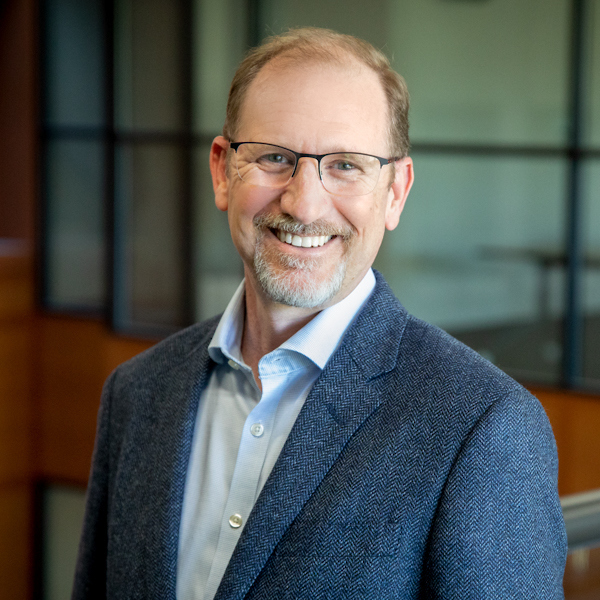
David Williamson Shaffer is the Sears Bascom Professor of Learning Analytics and Vilas Distinguished Achievement Professor of Learning Sciences at the University of Wisconsin-Madison's Department of Educational Psychology. He is also a Data Philosopher at the Wisconsin Center for Education Research. His work focuses on merging statistical and qualitative methods to model complex human collaboration. Shaffer holds an AB in History and East Asian Studies from Harvard University (1987), and MS/PhD in Media Arts and Sciences from MIT (1996/1998). Before academia, he was a teacher, curriculum developer, and game designer. His research emphasizes Quantitative Ethnography —a methodology combining big data analysis with cultural interpretation. Key contributions include Epistemic Network Analysis (ENA) and over 250 publications, including influential books like How Computer Games Help Children Learn (2006) and Quantitative Ethnography (2017). Awardees of the EU Marie Curie Fellowship (2008) and Spencer Foundation Fellowship (2003), Shaffer's work has been presented globally at conferences like Learning Analytics & Knowledge and Computer Supported Collaborative Learning. His interdisciplinary approach bridges education, data science, and humanities, addressing challenges in authentic STEM experiences, collaborative learning analytics, and culturally responsive pedagogy.
جستجوی استاد راهنمای دانشگاهی
برای مسیر پژوهشیتان، استاد راهنما، استاد دانشگاه و پژوهشگر مناسب را پیدا کنید و با آنها ارتباط بگیرید.
نمایش ۱-۱۵ از ۲٬۶۷۳ استاد راهنما
اطلاعات پروفایلها از صفحات عمومی دانشگاهها گرفته شده و ممکن است بهروز نباشد.

Professor Todd Squires is a distinguished faculty member in the Department of Chemical Engineering at the University of California, Santa Barbara, within the Robert Mehrabian College of Engineering. His research focuses on the fundamental principles of transport phenomena as applied to interfaces, membranes, and complex fluids, employing theoretical, computational, and experimental approaches to address significant challenges in micro-scale fluid mechanics. Dr. Squires' educational background includes: BS in Physics, UCLA (1995) BA in Russian Language and Literature, UCLA (1995) PhD in Physics, Harvard University (2002) His research interests span microfluidics and electrokinetics, active and nonlinear microrheology of complex materials, polymer dynamics and sensors, with particular emphasis on non-linear electrokinetic flows, interfacial rheology, and the self-assembly of nanostructured materials. His work bridges fundamental fluid mechanics with practical applications in microfluidic devices, energy storage, and biomedical systems, demonstrating the versatility of this fascinating field. Analysis of Professor Squires' recent publications reveals a consistent focus on interfacial phenomena, with particular attention to the rheological properties of fluid interfaces, particle dynamics in complex fluids, and novel microfluidic techniques for measuring and manipulating these systems. His research demonstrates strong interdisciplinary connections between chemical engineering, physics, and materials science, with applications spanning energy storage, biomedical engineering, and environmental systems. Professor Squires has received numerous prestigious awards and honors: 2018 Robert W. Vaughan Lecture in Chemical Engineering, Caltech 2015 Elected Fellow of the American Physical Society 2013 Mid-Career Award, American Electrophoresis Society 2012 The Dudley Saville Memorial Lecture at Princeton 2010 Pierre Gilles de Gennes Prize 2010 Allan P. Colburn Memorial Lectureship, University of Delaware 2009 Francois Frenkiel Award for Fluid Mechanics 2009 Camille Dreyfus Teacher-Scholar Award 2008 Beckman Young Investigator 2007 NSF CAREER Award 2005 'Rising Star' - Chronicle of Higher Education As principal investigator of the Squires Group, Professor Squires leads a dynamic research team that combines experimental, theoretical, and computational approaches to investigate transport phenomena at interfaces. His work has been supported by major funding agencies including the National Science Foundation, with his CAREER award indicating early recognition of his potential as both researcher and educator. While specific grant details aren't provided in the source material, his extensive publication record and prestigious awards suggest robust and sustained research funding. The Squires Group maintains state-of-the-art laboratory facilities for studying micro-scale fluid mechanics, including specialized equipment for microrheology measurements, microfluidic device fabrication, and interfacial characterization. Their research environment fosters collaboration across disciplines, with connections to materials science, physics, and biomedical engineering researchers at UCSB and beyond.
- Fluid Mechanics
- Transport Science
- Microfluidics
- +۷ مورد دیگر
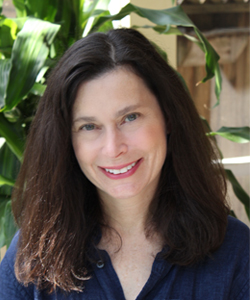
Kelly D Palmerمشاهده پروفایل
استادیار
Kelly D Palmer is an Assistant Professor in the History, Geography and Legal Studies Department at The University of Tampa, within the College of Social Sciences Mathematics and Education. Her academic focus centers on modern European history, with particular expertise in French history, the Holocaust, and World War II humanitarian efforts. Her educational background includes: B.A. from Michigan State University (1991) M.A. from Korbel School of International Studies at the University of Denver (2002) Ph.D. from Michigan State University (2010) Professor Palmer's research delves into the history of modern Europe, with a concentration on France, the Holocaust, and European postwar historical memory. She is currently completing an article on the American Friends Service Committee and Jewish rescue in World War II France, and another on Roswell McClelland's work with the American Friends Service Committee and War Refugee Board. Her upcoming project examines women humanitarian workers in the American Friends Service Committee during WWII. Her teaching covers World History from 1500, the Holocaust, Twentieth-Century Europe, and other European history courses. Her notable scientific awards and grants include: Chosen as a university-wide applicant for the 2023 National Endowment of the Humanities Summer Stipends Program Pollock Research Grant (2021) Grant from the Undergraduate Research and Inquiry Committee for an inquiry-based course (2020) College of Social Sciences Mathematics and Education Award for Outstanding Teacher (2018-2019) UCDALI Professional Development Grant (Spring 2016) CU Online Course Development Grant (Fall 2015) Nominee for College of Arts and Letters at the University of Colorado of Denver, Teaching Excellence Award (2013-2014) Dissertation Completion Fellowship, College of Social Science, Michigan State University (2010) Kussy Scholarship for Study of the Holocaust, James Madison College, Michigan State University (2008) International Studies Program Pre-dissertation Research Fellowship, International Studies Program, Michigan State University (2007) Muelder-Lowe Graduate Award, Department of History, Michigan State University (2007) Summer Research Enhancement Fellowship, Department of History, Michigan State University (2007) Summer Research Fellowship, Department of History, Michigan State University (2006) Summer Research Language Fellowship, Department of History, Michigan State University (2005) Somers Award for Excellence and Creativity in Teaching, Center for Integrative Studies in the Arts and Humanities, Michigan State University (2005) Recruitment Fellowship, Department of History, Michigan State University (2003-2004) Professor Palmer has secured significant grant funding for her research and teaching. Notable grants include: Pollock Research Grant (2021) for her research on WWII humanitarian efforts. Undergraduate Research and Inquiry Committee Grant (2020) for an inquiry-based course. UCDALI Professional Development Grant (2016) CU Online Course Development Grant (2015) She also mentors students through an internship program with the Florida Holocaust Museum, facilitating student placements and collaborative educational events. Professor Palmer collaborates closely with the Florida Holocaust Museum, where she has developed an internship program for students and co-organizes speaker events and educational activities. This partnership serves as a key platform for her students' experiential learning and community engagement.
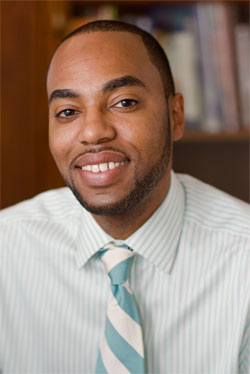
Christopher Emdin is a Professor of Science Education and Maxine Greene Chair for Distinguished Contributions to Education at Teachers College, Columbia University. He directs the STEAM, DREAM & IdeaLab initiatives. Emdin holds a B.S. in Physical Anthropology/Biology/Chemistry from Lehman College (2000), an M.S. in Natural Sciences from Rensselaer Polytechnic Institute (2003), and a Ph.D. in Urban Education from the CUNY Graduate Center (2007). His research focuses on urban STEM education , culturally responsive pedagogy , and Hip-Hop Education (HipHopEd) . Emdin has received prestigious awards including the Strage Prize (2011) and PDK International Outstanding Dissertation Award (2008) . He pioneered projects like the Science Genius B.A.T.T.L.E.S. , using rap battles to engage urban students in science. His work bridges theory and practice, emphasizing reality pedagogy and cosmopolitan ethics . Key contributions include over 50 publications on urban science education, equity, and hip-hop pedagogy. He is a leader in professional organizations such as NARST and AERA. Emdin’s grants include collaborations with NSF and Fund for Teachers, focusing on science agency and leadership in urban schools. His lab, IdeaLab , advances innovative teaching strategies rooted in youth culture.
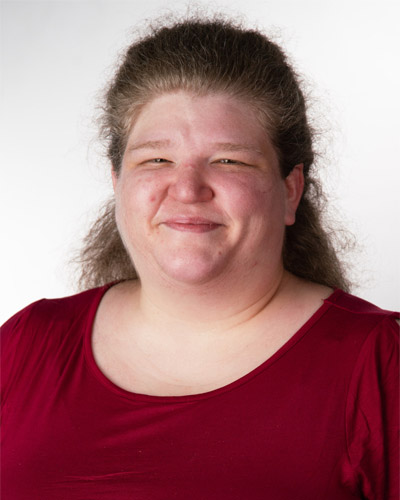
Elizabeth Lambertمشاهده پروفایل
مدرس ارشد
Elizabeth Lambert, Ph.D., is a Senior Lecturer in the Department of Mathematics at the University of Texas at San Antonio (UTSA), within the College of Sciences. She contributes to undergraduate and graduate education with a focus on mathematics instruction and pedagogical development. Education: Ph.D. in Math Education, Texas State University B.A. in Mathematics, Our Lady of the Lake University Her research and professional interests center on mathematics education , student learning processes , and teacher development and professional growth . These areas reflect her commitment to improving instructional practices and educational outcomes in mathematics at the collegiate level. While no publications are listed in the provided text, her work appears to align with trends in educational pedagogy, curriculum design, and faculty development in STEM disciplines. Professional Recognition: No scientific awards or honors are mentioned in the available information. Dr. Lambert advises students and contributes to academic programs in mathematics, though specific advisees or grant activities are not detailed. She plays an active role in shaping teacher preparation and ongoing professional development initiatives within her department. There is no mention of laboratory affiliations, research teams, or collaborative research groups in the provided content.
Dr. Katerina Marcoulides is an Associate Professor in the Quantitative and Psychometric Methods Program at the University of Minnesota's Department of Psychology. She is affiliated with the Minnesota Population Center and serves as Co-Chair of the Structural Equation Modeling Special Interest Group (SEM SIG) for the American Educational Research Association. Her research focuses on advanced data mining and modeling techniques for complex longitudinal data, particularly applied to developmental processes in economically disadvantaged immigrant children. She holds a PhD in Quantitative Psychology from Arizona State University, an MA from UC Davis, and a BA from UC Santa Barbara. Education: PhD: Quantitative Psychology, Arizona State University MA: Quantitative Psychology, University of California, Davis BA: Psychology (minor in Education), University of California, Santa Barbara Research Interests: Dr. Marcoulides develops and applies statistical methods such as structural equation modeling (SEM), Bayesian synthesis, and data fusion to study developmental and educational processes. Her work emphasizes longitudinal data analysis, item response theory, and multilevel modeling. Recent projects include NIH-funded research on parenting, marginalization, and well-being during the pandemic. Awards: APS Rising Star Award (2021) NIH Grant Award Teaching & Collaboration: She teaches courses on SEM, multilevel modeling, and data analysis at the University of Minnesota. Previously at the University of Florida, she contributed to workshops on educational data mining and served as an APA Advanced Training Institute presenter. Her interdisciplinary collaborations span population studies, health inequities, and workforce research. Labs & Groups: She leads the Data Analytics and Visualization Lab and actively participates in the Minnesota Population Center, integrating computational and statistical innovations with real-world applications.
Lauren A. Delisio is an Associate Professor of Special Education at Rider University's Department of Teacher Education. She has taught graduate and undergraduate courses in special education, inclusive practices, and assistive technology since 2015. Ph.D. in Exceptional Student Education (2015, University of Central Florida) Graduate Certificate in Autism Spectrum Disorders (2012, University of Central Florida) M.S. in Teaching (2005, Pace University) B.A. in Communications (2000, Rider University) Her research focuses on universal design for learning (UDL) , assistive technology , and inclusive education practices for students with autism spectrum disorders (ASD), attention deficit hyperactivity disorder (ADHD), and intellectual disabilities. She has explored trauma-informed instruction, STEM accessibility, and evidence-based practices in inclusive classrooms. Her recent publications analyze UDL implementation, video prompting for independence, and pandemic impacts on inclusive education. She has received grants through the Department of Education's Office of Special Education Programs (OSEP) for Project LEAD and served as a doctoral intern with OSEP. Delisio has contributed to STEM research via video game integration for students with disabilities and supported alumni engagement through data collection. She collaborates with service providers, universities, and policymakers to improve educational outcomes for neurodiverse learners.
Paulo Blikstein serves as Associate Professor of Communications, Media and Learning Technology Design at Columbia University. Previously, he was Assistant Professor of Education and (by courtesy) Computer Science at Stanford University and co-founded the Lemann Center for Brazilian Education (2008-2018). Education: Ph.D. in Learning Sciences, Northwestern University (2009) M.A. in Media Arts & Sciences, MIT Media Lab (2002) M.Eng. in Electronic Engineering, University of São Paulo (2000) B.S. in Metallurgical Engineering, University of São Paulo (1998) His research pioneers constructionist learning environments through digital fabrication, educational robotics, and tangible interfaces—focusing on equitable access for underserved communities. Inspired by Paulo Freire and Seymour Papert, he develops open-source tools like the GoGo Board robotics platform and leads the global FabLab@School initiative establishing fabrication labs in schools across four continents. Current work emphasizes multimodal learning analytics to study student interactions in maker-centered classrooms. Publications reveal strong focus on democratizing invention through maker education, with recurring themes in constructionist theory application, multimodal assessment, and context-specific technology adaptation. Brazilian education reform and low-cost computational solutions form significant threads, particularly in 2016-2017 publications. Scientific Awards: Two Google Faculty Awards National Science Foundation Early Career Award (highest U.S. government honor for early-career scientists) Blikstein directs the Transformative Learning Technologies Lab (TLTL) and co-founded Stanford's Center for Educational Entrepreneurship and Innovation in Brazil. His FabLearn conference established the first academic forum on Maker Movement applications in education. While specific grant details aren't listed, the NSF CAREER Award signifies major federal research funding. He spearheads the FabLab@School project deploying advanced fabrication labs in K-12 institutions worldwide and founded the FabLearn conference series. His work integrates teams of engineers, educators, and designers to create scalable solutions for resource-constrained learning environments.

Georgia Perakis is the John C Head III Interim Dean of MIT Sloan School of Management and a Professor of Operations Management and Operations Research & Statistics. She has been on MIT Sloan's faculty since 1998, contributing extensively to research in analytics/AI, optimization, and machine learning applications in pricing, supply chains, healthcare, and energy. Recognized as a leading academic, she has won numerous awards, including the INFORMS Fellow and Distinguished MSOM Fellow, along with multiple best paper awards. Perakis has supervised 30 PhD and 59 master's students, fostering lifelong academic relationships. Her administrative roles include co-director of the Operations Research Center and Associate Dean for Social and Ethical Responsibilities of Computing. She currently serves as Editor-in-Chief of M&SOM and has held editorial leadership roles in top journals like Operations Research and Management Science. Her education includes a BS in Mathematics from the University of Athens and advanced degrees in applied mathematics from Brown University. Research Interests : Perakis focuses on solving complex problems at the intersection of optimization and machine learning, with applications in retail promotions, healthcare operations (e.g., emergency department management), and energy systems. Her work emphasizes practical solutions to real-world challenges, leveraging data-driven analytics and prescriptive models. Recent projects include optimizing patient placement in emergency departments and modeling demand for new products in retail. Grants & Awards : Her accolades include the NSF CAREER Award, PECASE Award, and over a dozen best-paper recognitions. Notable contributions include a finalist position in the JD.com Competition (2019) and winning first place for Johnson & Johnson’s demand-prediction work (2018). She has also pioneered methodologies for equitable resource allocation in healthcare. Education & Leadership : Perakis holds leadership roles in interdisciplinary initiatives like the MIT Initiative on the Digital Economy and the Food Supply Chain Analytics and Sensing Initiative. Her teaching excellence is underscored by awards such as the Jamieson Prize and Teacher of the Year (MIT Sloan). She has directed major programs like the MIT Leaders for Global Operations and the Executive MBA program. Labs & Teams : She is affiliated with the Operations Research Center (an interdepartmental PhD program) and collaborates with institutions like UMass Memorial Hospital on healthcare optimization projects. Her work integrates ethics into AI development, emphasizing fairness, bias mitigation, and societal impact.
- Analytics/AI
- Optimization
- Machine Learning
- +۴ مورد دیگر
Douglas D. Ready is an Associate Professor of Education and Public Policy at Teachers College, Columbia University , where he serves as Director of the Consortium for Policy Research in Education (CPRE-TC). His research focuses on the intersections of education policy, social policy, and educational equity, particularly how policies influence socio-demographic disparities in cognitive development. Research Interests: Ready’s work examines the structural determinants of educational equity, including school choice architecture, personalized learning, early childhood education, and the impacts of technology on instruction. He has published extensively in journals such as Educational Evaluation and Policy Analysis and Sociology of Education . Editorial Roles: Ready contributes to the academic community as a member of the editorial boards of Educational Evaluation and Policy Analysis and American Educational Research Journal . Key Projects: He has led analyses of programs like Teach to One: Math and Pre-K for All , exploring their effects on student outcomes and equity.
- Education Policy
- Social Policy
- Educational Equity
- +۳ مورد دیگر
Jill Newton is a Professor in the Department of Curriculum and Instruction at Purdue University’s College of Education. Her work focuses on mathematics education curriculum development, teacher training, and equity in education, with additional contributions to international and study abroad programs. Ph.D. in Curriculum, Teaching, and Educational Policy (Mathematics Education), Michigan State University (2008) M.A. in International Education, George Washington University (1995) B.S. in Mathematics and Secondary Teaching Certification, Michigan State University (1987) Newton’s research spans algebra teaching, curriculum coherence, and social justice in education. She has led national studies on mathematics teacher preparation and explored how teachers use curricular resources post-COVID. Her work also emphasizes international education, including virtual communities of practice for global social justice. Recent publications highlight her focus on algebraic reasoning, curricular alignment, and equity. She has co-authored studies on elementary teachers’ curriculum use, preservice teacher development, and virtual intercultural collaborations. Terry L. Wood Mathematics Teacher Educator Award (2024-25) Book of Great Teachers Inductee (2023) Outstanding Leadership in Globalization Award (2022-23) Charles B. Murphy Outstanding Undergraduate Teaching Award (2017) Newton has coordinated undergraduate research at Purdue since 2018 and has taught mathematics education courses since 2004. Her teaching experience spans secondary schools in Venezuela, Tanzania, Bulgaria, and Papua New Guinea, enriching her global perspective.
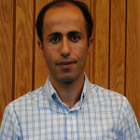
S. Yaser Samadi is an Associate Professor in the Department of Mathematics at the School of Mathematical and Statistical Sciences, Southern Illinois University Carbondale. He holds a Ph.D. in Statistics from the University of Georgia (2014) and maintains an active research program in advanced statistical methodologies. Education: Ph.D. in Statistics, University of Georgia, 2014 Research Interests: Dr. Samadi specializes in multivariate time series analysis, high-dimensional statistical inference, and tensor data analysis. His work addresses critical challenges in big data, symbolic data, and dimension reduction for time series through Bayesian analysis and sequential methods for dependent and independent data, yielding robust models for complex data structures. Publication Trends: His recent publications (2014-2023) emphasize time series analysis, dimension reduction, and innovative approaches for interval-valued and matrix-valued data. Key contributions include envelope models for vector autoregression, copula-based count data modeling, and sequential analysis techniques, bridging theoretical statistics with econometrics and data science applications. Scientific Awards: Outstanding Teacher of the Year, School of Mathematical and Statistical Sciences (2021) Advising: Dr. Samadi has mentored four Ph.D. students to completion: Rukayya Ibrahim (Assistant Professor, Penn State Harrisburg), Wiranthe Herath (Assistant Professor, Drake University), Tharindu De Alwis (Postdoctoral Fellow, WPI), and Hadi Safari Katesari (Teaching Assistant Professor, Stevens Institute of Technology). His Master's students Samira Zaroudi (CUNY) and Reginald Ziedzor (Amplify) have also achieved notable career placements.
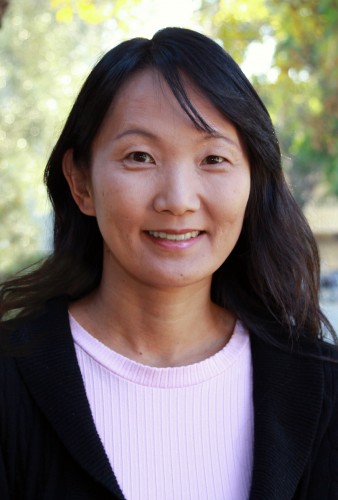
Yuuko Uchikoshi Tonkovich is a Professor at the School of Education, University of California, Davis, where she has served since 2004, advancing from Assistant to Associate and then to full Professor. Her work centers on language and literacy development in young dual language learners, with a focus on bilingualism, early literacy, and the role of family and media in language acquisition. Her research interests include: Early Childhood Development Multilingual Learners and Bilingual Education Language Acquisition and Literacy Parent-Child Interaction and Home Language Environment Quantitative Analysis of Educational Outcomes Educational Television and Multimedia Her recent publications span topics such as cognitive distancing in parent-child reading, morphological awareness in bilingual readers, and the impact of teacher language use in multilingual classrooms. The research consistently emphasizes longitudinal, cross-cultural, and interdisciplinary approaches, particularly focusing on Chinese American and Mexican American immigrant families. Her scientific awards include: AERA Vocabulary SIG Notable Vocabulary Researcher Award (2025) Foundation for Child Development Young Scholars Program Grant International Reading Association Dissertation Fellowship and Finalist Award Harvard Graduate School of Education Fellowships She has advised numerous research projects and secured significant funding from NIH/NICHD, the Foundation for Child Development, and other organizations. She teaches courses such as Language Development, Early Literacy, and Research on Text Comprehension. She is actively involved in national initiatives, serving on the Technical Advisory Group for the First 5 California Dual Language Learner Study and as Associate Editor of Applied Psycholinguistics . She leads the Language & Literacy Development Lab at UC Davis, which investigates the cognitive, linguistic, and socio-emotional development of dual language learners.
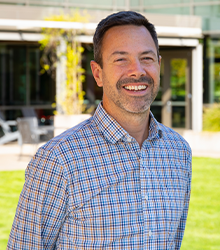
Dr. Ben Clarke is an Associate Professor and Department Head of Special Education and Clinical Sciences at the University of Oregon’s College of Education. His research focuses on mathematical development, assessment systems, and school-based interventions to support student achievement. He has led over 20 federally funded grants totaling ~$55 million, emphasizing early numeracy interventions and multi-tiered instructional models. Clarke’s work bridges theory and practice, with publications on mathematics instruction, assessment, and RTI frameworks. Education: PhD (2002), MA (2001) in School Psychology/Special Education from University of Oregon; BS (1997) in Psychology from Wabash College (Phi Beta Kappa). Research Interests: Mathematics intervention design and efficacy Early numeracy assessment Multi-tiered systems of support (MTSS) Technology in education Equity in mathematics education Publications highlight his focus on intervention fidelity, tiered models, and outcomes for students with learning difficulties. Awards include the AERA Special Education SIG Research Award and recognition for academic excellence. Grants and Advising: Principal Investigator on ~$55M in federal grants; advises graduate students in School Psychology and Special Education. His lab develops evidence-based tools like the KinderTEK iPad program and contributes to national practice guides (e.g., IES RTI for Mathematics). Labs/Teams: Leads research teams focused on early mathematics intervention and MTSS implementation, collaborating with schools and policymakers to scale effective practices.

Peter Gordonمشاهده پروفایل
دانشیار
Peter Gordon is an Associate Professor of Neuroscience and Education and Cognitive Science in Education at Teachers College, Columbia University. He directs the Language and Cognitive Neuroscience Lab and holds affiliations with Biobehavioral Sciences, Human Development, and other departments. His research focuses on language acquisition, developmental neuroscience, cross-cultural numerical cognition, and MRI-based studies of language processing. Dr. Gordon earned a B.A. (Hons) in Psychology from the University of Stirling (Scotland) and a Ph.D. in Psychology from MIT. His fieldwork includes extensive studies with the Piraha in Amazonia, Brazil, and the Kadiweu in Mato Grosso do Sul, Brazil. His research interests span infant event representations, behavioral genetics of language, and the interplay between language structure and cognitive development. Notable contributions include work on anumeric cultures and the linguistic relativity hypothesis. Publications highlight cross-cultural studies, morphological processing, and cognitive neuroscience of language. He has conducted influential research on numerical cognition in Amazonian cultures and the genetic influences on language acquisition. Contact: pg328@tc.columbia.edu | Office: 1152 Building 528 | Lab: [Link Provided].
نمایش نتایج تا ۷۵۰ مورد اول. برای یافتن نتایج دقیقتر، جستجوی خود را با فیلترها محدود کنید.