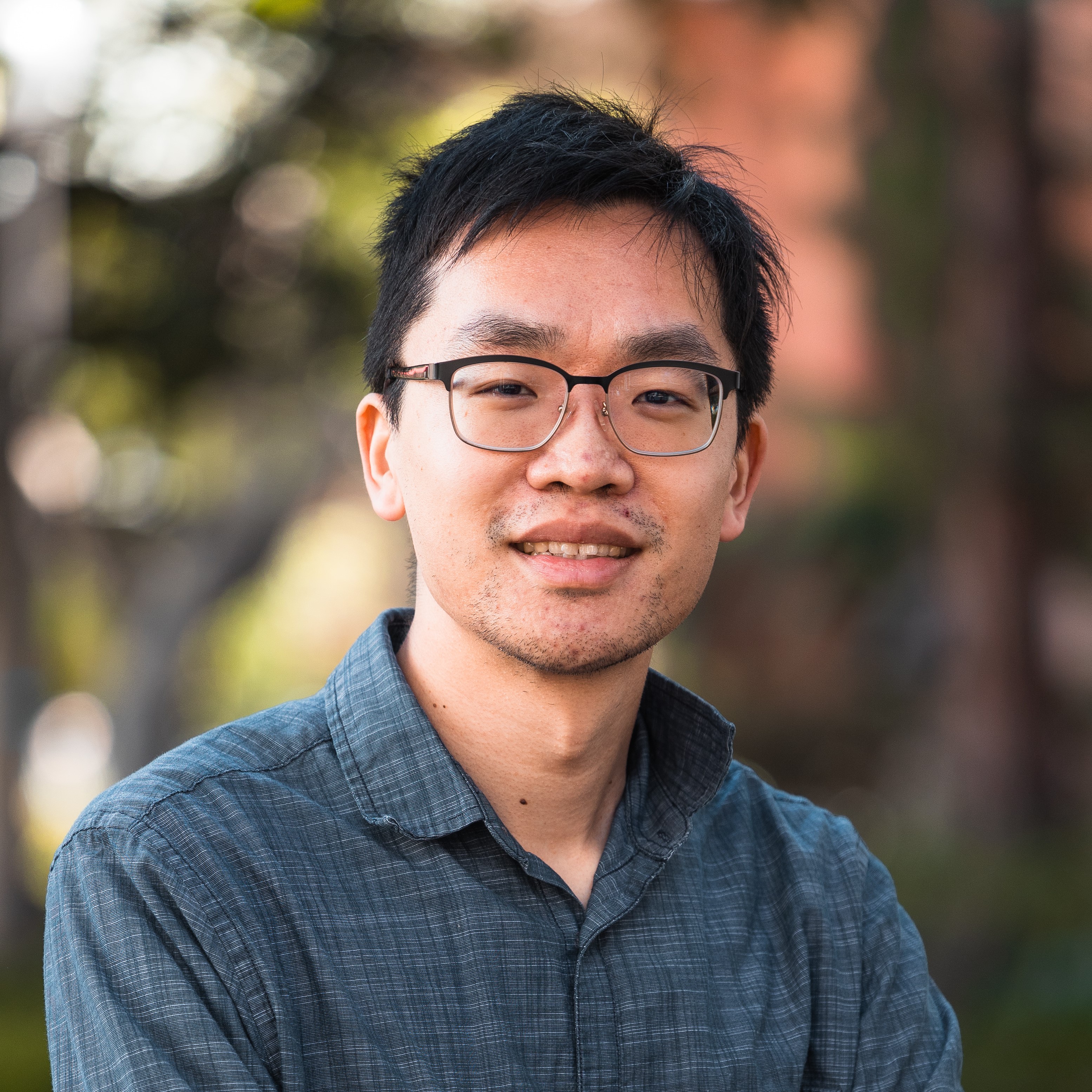
Robin Jia is an Assistant Professor in the Thomas Lord Department of Computer Science at the University of Southern California (USC) , where he leads the AI, Language, Learning, Generalization, and Robustness (Allegro) Lab . His research focuses on enhancing the reliability and robustness of large language models (LLMs) through mechanistic understanding, benchmarking under distribution shifts, and neurosymbolic integration. Key affiliations include collaborations with the USC Keck School of Medicine and contributions to legal frameworks like the EU's Digital Services Act. Robin's research spans multiple domains, including: Scientific analysis of LLM capabilities in in-context learning , data memorization , and numerical reasoning Advancements in robust NLP systems , emphasizing uncertainty estimation and calibration Development of methods combining LLMs with symbolic solvers for complex reasoning tasks Interdisciplinary applications in medicine and law , such as privacy-preserving synthetic data generation and medical misconception evaluation . His recent publications (2024-2025) address Fourier-based numerical embeddings (NeurIPS), neurosymbolic planning (NAACL), and multimodal benchmarking (COLM), with a strong emphasis on privacy , fairness , and transparency . Scientific awards include the Google Research Scholar Award (2023) , SoCalNLP Symposium Best Paper Awards , and ACL/EMNLP outstanding papers . He advises PhD students like Johnny Wei and Ameya Godbole, and has secured grants from the NSF , USC-Capital One , and USC-Amazon .
Yuriy Rogovchenko is a Professor in the Department of Mathematical Sciences at the University of Agder. His research spans differential equations, mathematical modeling, and education innovation, with applications in biology, social sciences, and engineering. Rogovchenko has contributed extensively to mathematics education through projects like PLATINUM (Erasmus+ Strategic Partnership) and CPEA-ST-2019/10067 (Eurasia project). PhD in differential equations (Institute of Mathematics, Kyiv, 1987) Regular Associate at Abdus Salam ICTP, Trieste (2004-2011) Editor for 11 international journals Referee for over 70 journals Research Interests: Qualitative theory of differential equations, perturbation methods, mathematical modeling in interdisciplinary contexts. He focuses on enhancing conceptual understanding through inquiry-based learning and nonstandard problems. Publications: Recent works include advancements in linear system observability, parameter identification methods, and educational studies on exact differential equations. His collaborations with Svitlana Rogovchenko and Matthias Pätzold highlight applications in engineering and biology. Awards: Sørlandet kompetansefonds research award (2016).
Svitlana Rogovchenko is a Professor at the Department of Engineering Sciences, University of Agder, Norway. Her academic work bridges pure mathematical research in differential equations with innovative pedagogical approaches in engineering and interdisciplinary education. Educational Background: Doctor of Philosophy in Differential Equations (1988), Institute of Mathematics, National Academy of Sciences, Kyiv, Ukraine Master of Science in Mathematics (1983), Kyiv State University, Ukraine Research Interests: Qualitative theory of ordinary and impulsive differential equations, asymptotic methods in nonlinear mechanics, mathematical modeling, and the intersection of mathematics education with engineering and biology curricula. She focuses on conceptual understanding, pedagogical challenges, and commognitive conflicts in learning differential equations. Recent Publications Trends: Her work spans mathematical modeling of vehicle crashworthiness, interdisciplinary education for biologists and engineers, and pedagogical innovations in ordinary differential equations. Articles emphasize assessment design, group work tensions, and bridging mathematical theory with applied contexts.
Andrew Lan is an Associate Professor in the College of Information and Computer Sciences at the University of Massachusetts Amherst, where he also serves as the CS Undergraduate Program Director. He was granted tenure by the UMass Board of Trustees in June 2025 and is currently on leave through Spring 2026. His research focuses on developing human-in-the-loop machine learning methods to enable scalable, effective, and personalized learning experiences in education. Dr. Lan received his BS in Physics and Mathematics from the Hong Kong University of Science and Technology, followed by his MS (2014) and PhD (2016) in Electrical and Computer Engineering from Rice University. He completed postdoctoral research at Rice University (2016) and Princeton University's EDGE Lab (2017-2018). His research spans artificial intelligence for education, with particular expertise in educational data mining, knowledge tracing, personalized learning systems, and human-AI collaboration in educational contexts. Dr. Lan's work leverages massive and multimodal learner and content data collected from both traditional classrooms and online learning platforms to develop systems that deliver high-quality, affordable, and personalized learning experiences. He has made significant contributions to areas including computerized adaptive testing, math word problem generation, student affect detection, and automated grading systems. His recent work increasingly focuses on leveraging large language models for educational applications while maintaining rigorous scientific validation of these approaches. Best Student Paper Award at the 2024 AIED Conference (with Alexander Scarlatos) Best Paper Nominee at LAK 2021 Best Student Paper Award at IEEE Big Data 2020 NAEP Math Automated Scoring Challenge Grand Prize Winner Dr. Lan actively mentors graduate students and postdoctoral researchers, with several of his advisees receiving recognition for their work. He has secured substantial funding from the National Science Foundation, including a $90M grant for the SafeInsights project, a secure cyberinfrastructure for educational research. His research group collaborates with institutions including Worcester Polytechnic Institute, University of Pennsylvania, and Rice University. He teaches undergraduate and graduate courses including COMPSCI 240 (Reasoning under Uncertainty) and COMPSCI 590OP (Applied Numerical Optimization), with a focus on the practical application of theoretical concepts in machine learning and artificial intelligence. His educational philosophy emphasizes bridging the gap between theoretical foundations and real-world implementation in educational technology.
Nenad Radakovic is an Associate Professor of STEM Education at Queen's University's Faculty of Education. His research focuses on transdisciplinary approaches in mathematics and STEM education, emphasizing how interdisciplinary integration can enhance learning across PK-12 and post-secondary contexts. He holds a PhD in Curriculum Studies and Teacher Development from the Ontario Institute for Studies in Education (OISE), University of Toronto, and has taught secondary mathematics in Croatia and Canada. Prior roles include Associate Professor at the College of Charleston and Sessional Lecturer at the University of Toronto, where he instructed courses on holistic mathematics pedagogy and curriculum design. Dr. Radakovic’s research interests span transdisciplinary curricula, risk education, mathematics teacher training, and the role of technology in education. He is a STaR Fellow with the Association of Mathematics Teacher Educators and contributes to professional organizations like NCTM and PMENA. His work explores how mathematics education can address societal challenges through critical pedagogy and inclusive practices. Key publications include edited volumes on transdisciplinarity in mathematics education and borders in teacher training. His recent articles address STEM curriculum innovation, inclusive pedagogical frameworks, and the application of feminist theory to educational research. Collaborations include transdisciplinary projects blending arts and mathematics, such as using 3D printing to explore cultural heritage through art.
Gale M. Sinatra is a Professor at the Rossier School of Education and jointly appointed in the Psychology Department at the University of Southern California . Her research focuses on conceptual change learning , science education , and public understanding of science , particularly around controversial topics like climate change and evolution. PhD, MS, BS in Psychology from University of Massachusetts, Amherst Her recent publications explore refutation texts , epistemic emotions , and sustainability education , with a 2021 co-authored book Science Denial: Why It Happens and What to Do About It . Awards include National Academy of Education membership (2022), AERA Sylvia Scribner Award (2020), and Fellowships in APA and AERA. She has served as President of APA Division 15 and Associate Dean for Research at Rossier. NSF Grant (2018) for Augmented Reality in Paleontology Education Mattel Children’s Foundation Grant (2014) for Speedometry Program SSHRC Grant (2014) for Epistemic Belief Change Research
Prof. Dr. Garvin Brod is a Research Professor at the DIPF | Leibniz Institute for Research and Information in Education and Goethe University Frankfurt, specializing in individualized learning and cognitive development. He is affiliated with the Department of Educational Psychology within the College of Psychology & Sports Science. His research focuses on technology-supported educational interventions, memory and learning dynamics, and the development of knowledge acquisition processes. Brod leads projects like ACHILLES (learning success diagnostics), PROMPT (digital prompting techniques), and VokSi (vocabulary learning), addressing self-regulated learning, reading education, and cognitive strategies. The 13 most recent publications highlight trends in educational technology, self-regulated learning mechanisms, and cognitive development. Key themes include mobile learning interventions, memory retention strategies, and the role of executive functions in belief revision. Brod’s work bridges experimental psychology with practical EdTech solutions for children’s learning challenges. As a visiting fellow at St John's College, University of Cambridge, and head of DIPF’s departments for Individualized Support and Education and Development, Brod collaborates on data-sharing initiatives like ShaReD. He holds a doctorate from Humboldt University and a diploma in psychology from Saarland University.
Ben Green is an Assistant Professor at the University of Michigan School of Information and holds a courtesy appointment at the Gerald R. Ford School of Public Policy. He is also a Faculty Associate at Harvard’s Berkman Klein Center for Internet & Society and a Fellow at the Center for Democracy & Technology. Green earned his PhD in Applied Mathematics from Harvard University with a secondary field in Science, Technology, and Society. His research focuses on the ethics of government algorithms, emphasizing algorithmic fairness, human-algorithm interactions, and AI regulation. He advocates for design and governance practices that prevent algorithmic harms and advance social justice. His work includes critiques of overreliance on technology in urban planning, as highlighted in his book The Smart Enough City , and ongoing projects on equitable AI policies. Green’s contributions extend to publications analyzing human oversight in AI systems, privacy in public health contexts, and the societal impacts of smart city technologies. His interdisciplinary approach bridges computer science, law, and public policy to address real-world challenges in technology governance. As a Fellow at the Center for Democracy & Technology and through his academic roles, Green collaborates on initiatives promoting ethical technology use in government and urban environments. His research has informed policy discussions on data privacy, algorithmic accountability, and equitable technology deployment.
Rebecca Nugent is the Stephen E. and Joyce Fienberg Professor of Statistics & Data Science and Department Head at Carnegie Mellon University. She holds a PhD in Statistics from the University of Washington (2006), an MS in Statistics from Stanford (2006), and a BA in Mathematics, Statistics, and Spanish from Rice University (2002). Her research spans clustering methodology , record linkage , educational data mining , public health , and semantic organization , with a focus on high-dimensional data and adaptive learning environments. She leads the Integrated Statistics Learning Environment (ISLE) and Corporate Capstone programs, emphasizing low-barrier data platforms for education and industry collaboration. Academic Roles : Department Head, Carnegie Mellon; Affiliated Faculty, Block Center for Technology and Society Research Grants : NSF (2017-2019), NIH (2018), Carnegie Mellon ProSEED/Simon Initiative (2020, 2018), Berkman Fund (2014) Her 15 most recent publications focus on data science pedagogy, clustering algorithms, record linkage applications in historical and medical data, educational data mining, and semantic organization studies. Awards include the ASA Waller Education Award (2015) and the William H. and Frances S. Ryan Award (2015) . She mentors a diverse group of PhD, Master's, and undergraduate students, with alumni pursuing careers in academia, industry, and sports analytics.
Kevin Pugh is a Professor in the School of Psychological Sciences at the University of Northern Colorado, affiliated with the College of Education and Behavioral Sciences. Specializing in transformative experience theory, motivation, and cognition, his work bridges educational psychology with real-world learning applications. Ph.D. in Educational Psychology (Learning & Cognition), Michigan State University (2002) B.S. in Psychology, Brigham Young University (1994) Assistant Professor, University of Toledo (post-Ph.D.) Joining UNC in 2006 Dr. Pugh's research investigates how learning transforms students' worldviews through Deweyan aesthetics and motivational frameworks. His transformative experience theory emphasizes real-world application of knowledge, studied across science education, problem-based learning, and culturally relevant pedagogy. Recent publications analyze mineral misconceptions, instructor-student connections, and gender dynamics in geology education. He teaches learning theory, cognition, and motivation courses using transformative, authentic pedagogies. The Calvin Project, which uses comic characters to explore motivation theory, exemplifies his innovative approach. Dr. Pugh has secured National Science Foundation grants and serves on the editorial board of the Journal of Experimental Education. Principal investigator for NSF-funded projects Editorial board member, Journal of Experimental Education School of Psychological Sciences faculty Contact: kevin.pugh@unco.edu | Office: McKee Hall 63 | Phone: 970-351-2989
Associate Professor Christine Preston at the University of Sydney's Faculty of Education and Social Work specializes in primary science education with a focus on early childhood development. She maintains active classroom experience through her kindergarten science teaching and leads research on science diagrams, toy-based learning, and teacher professional development. Her work integrates embodied learning and representational pedagogies to enhance conceptual understanding in STEM subjects. Dr. Preston's research examines innovative approaches including citizen science integration, digital technologies, and adaptive curriculum design. She currently lectures in primary science and technology education, while supervising doctoral candidates exploring computational thinking and marine biology education. Her scholarly contributions emphasize practical classroom applications and teacher support resources. Award recognition includes multiple Excellence in Teaching awards (2007, 2016) and the 2001 NSW Quality Teaching Award. She maintains active membership in international science education associations including ASTA, ESERA, and NSTA, serving on editorial boards for science education journals.
Professor Joseph Wood is a Professor of Visual Analytics at City St George's, University of London, where he serves as a founding member of the giCentre. His academic career spans over three decades, with continuous contributions to Geographic Information Science and visualization since 1990. He previously served as Head of Department for Computer Science at City University between 2014 and 2017. Professor Wood's educational background includes a PhD in Geographical Information Science from the University of Leicester (1996), an MSc in the same field from the University of Leicester (1990), and a BSc in Physical Geography & Geology from the University of Sheffield (1989). His academic progression shows steady advancement from Research Scholar at the University of Leicester (1990-1992) through various lecturer and senior positions to his current professorship. His research interests center on visual analytics and data visualization, with particular expertise in geographic information science and terrain analysis. Professor Wood has developed innovative methods bridging GI Science, Data Visualization, and education domains. His specific interests include narrative of visual analytic design, computational thinking in pedagogy, and novel visualization design for geographic data. His work demonstrates a consistent focus on making complex spatial data understandable through innovative visualization techniques. Analysis of Professor Wood's recent publications reveals a strong emphasis on practical applications of visualization techniques across diverse domains including transportation, epidemiology, sports analytics, and historical migration patterns. His work shows an evolution from foundational geographic information science toward broader applications in visual analytics, with increasing focus on narrative structures, responsive design, and accessibility considerations in visualization. The interdisciplinary nature of his research is evident in collaborations spanning computer science, geography, urban planning, and public health domains. Professor Wood has been actively involved in the academic community, serving on organizing and program committees for major international conferences including IEEE Infovis and VAST, Eurovis, GIScience, Spatial Accuracy, and Geomorphometry. His contributions to the field have been recognized through invitations to deliver keynote talks at prestigious venues ranging from GeoComputation to TEDx, where he presented on topics such as visualizing movement behavior of cyclists. As an advisor, Professor Wood has supervised numerous PhD and Master's students, with current supervision of Julia Crossley (Student conceptualisation of abstraction in computer science) and Jude Nzemeke (Understanding student misconception in recursive algorithmic thinking). His extensive supervision history includes completed PhDs on topics ranging from cycling behavior to spatio-social relations in photographic archives. His academic leadership extends to software development, with contributions to tools like litvis, elm-vega/el-vegalite, giCentre Utils, handy, and LandSerf GIS. Professor Wood is an active member of professional organizations including IEEE (2007-present), Association of Computing Machinery (ACM) (2007-present), and Association of Geographic Information (AGI) (1997-present), demonstrating his commitment to interdisciplinary collaboration across computer science and geographic information domains.
Alipaşa Ayas is a Professor and Dean of the Faculty of Education at Bilkent University, where he also serves as Chair of the Department of Educational Sciences. His research focuses on science education, teacher training, conceptual understanding, and inclusive education. He has led numerous national and international projects, including UNICEF- and EU-supported initiatives. Ph.D., University of Southampton M.A., University of New Brunswick MSc., Karadeniz Technical University BSc., Karadeniz Technical University His research interests span teacher education, science education (particularly chemistry), concept development, curriculum design, and assessment strategies. He employs both qualitative and quantitative methods to explore these areas. His publications emphasize inquiry-based learning, conceptual change strategies, and the effectiveness of interventions such as the 5Es model, constructivist activities, and analogies in enhancing science learning. These works often address misconceptions in chemistry and methods to improve scientific process skills. He has contributed to projects supported by the World Bank, EU, and UNICEF, including initiatives on lifelong learning, education development, and inclusive teacher training. His administrative roles include a 6-year deanship at Karadeniz Technical University and leadership of Bilkent University’s Graduate School of Education since 2017.
SumeYYE Aydin Gurler serves as an Associate Professor in the Department of Mathematics and Science Education at Gaziantep University's Nizip Faculty of Education since 2024, following her promotion from Doctor Lecturer (2018-2024). Her academic career builds upon prior experience as a Science Teacher at Turkey's Ministry of National Education (2008-2018). Her educational foundation includes: Doctorate in Science Education, Firat University Institute of Educational Sciences (2011-2016) Master's in Science Education, Firat University Institute of Science and Technology (2008-2011) Bachelor's in Science Teaching, Firat University Faculty of Education (2004-2008) Professor Gurler's research centers on Science Education with specialized focus on STEM/STEAM integration, educational assessment methodologies, teacher development, and environmental education. Her work investigates critical thinking cultivation, student attitudes toward science, curriculum evolution in Turkish contexts, and identification of science misconceptions. She has produced significant analyses of historical developments in Turkish science education across multiple eras (1938-2020) through book chapters. Analysis of her 15 most recent publications (2018-2023) reveals consistent emphasis on innovative assessment tools (rubrics, achievement tests), STEM/STEAM attitude measurement, and contextualized science teaching. Her work spans primary/middle school levels, addressing Turkish educational challenges including Syrian student integration, sustainable development awareness, and TIMSS performance evaluation. Her scientific recognition includes: TÜBİTAK Direct Domestic PhD Scholarship (2211), 2011 TÜBİTAK Domestic Master's Scholarship (2210), 2009 Triple First Place Awards at Firat University (Department, Faculty, and University-wide), 2008 Professor Gurler actively mentors three master's students on science concept understanding, educational game efficacy, and environmental awareness. She has secured Horizon 2020 funding for public science engagement projects including Researchers' Night events and the Sustainable Environment and Climate Change Science Festival. Her service extends to TÜBİTAK-funded school science fairs and teacher training workshops on context-based assessment. She maintains active scholarly engagement through scientific committee memberships, session chairing at national congresses, and organizing international symposia on science education developments.
Susan C. Levine is the Rebecca Anne Boylan Distinguished Service Professor of Education and Society in the Department of Psychology at the University of Chicago. Her research explores the interplay between early spatial and numerical thinking, focusing on how adult-child interactions shape mathematical development in home and school settings. Her work examines children's understanding of natural numbers and fractions, evaluates interventions to improve math skills, and investigates how parental and teacher math attitudes influence child outcomes. Key areas include math anxiety, gesture-based learning, and socioeconomic impacts on numeracy. Recent publications highlight gesture interventions for spatial misconceptions, math anxiety in college calculus, and the role of parental interactions in shaping children's mathematical beliefs. The Distinguished Service Professor award recognizes her contributions to educational psychology.