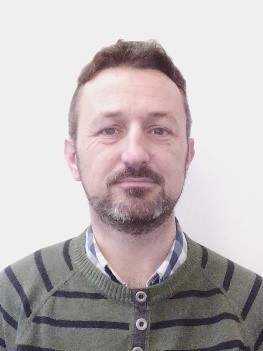
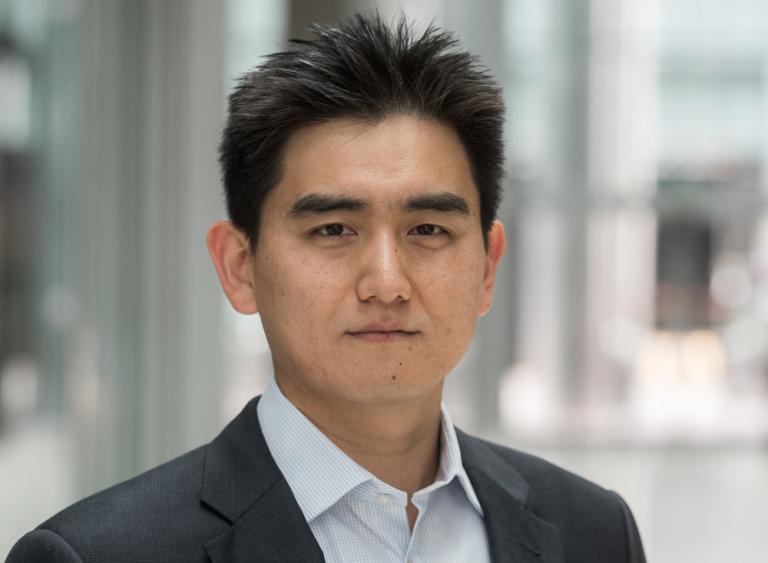
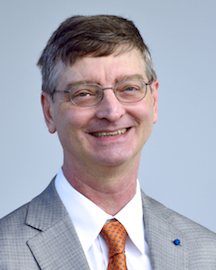
Professor Alsayed Algergawy is the substitute for the Chair of Data and Knowledge Engineering at the University of Passau since April 2023. His work bridges semantic web technologies and machine learning to enable heterogeneous data integration across domains. Current focus areas: schema/ontology alignment, entity resolution, knowledge graph construction Active in DFG Collaborative Research Center AquaDiva (data lifecycle management) Domain applications: biodiversity, agriculture, energy His team develops hybrid strategies combining rule-based systems with ML techniques to extract value from both structured and unstructured data sources.
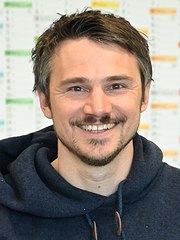
Pavan Turaga is a Professor and Founding Director of The GAME School at Arizona State University (ASU), with a joint appointment in the School of Electrical, Computer and Energy Engineering (ECEE). They lead transdisciplinary research and education initiatives spanning gaming, esports, AI-enabled media creation, computer vision, and geometric modeling. Ph.D., Electrical Engineering, University of Maryland (2009) B.Tech., Electronics and Communication Engineering, IIT Guwahati (2004) Research focuses on integrating geometry and topology with machine learning , enabling advancements in: Computer vision for human activity recognition Generative AI for immersive media Health analytics and wearable rehabilitation systems AI ethics and pandemic prediction Key publications span CVPR (2023 spotlight paper PolyINR ), DLGC workshop (2023 best paper), and ICML (2019 work on GAN priors). Recent work explores LMMs , 3D human modeling , and AI for pandemic preparedness . Scientific accolades include: ASU Founders' Day Research Excellence (2025) NSF CAREER award (2015) CVPR 2023 Spotlight paper 2024 X-Prize (Rainforest Challenge) Directed research for students like Rajhans Singh and Ankita Shukla, securing grants from NSF , DARPA , and industry partners (Adobe, Google ATAP). Founded the Geometric Media Lab , emphasizing interdisciplinary collaborations with mathematicians, health scientists, and media artists.
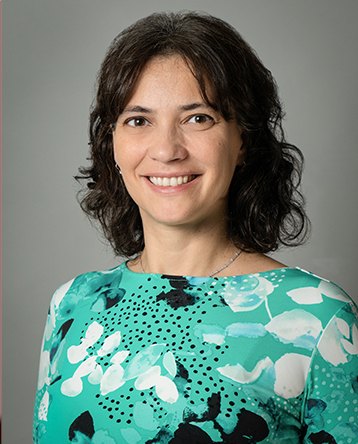
Professor Eric Morgan at Queen's University Belfast leads parasitology research in the School of Biological Sciences , focusing on climate-driven epidemiology of parasitic infections in animals. His work integrates predictive modeling, parasite transmission dynamics at the wild-domestic interface, and sustainable livestock health solutions. Veterinary parasitology and climate change impact Anthelmintic resistance mitigation strategies AI-enhanced diagnostic systems for animal health Current research students include Anthony George, who investigates Combining alternative approaches for helminth control in grazing livestock . Public engagement initiatives like the BUG Consortium and Poo Patrol translate findings into practical parasite management. His recent publications in 2025 address topics like flood reactors, zoonotic toxocariasis, and precision agriculture tools for parasite risk assessment.
Remus Teodorescu is a Professor at AAU Energy , Aalborg University , specializing in Power Electronics System Integration and Materials . His work bridges Lithium-Ion Batteries , Modular Multilevel Converters , and Smart Battery Systems . Education : Not explicitly mentioned in the text. Research Interests focus on Battery Management Systems , AI-Driven Energy Optimization , and Power Electronics for renewable energy integration. Key projects include Digital Twin for Lithium-Ion Batteries and BMS-DC for Data Centers . Recent Publications (2025) emphasize Finite Set MPC , Gradient Descent Optimization , and AI in Battery Parameter Estimation . His 2024 work explores Physics-Informed Neural Networks and Fault-Tolerant Converters . Scientific Awards : Villum Foundation Grant (313 million kroner, 2021) Named world's best in electrical engineering (2023) Advising includes supervising PhD projects on AI-Accelerated Battery Twins and Data-Driven SOH Estimation . Collaborations span Energy Cluster Denmark and Villum Fonden .
Prof. Dr. Janick Edinger is a Professor of Distributed Operating Systems at the Department of Informatics, Faculty of Mathematics, Informatics and Natural Sciences, University of Hamburg, Germany. He leads a research group focused on distributed, context-aware, and adaptive computing systems, with a strong emphasis on edge computing, computation offloading, and assistive technologies. Education: PhD in Computer Science, University of Mannheim Studies at National Taiwan University Studies at University of Alberta, Canada Research stays at University of British Columbia, Hong Kong Polytechnic University, and Georgia State University, USA His research explores how edge computing and computation offloading can enable efficient, privacy-preserving processing of sensor and video data close to their sources, particularly in dynamic environments. He investigates the integration of autonomous and heterogeneous systems—such as drone fleets and mobile devices—into scalable middleware platforms for real-time monitoring and decision-making in logistics and industrial operations. His work also emphasizes societal impact, contributing to accessible routing, adaptive interfaces, and crowd-sourced mapping. The recent publications reflect a strong trend in edge computing, federated learning, privacy-preserving analytics, and assistive technologies. Topics include WebAssembly-based offloading, emotion prediction via eye tracking, real-time traffic detection, and predictive maintenance in Industry 4.0, showcasing a blend of foundational systems research and applied human-centered computing. Scientific Awards: PerCom 2021 Mark Weiser Best Paper Award Best Paper Award at IEEE PerCom 2021 for 'Voltaire: Precise Energy-Aware Code Offloading Decisions with Machine Learning' Prof. Edinger actively advises students and leads research projects involving grants and collaborations. His team includes PhD candidates and researchers working on middleware, edge systems, and context-aware applications. He has served on conference program committees, such as shadow PC member for EuroSys 2021, and publishes in top venues including IPDPS, PerCom, CHIIR, and COMPSAC. Labs and Teams: He leads the Distributed Operating Systems research group at the University of Hamburg, where he mentors students and collaborates on projects involving edge computing, IoT, and adaptive systems.
Daniel Stilck França is an Associate Professor at the Department of Mathematical Sciences within the Faculty of Natural and Life Sciences at the University of Copenhagen . He is affiliated with the QMATH Centre for Quantum Mathematics and related research networks. His research focuses on quantum information and computation , particularly on noise characterization in quantum systems, its impact on computational tasks, and quantum-inspired convex optimization algorithms. Recent work explores tensor networks and quantum error mitigation limitations. Key publications (2023-2025) address topics like Pauli channel estimation, Hamiltonian parameter learning, and quantum simulator scalability. His work has been featured in Nature Communications , Nature Physics , and ACM/IEEE conferences.
Ana Inés Torres is an Associate Professor in the Department of Chemical Engineering at Carnegie Mellon University's College of Engineering. She leads an active research group focused on sustainable process systems engineering, with affiliations at the Center for Advanced Process Decision-Making and the Wilton E. Scott Institute for Energy Innovation. Her work bridges chemical engineering with sustainability challenges, particularly in decarbonization and circular economy applications. Dr. Torres earned her educational credentials from Universidad de la República Oriental del Uruguay and the University of Minnesota: Ph.D. in Chemical Engineering, University of Minnesota (2013) Diploma in Chemical Engineering, Universidad de la República Oriental del Uruguay (2005) B.S. in Chemistry, Universidad de la República Oriental del Uruguay (2003) Her research interests span process systems engineering with a sustainability focus, particularly in chemical industry decarbonization through electrification and biomass utilization, circular economy network analysis, and environmentally-friendly rare earth element recovery processes. She integrates modeling, analysis, and optimization to design clean and sustainable chemical processes, with growing emphasis on machine learning applications in process optimization. Analyzing her recent publications reveals a strong focus on decarbonization strategies for existing industrial infrastructure, particularly oil refineries, and circular economy network design. Her work demonstrates increasing integration of machine learning with traditional process systems engineering approaches to tackle complex sustainability challenges across multiple scales, from molecular recovery processes to entire supply chain networks. Dr. Torres has received several prestigious recognitions: NSF CAREER award (2024) Dean's Early Career Fellowships award (2025) Consultant for United Nations Industrial Development Organization (UNIDO) (2024) Associate editor of Clean Technologies and Environmental Policy She actively mentors a diverse group of graduate students working on cutting-edge sustainability challenges, with recent projects focusing on circular economy networks, rare earth element recovery, and bio-refinery design. Her research has attracted significant funding, including the NSF CAREER award, and she participates in multiple collaborative initiatives through CMU's energy research centers. Dr. Torres also serves as an invited speaker at major conferences including FOCAPD and FOCAPO/CPC. Dr. Torres leads the Torres Research Group at CMU, which maintains strong connections with industry partners and international organizations including UNIDO. The group operates within CMU's robust energy research ecosystem, collaborating with the Wilton E. Scott Institute for Energy Innovation and the Center for Advanced Process Decision-Making to address complex sustainability challenges through interdisciplinary approaches.
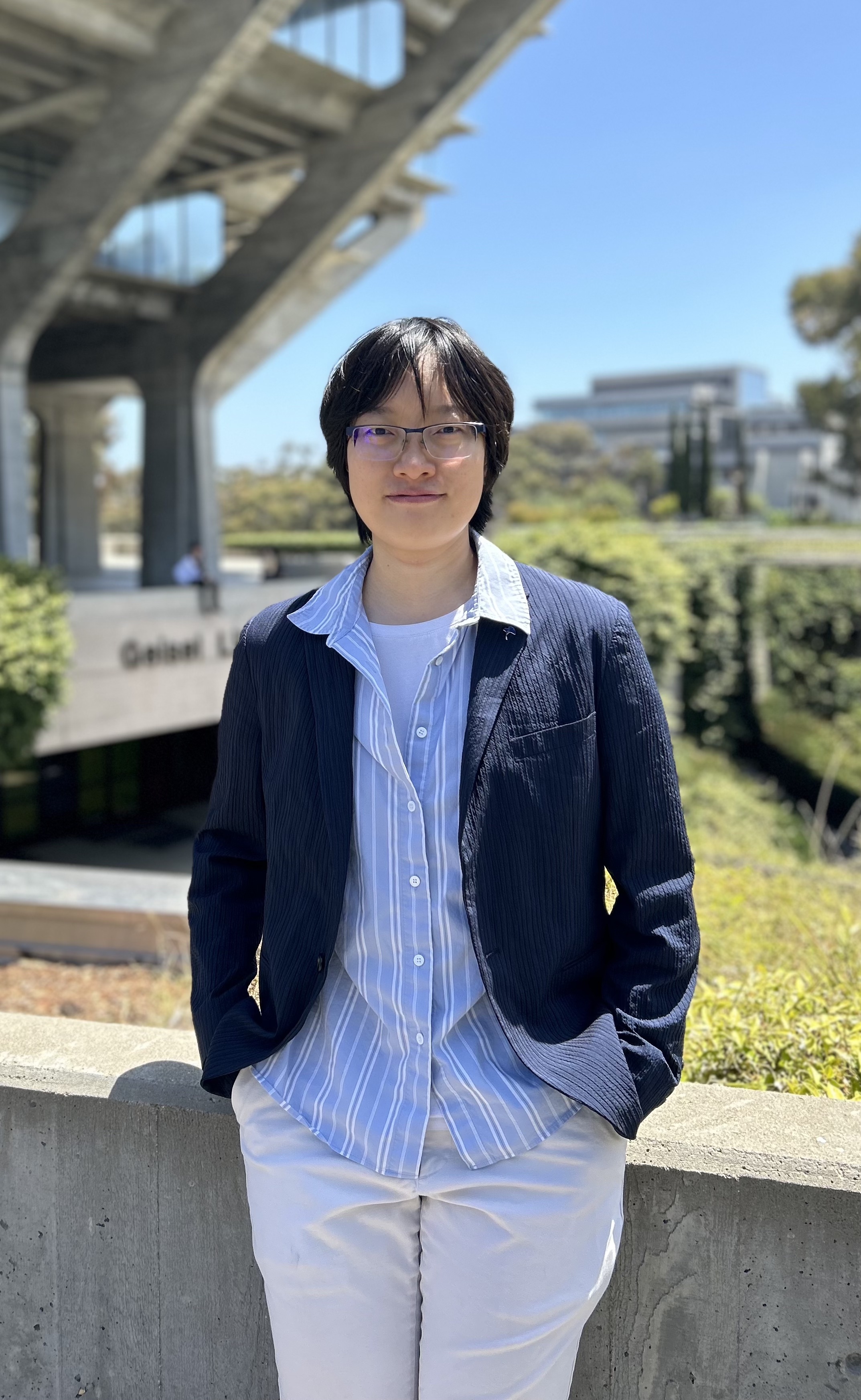
Xiaofan Yu is an Assistant Professor in the Department of Electrical Engineering at the University of California, Merced. He holds a Ph.D. (2025), M.S. (2020), and B.S. (2018) from the University of California, San Diego and Peking University, respectively. His research focuses on embedded systems , edge AI , and neuromorphic computing , with applications in IoT, federated learning, and hyperdimensional computing. ML&Systems Rising Star (2024) CPS Rising Star (2023) EECS Rising Star (2022) His work addresses on-device AI for real-world IoT deployments, reliability-driven sensor networks , and next-generation edge intelligence . Recent publications highlight advancements in federated learning (TIOT 2025), multimodal sensor interaction (IMWUT 2025), and noise-resilient sensor systems (Sensors 2024). Key subfields include hyperdimensional computing , asynchronous distributed training , and resource-efficient edge models . Dr. Yu actively mentors students across institutions and programs, including the Early Research Scholarship Program (UCSD) and ENLACE Summer Research Program. He has advised projects on smart elderly monitoring , LLM-based sensor reasoning , and hyperdimensional algorithm optimization . Collaborations span UCSD, TUM, and Stanford, with industry partnerships in IoT design automation (RelIoT simulator) and biomedical applications (bladder fullness restoration system).
Karan Singh serves as an Assistant Professor of Operations Research at Carnegie Mellon University's Tepper School of Business, where he develops theoretically rigorous algorithms for machine learning systems with emphasis on reinforcement learning and control theory. His work synthesizes techniques from online learning, optimization, and statistics to address complex interactive learning challenges. His academic journey includes: PhD in Computer Science from Princeton University under Elad Hazan Postdoctoral research at Microsoft Research (Redmond) Bachelor's degree in Computer Science from Indian Institute of Technology (IIT) Kanpur Singh's research program centers on three interconnected pillars: Algorithmic Reductions : Creating efficient methods to solve complex learning problems (e.g., reinforcement learning) using solvers for simpler tasks, yielding breakthroughs in online boosting and RL with concave rewards Nonstochastic Control : Establishing an algorithmic foundation for control theory through provably efficient instance-optimal algorithms that extend online learning to stateful systems Privacy-Preserving Online Learning : Investigating fundamental limits of regret minimization under differential privacy constraints while maintaining performance His approach consistently bridges theoretical computer science and practical control applications. Analysis of his 15 most recent publications reveals a clear evolution toward integrating algorithmic reductions with nonstochastic control frameworks. Recent work (2023-2025) demonstrates increasing focus on sample efficiency in agnostic boosting, privacy-aware optimization without smoothness assumptions, and competitive ratio analysis in online control. A unifying thread is the development of regret-optimal algorithms for linear dynamical systems under adversarial disturbances. His contributions have earned significant recognition: Best Paper Award at OptRL workshop (NeurIPS 2019) Spotlight Prize from New York Academy of Sciences' ML Symposium (2018) Multiple oral presentations at NeurIPS/ICML (acceptance rate Though specific student advisees aren't listed, Singh's extensive publication record with junior co-authors indicates active mentorship. His research has secured substantial support including a US patent (11,138,513 B2) for dynamic learning systems and collaborations through CMU's Machine Learning and Optimization group. Current projects involve interdisciplinary work on differentiable control libraries (Deluca) and medical applications like mechanical ventilation control. Singh leads research within CMU's Machine Learning and Optimization ecosystem, collaborating across computer science and engineering departments. His team develops foundational tools like the Deluca differentiable control library while pursuing real-world applications in healthcare systems, demonstrating strong cross-disciplinary integration.
Daniel Sage is a Lecturer and Scientific Advisor at École polytechnique fédérale de Lausanne (EPFL) , affiliated with the Biomedical Imaging Laboratory (LIB) under the College of Engineering (STI) and School of Life Sciences (SV) . He specializes in bioimage informatics , structured-illumination microscopy , and deep learning applications for biomedical imaging. His work spans algorithm development for single-molecule localization microscopy (SMLM) , fluorescence imaging , and 3D reconstruction . His research group has developed open-source tools like FlexSIM for light inhomogeneity correction, DeepImageJ for integrating deep learning in ImageJ, and Steer'n'Detect for orientation-accurate template detection. His publications focus on correcting multiple-blinking artifacts in PALM, optimal transport metrics for SMLM evaluation, and contextual feature analysis for xenograft cell classification. He mentors PhD students and contributes to interdisciplinary education through courses such as Bioimage Informatics and Fundamentals of Image Analysis , emphasizing practical software solutions and Java programming for bioimage processing. His collaborations include institutions like Howard Hughes Medical Institute and Centre National de la Recherche Scientifique (CNRS) .
Samuel Jean Bassetto is an Associate Professor in the Department of Mathematics and Industrial Engineering at Polytechnique Montréal. He serves as Director of the Continuous Improvement Laboratory (LABAC) and holds membership in multiple prestigious research groups including the Research Group on Globalisation and Management of Technology (GMT), Poly-Industries 4.0 Laboratory, Interuniversity Research Centre on Enterprise Networks, Logistics and Transportation (CIRRELT), and Institute for Data Valorization (IVADO). Dr. Bassetto's research spans multiple disciplines, focusing on continuous improvement through the integration of engineering, artificial intelligence, cognitive science, psychology, and design. His primary sphere of excellence is in New Frontiers in Information and Communication Technologies, with secondary expertise in Modeling and Artificial Intelligence and Human Health. He develops tools that place humans at the center of technology to enhance organizational performance while respecting human rhythms and cognitive limitations. His recent publication portfolio reveals a strong interdisciplinary approach, with research bridging industrial engineering, cognitive neuroscience, and AI ethics. His work addresses practical challenges in lean manufacturing assessment, racial bias in medical AI systems, cognitive data collection in natural environments, and condition monitoring for industrial machinery. The research consistently demonstrates a commitment to developing practical solutions that integrate human factors with technological innovation. NSERC Synergy Prize for Innovation recipient Principal investigator on multiple research grants from NSERC, FRQ, and MITACS Collaborations with over a dozen institutions across multiple countries Supervision of over 150 highly qualified personnel throughout his career Dr. Bassetto teaches specialized courses including CAP7011 (Creativity in Research), IND8444 (Continuous Improvement), IND8203 (Industrial Launch), and previously taught IND8178 (Production). His teaching philosophy emphasizes practical application, with courses featuring hands-on exercises, real-world scenarios, and gamification techniques to enhance learning. His supervision portfolio includes numerous Ph.D. and Master's students working on topics ranging from human-technology collaboration to reinforcement learning for production management. Through LABAC, Dr. Bassetto leads research initiatives focused on developing human-centered tools for continuous improvement in organizational settings. The laboratory conducts projects related to industrial IoT applications, cognitive aspects of process improvement, and the development of practical frameworks for organizations to enhance performance while maintaining respect for human rhythms and cognitive capabilities.
Mark Jenkinson is a Professor of NeuroImaging at the University of Oxford's Nuffield Department of Clinical Neurosciences and also holds positions at the University of Adelaide's Australian Institute for Machine Learning and the South Australian Health and Medical Research Institute (SAHMRI). He heads the Structural Modelling and Analysis Group at the FMRIB Centre, where his research focuses on multimodal population modeling and structural brain segmentation. Education: DPhil in Robotics Research (University of Oxford, 1999) BSc (Hons I) in Mathematical Physics (University of Adelaide, 1994) BE (Hons I) in Electrical and Electronic Engineering (University of Adelaide, 1993) Professor Jenkinson's research spans two major themes: multimodal modeling of populations to describe disease processes and apply to individual patient diagnoses, and structural segmentation and analysis of brain anatomy and pathology, particularly focusing on sub-cortical structures and lesions. His work integrates advanced computational methods with neuroimaging to develop tools for understanding neurological disorders. As the developer of key components of the FMRIB Software Library (FSL), he has significantly contributed to standard neuroimaging analysis pipelines used worldwide. His recent publications demonstrate a strong focus on deep learning applications in neuroimaging, uncertainty quantification in medical AI, and advanced segmentation techniques. There's a clear trend toward developing more robust, anatomically plausible models that preserve topological structures while improving diagnostic capabilities for conditions like multiple sclerosis, Huntington's, and Parkinson's diseases. Scientific Awards: Highly Cited Researcher (Clarivate Analytics 2018-2021, Thomson Reuters 2014-2016) ISMRM Outstanding Teacher Award (2009, 2014) Teaching Excellence Award, University of Oxford (2012) David Phillips Fellowship from BBSRC (2005-2010) Professor Jenkinson has supervised over 25 doctoral students whose work spans brain segmentation, connectivity analysis, and clinical applications of neuroimaging. His research is supported by significant grants including the Medical Research Future Fund (AU$2m), Wellcome Trust Centre for Integrative Neuroimaging (£11m), and NIH Human Connectome Project (US$30m), reflecting the high impact and translational potential of his work. As head of the Structural Modelling and Analysis Group at FMRIB, Jenkinson leads a team developing the FSL (FMRIB Software Library), one of the most widely used neuroimaging analysis packages globally. His group collaborates extensively with clinical researchers on applications ranging from multiple sclerosis to traumatic brain injury, translating computational advances into clinical practice.
Onesun Steve Yoo is a Professor of Operations and Marketing Analytics at the UCL School of Management, University College London, and Co-Director of the UCL Centre for Sustainable Business. He holds a PhD from UCLA Anderson School of Management, alongside advanced degrees in Electrical Engineering and Applied Mathematics from UC Berkeley and UCLA. His research focuses on innovation and entrepreneurship, examining operational and marketing strategies for firms launching innovative products/services. Key areas include consumer behavior analysis, pricing policies, sequential product launches, and the impact of technologies like surge pricing and AI-driven data analytics on business operations. Recent work integrates sustainability initiatives with AI to enhance operational transparency in supply chains and regulatory compliance. Yoo’s research has been published in top journals such as Marketing Science , Operations Research , and Manufacturing & Service Operations Management . His findings have been cited by US policymakers and featured in media outlets like the Wall Street Journal . He serves as a senior editor at Production and Operations Management and associate editor at Manufacturing & Service Operations Management . His academic service includes grants from Innovate-UK (UKRI) to collaborate with industry on sustainable business practices. Yoo’s work bridges theoretical research with practical applications, emphasizing data-driven decision-making and interdisciplinary collaboration between operations, marketing, and sustainability domains.
Roel Leus is a full professor at KU Leuven's Faculty of Economics and Business (FEB), part of the Operations Research and Statistics Research Group (ORSTAT). He holds roles such as Program Director for the Business Engineering programs and Chairman of the KU Leuven Advisory Committee for the Chinese Region. He earned his PhD in Applied Economics from KU Leuven in 2003, focusing on project planning under uncertainty. His research emphasizes operations research and management, particularly scheduling, project planning, and decision-making under uncertainty. Education: PhD in Applied Economics (KU Leuven, 2003); Master's in Business Engineering (Handelsingenieur, KU Leuven, 1998). He has held academic positions since 2003, including adjunct professorships at Beijing Jiaotong University. His administrative roles include heading ORSTAT research group (2012–2016) and program directorships. Research Interests: Sequencing and scheduling, project planning under uncertainty, discrete optimization, and practical quantitative decision support. He has supervised 12 graduated PhD students as primary supervisor and contributed to numerous publications in top journals like INFORMS Journal on Computing and European Journal of Operational Research. Teaching: Courses include 'Introduction to Operations Research,' 'Operations Research,' and 'Applications of Operations Research.' He coordinates master's theses in Data Science and Business Analytics, focusing on practical optimization problems. Grants and Projects: Acquired over €2 million in research funding from private companies, the National Bank of Belgium, and KU Leuven. His work spans satellite scheduling, supply chain management, and cross-docking logistics. Labs/Teams: Active in ORSTAT, collaborating on projects like drone-assisted delivery and robust scheduling algorithms. His research bridges theoretical advancements with real-world applications in logistics, manufacturing, and aerospace.
William Gropp is the Grainger Distinguished Chair and Director of the National Center for Supercomputing Applications (NCSA) at the University of Illinois Urbana-Champaign. He holds a Ph.D. in Computer Science from Stanford University (1982) and has contributed extensively to parallel computing, software for scientific computing, and numerical methods for PDEs. His research focuses on high performance computing, programming models, and scalable algorithms. Education: B.S. Mathematics (Case Western Reserve, 1977), M.S. Physics (University of Washington, 1978), Ph.D. Computer Science (Stanford, 1982). Research Interests: Gropp's work spans HPC, parallel computing, and numerical methods. He co-developed the MPI standard and MPICH implementation, and contributed to the PETSc library. His current projects include the Delta and DeltaAI supercomputers, Illinois Computes, and exascale initiatives. Scientific Awards: AAAS Fellow (2018), ACM/IEEE-CS Ken Kennedy Award (2016), SIAM/ACM Prize (2015), and 2024 ACM Software System Award. Member of the National Academy of Engineering. Grants & Leadership: Director of NCSA, leader of the Midwest Big Data Hub, and contributor to NSF-funded projects. His teams support AI/ML infrastructure and exascale computing. He advises on HPC policy and serves on committees like the Computing Community Consortium. Labs/Teams: NCSA, Siebel School research groups, collaborations with DOE, NSF, and industry partners. His work drives advancements in cyberinfrastructure and computational science.