
Ms. Gabriella Di Guardo serves as a Lecturer for Italian at the Specialized Language Center of University of Bielefeld, Germany. She is affiliated with the Italian and Arabic Department where she teaches Italian language courses. Her professional focus centers on Italian language instruction, encompassing linguistic structures, cultural contexts, and communicative competence development for students at the university. The Specialized Language Center at Bielefeld University provides language education across multiple languages to support both academic and professional development of students and staff. Contact information shows her office is located at UHG B0-308 with telephone number +49 521 106-67326. The university's language center operates within Bielefeld's broader educational framework that emphasizes interdisciplinary approaches across their four strategic research areas: The Changing World, The Material World, The Mathematical World, and The Socio-Technical World.
جستوجوی استاد و پژوهشگر
استاد راهنما، استاد دانشگاه یا پژوهشگر مناسب برای مسیر پژوهشیتان را پیدا کنید و با او ارتباط بگیرید.
نمایش ۷۰۶-۷۲۰ از ۲٬۵۸۷ استاد راهنما
اطلاعات این پروفایلها از صفحات عمومی دانشگاهها جمعآوری شده و ممکن است بهروز نباشد.

Wilfried Gabriel is a Professor of Educational Science and Waldorf Education at the Alanus University of Arts and Society (Waldorf Institute Witten Annen) since 2024. He previously served as founder and headmaster of the Waldorf Vocational College Schloss Hamborn (2009–2021) and taught at the Rudolf Steiner School Schloss Hamborn (2002–2021). His research focuses on practical learning, vocational education, and Waldorf pedagogy, leading initiatives like the 'Learning to Act' pilot project (2019–2023). He holds a doctorate in educational science from the University of Paderborn (1994) and has contributed extensively to educational policy and organizational development in Waldorf schools. Education: State examination in mathematics and physics (1984, University of Dortmund) PhD on 'Personal Pedagogy in the Information Society' (1994, University of Paderborn) Research Interests: Practical learning methodologies, Waldorf educational models, vocational training systems, and organizational development in educational institutions. Key Projects: Research Center for Practical Learning and Vocational Education at Waldorf Schools (since 2017), co-founder of the Academy for Social Management and Organizational Development (1998–2002). His publications emphasize the integration of practical learning into Waldorf education, digitalization’s impact on schooling, and holistic rehabilitation concepts. He has advised numerous schools and institutions on pedagogical strategies and governance.
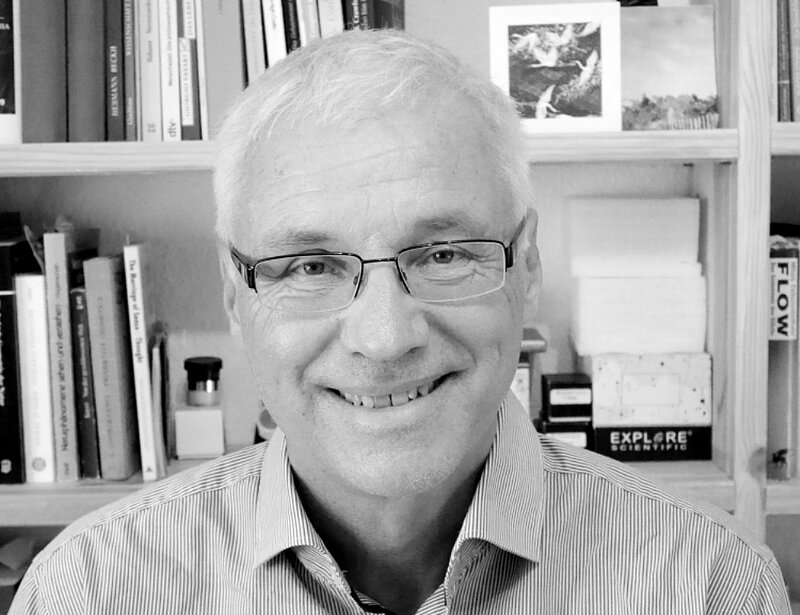
Dr. Jürgen Peters currently serves as a Lecturer in the Department of Educational Science at Alanus University since 2021, focusing on Waldorf Education, Childhood Education, and Art Education. Previously, he held roles as a Research Assistant (2009–2013), completing his doctoral thesis on work-related behavior patterns among Waldorf teachers. His career spans teaching mathematics and physics at Waldorf schools (Witten, Wilton NH, USA) and roles in teacher training programs. He earned a Mathematics diploma from Ruhr University Bochum in 1980. His research emphasizes empirical studies of Waldorf education systems, teacher well-being, and school quality. Key areas include analyzing workload and job satisfaction among educators, evaluating educational experiences in alternative schools, and developing curriculum frameworks. Peters has co-authored over 20 publications including monographs like Wir waren auf der Waldorfschule (2021) and peer-reviewed articles in journals like RoSE - Research on Steiner Education . His work bridges pedagogical theory with practical implementation, contributing to quality development initiatives in Waldorf schools through collaborative projects and institutional evaluations.
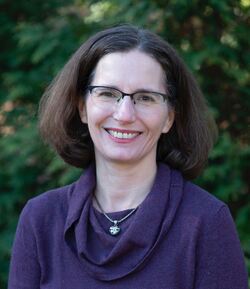
Bethany Rittle-Johnson is a Professor of Psychology & Human Development at Vanderbilt University’s Peabody College, holding the Anita S. and Antonio M. Gotto Chair in Child Development. Her research focuses on how children learn mathematical concepts and problem-solving procedures, emphasizing the roles of comparison, explanation, and early math skills in promoting knowledge development. She bridges psychological theory with educational practice, collaborating with teachers and institutions to apply research findings in real-world settings. Education: PhD in Psychology from Carnegie Mellon University (1999). Research Interests: Developmental cognitive science, mathematics education, self-regulated learning, and equity in STEM education. She investigates how cognitive strategies like comparison enhance learning, the predictive value of early math skills, and marginalized students’ experiences in mathematics classrooms. Recent Article Trends: Her work addresses equity in education, particularly for marginalized students, and explores innovative interventions such as board games and exit tickets to improve numeracy and self-regulated learning. She also examines parental and teacher roles in fostering early math skills. Awards & Honors: Sylvia Scribner Award (2024), Fellow of the Association for Psychological Science (2020), and recognition as a top author in mathematics education research. Advising & Grants: Advises graduate students like Jake Kaufman, Rebecca Adler, and Camille Msall. Leads projects funded by agencies such as the National Science Foundation, focusing on topics like algebra instruction, patterning in early math, and home numeracy interventions. Labs & Teams: Directs the Children’s Learning Lab, which studies math learning in children and develops evidence-based educational tools. Collaborates with the Peabody Research Institute and global networks like ManyNumbers to advance early numeracy research.

- Image Analysis
- Computer Vision
- Medical Imaging
- +۷ مورد دیگر
Anders Nymark Christensen is an Associate Professor in the Department of Applied Mathematics and Computer Science at the Technical University of Denmark (DTU), specializing in Visual Computing. His work bridges computer vision, medical imaging, and materials science, with a strong focus on explainable AI in clinical applications and structural analysis of complex materials. Institution: Technical University of Denmark (DTU) School: Department of Applied Mathematics and Computer Science Department: Visual Computing Role: Associate Professor Christensen’s research interests include image analysis, computer vision, explainable AI, ultrasound imaging, fetal medicine, and fiber orientation in composites. He applies advanced computational techniques to solve real-world problems in healthcare and materials engineering, particularly through structure tensor analysis and deep learning. His recent publications highlight a strong trend in developing AI tools for clinical decision support in fetal medicine, structural analysis of food and composite materials, and ultrasound imaging. These works span journals such as Scientific Reports , Food Structure , and IEEE Access , reflecting interdisciplinary innovation. Clinical validation of explainable AI for fetal growth scans Characterization of anisotropy in mozzarella cheese Determining fetal orientations from ultrasound video Structure tensor analysis in composites He supervises several PhD students in projects related to AI in skin lesion analysis, cancer detection, and ultrasound imaging. His collaborative network includes key researchers at DTU such as Anders Bjorholm Dahl, Vedrana Andersen Dahl, and Mads Nielsen. He has been involved in significant research grants and is active in both medical and engineering domains, contributing to open datasets and reproducible research. Christensen leads and contributes to numerous active projects, including: Decision Support AI for Skin Lesions (2024–2027) Fighting Cancer with Generative AI (2024–2027) SONAI: Explainable AI in the Clinic (2022–2026) Deep learning for identifying biomarkers in medical images (2022–2025) His work supports UN Sustainable Development Goals related to health, innovation, and responsible consumption, particularly through advancements in medical diagnostics and sustainable materials.
Almudena Alonso Ferreiro is a full-time Lecturer at the Department of Didactics, School Organization and Research Methods in the Faculty of Education and Social Work, University of Vigo. With a PhD in Digital Competence and School Ethnographic Studies (USC 2016), her research focuses on technology integration in education, digital equity, and curriculum development. University of Vigo Faculty of Education and Social Work Department of Didactics, School Organization and Research Methods Research Themes : Digital competence development in primary education ICT implementation in knowledge societies Gender perspectives in educational technology Evaluation of institutional technology projects Socio-cultural factors in digital inclusion Photovoice and ethnographic research methods Article Trends : Her publications (2012-2021) reveal consistent focus on 1:1 computing programs, digital equity in Galicia, teacher training curriculum analysis, and web-based educational tools. Key methodologies include ethnographic studies, photovoice, and web scraping analysis. Scientific Contributions : Coordinator of AECID-funded project in Argentina (2012-2014) Participant in REUNI+D International Symposium (2013) Co-author with Adriana Gewerc Barujel Research group: RITME (Reflection, Innovation, Transfer and Educational Improvement)
Lydia DeFlorioمشاهده پروفایل
دانشیار
Lydia DeFlorio, Ph.D. is an Associate Professor in the Department of Human Development and Family Science at the University of Nevada, Reno, College of Education and Human Development. Her research focuses on cognitive and socioemotional development in children, early mathematical development, parenting practices, and curriculum design for culturally and socioeconomically diverse early childhood settings. Education: Ph.D., M.A., and B.A. from the University of California, Berkeley and California State University, Sacramento. Her current research examines early mathematics interventions in home and classroom environments, targeting at-risk children in preschool and primary grades. She investigates strategies for improving mathematical knowledge through teacher and parent interventions, emphasizing scalability and sustainability in public preschool programs. The trends in her scholarly work highlight a strong emphasis on early childhood mathematics education, the role of socioeconomic status in developmental outcomes, and the implementation of evidence-based interventions. Her publications span topics such as curriculum design, self-regulation in learning, and diversity in educational settings. Lydia's professional experience includes work in early childhood education, child and family mental health, and interventions for at-risk youth. She is actively engaged in research that bridges educational theory with practical applications for families and educators.

Olaf Krey is a full Professor at the Institute of Physics within the Faculty of Mathematics, Natural Sciences and Technology at the University of Augsburg . He leads a research group focused on physics didactics , with secretariat members Norbert Büttgen, Jens Klinghammer, Stefanie Peter, Lisa-Marie Christ, and Manuel Schleicher. Krey's research interests span the role of mathematics in physics education , self-efficacy expectations in teaching and learning physics , and historical perspectives in physics didactics . His work emphasizes bridging mathematical reasoning with physics concepts, analyzing identity constructions in STEM education, and developing instruments to assess educational outcomes. Key article trends include: Mathematics-Physics interplay Stem identity development Educational video analysis Historical science integration Teacher training innovations Visual representation in physics Krey has not been explicitly associated with scientific awards in the text. His team collaborates on projects related to early science education , experimental didactics , and interdisciplinary competencies , with a focus on supporting future teachers through evidence-based practices.
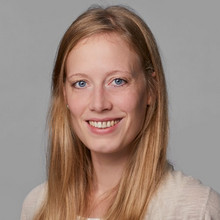
Laura Schilling is a researcher in Educational Science at Leuphana University of Lüneburg, Germany. Her work focuses on the professional development of mathematics teachers, particularly on fostering adaptive teaching skills, diagnostic competence, and the integration of video-based tools in teacher education. Her research interests revolve around designing and evaluating university courses that prepare pre-service teachers for adaptive, competency-oriented mathematics instruction. She investigates how future teachers can be supported in diagnosing student needs and delivering suitable instructional interventions, often employing qualitative and intervention-study methodologies. Across her publications, Schilling consistently explores the interface between theory and practice in teacher education, emphasizing problem-solving settings and the use of digital media such as explainer videos to enhance student learning in mathematics classrooms. She is an active member of the interdisciplinary ZZL-Netzwerk 2.0 project (2019-2023), funded by the German Federal Ministry of Education and Research, which aims to strengthen the linkage between theory and practice in teacher training across the domains of inclusive teaching, coaching & mentoring, and teacher health.

Dr. Svenja Lemmrich is Professor for Empirical Educational Research in Mathematics Didactics at Leuphana University of Lüneburg, Germany. She specializes in empirical research on mathematics education, teacher professional development, and adaptive teaching strategies. Research Focus: Empirical educational research in mathematics didactics Adaptive learning support in competency-oriented mathematics instruction Teacher education and professional development Multilingualism in teacher education Projects: She is actively involved in the DaZKom-Transfer project, funded by the Federal Ministry of Education and Research, which focuses on performance-based measurement of German as a second language competence among prospective teachers. Publications: Her recent work includes peer-reviewed journal articles and book chapters on adaptive teaching in mathematics, innovative teaching methods in German secondary schools, and empirical findings on teacher education. Contact: svenja.lemmrich@leuphana.de
Adolphe Adihou is a tenured Professor at Université de Sherbrooke , Canada, specializing in mathematics education with a focus on algebraic thinking , primary-secondary education transition , and digital didactic resources . He also contributes to teacher training programs and curriculum development in Quebec and West Africa. Education : Doctorate in Education (2003) and Diplôme de mathématicien (1992) from Université de Genève; earlier degrees from Université nationale du Bénin (1988) and Université de Sherbrooke (2006-2011). His research explores student difficulties in mathematics , teacher practices , and interdisciplinary approaches in STEM education. Recent work analyzes algebraic reasoning in cross-cultural contexts and develops teacher training frameworks for inclusive pedagogy. Scientific awards include the 2019 Université de Sherbrooke Recognition for exceptional achievement and the 2018 AMQ Prize for innovative digital didactic resources. He has secured multiple grants from CRSH , AUF , and Fonds de recherche du Québec for projects on educational equity and teacher professionalization .
Keith Laube is an Instructor of Business at Colorado Mesa University's Montrose Campus, where he has been teaching since 2020. He holds an MBA in Business Administration from Colorado State University and advanced degrees in Civil Engineering from Iowa State University. With extensive professional experience as a design and consulting engineer, business owner, and public works director, he brings real-world expertise into the classroom. His educational background includes: MBA, Business Administration – Colorado State University MS, Civil Engineering – Iowa State University BS, Civil Engineering – Iowa State University Mr. Laube teaches accounting, mathematics, and geology, emphasizing practical applications of classroom concepts in students' careers and personal lives. He believes in adapting instruction to diverse learning styles and connecting academic content with real-world projects. His teaching philosophy centers on lifelong learning and equipping students with skills for both professional and personal success. Though no publications are listed, his interdisciplinary background bridges engineering, business, and public administration, suggesting a pedagogical focus on applied sciences and workforce readiness. He has not received any scientific awards listed in the provided text. Mr. Laube advises students informally through experiential learning but no formal graduate advisees are mentioned. He has not been awarded any grants in the provided information. He is actively involved in community engagement through music and theater, participating in the Montrose Community Band, Valley Symphony Association Choir, and Magic Circle Players Theater. He also trains and competes in triathlons, reflecting a commitment to personal development and discipline.
Jana Bérešováمشاهده پروفایل
دانشیار
- English Language Didactics
- Common European Framework of Reference for Languages
- Communicative Testing
- +۳ مورد دیگر
Jana Bérešová is an Associate Professor at the Department of English Language and Literature, Faculty of Education, Technical University in Trnava. With over three decades of academic experience since 1982, she specializes in English language didactics, communicative testing, and the implementation of the Common European Framework of Reference for Languages (CEFR) in educational contexts across Slovakia and Europe. Her educational background includes: PhDr. in Interpreting and Translation (English and Arabic) from Comenius University, Bratislava (1982) Additional studies in General Education Teaching at Comenius University (1985) PhD in Physics and Mathematics from Technical University of Trnava (1999) PhD in Philosophy from Comenius University, Bratislava (2002) Habilitation procedure completed in 2005, earning the title of Associate Professor Bérešová's research focuses on English language didactics, with particular emphasis on communicative testing methodologies aligned with CEFR standards, intercultural communicative competence development, and contemporary approaches to English language teaching. Her work bridges theoretical frameworks with practical classroom applications, examining how language assessment can better reflect authentic communication needs while promoting cultural awareness among learners. Her recent publication trends (2023-2025) reveal a strong focus on CEFR implementation, teacher education, and language assessment. She has extensively researched how the CEFR self-assessment grid functions in teacher training contexts, investigated plurilingual approaches to language teaching, and examined written performances across proficiency levels. Her work increasingly addresses the role of technology in language education, including AI applications for writing improvement and innovative assessment methodologies. Jana Bérešová has mentored five doctoral students, with three currently under her supervision. Her academic guidance emphasizes reflective practice, alignment with international language frameworks, and practical applications of language teaching methodologies. She has been instrumental in developing teacher training programs focused on CEFR implementation across Slovak educational institutions and has participated in numerous European Council initiatives related to language education.
Lars Kilianمشاهده پروفایل
پژوهشگر
Lars Kilian is a Researcher at the German Institute for Adult Education - Leibniz Centre for Lifelong Learning (DIE) in Bonn, where he serves as Editor-in-Chief of wb-web, a portal for teachers of adult and continuing education. His academic career spans multiple German institutions with a focus on adult education research and digital learning methodologies. Dr. Kilian earned his doctorate (Dr. phil.) from the Technical University of Kaiserslautern, a Diploma in Educational Sciences with a focus on adult education and educational planning from the University of Erfurt, and a first state examination in primary school teaching for mathematics and art education from the Erfurt University of Education. His research interests center on teaching and learning with digital media in higher education settings, competence-oriented didactic approaches, and quality development/school development. His work explores how digital technologies transform pedagogical practices and institutional structures in adult education. He has particular expertise in e-learning frameworks, competence development models, and the integration of digital media into educational practice. Analysis of his recent publications reveals a strong trajectory toward digital transformation in adult education, with increasing focus on national education platforms, open educational resources (OER), artificial intelligence applications, and pandemic-driven shifts to remote learning. His work demonstrates a consistent concern with practical implementation challenges, user experiences, and the development of sustainable digital learning ecosystems within adult education contexts. Dr. Kilian serves in multiple leadership capacities including as Treasurer of the Society for Media in Science (GMW) since 2016, Member of the Steering Committee for Digitalization in Further Education for the Ministry of Culture and Science in North Rhine-Westphalia since 2019, and Advisory Board member for OERinfo/DIPF since 2023. His wb-web portal has become a significant resource for adult educators seeking professional development. He leads the Portals Team at DIE and contributes to multiple national initiatives focused on digitalization in adult education, including the National Education Platform development and Education for Sustainable Development (ESD) quality development. His collaborative work extends across institutional boundaries to connect research with practice in adult education settings.
Susanne Wittمشاهده پروفایل
پژوهشگر
Susanne Witt is a Research Associate at the German Institute for Adult Education (DIE), a member of the Leibniz Association. She serves as a Specialist Assistant for the Portals Team in knowledge transfer and works within Research Infrastructures. Her professional contact information includes telephone (+49 228 3294-170), fax (+49 228 3294-399), and email (witt@die-bonn.de), with an ORCID identifier (0009-0000-4155-6927). Her career path includes diverse experiences as a graduate sports teacher (Ruhr University Bochum), French Business Correspondent (ILS Hamburg), Human Resources Specialist (IHK Bonn), and journalist (FJS Berlin). Witt's research interests focus on digital transformation in adult education, with particular expertise in wb-web (a portal for continuing education professionals), EPALE (Electronic Platform for Adult Learning in Europe), Qualidat (research map), library architecture, and online program scheduling. Her work increasingly addresses artificial intelligence applications in education, digital accessibility, and sustainable educational practices. She explores how emerging technologies like ChatGPT and AI tools can be effectively integrated into educational settings while maintaining critical perspectives on their implementation. Her publication portfolio reveals a clear trend toward digital education innovations, with recent work examining AI implementation requirements, prompting techniques, digital accessibility, and the implications of the EU AI Act for educational institutions. These publications demonstrate her evolving focus from foundational digital education topics to cutting-edge AI applications, while maintaining consistent attention to practical implementation challenges and accessibility considerations. Witt actively contributes to editorial work as part of the wb-web and EPALE teams, serving as an EPALE Ambassador. She has moderated and participated in numerous podcasts and discussion formats, particularly the potenziaLLL series, focusing on practical applications of educational theory. Her work often involves thematic dossier curation on critical topics like media literacy, digital teaching methods, and collaborative learning approaches. She has developed significant expertise in digital teaching methodologies, including Barcamps, Design Thinking, Scrum for agile instruction, and technical solutions for hybrid teaching environments. Her research also encompasses critical media literacy, cultural education, health literacy, and food literacy within adult education contexts, demonstrating a comprehensive approach to contemporary educational challenges.
فقط ۷۵۰ نتیجه اول نمایش داده میشود. برای رسیدن به نتایج دقیقتر، جستوجو را با فیلترها محدودتر کنید.