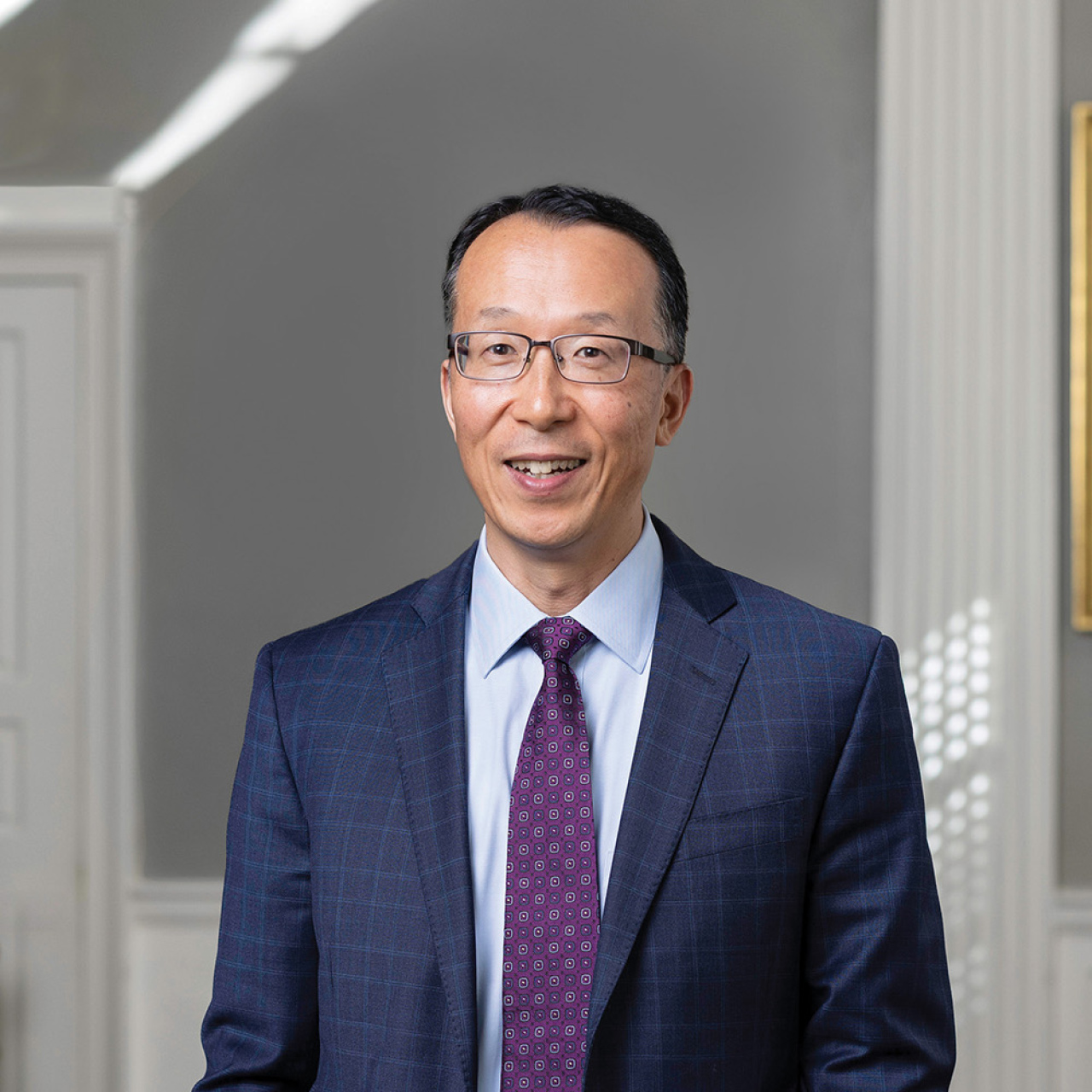
James S. Kim is a Professor of Education at Harvard University's Graduate School of Education, where he conducts policy-relevant research focused on improving literacy outcomes for low-income students and struggling readers. With an Ed.D. from Harvard University (2002), he leads the READS Lab (Research Enhances Adaptations Designed for Scale in Literacy), a research team that partners with school districts to solve literacy challenges through evidence-based interventions. Dr. Kim's research centers on understanding how building students' domain knowledge and reading engagement can foster long-term improvements in reading comprehension. His work emphasizes experimental design and evidence-based interventions, with a particular focus on addressing educational inequality. His research interests include early education, education policy, evidence-based intervention, human development, inequality and education gaps, informal and out-of-school learning, language and literacy development, and teachers and teaching. Kim's most significant contribution is the Model of Reading Engagement (MORE), a spiraled and sustained content literacy intervention co-developed with schoolteachers that has been shown to improve first to third-grade students' reading comprehension in science, English language arts, and math. Notably, research on MORE meets WWC (What Works Clearinghouse) standards without reservation, and long-term follow-up suggests the intervention's impact persists through fourth grade. His publications reveal a consistent focus on content literacy, domain knowledge development, and transfer effects in reading comprehension. Research on MORE meets WWC standards without reservation Long-term effects of MORE persist through fourth grade Commitment to Open Science principles (open data, open materials, preregistration) As a servant leader, Kim builds long-term partnerships with school districts to implement literacy interventions at scale. His READS Lab promotes open science practices while developing practical solutions to literacy challenges. His research on summer reading interventions, parental text messaging, and classroom-based content literacy approaches demonstrates his commitment to translating research into practice. Kim's current work includes scaling the MORE intervention to improve reading comprehension for high-needs students in moderate to high poverty schools through a Department of Education-funded project (2024-2028).