معرفی
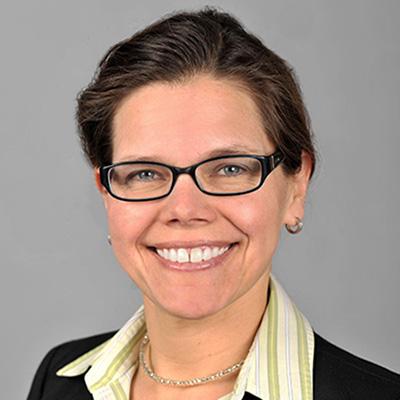
Angela Boatman is an Associate Professor in the Department of Educational Leadership & Higher Education at Boston College specializing in higher education policy evaluation, with emphasis on improving access and success for underrepresented student populations through evidence-based interventions.
Her educational credentials include:
- Ed.D. in Higher Education from Harvard University
- M.P.P. and M.A. in Higher Education from the University of Michigan
- B.A. from the University of Minnesota
Dr. Boatman's research program systematically examines college access barriers and success pathways, focusing on remedial education reform (particularly mathematics), financial aid design, community college transfer policies, and behavioral interventions to reduce loan aversion. She employs rigorous quasi-experimental and experimental methodologies to evaluate policy impacts on student outcomes, with particular attention to equity implications for traditionally marginalized groups. Her work bridges academic research and practical policy implementation through sustained engagement with federal and state education agencies.
Analysis of her recent publications (2019-2025) reveals consistent thematic focus on remediation models (corequisite vs. traditional, high school vs. college timing), behavioral economics applications in financial aid, and cross-institutional transfer policies. Her research spans diverse contexts including U.S. community colleges, technical institutions in Chile, and rural-serving universities, demonstrating methodological versatility through large-scale administrative data analysis, randomized trials, and comparative international studies.
Dr. Boatman has secured substantial external research funding from the Institute for Education Sciences, Bill & Melinda Gates Foundation, Lumina Foundation, and Peabody College. She actively contributes to national discourse as a faculty affiliate of the Center for the Analysis of Postsecondary Readiness (CAPR) and the Center for Education Policy Research (CEPR) at Harvard University, frequently presenting findings to policymakers and practitioners through congressional briefings, Federal Reserve conferences, and national education forums.