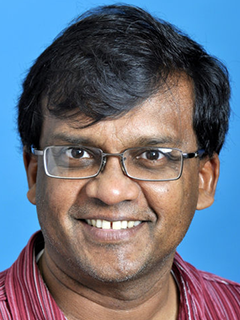
MARTIN GONZALEZ FERNANDEZ is a Professor at the University of Santiago de Compostela, affiliated with the Department of Philosophy and Anthropology within the Faculty of Philosophy. His academic focus lies in the History of Philosophy, particularly skepticism, Enlightenment studies, and intellectual censorship dynamics. He holds a doctorate from the same institution with a thesis on skepticism from antiquity to the Renaissance. His research integrates archival analysis (e.g., Inquisition records) with intellectual biography, examining figures like Omar Khayyám, Galileo, and Giordano Bruno. Key themes include forbidden readings in academia, the interplay between censorship and enlightenment thought, and the transmission of ideas across cultural and religious boundaries. Notable works analyze Galician intellectual history, tracing materialist movements, Enlightenment legacies, and the role of skepticism in pre-modern scientific and religious contexts. His work bridges ancient philosophical traditions with medieval and early modern interpretations, emphasizing cross-cultural exchanges between Islamic and European thought.
Mahyar Entezari is a Lecturer in Foreign Languages and the Coordinator of the Persian Language Program at the University of Pennsylvania's Department of Middle Eastern Languages and Cultures, within the School of Arts & Sciences. He teaches Persian language at all levels and courses on modern Iran, including Iranian cinema and Middle Eastern literatures. Education: PhD in Middle Eastern Languages and Cultures, University of Texas at Austin MA in Middle Eastern Studies, University of Texas at Austin BA in German Studies, University of California, San Diego His research focuses on national identity, political discourse, and cultural expression in Iran, particularly analyzing the role of cinema, literature, and state rhetoric in shaping collective memory and resistance. He explores how dissident films reflect political ideologies and how pre-Islamic heritage is mobilized in modern Iranian culture. His recent scholarly work spans topics such as the Iran–Iraq War in dissident cinema, 20th-century Persian prose fiction, and the representation of pre-Islamic history in contemporary Iranian society. These publications reflect a strong interdisciplinary engagement with film, literature, history, and cultural studies. Scientific Awards and Recognitions: Fulbright Program award or fellowship U.S. Department of State award or fellowship Mahyar Entezari actively contributes to academic leadership and pedagogical development. He has co-organized the Middle East Film Festival for nearly a decade, served on academic committees, and led teacher training initiatives. His research has been presented at institutions including Princeton University and the United States Military Academy at West Point. While no specific grants are mentioned, his fellowships indicate strong external recognition and support for his scholarly work. He is affiliated with the American Association of Teachers of Persian and plays a central role in shaping Persian language pedagogy and Iranian cultural studies at Penn.
Ina Dietzsch is a full professor and executive director at the Institute for European Ethnology/Cultural Anthropology at Philipps University of Marburg, affiliated with the Faculty of Social Sciences and Philosophy. She leads the Institute for Empirical Cultural Studies and is deeply engaged in interdisciplinary research on digital culture, water, and technology. She also holds a scientific project management role at the University of Basel and FHNW in Switzerland. PhD, Humboldt University of Berlin (2000) Habilitation, University of Basel (2015) W3 Professor, Philipps University of Marburg (2020–present) Her research centers on the digitization and mathematization of nature, with a focus on water practices, ontologies, and narratives. She explores how digital technologies reconfigure human, animal, plant, and technical relations, particularly in agriculture and urban development. Drawing on feminist theorists like Donna Haraway, she critically examines posthuman and cyborg identities, participatory design, and visual communication. The recent publications reflect a strong trend in digital cultural techniques, especially in water and agriculture. Themes include smart water systems in South Africa, posthuman readings of urban water, digital farming methodologies, and the role of visual participation in urban planning. The works combine ethnographic, theoretical, and design-anthropological approaches. Ina Dietzsch is actively involved in academic leadership and collaboration. She is a board member of the Marburg Center for Digital Culture and Infrastructure and the DGEKW Commission on Digitalization in Everyday Life. She co-leads the Critical Icono-Ethnography Lab (CIELab) and the Marburg Water Lab, fostering interdisciplinary and participatory research. She has supervised various research projects funded by the Swiss National Science Foundation and the German Federal Ministry of Education and Research. Her work bridges cultural anthropology, science and technology studies, and design, with a strong emphasis on public engagement and collaborative knowledge production.
Klaus Brax is a Senior University Lecturer in Comparative Literature at the University of Helsinki's Faculty of Arts, Department of Philosophy, History and Art Studies. He has been actively contributing to literary studies through teaching, research, and supervision of graduate students. His research interests span textual analysis, rhetorical and affective narratology, literary ethics, genre theory, and the history and classics of literary studies. Brax has taught courses on narrative ethics, narrative and emotions, classics in literary studies, parody in literature, and various historical novel forms including Victorian, neo-Victorian, and postmodern historical fiction. His recent publications (2024-2025) demonstrate continued scholarly engagement across multiple literary journals, particularly Shakespeare's Coffee House . Analyzing these works reveals a consistent focus on narrative ethics, memory studies, Holocaust representation, and the intersection of historical events with literary form. His scholarship often examines how literature processes trauma, constructs ethical frameworks, and represents historical consciousness. Kannustinpalkkio opetuksessa ja opetuksen kehittämisessä ansioitumisesta (2022) Brax actively supervises Master's theses and doctoral dissertations, with current supervision extending into 2025. He participates in academic conferences including the upcoming Memory Studies Association Conference (July 2025) and recently organized the 'Literature in Eras of Conflict' event (October 2024). His academic service includes committee work assessing candidates for academic posts and membership in the continuous learning working group.
Fiona Sophie Makulik is a researcher at the University of Bremen, affiliated with the Department of German Studies and the Research Training Group (RTG) Contradiction Studies. Since 2023, she has served as an elected member of the Care, Equality and Diversity Board of the RTG Contradiction Studies. Master in Language and Communication Studies (University of Greifswald, 2019–2021) Bachelor in German Studies and Philosophy (University of Bremen, 2017) Her research focuses on feminist linguistics , discourse linguistics , and political linguistics , particularly the diachronic evolution of counter-discourses in the German abortion debate. She examines practices of contradiction, positioning, and discursive disruption across three historical periods (1971–75, 1990–94, 2018–2022), integrating theories from feminist and political linguistics. Fiona's recent publications include studies on the feminist abortion discourse's aesthetics, relational dynamics, and digital antifeminism. Her work appears in interdisciplinary volumes such as Discourses in/of Disruption and Debating, Opposing, Protesting , often analyzing linguistic practices in biomedical and digital contexts. She actively presents at conferences like That Goes Too Far! (Free University of Berlin) and Exploring Contradictions beyond Contradiction (University of Bremen), emphasizing the intersection of linguistics, feminism, and political critique. Fiona contributes to projects on decolonial knowledge production and serves in academic working groups on pragmatics and language in politics.
Mary Jo Reiff serves as a Professor in the Department of English at the University of Kansas, maintaining active faculty status with offices in Wescoe Hall (Room 3067 for faculty duties; Room 3001K for First Year Writing Program administration). Her scholarly identity bridges rhetoric/rhetorical theory and composition studies, with institutional recognition through multiple teaching professorships. Her research interrogates writing theory, public rhetoric, and knowledge transfer mechanisms, emphasizing audience theory and rhetorical genre studies through critical ethnographic methods. Recent investigations analyze public petitions as climate change mobilization tools and explore collaborative authorship via culinary metaphors, revealing her commitment to material practices and posthumanist frameworks in writing studies. This trajectory demonstrates evolving focus from foundational genre theory to embodied, ecological perspectives on writing ecologies. Analysis of her 15 most recent publications (2011-2024) reveals three dominant trends: (1) sustained examination of genre-materiality intersections in public discourse, (2) innovative methodological expansions through cooking-writing analogies, and (3) persistent engagement with writing transfer across academic contexts. Her work consistently connects theoretical frameworks to pedagogical applications, particularly in first-year composition. Her scientific recognition includes: John C. Wright Outstanding Graduate Mentor Award (University of Kansas, 2021) Frances L. Stiefel Teaching Professorship (2018-2021) Conger-Gabel Teaching Professorship (2016-2018) Mabel S. Fry Award for Teaching Excellence (2013) Reiff's mentorship excellence is formally acknowledged through the John C. Wright Award, reflecting her dedication to graduate student development within rhetoric and composition programs. Her teaching awards spanning 2013-2021 demonstrate sustained pedagogical impact, particularly in writing program administration and first-year composition instruction, where she has developed innovative team-teaching models and transfer-focused curricula.
Josh Edelman is a Reader in Drama and Contemporary Performance at the Manchester School of Theatre, Manchester Metropolitan University. With a PhD in Theatre from Trinity College, Dublin, he has established himself as a leading scholar in performance studies, particularly focusing on the intersections of performance, ritual, and religion in the modern West, as well as the relationships between politics, policy, and theatremaking in contemporary Europe. His academic journey includes: AB in Study of Religion from Harvard University MPhil in Theology and the Arts from University of St Andrews PhD in Theatre from Trinity College, Dublin Edelman's research primarily explores the complex relationships between performance, ritual, and religion in the modern West, with particular attention to how religious practices manifest in public spaces and contemporary performance contexts. He also investigates the intersections of politics, policy, and theatremaking in contemporary Europe, examining how theatrical institutions function within broader cultural and political frameworks. His work extends to contemporary Irish performance, experiments in audiencing, and new writing, reflecting a deep engagement with both theoretical and practical aspects of theatre and performance. His recent publications reveal a strong focus on sacred space, religious performance, and the political dimensions of theatre. Key themes include the occupation of sacred spaces as protest, the impact of economic crises on theatre funding, ritual innovation during the pandemic, and the relationship between religious traditions and contemporary performance practices. His work often bridges academic theory with practical applications in theatre policy and cultural management. Edelman has received recognition for his scholarly contributions through: Principal investigator on the AHRC-funded project 'The value of subsidised, commercial and amateur theatre and dance for Tyneside's audiences' Founding co-convenor of the Performance, Religion and Spirituality Working Group of the International Federation for Theatre Research Founding member of the Project on European Theatre Systems (STEP) As an educator, Edelman teaches across all three years of MMU's Texts, Contexts and History strand in the drama program, supervises Theatre Practice and Advanced Theatre Practice students, and contributes to the first-year Practice and Performance unit. His professional background as a theatre director in New York, Texas, and Dublin for over a decade informs his teaching practice, providing students with valuable industry insights. He also maintains active community engagement as a volunteer coordinator at the Asylum Seeker Drop-In Centre at West London Synagogue and serves as an expert advisor on theatre policy to The Arts Council of Ireland.
Mario Aquilina is a Senior Lecturer in the Department of English within the Faculty of Arts at the University of Malta. He holds a BA (Hons) and MA in English from the University of Malta and earned his PhD in English Studies from the University of Durham, UK in 2013. His academic work spans literary theory, electronic literature, and style studies, with particular focus on continental philosophy's intersection with literary analysis. His research interests prominently feature Critical Theory, Literary Theory, Electronic Literature, and Digital Humanities. Aquilina has made significant contributions to understanding style in literature through the lens of thinkers like Blanchot and Gadamer, while also exploring the emerging field of electronic literature and its theoretical implications. His work on the relationship between literature and digital games represents an innovative interdisciplinary approach that bridges traditional literary studies with contemporary digital culture. Aquilina's publication pattern reveals a strong trajectory in theoretical literary studies, with recent work increasingly engaging with digital humanities methodologies and big data approaches to literary analysis. His scholarship demonstrates consistent engagement with continental philosophy while progressively incorporating computational and digital perspectives on literature. As an educator at the University of Malta, he teaches within both the Department of English and the Centre for English Language Proficiency. His professional experience includes extensive work as an editor for international publishers, with particular expertise in managing multi-author projects and navigating cross-cultural editorial challenges. His academic contributions include editing multiple volumes on the history of the essay and serving as co-editor for the CounterText special issue on Electronic Literature. He maintains an active research agenda that bridges traditional literary scholarship with contemporary digital approaches, reflecting the evolving nature of literary studies in the 21st century.
Alireza Mohammadinodooshan is a Postdoctoral Fellow at Linköping University's Department of Computer Science (IDA), Sweden, working within the Database and Information Technology (ADIT) research group. He contributes to the Wallenberg AI, Autonomous Systems and Software Program (WASP) – Sweden's largest individual research initiative – focusing on data-driven analysis of social media engagement dynamics across Twitter, Facebook, and Instagram platforms. His research centers on quantifying how political bias, news reliability, and content-agnostic factors shape temporal user engagement patterns. Key interests include social media analysis, user engagement dynamics, data mining, information systems, network science, and artificial intelligence, with emphasis on cross-platform comparative studies and algorithmic amplification effects in news consumption. Analysis of his 15 most recent publications reveals consistent focus on temporal modeling of engagement decay, multi-format content interaction (photos/videos/albums), and the interplay between news source characteristics and user behavior. His methodological approach combines large-scale dataset analysis with network theory to identify virality predictors and platform-specific engagement mechanics. No scientific awards were documented in available sources. No advising roles or research grants were referenced in the provided materials. He operates within the ADIT research group at Linköping University, which specializes in advanced database and information systems for the digital society. This group forms part of IDA's broader WASP-affiliated ecosystem focused on AI-driven autonomous systems, enabling interdisciplinary collaboration on large-scale data challenges in social computing.
Larry Beason is a Professor at the University of South Alabama within the College of Arts and Sciences, Department of English. His expertise spans rhetorical analysis, composition pedagogy, grammar, and science fiction. He is renowned for his book Eyes Before Ease , which delves into the cultural and communicative significance of spelling, and has co-authored several influential grammar and usage guides. Research Focus: Rhetorical analysis, writing assessment, ethics in writing instruction, and intersections of digital communication with pedagogy. Notable Publications: Eyes Before Ease , A Commonsense Guide to Grammar & Usage , and The McGraw-Hill Handbook of English Grammar and Usage . His scholarly work addresses topics such as grammar standards in gaming forums, writing assessment methodologies, and the role of ethics in composition instruction. He has contributed to journals like College Composition and Communication , WPA: Journal of the Council of Writing Program Administrators , and Research in the Teaching of English .
David Thorsén is a Senior Lecturer at the Department of Education, Stockholm University. His research focuses on the intersection of medicine and education through historical and pedagogical lenses, particularly examining visual and material culture in science education and health teaching practices. Pedagogy and Health research group History of Education and Sociology of Education research group Current projects analyze relationships between schools and museums from 1880-1980, funded by the Swedish Research Council. Recent publications examine object-based learning, teacher-scientists in early 20th century Sweden, and dissection practices in science education. Email: david.thorsen@edu.su.se
Ermelinda Bisello serves as a Lecturer and researcher at the Institute of Italian Studies (ISI) within the Faculty of Communication, Culture and Society at the Università della Svizzera italiana (USI) in Lugano. Her academic focus centers on Italian literary traditions with specialized expertise in stylistic and rhetorical analysis, particularly aphoristic forms. Her educational background includes studies in Turin, Paris, and Trento, where she initiated her research trajectory. Formal degree details are not specified in available sources. Dr. Bisello's research examines stylistic and rhetorical dimensions of literary genres—especially aphorisms—the theme of silence in modern literature between contemplation and prudence, historical discourse in literature, literature-medicine intersections, and Italian literature didactics. Her work extends to cultural history of the modern age, children's literature, and teaching methodologies, demonstrating interdisciplinary engagement across literary, historical, and medical humanities. Analysis of her 2009-2020 publications reveals sustained exploration of early modern Italian literature, with recurring investigations into censorship mechanisms, moral anatomy, and Alessandro Manzoni's I Promessi Sposi . Her scholarship consistently bridges literary analysis with historical context, particularly examining how medical knowledge, religious thought, and political structures shape narrative forms. No scientific awards are documented in the provided materials. Information regarding student advising, research grants, or laboratory affiliations is not available in current records.
Kamal Premaratne serves as a Professor in the Department of Electrical & Computer Engineering at the College of Engineering, University of Miami. His scholarly work uniquely bridges technical expertise in machine learning and signal processing with social science research on conspiracy theories and political extremism. With numerous publications in both technical and social science journals, he demonstrates an exceptional interdisciplinary approach to understanding complex contemporary phenomena. Professor Premaratne's research spans two primary domains: advanced computational methods and social/political analysis. In computational methods, he focuses on quantum tensor networks for time series analysis, graph neural networks for gesture recognition, and uncertainty quantification in machine learning systems. His social science research examines conspiracy theories including the "White Replacement" theory, QAnon, and "white genocide" narratives, investigating their sociodemographic correlates and relationship to political extremism. His work often employs mixed-methods approaches combining qualitative analysis with quantitative content analysis and network analysis. Analysis of Premaratne's recent publications reveals a strong focus on understanding how conspiracy theories spread on social media platforms and their relationship to political behavior. His technical work shows innovative applications of quantum physics concepts to machine learning problems, creating more interpretable models while maintaining performance. This dual focus demonstrates how computational methods can be applied to social science questions and vice versa. Professor Premaratne actively collaborates with researchers across disciplines including psychology, political science, and communication studies. His research has been published in high-impact journals such as Scientific Reports, Journal of Politics, and Political Science Quarterly. Though specific grant information isn't detailed in the available materials, his extensive publication record suggests substantial research activity. His work has significant implications for understanding political polarization, misinformation spread, and developing more interpretable AI systems.
Cristy Beemer is Associate Professor of English at the University of New Hampshire and serves as Vice President of the Coalition of Feminist Scholars in the History of Rhetoric and Composition (2024-2026). Her educational background includes: B.A. in English, State University of New York at New Paltz B.A. in Liberal Arts & Sciences & Humanities, Hofstra University M.A. in English, State University of New York at New Paltz Ph.D. in English, Miami University - Ohio Dr. Beemer's research centers on feminist rhetoric across historical periods, with expertise in composition theory, early modern rhetoric, technical writing, and rhetoric of health and medicine. Her work examines how women's voices operate in political and medical discourses, notably through her book project on breast cancer online communities as rhetorical spaces for wellness and support. Publication trends reveal consistent engagement with feminist rhetorical theory, bridging historical analysis of early modern queens with contemporary studies of digital health communities and business communication pedagogy. No scientific awards or fellowships were documented in the source materials. Information regarding advisees and grant funding is not specified in available records. She actively leads Writing Across the Curriculum initiatives in business schools through the Coalition of Feminist Scholars, fostering interdisciplinary collaboration in rhetorical education.
Margaret Meserve is Professor of History at the University of Notre Dame, concurrently serving as Vice President and Associate Provost for Academic Space and Support and Interim Dean of the Hesburgh Libraries. Her scholarship centers on the Italian Renaissance with emphases on printing history, papal politics, and cross-cultural encounters between Europe and the Islamic world during the fifteenth and sixteenth centuries. Her educational background includes a Ph.D. from the Warburg Institute, University of London. Additional professional experience encompasses a curatorial role in the Incunabula Section of the British Library, enriching her expertise in early printed materials. Meserve's research reveals how news circulation, propaganda, and disinformation operated in Renaissance Rome following the advent of print technology. She investigates the interplay between historical writing, diplomatic correspondence, and crusade narratives, particularly examining European perceptions of the Ottoman Empire. Her work demonstrates how printed papal decrees shaped political discourse and public opinion, while her studies of Pius II's commentaries illuminate humanist approaches to autobiography and cross-cultural representation. Current projects continue to explore information networks in early print culture. Her publications consistently address Renaissance information ecosystems, with chronological focus spanning 1470-1527. Key thematic threads include the materiality of texts, papal authority in crisis periods, and the construction of Islamic empires in European historical thought. Scientific recognition includes: American Historical Association's 2008 Helen and Howard R. Marraro Prize Renaissance Society of America's Phyllis Goodhart Gordon Prize (2009) American Catholic Historical Association's 2022 Helen and Howard R. Marraro Prize DeLong Book Prize (highly commended) by SHARP (2022) NEH Fellowship ACLS Fellowship Fellow of the American Academy in Rome Newberry Library Fellowship Meserve directs doctoral dissertations in European history with specialization in the Renaissance period. Her research has received substantial grant support from the National Endowment for the Humanities, American Council of Learned Societies, and Newberry Library. Administrative leadership includes oversight of academic space planning and library systems at Notre Dame. Teaching responsibilities encompass courses on Italian Renaissance, Early Modern Rome, and the history of the book, integrating her archival expertise with theoretical frameworks in book history. No dedicated laboratory or research team structure is documented in source materials, though her administrative roles involve coordination of academic support units and library collections.