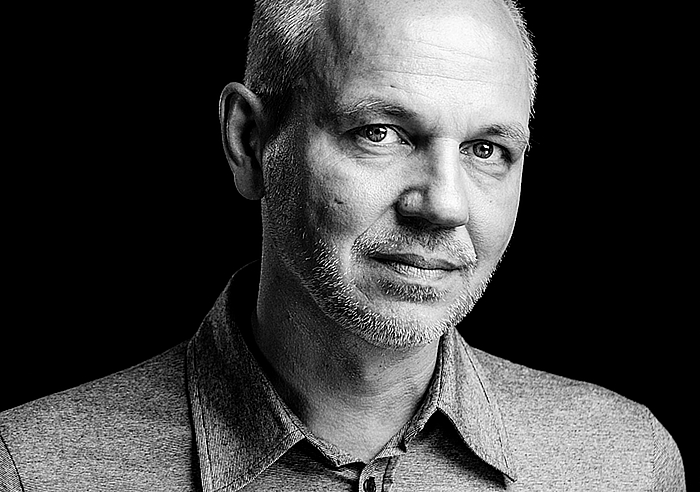
Roger Boltshauser is a Full Professor and Deputy Head at the Department of Architecture, ETH Zurich. His practice and academic work emphasize tectonic building culture, proportion, and material experimentation, diverging from mainstream German-Swiss architectural trends. He combines teaching with active architectural practice, influencing younger generations at ETH and TU Wien. Key themes: Tectonic structures, grid-based order, social responsibility in architecture, critique of modernist canons Notable projects: Hochhaus H1 Zwhatt-Areal (2025), Masterplan Zoo Basel (2025), Centre for Dental Medicine Zurich (2025) His buildings prioritize mass and permanence , evident in projects like the Kopfholz School and Rauch House . Recent works at the EPFL Solar Biennale (2025) and Architecture of Memory exhibition (2025) explore sustainable design and cultural narratives. Boltshauser’s studio on Dubsstrasse exemplifies research into load-bearing structures and urban spatial relationships.
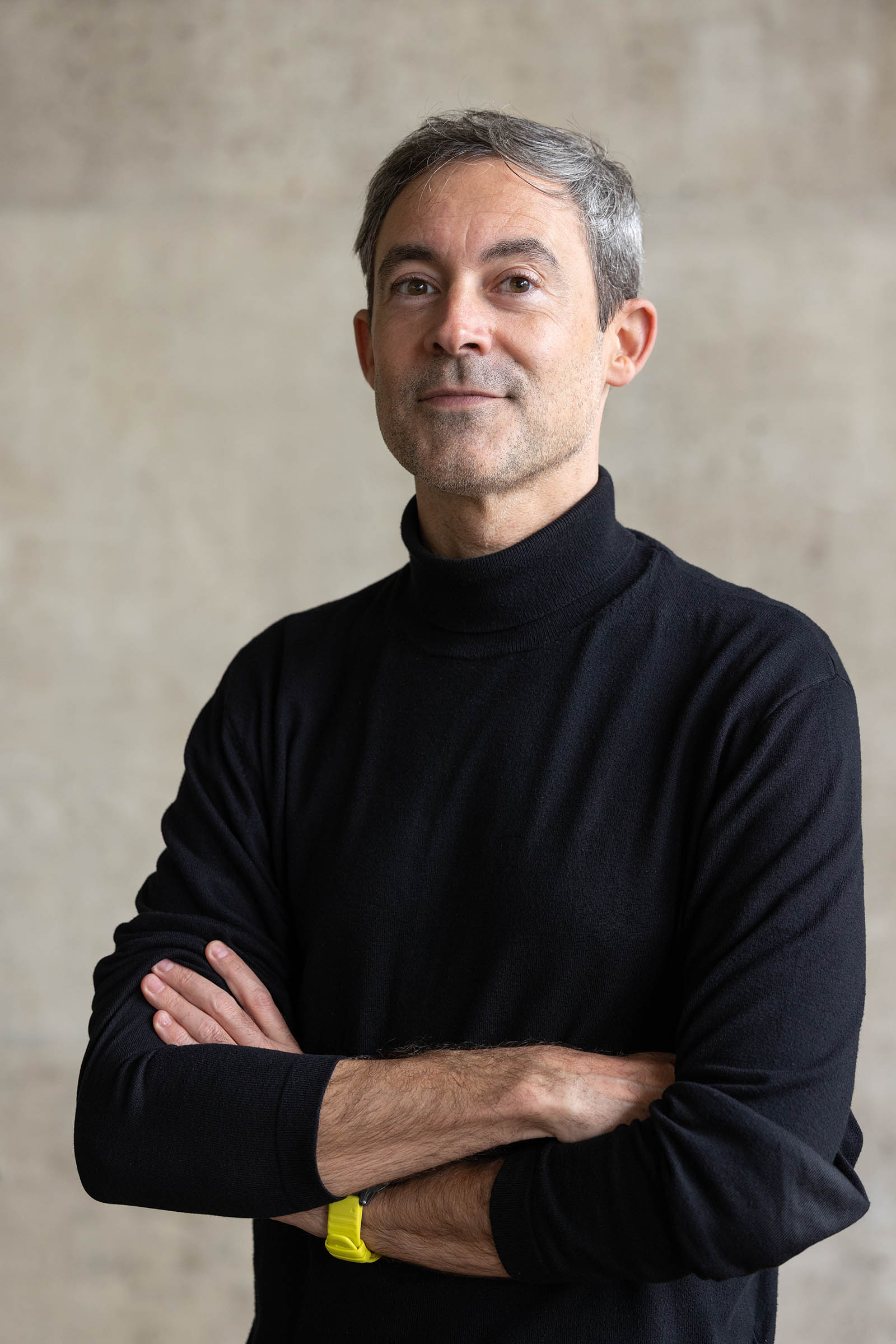
Dr. Hooman Foroughmand Araabi is a Senior Lecturer in Urban Planning and Design at the University of the West of England (UWE) , affiliated with the Faculty of Environment and Technology and the Department of Architecture and the Built Environment . His work bridges critical theory and creative urban design, focusing on the alignment of criticality and creativity to enhance public spaces. Research Interests: Urban design theory, inclusivity in the built environment, decolonising urbanism, beauty in urban design, and governance of design. He also explores urbanism in Iran and the Middle East, emphasizing sociopolitical frameworks and localized design knowledge. Publication Trends: His 15 most recent articles (2011–2025) highlight themes like urban design theory, critical methodologies, participatory design, and regional urbanism. Notably, he develops a Deleuzoguattarian approach for urban design and examines the ethics of beauty in public spaces.
Eric Firley is an Associate Professor at the University of Miami School of Architecture , specializing in urban design and planning. His work interrogates the evolution of design practices under climate change, market pressures, and urbanization trends. Current focus on climate resilience in heritage cities like Miami and Venice Editor of Wiley's Urban Handbook series Key themes: postwar urbanism critiques, professional mutations, and evidence-based planning His publications explore Miami's climatic vulnerabilities, Olympic legacy planning, and theoretical frameworks for adaptive urbanism. Collaborative projects with Victor Deupi emphasize interdisciplinary approaches to coastal city challenges. Scientific awards: No specific honors mentioned in the provided texts.
Jonathan Clarke is a Research Fellow at the University of Warwick's Department of Politics and International Studies, affiliated with the Resilient Cities Laboratory (ResCityLab). His work focuses on enhancing urban resilience through design, planning, and governance, particularly regarding critical infrastructure security and comparative international security arrangements. He contributed to major EU-funded projects like RESILENS (2015-2017) and HARMONISE (FP7), exploring resilience frameworks for critical infrastructure and adaptive governance strategies. His research integrates risk management with socio-political dynamics, emphasizing transformative practices in infrastructure resilience. Clarke is also a chartered landscape architect with professional experience in urban design, masterplanning, and environmental assessment. He serves as a design expert for MADE and an external tutor at the University of Sheffield's Landscape Department. Key publications include analyses of anthropocentric resilience politics, adaptive urban planning paradigms, and security-driven urban resilience strategies. His work bridges academic research with practical applications, advocating for holistic approaches to urban challenges in the Anthropocene.
Professor Richard Economakis is a faculty member at the University of Notre Dame School of Architecture , where he serves as Director of Architecture and Urbanism in the Graduate Program. He joined the faculty in 1996 and combines teaching with a private architectural practice, focusing on classical design and urbanism. Education: Undergraduate and graduate degrees from Cornell University , licensed architect in Greece. Research Interests: Architectural history and theory, classical architecture, urban design, and durability in construction. Design Practice includes projects in the U.S., Central America, and Europe, such as a runner-up design for Seaside, Florida's gateway and ongoing work on Seaside's Assembly Hall and Theater. He also contributed to Whitman College at Princeton University during a leave year (2002-2003) and collaborated on the masterplanned town of Cayalã in Guatemala , recognized with multiple awards. Key Publications include Durability in Construction (2015) and co-edited works like Building Classical and Acropolis Restoration . His research on the Doric Order has been widely presented. Awards and Recognition : Royal Institute of British Architects Book of the Month (July 2015) for Durability in Construction . Palladio Award (2013) for Civic Hall at Cayalã. Arthur Ross Award (2016) for civic design. International Making Cities Livable Award (2015). Acanthus Award (Chicago Midwest Chapter, ICAA, 2015). Academic Contributions include founding and co-organizing summer design programs in Greece and England, serving as Interim Director of Graduate Studies (1999-2000), and lecturing internationally at institutions like the University of Bologna and Princeton University.
Gregory D Bunch is an Adjunct Professor of Entrepreneurship at the University of Chicago Booth School of Business. With a diverse career spanning entrepreneurship, consulting, corporate board leadership, and public service, he brings extensive real-world experience to his academic role. He has advised Fortune 50 companies, family businesses, and startups, working with organizations like Abbott Labs, American Express, Harley-Davidson, and PepsiCo. Founder of Masterplan International Corporation (strategy consulting) Partner at Brandtrust (brand strategy consultancy) Co-founded a healthcare software startup in the Bay Area Served as alderman in West Chicago Education : Bachelor's in Philosophy from Wheaton College MDiv from Harvard University His research and teaching interests focus on entrepreneurship, corporate innovation, and strategic management in volatile environments. Current work explores intersections between AI-driven strategy, customer creation, and adaptive leadership frameworks. Recent publications analyze: Mythological parallels to modern entrepreneurship (e.g., Elon Musk as Odysseus) AI applications in strategic planning and operationalization Business leadership approaches under VUCA (Volatility, Uncertainty, Complexity, Ambiguity) conditions Greg teaches New Venture Strategy across multiple quarters through 2026, maintaining active engagement with Chicago Booth's academic programs.
Rachel Kerr is a Lecturer in Urban Design at the University of Manchester, based in the Department of Planning, Property and Environmental Management. She previously worked in international urban design consultancies such as Tetra Tech, AECOM, and WYG, specializing in town center regeneration and sustainable masterplanning. She serves on the leadership committee of the Manchester Urban Design Lab as Outreach Coordinator, bridging academia and industry. Her academic interests span urban design processes, digital technologies, design quality assessment, pedagogical methods, and the societal impact of urban design. She contributes to UN Sustainable Development Goals through sustainable built environment research. Teaching roles include Programme Director for the Urban Design and International Planning MSc, leading courses like Urban Design Studio and Masterplan Studio. Rachel actively engages with professional bodies, serving on the RTPI North-West Regional Activities Committee and Policy and Research Task Group. She has presented at high-profile events including the RTPI North-West Urban Design Training and Manchester Science Festival exhibitions.
Claudia Sinatra is a Lecturer at ETH Zürich’s Department of Civil, Environmental and Geomatic Engineering, affiliated with the Institute of Spatial and Landscape Development. She holds an MSc in City Design and Social Science from LSE and an MSc in Architecture from the University of Ferrara (Italy), with additional studies at the Technical University of Munich. Her work bridges urban design, sociology, and visual storytelling, focusing on socio-spatial justice, care-oriented urbanism, and intersectional feminist spatial practices. Since 2022, she has contributed to ETH’s Master’s program in Spatial Development and Infrastructure Systems, teaching the Urban Design Studio for Planners. Her professional experience includes roles at multidisciplinary firms in London and Zurich, leading urban analyses, masterplans, and public realm projects. She actively engages with gender equity in planning through memberships in organizations like Frau + SIA and LARES. Parallel to academia, she practices as an independent graphic designer, integrating visual narratives with urban research. Her research and teaching emphasize collaborative design processes and critical dialogue in complex urban transformations. Notable engagements include moderating panels on planetary urbanization and postcolonial climate discourse, as well as exhibiting projects like “Activism. Feminism. Care” at ETH Zürich.
Andreas Quednau is a full-time university professor of urban design at Leibniz University Hannover (since 2015), affiliated with the Institute for Design and Urban Planning under the Faculty of Architecture and Landscape. His academic career includes previous roles as full professor at the State Academy of Fine Arts Stuttgart (2009–2015) and research associate at TU Berlin (2005–2009/2008–2009). He co-founded SMAQ (Sabine Müller & Andreas Quednau), an architecture and urban design practice based in Berlin since 2005. Education: Diploma in Architecture (TU Berlin), Master's with Distinction in Advanced Architectural Design (Columbia University) Professional Experience: SMAQ (2001–present), Diller Scofidio + Renfro (NYC), KCAP (Rotterdam), Arata Isozaki (Berlin) Research focuses on molecular urbanism, climate-responsive design, sustainable infrastructure, and narrative-driven urban strategies. Notable projects include the Xeritown masterplan in Dubai and the Charter of Dubai manifesto. His work explores intersections between ecology, technology, and cultural narratives in urban systems. Key awards include the Holcim Award for Sustainable Construction and Architectural Review Award for Emerging Architects. His theoretical contributions are showcased in books like Charter of Dubai (2012) and Giraffes, Telegraphes, and Hero of Alexandria (2016). Teaching and research emphasize: Integration of design, ecology, and technology Critical urban transformation in global contexts Climate-adaptive urban systems Labs/Teams: SMAQ practice integrates academic research with professional projects, focusing on urban design innovations that balance ecological imperatives with cultural narratives.
Anne Marie Kanstrup is a **Professor** and **Pro-rector** at **Aalborg University**, affiliated with the *Faculty of Social Sciences and Humanities* and the *Department of Culture and Learning*. Her research focuses on participatory design, assistive technology, and inclusive digital solutions for vulnerable populations, such as individuals with cognitive disabilities or severe physical impairments. She leads or participates in high-impact projects like the *Center for Rehabilitation Robotics*, developing exoskeletons and assistive technologies for severely disabled individuals. Her work emphasizes user involvement and interdisciplinary collaboration, addressing challenges in healthcare, education, and technology design. Key research themes include participatory design methodologies, digital coping strategies for youth with disabilities, and mobile health (mHealth) applications for chronic disease management. Her recent publications explore topics like exoskeleton usability, digital inclusion of disabled youth, and shared decision-making in healthcare. As Pro-rector, she drives initiatives such as the *PBL Digital Masterplan* to integrate digital learning tools into university education. Her activities include organizing workshops on creativity in technology design and advising on policies for health informatics and academic innovation. Notable projects include user-centered development of the EXOTIC exoskeleton and collaborative studies on mHealth applications for adolescents with knee pain. Her work bridges academic research with practical implementation, emphasizing societal impact and user empowerment.
Tom Holberton is an Associate Professor (Teaching) at The Bartlett School of Architecture, University College London, where he also completed his BSc, DipArch, and MArch degrees. A chartered architect (RIBA ARB) with over ten years of research and teaching experience at UCL's Unit 21, he leads innovative design pedagogy integrating artificial intelligence and computational techniques. His educational background includes: BSc in Architecture from the Bartlett School of Architecture DipArch from the Bartlett School of Architecture MArch from the Bartlett School of Architecture His research pioneers the application of artificial intelligence within architectural design, specifically investigating the latent space of deep-learning models as a novel design medium. This work examines historical computational design paradigms alongside emerging technologies including Generative Adversarial Networks (GAN), Large Language Models (LLM), and crossmodal systems like DALL-E and Midjourney, critically assessing their impact on design agency and creative processes. Analysis of his 94+ publications reveals consistent thematic threads: integration of Japanese cultural elements with Western design practices, sustainable urban interventions in London, and experimental applications of AI in architectural representation. His projects frequently bridge heritage preservation with technological innovation, particularly in exhibitions and public space transformations. His distinguished awards include: RIBA Bronze Medal RIBA Sergeant Award for Excellence in Drawing RIBA Skidmore Owings Merrill Foundation Scholarship Victor Chu Prize Hamilton Prize Faculty Medal As an educator, Holberton serves as Design Unit Tutor for both BSc (UG21) and MArch (PG21) Architecture programmes, Practice Tutor for Design Realisation, and Technical Thesis Tutor. Since 2020, he co-pioneered a vertical teaching model integrating four academic years. His research attracts Arts Council funding for Japanese craft-AI collaborations and additive manufacturing partnerships, with projects featured in Monocle, Wallpaper, and Japanese national media. He founded the research studio SoHoKo (2013) specializing in AI-driven installations and exhibitions for institutions including the Victoria and Albert Museum, British Museum, and Japan House London. As a member of UCL's AI in Education working group, he investigates AI's pedagogical implications while serving as D&AD Awards advisor and judge.
Pablo Pérez-Ramos is an Associate Professor of Landscape Architecture at the Harvard Graduate School of Design (GSD), where he coordinates the first-semester Landscape Architecture Core Studio. He holds a Doctor of Design and Master in Landscape Architecture from the GSD and is a licensed architect from the Escuela Técnica Superior de Arquitectura de Madrid (ETSAM). His research explores the intersection of design, natural sciences, and environmental humanities, focusing on ecological narratives, thermodynamics, and agroecological practices in arid regions like the Maghreb, India, Peru, and Mexico. Education: Doctor of Design (GSD), Master in Landscape Architecture (GSD), Licensed Architect (ETSAM). Research interests include formal tensions between human technology and natural processes, climate adaptation strategies, and the philosophy of science. He has coordinated urban planning initiatives, such as the 2025 Masterplan for Quito, and taught at Northeastern University and the Boston Architectural College. His work is funded by institutions like the David Rockefeller Center for Latin American Studies and the Harvard Center for Green Buildings and Cities. Publications include edited volumes like New Geographies 08: Island (2016) and contributions to journals such as the Journal of Landscape Architecture and International Journal of Islamic Architecture . Exhibitions curated include The Oasis Loop: Vernacular Agricultural Landscapes in Arid Conditions .
Malkit Shoshan is a Design Critic in Urban Planning and Design at Harvard University’s Graduate School of Design (GSD) and the founder/director of FAST (Foundation for Achieving Seamless Territory), a think tank investigating architecture’s role in conflict zones and human rights. She holds concurrent roles as an international scholar at NYU’s Institute for Public Knowledge and a PhD fellow at Delft University of Technology. Shoshan’s work bridges research, advocacy, and design to expose systemic spatial violence in conflict areas, particularly Israel-Palestine. Education: Bachelor of Architecture from Technion – Israel Institute of Technology Master of Architecture from IUAV University of Venice PhD Candidate, Delft University of Technology Research Focus: Shoshan explores the intersection of architecture, urban planning, and human rights in conflict regions. Her award-winning Atlas of Conflict: Israel-Palestine (2010) maps territorial shifts and resource distribution. Recent projects include BLUE: The Architecture of UN Peacekeeping Missions (2023) analyzing UN peacekeeping’s material footprint and Border Ecologies (2021), awarded the Venice Biennale Silver Lion. Awards: Silver Lion at Venice Architecture Biennale (2021) Finalist for Harvard GSD Wheelwright Prize (2014) Pedagogy: As Area Head of Art, Design, and the Public Domain MDes program at GSD, she emphasizes critical spatial practice, systemic inequality, and community engagement. Courses include Spatial Design Strategies for Climate- and Conflict-Induced Migration and Interdisciplinary Art and Design Practices . Labs/Teams: FAST collaborates with international institutions, NGOs, and communities to produce exhibitions (e.g., UN Headquarters NYC, Venice Biennale) and policy interventions. Current projects address UN peacekeeping’s environmental legacy and Gaza Strip border ecologies.
Professor Kayvan Karimi is a leading academic and practitioner in urban analytics and spatial design at University College London (UCL), holding the position of Professor of Urban Analytics and Spatial Design at the Bartlett School of Architecture. He directs the MSc and MRes programmes in Space Syntax: Architecture and Cities and serves as a director of Space Syntax Limited, a UCL spin-off company. With over 30 years of experience, he bridges academic research and professional practice in urban design, planning, and architecture. Education: PhD, University College London, 1998 Research Interests: His work focuses on spatial-configurational analysis, urban morphology, strategic planning, transport networks, urban regeneration, and evidence-based design methodologies. He explores macro-scale city planning down to micro-scale public space design, emphasizing the integration of theory and practice. Current projects include studies on waterway impacts, participatory design tools, and urban growth patterns in cities like Dar es Salaam and Amsterdam. He also investigates the socio-economic implications of urban spatial structures, such as housing market dynamics. Professional Contributions: He advises on global urban projects and collaborates with institutions worldwide. His work with Space Syntax Limited applies UCL research to real-world design challenges, including masterplanning and heritage conservation. He pioneered lightweight national-scale spatial models for EU contexts and developed methodologies to assess urban resilience post-disasters. Labs & Teams: He leads the Space Syntax Laboratory at UCL, a hub for analytical urban design research. The lab’s interdisciplinary approach combines spatial analysis, agent-based modeling, and geospatial data to address urban challenges.
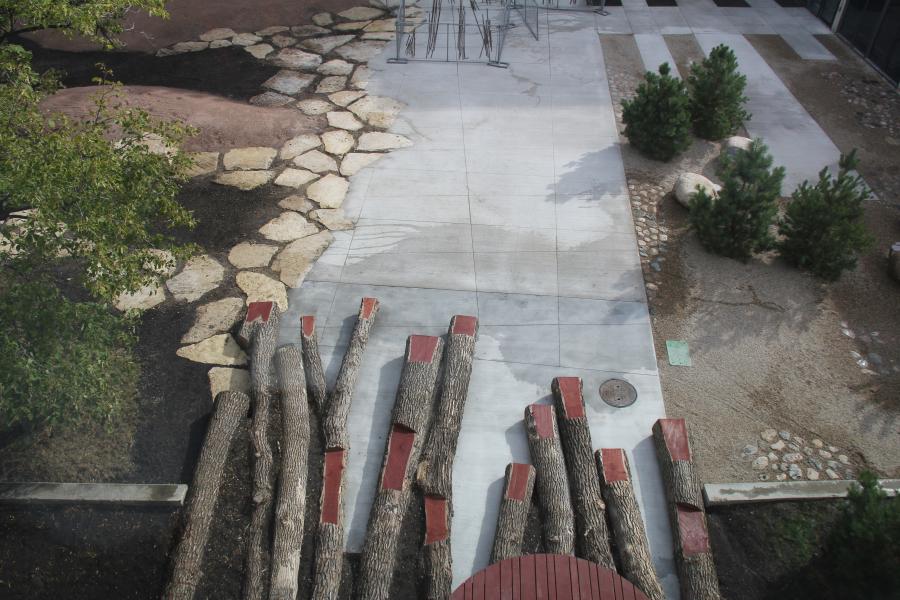
Professor Dietmar Straub is a leading landscape architect and educator at the University of Manitoba's Faculty of Architecture. He holds the rank of Professor in the Department of Landscape Architecture, specializing in sustainable design, ecological rehabilitation, and community-engaged scholarship. His work bridges academia and practice, emphasizing improvisation, recycling, and interdisciplinary collaboration. Education : Diplom-Ingenieur (Master’s equivalent) in Landscape Architecture, Technical University of Munich Certification in Vocational Education and Training (pedagogy/educational psychology) Landscape Gardener Journeyman’s Certificate Research & Practice : Straub’s research, often conducted through 'Research by Design,' focuses on gardens as experimental spaces, traumatized landscapes, and water management in prairie contexts. Key projects include the award-winning Chenshan Botanic Garden (Shanghai) and the Science Courtyard at the University of Manitoba, which integrates native plantings, geological storytelling, and biodiversity. Teaching : He teaches design studios and site planning, emphasizing hands-on learning through projects like tree-pit construction and community planting initiatives. His approach narrows the gap between theory and practice, fostering student engagement with material processes and ecological systems. Awards : Over three dozen national/international awards highlight his contributions to sustainable design, including the 2024 LILA Award for the Science Courtyard and the 2023 Indigenous Initiatives Fund grant for the Shared Path project with Lake Manitoba First Nation. Community Work : Straub collaborates with underserved communities (e.g., Folly Forest in Winnipeg) to create spaces that blend ecological resilience with cultural relevance. His practice often involves pro bono work, prioritizing social impact over commercial gain.