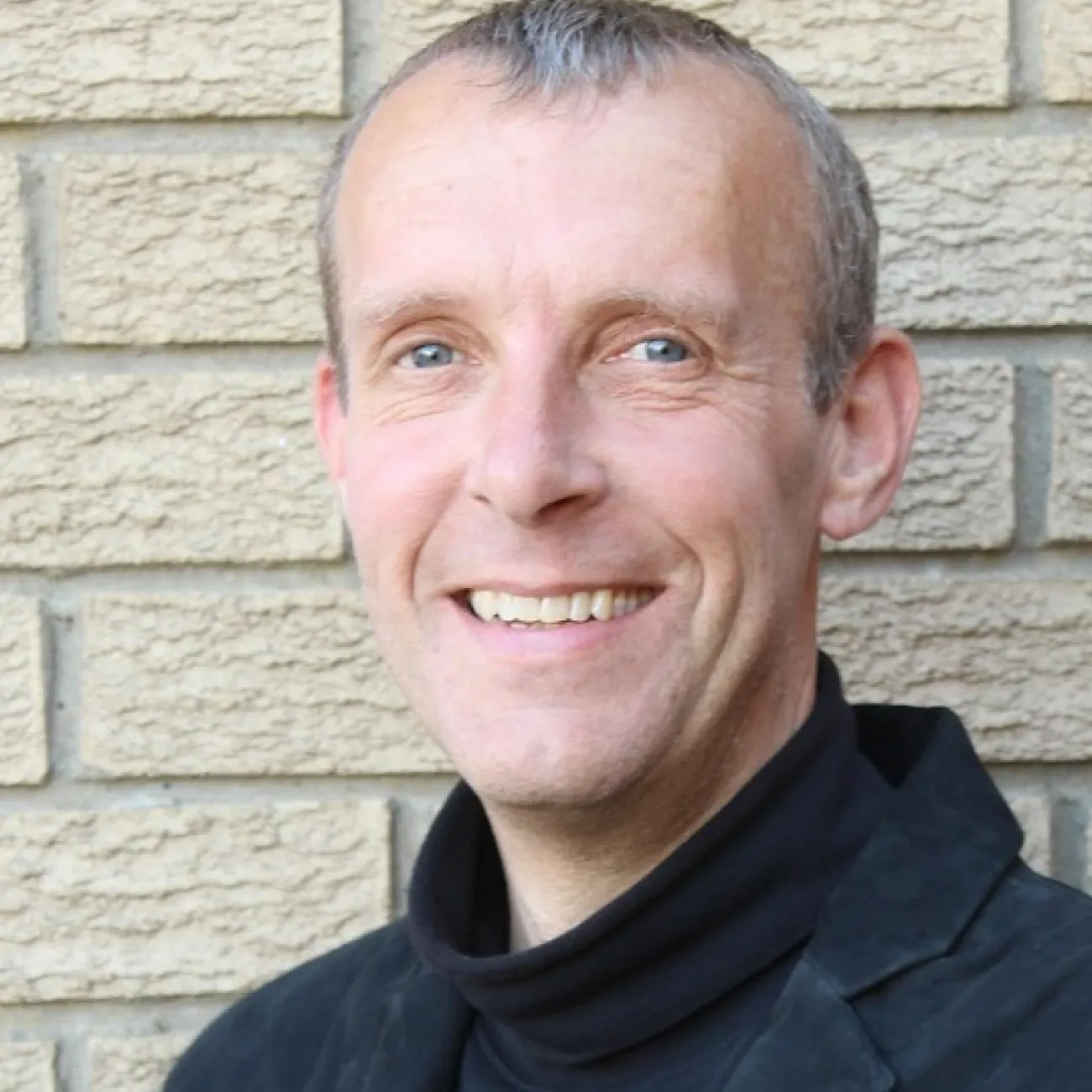
Christopher R. Knittel is the George P. Shultz Professor of Energy Economics and Professor of Applied Economics at the Massachusetts Institute of Technology (MIT) Sloan School of Management . He serves as Director of MIT’s Center for Energy and Environmental Policy Research (CEEPR), Director of the MIT Climate Policy Center, and Deputy Director for Policy at the MIT Energy Initiative (MITEI). PhD, University of California, Berkeley (1999) M.A., University of California, Davis (1996) B.A., California State University, Stanislaus (1994) His research focuses on energy economics, environmental policy, and machine learning applications in energy systems. He leads interdisciplinary initiatives like the Climate Action Through Education program for high schools and co-directs the E2e Project with UC Berkeley and University of Chicago. Recent publications analyze data center energy dynamics, hydrogen technologies, Russian oil sanctions, and transportation policy reforms. His work emphasizes policy cost-effectiveness, emissions equity, and energy market responses to regulation.
Associate Professor Madeline Taylor is an Australian Research Council (ARC) Early Career Industry Fellow at Macquarie Law School and Co-Lead of the Energy, Communities, and Market Regulation Stream at the Transforming Energy Markets Research Centre. She specializes in socio-legal aspects of energy transition, focusing on regulatory frameworks, energy justice, and land-use conflicts between energy developers and communities. Her work bridges property law, commercial law, and comparative law to address challenges in renewable energy integration and resource governance. Affiliations: Honorary Associate at Sydney Environment Institute, Member of Sydney Institute of Agriculture Industry Partners: NSW Department of Primary Industries and Spark Renewables (FAARM Project) Research Interests: Energy law and policy, agricultural-legal synergies, renewable energy siting, and just transition principles. She co-edits the Oil, Gas and Energy Law Journal and contributes to the LexisNexis Energy and Resources Law in Australia . Recent Articles Highlight Key Themes: Offshore wind governance, agrivoltaics regulatory systems, hydrogen licensing, and energy justice frameworks. These works emphasize interdisciplinary approaches to balancing economic, environmental, and social dimensions of energy transitions. Awards: 2023 Lawyers Weekly Women in Law Academic/Researcher of the Year, 2024 AFR Higher Education Awards Finalist, Clean Energy Council Transformational Leadership Scholarship Teaching and Engagement: Embeds climate justice in commercial law education; advises governments and NGOs on energy policy. Active in RE-Alliance Management Committee and IUCN Climate Change Law initiatives.
Dr. Harry T. Conway is the Alternate Permanent Representative of Liberia and Chair of the Marine Environment Protection Committee (MEPC) at the International Maritime Organization (IMO). He leads global maritime environmental policy initiatives, including the 2023 IMO GHG Strategy. His academic affiliations include guest lecturing at the International Maritime Law Institute's special course on marine environmental protection and opposing a WMU PhD candidate's thesis. Education: PhD in Politics and International Relations (Cardiff University, UK), MA (Distinction) in International Maritime Policy (University of Greenwich, UK), and MBA (Hanze University of Applied Sciences, Netherlands). His research focuses on environmental politics, with emphasis on climate agreements and maritime decarbonization. Professional Experience: Policy Officer and Officer-in-Charge of Liberia's IMO Permanent Mission (2012–present), Chief of Staff at Liberia Maritime Authority (pre-2012), and finance roles in Liberian banking institutions. He contributed to the 2050 Africa Integrated Maritime Strategy for the African Union and serves on the International Quality Assessment Review Body (IQARB). Publications include contributions to 'The African Union and the Law of the Sea' and peer-reviewed articles on maritime innovation and decarbonization. He frequently speaks at international shipping conferences and advises on maritime regulatory frameworks.
Arjan F. Kirkels is an Assistant Professor and University Lecturer in the Department of Technology, Innovation & Society within the School of Industrial Engineering and Innovation Sciences at Eindhoven University of Technology (TU/e). His work focuses on sustainability assessments, decision-making in transitions, and interdisciplinary education for sustainable innovation. His research interests include Life Cycle Assessment (LCA), Multi-Criteria Assessment (MCA), sustainability transitions, industrial ecology, and systems engineering. He applies these to emerging technologies such as batteries, hydrogen systems, and heat pumps, with a strong emphasis on integrating stakeholder values and addressing deep uncertainties in sustainability decisions. The recent articles highlight a consistent focus on assessing emerging technologies, particularly in renewable energy and circular economy applications. Trends include prospective LCA, experience curves in solar technology, socio-technical impact assessment, and educational innovations in sustainability. His work bridges technical analysis with social and governance dimensions of sustainability transitions. Best Teacher Award, 1st year Bachelor Sustainable Innovation, for course 0SV20 'Industrial Ecology' (2013) Best Teacher Award, 1st year Bachelor Sustainable Innovation, for course 0SV20 'Industrial Ecology' (2018) Best Teacher Award, 1st year Bachelor Sustainable Innovation, for course 0SV20 'Industrial Ecology' (2020) Educational award nomination, bachelor Sustainable Innovation, course 0SK30 Inter-University Sustainability Challenge (2023) Education Award 2024 - master Innovation Sciences (2025) Arjan F. Kirkels has supervised over 100 thesis students and more than 100 interdisciplinary student groups. He has developed and taught over 20 courses and co-authored 4 textbooks and 7 publications on educational innovation. He is currently supervising four researchers: Huiying Liu, Prapti Maharjan, Rishi Bhatnagar, and Seyed Mousavi. His research is supported by projects such as the EU-funded cVPP (Community-based Virtual Power Plant) and studies on Dutch sustainability transitions. He is actively involved in educational initiatives, including MOOC development and challenge-based learning, and contributes to public discourse through media appearances and workshops on sustainability education and systems thinking.
Yueh-Lin (Lynn) Loo is the Theodora D. '78 and William H. Walton III '74 Professor in Engineering and Professor of Chemical and Biological Engineering at Princeton University. She holds affiliated roles in the Andlinger Center for Energy and the Environment, Department of Chemistry, Department of Electrical Engineering, Princeton Environmental Institute, and Princeton Materials Institute. Her research focuses on organic and polymer electronics, with emphasis on solution-processable materials, soft lithography, and interfacial engineering in solar cells. She has pioneered innovations in organic electronics fabrication and scalable energy technologies. Education: Ph.D. in Chemical Engineering from Princeton University (2001); BSE in Materials Science and Engineering and Chemical Engineering from the University of Pennsylvania (1996). Research Interests: - Solution-processable organic conductors for thin-film electronics - Soft lithography techniques for patterning plastic electronics - Self-assembled monolayers for optimizing organic solar cell interfaces - Development of cost-effective, large-area electronic device fabrication methods Her articles span organic semiconductor material design, device fabrication techniques, and energy applications. Awards include Fellowships from the National Academy of Engineering, American Institute of Chemical Engineers, and multiple industry recognitions for innovation in materials science and clean energy. Advises graduate students in chemical engineering and materials science. Leads the Organic and Polymer Electronics Laboratory, advancing research in decarbonization technologies and maritime energy solutions. Current projects include smart solar spectrum management systems and recyclable plastic electronics.
Henri van Soest is a Professor of Policy Analysis at the RAND School of Public Policy and a Senior Analyst at RAND Europe. He is based at RAND, a global policy research organization, where he leads studies on energy security, artificial intelligence governance, critical infrastructure protection, and European Union policy. His work supports key institutions including the European Union, UK government, and Dutch government. His research focuses on the intersection of technology and policy, particularly in energy systems and AI. Key areas include: AI governance and trustworthy AI tools Energy security and digitalisation of the power grid Critical undersea infrastructure protection Cybersecurity in energy systems Space technology regulation Societal resilience and national security The trend in his recent publications shows a growing emphasis on the dual-use nature of AI in critical infrastructure, balancing innovation with security and resilience. His work combines technical analysis with policy recommendations, often using modeling and expert elicitation. Much of his research addresses transatlantic and European policy challenges, especially in energy and security domains. Scientific contributions and policy impact are evident through frequent publications and expert submissions to governmental bodies. Notable outputs include evidence submissions to the UK Parliament and reports for the U.S. Department of Energy. While no formal awards are listed, his influence is reflected in high-level policy engagement. He has advised on grants and policy studies involving global teams, particularly in energy transition, AI infrastructure, and resilience planning. His prior experience includes energy policy research at the University of Oslo, cleantech analysis, and corporate governance in banking. He holds a Ph.D. from the University of Cambridge and a joint LL.M. from KU Leuven and the University of Zurich. Henri van Soest leads research within RAND Europe’s multidisciplinary teams focusing on science, technology, and security policy. His work often involves collaboration across international experts and institutions, particularly on EU and NATO-related security issues. He contributes to projects involving horizon scanning, Delphi studies, and quantitative modeling in policy contexts.
Massimo Figari is a Full Professor at the University of Genoa , affiliated with the Department of Naval, Electrical, Electronic, and Telecommunications Engineering (DITEN) . He serves as the Course Coordinator for the Maritime Science and Technology course and teaches a range of subjects including naval systems reliability, military ship design, and maritime economics. His research spans naval architecture , maritime safety , autonomous shipping , and decarbonization technologies . He is actively involved in developing battery energy storage systems for naval applications, certification frameworks for autonomous ships, and simulation-based training for maritime education. His work emphasizes sustainability, safety, and innovation in marine engineering. Recent publications reflect a strong focus on emission reduction , alternative marine fuels like methanol, and autonomous navigation systems . These contributions position him at the forefront of maritime engineering research and education. Contact: He is available via email at massimo.figari@unige.it and holds office hours on Fridays from 4–5 PM at Villa Cambiaso, Office No. 322.
Amanda Giang serves as Assistant Professor at the University of British Columbia's Faculty of Applied Science, Department of Mechanical Engineering, holding a Canada Research Chair in Environmental Modelling for Policy. She maintains a joint appointment with the Institute for Resources, Environment and Sustainability (IRES). Her educational background includes a B.A.Sc. from the University of Toronto, followed by M.S. and Ph.D. degrees from MIT, with postdoctoral training at MIT and Harvard. Dr. Giang's research employs interdisciplinary approaches to develop modeling tools for environmental policy analysis, focusing on pollution assessment, environmental injustice, and the intersection of air quality, decarbonization, and equity. Her work emphasizes action-oriented partnerships with community organizations and government health/environment agencies. Current projects address freight transport decarbonization equity, cumulative impact assessment methodologies for overburdened communities, and holistic environmental impact evaluation in technology design. Her recent publications demonstrate expertise across environmental modeling, policy analysis, and justice frameworks, with significant contributions to understanding spatial inequities in environmental risk distribution and developing community-engaged research methodologies. UBC Killam Research Prize, 2023 Dr. Giang actively collaborates with community groups and government authorities through her LEAP (Learning, Environmental Assessment, and Policy) research group. Her work integrates technical modeling with real-world policy applications, particularly in urban environmental planning contexts where equity considerations are paramount. She has developed innovative frameworks for cumulative impact assessment and environmental justice analysis that directly inform regulatory decision-making processes. Her research laboratory focuses on developing open-source modeling tools for environmental policy analysis while maintaining strong community partnerships that ensure research addresses pressing local environmental justice concerns.
Dr. Jason Monios is a Senior Professor of Maritime Logistics at Kedge Business School in Marseille, France, specializing in operations, supply chain, and information management. His work focuses on the intersection of maritime transport, logistics, and environmental sustainability. Professor Monios' research spans three primary domains: Maritime Transport: Focusing on port system evolution, collaboration in port hinterlands, port governance and policy, and institutional frameworks Multimodal Transport: Examining multimodal corridors, dry ports, development of multimodal terminals, and urban logistics strategies Sustainability: Addressing maritime sustainability, decarbonization policies, green ports, climate change adaptation, and electric/autonomous vehicle integration His recent publications (2022-2025) demonstrate a strong focus on climate change adaptation in port governance, decarbonization of maritime transport, and innovative logistics solutions like urban consolidation centers. His work increasingly examines the intersection of environmental policy, technological innovation, and institutional frameworks in global shipping and logistics. Notable awards and recognitions include: Ranked in the top 2% of logistics researchers worldwide by Stanford/Elsevier (2021 and 2022) Research on climate change adaptation cited in the IPCC report (2022) Professor Monios has led research projects with a total budget exceeding €1 million and has supervised numerous doctoral theses. His work extends beyond academia through collaborations with national and regional transport authorities and technical reports for international organizations including UNCTAD, UN-ECLAC, and the World Bank.
Professor Alan J Murphy is a leading academic in Maritime Engineering at the University of Southampton. He holds a First-Class BEng in Naval Architecture and a PhD in Experimental Hydrodynamics. His research focuses on decarbonizing maritime systems, emission reduction, and sustainable propulsion technologies. He has held leadership roles including Head of the Marine, Offshore and Subsea Technology Group at Newcastle University and is currently Editor-in-Chief of the International Journal of Maritime Engineering. Education: BEng Naval Architecture (Newcastle University), PhD Experimental Hydrodynamics (University of Southampton) Affiliations: Royal Institution of Naval Architects Fellow, Worshipful Company of Shipwrights Liveryman Research interests include net-zero maritime propulsion, energy efficiency, and policy/regulation for sustainable shipping. He has supervised numerous PhD students and contributed to major projects such as the establishment of Newcastle University’s Singapore campus. Publications span topics like electrified port systems, alternative marine fuels, and underwater vehicle navigation. Awards include the Stanley Grey Fellowship and Froude Scholarship.
Professor Ingrid Bouwer Utne is a faculty member at the Department of Marine Engineering, Norwegian University of Science and Technology (NTNU). Her primary research focuses on risk analyses of ships, marine systems, and autonomy, with emphasis on operational safety, maintenance management, and risk control in autonomous maritime technologies. Key Projects: Leader of the Risk Group at NTNU, involved in the SFI Autoship initiative and ERC AdG BREACH project addressing risk-based rationality in autonomous systems. Research Interests: Autonomous systems design, probabilistic risk assessment, safety engineering, and risk-informed decision-making for marine operations. Grants & Funding: Secured funding from the Research Council of Norway, MAROFF, and industry partners for projects like ORCAS (Online Risk Management for Autonomous Ships) and UNLOCK (Supervisory Risk Control). She supervises numerous PhD students and postdocs, focusing on topics such as autonomous vessel navigation, risk modeling for underwater robotics, and decarbonization of maritime systems. Her work bridges theoretical risk analysis with practical applications in marine autonomy and safety systems.
Børge Rokseth is an Associate Professor at the Department of Engineering Cybernetics, Norwegian University of Science and Technology (NTNU). His work focuses on maritime systems, autonomous vessel control, and safety verification. He actively supervises Master's students and contributes to research on risk-informed control systems, hybrid power systems, and systems-theoretic process analysis (STPA). Research Interests: Rokseth's research spans autonomous ship systems, dynamic risk assessment, and safety verification. He explores risk-based decision-making for maritime autonomy, hazard identification in hybrid propulsion systems, and control function allocation in dynamic positioning. His work integrates systems theory, machine learning, and regulatory compliance (e.g., COLREGS) to enhance safety and environmental performance in marine operations. Publications: His recent work includes probabilistic trajectory prediction frameworks for autonomous ships, STPA-based safety analyses, and studies on decarbonization barriers in the maritime industry. These publications emphasize risk modeling, systems-theoretic approaches, and simulation-based verification. Teaching: Rokseth teaches courses such as TTK4130 - Modelling and Simulation, contributing to the education of future engineers and researchers in cybernetics and maritime systems.
Dr Stathis Tingas is a Lecturer at Edinburgh Napier University's School of Computing Engineering and the Built Environment. His research focuses on hydrogen fuel systems, combustion engineering, and sustainable transportation technologies. With numerous publications in high-impact journals and conference proceedings, Dr Tingas has established himself as a significant contributor to the field of alternative energy systems. Dr Tingas' research interests center on hydrogen and ammonia as alternative fuels for transportation, with particular emphasis on combustion characteristics, engine performance, and emissions control. His work spans theoretical modeling, computational analysis, and practical applications for decarbonizing various transportation sectors including aviation, heavy-duty vehicles, and maritime transport. Recent publications demonstrate his focus on hybrid propulsion systems combining fuel cells with traditional engine technologies. Dr Tingas' publication record shows consistent productivity with research outputs spanning from fundamental combustion science to applied engineering solutions. His work often employs computational singular perturbation techniques for analyzing complex combustion phenomena, with recent focus shifting toward practical applications of hydrogen and ammonia fuels in real-world engine systems. The trend in his publications indicates growing emphasis on zero-emission transportation solutions aligned with net-zero targets. Dr Tingas serves as a second supervisor for PhD students, including Richard Wallace who is working on subsurface hydrogen storage simulation. He has successfully secured multiple research grants from UK government bodies including the Department for Science, Innovation & Technology, Scottish Government, and the Royal Society of Edinburgh, with projects totaling over £500,000 in funding. His current research portfolio includes projects focused on accelerating clean energy technology development, creating sustainable cities, advancing electromobility, and developing zero-carbon hydrogen engines for heavy transport applications. These projects demonstrate his commitment to addressing practical challenges in the transition to sustainable energy systems.
Professor Anna Korre is a leading academic in Environmental Engineering at Imperial College London's Faculty of Engineering. She serves as Associate Provost (Sustainability) and held the role of Co-Director of Energy Futures Lab (2018-2024). Her primary affiliation is with the Department of Earth Science & Engineering, where she leads the Minerals, Energy and Environmental Engineering Research Group. Her research focuses on risk modeling, environmental impact assessments, and engineering solutions for sustainable resource production and decarbonization. Key areas include carbon capture and storage (CCS), geothermal energy, and life cycle analysis of industrial systems. Affiliations: Energy Futures Lab, Institute for Molecular Science & Engineering, Minerals, Energy and Environmental Engineering Group Committee Roles: Chair of Earth Science & Engineering Sustainability Committee, member of University Sustainability Strategy Committee Her work integrates computational modeling, artificial intelligence, and multi-disciplinary collaboration to address global energy challenges. Over 150+ peer-reviewed publications and high-impact projects funded by UKRI, EU, and industry partners demonstrate her leadership in advancing sustainable technologies. She has appeared in media including BBC's The Life Scientific podcast discussing carbon capture innovations. Research highlights include optimizing CO2 storage networks, assessing geothermal reservoir risks, and evaluating lithium production sustainability. She champions industry-academia partnerships to translate research into real-world decarbonization solutions.
Professor Julia Race is a leading academic in the Department of Naval Architecture, Ocean and Marine Engineering at the University of Strathclyde’s Faculty of Engineering, where she also serves as Vice Dean (Academic). Her research focuses on the role of pipeline infrastructure in achieving net-zero emissions, particularly through carbon dioxide transport for Carbon Capture and Storage (CCS) and hydrogen energy systems. PhD, University of Cambridge – Carbon diffusion across dissimilar steel welds (1992) BEng, University of Sheffield (1989) Her research interests center on the adaptation of energy infrastructure for decarbonization, combining engineering, risk assessment, and socio-economic analysis. She investigates material specifications for CO₂ and H₂ pipelines, quantitative risk assessments, hydraulic design, and the wider economic impacts of energy transitions. Her work is closely tied to UN Sustainable Development Goals, particularly those related to climate action and sustainable industry. The recent publications reflect a strong trend toward interdisciplinary research at the intersection of engineering, economics, and policy. Her work increasingly emphasizes the socio-economic dimensions of decarbonization, including employment impacts, labour supply constraints, and regional economic benefits of CCS and hydrogen infrastructure. There is a clear focus on UK industrial clusters and the role of Scottish CO₂ transport systems in national and international markets. Julia Race has contributed to several policy briefings and collaborative reports with key stakeholders including the Scottish Government, OEUK, and Storegga. She is actively engaged in research projects funded by EPSRC, NERC, and the British Council, focusing on early-career development, maritime decarbonisation, and engineering education equity. Co-investigator, Strathclyde Engineering Scholars – Equal Outcomes for the Most Disadvantaged (2025) Principal Investigator, EPSRC/NERC CDT in Offshore Renewable Energy (IDCORE 2) (2019–2028) Co-investigator, Empowering Early Career Researchers to Advance Maritime Decarbonisation in Indonesia (2024–2026) Co-investigator, Green Hydrogen Integration at Sullom Voe (2023–2024) She plays a key role in policy outreach and professional engagement, regularly participating in workshops and meetings with government and industry stakeholders. Her leadership extends to diversity and inclusion in engineering education, where she contributes to initiatives aimed at supporting disadvantaged students.