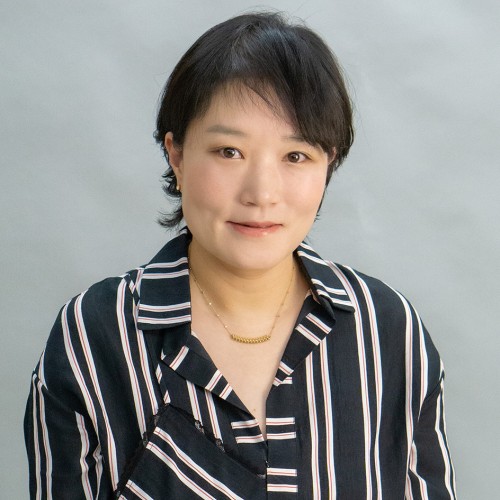
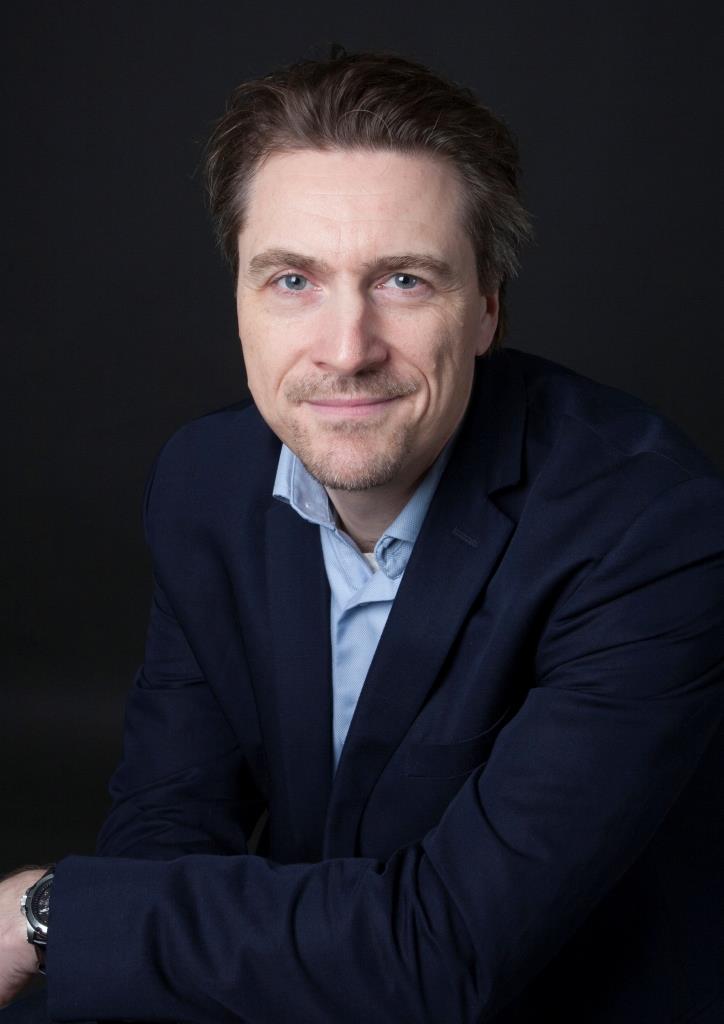
Brent Wood is a Sessional Lecturer III in the Department of English and Drama at the University of Toronto Mississauga, specializing in poetry and poetics, Canadian literature, North American musical literature, poetry in performance, and tragedy. He teaches courses including Reading Poetry, Canadian Poetry, Creative Writing, and specialized topics on Leonard Cohen and Myth in Crisis. Wood's research interests span Canadian poetry criticism and Grateful Dead musicology. His work examines poetic techniques, rhythmic dynamics, and thematic elements across traditional Canadian poetry and rock music lyrics. He focuses on the intersection of literary analysis and musical performance, particularly in countercultural contexts. His publications reveal a consistent exploration of rhythmic complexity and thematic depth, moving between Canadian literary figures like Margaret Avison, Gwendolyn MacEwen, and Don McKay, and the lyrical innovations of the Grateful Dead. The recurring theme across his work is the examination of how artistic expression navigates between tradition and innovation, structure and freedom. Wood has authored the book The Tragic Odes of Jerry Garcia and the Grateful Dead: Mystery Dances in the Magic Theater (Routledge 2020) and co-edited Listening for the Heartbeat of Being: the Arts of Robert Bringhurst (McGill-Queens University Press 2015), demonstrating his commitment to interdisciplinary scholarship that bridges literary and musical analysis.
Naoki Kimata is an Assistant Professor (non-tenure-track) in the Graduate School of Advanced Science and Engineering at Waseda University, where he has been employed since September 2024. His research focuses on photoreceptor biochemistry and G protein-coupled receptor (GPCR) activation mechanisms, particularly investigating structural changes in rhodopsin using advanced spectroscopic techniques. Kimata's research explores fundamental mechanisms in photobiology and cellular signaling, with specific interests in: Structural dynamics of rhodopsin activation pathways GPCR signal transduction mechanisms Photoreceptor protein function (including OPN4) Solid-state NMR applications in membrane protein studies Retinal chromophore interactions His publication record demonstrates consistent focus on rhodopsin activation mechanisms using structural biology approaches, particularly solid-state NMR spectroscopy to analyze conformational changes in G protein-coupled receptors. Recent work investigates non-visual light response systems in retinal ganglion cells. Kimata has secured multiple competitive grants including: JSPS Grant-in-Aid for Scientific Research (2022-2025): Analysis of non-visual photoresponse mechanisms JSPS Early-Career Scientists Grant (2019-2022): OPN4 photoreceptor activation mechanisms JSPS Research Activity Start-up Grant (2018-2020) He teaches undergraduate laboratory courses and graduate seminars in molecular biosciences, and supervises thesis projects in biological sciences.
Koji Toba is a Professor at Waseda University's Faculty of Letters, Arts and Sciences, School of Humanities and Social Sciences, specializing in Japanese literature. He holds a Ph.D. in Literature from Waseda University (2005), an MA in Literature (1996), and a BA from Hokkaido University (1991). His career includes positions as Associate Professor at the University of Tokushima (2004–2011) and visiting scholarships at Cornell University, Columbia University, and UCLA. His research explores Japanese postwar literature, avant-garde movements, documentary film, and media history, with a focus on figures like Abe Kōbō and Sugiura Minpei. Key themes include the intersection of art, politics, and mass media in Cold War-era Japan, colonial legacies, and cultural adaptation. Toba has led projects on screen media in social movements and high-growth-era cultural production. His publications analyze trends in literary criticism, film adaptation, and transnational cultural flows, emphasizing how media technologies (e.g., magic lanterns, radio) shaped postwar narratives. Toba also contributes to public discourse through lectures, exhibitions, and media commentary on modern Japanese literature and art.
Anna Wessman is a Professor of Iron Age Archaeology at the Department of Cultural History, University Museum of Bergen. Her research spans Late Iron Age Finland and the Baltic region, burial archaeology, metal-detecting cultures, citizen science, and museum studies. She has led major projects like the Levänluhta water burial analysis and co-developed the semantic portal FindSampo , integrating public finds into open-access databases. PhD in Archaeology (University of Helsinki, 2010) with a focus on Iron Age burial rituals Acting University Lecturer in Museum Studies, University of Helsinki (2015-2017) Adjunct Professor in Iron Age Studies, University of Turku (2022 onwards) Her research combines ethnographic methods with isotopic analysis, examining topics like the Finnar in sagas, cremation practices, and the role of citizen scientists in archaeology. She collaborates across disciplines, including genetics (e.g., Levänluhta isotope studies) and digital humanities ( FindSampo platform). Recent articles highlight her work on metal-detected artifact networks (2025), Viking Age magic interpretations (2025), and cremation studies (2024). Her projects have been funded by the Kone Foundation, Academy of Finland, and Emil Aaltonen Foundation, focusing on community archaeology and digital heritage platforms. Wessman actively bridges academic and avocational communities, advocating for structured collaboration with metal-detectorists to enhance archaeological data. Her publications address ethical dilemmas in displaying human remains (2021) and methodological innovations like 'archaeological object interviews.' Key affiliations: University of Bergen (current), University of Helsinki (PhD), University of Turku (Adjunct Professor) Founding member of the European Public Finds Recording Network and Cultural Heritage Crime Network
Maxwell Foxman is an Assistant Professor of Media Studies and Game Studies at the University of Oregon's School of Journalism and Communication. His research focuses on the intersection of games, play, and non-game contexts including journalism, politics, and social media. Foxman examines how games and play interact with media professions across several overlapping realms: immersive media (Virtual Reality/Augmented Reality/XR), Game Journalism, Esports, and Game Production. University of Oregon, School of Journalism and Communication Ph.D. in Communications from Columbia University (2018) Co-director of the Esports and Games Research (EGR) Lab $1.5 million NSF grant recipient for virtual meetings research Co-author of 'Mainstreaming and Game Journalism' (MIT Press, 2023) Foxman's educational background includes a Ph.D. in Communications from Columbia University (2018), where his dissertation was titled 'Playing with Virtual Reality: Early Adopters of Commercial Immersive Technology.' He also holds an M.Phil. in Communications from Columbia (2015), an M.A. in Media, Culture and Communication from NYU (2012), and a B.A. in American Studies, Music, and Creative Writing from Columbia University (2007). His research interests span Game Studies, Game Journalism, Esports, Virtual Reality, Augmented Reality, Immersive Media, and Gamification. Foxman's work explores how games and playful elements are integrated into mainstream media and society, with particular attention to how play shapes digital media adoption and influences non-game contexts like journalism and politics. His recent work has examined early adopters of VR technology, game journalism's evolution, and the mainstreaming of games as a cultural medium. Foxman's 15 most recent publications reveal a consistent focus on how play intersects with digital media and culture. His research trajectory shows movement from examining specific game applications (like Foursquare and MTV's Fantasy Election) to broader investigations of how game mechanics shape workplace interactions. The articles collectively demonstrate expertise in virtual reality adoption, game journalism history, esports culture, and the application of play theory to non-game contexts. $1.5 million NSF grant for virtual meetings equity research Co-director of the Esports and Games Research Lab Collaborations with researchers at Michigan State, Wisconsin, and Singapore institutions Featured in major media outlets including Washington Post, USA Today, and Polygon Foxman actively collaborates with graduate students and faculty across disciplines. His current NSF-funded project involves multiple institutions studying how videoconferencing affects workplace equity. As co-director of the Esports and Games Research Lab, he oversees research on collegiate esports ecosystems, diversity in gaming, and professionalization pathways. Foxman also previously worked as an adjunct professor at Marymount Manhattan College and NYU before joining the University of Oregon faculty. Foxman's research has practical implications for understanding how play and games are becoming integrated into everyday digital life. From newsrooms to workplaces to social interactions, his work helps explain how game mechanics shape non-game contexts and how these integrations affect individuals and society. His current focus on Zoom fatigue and virtual meeting equity addresses pressing concerns about how digital technologies reproduce and amplify social inequalities.
Professor Mark Geller serves as the Jewish Chronicle Professor of Jewish Studies at University College London's Department of Hebrew & Jewish Studies, where he has been a faculty member since 1976. He also directs the Institute of Jewish Studies at UCL, a position he has held since 1982, and previously served as Head of Department from 1984-1993. From 2010-2018, he was on secondment from UCL serving as Visiting Professor for the History of Knowledge at the Freie Universität Berlin. Professor Geller completed his BA in Classics at Princeton University (1966-1970), including a year at the Hebrew University of Jerusalem, and earned his PhD in Mediterranean Studies from Brandeis University in 1974. His academic journey includes significant research periods at the University of Munich's Institute for Assyriology and Hittitology (1980-81) and multiple fellowships at prestigious institutions across Europe. Geller's research centers on the intersection of ancient Near Eastern studies and Jewish traditions, with particular emphasis on medical and magical texts. His groundbreaking work has demonstrated the survival of cuneiform script into the third century AD and established crucial connections between Akkadian and Aramaic medical traditions and later Jewish texts, especially the Babylonian Talmud. His interdisciplinary approach bridges philology, archaeology, medical history, and cognitive science. Professor Geller's publications reveal a consistent trajectory of innovative scholarship connecting Mesopotamian knowledge systems with later traditions. Recent works examine Babylonian medical knowledge transmission, cognitive aspects of ancient thought through cuneiform texts, and the longevity of Akkadian linguistic influence in Syriac magic texts. His research demonstrates how ancient medical and magical practices evolved and influenced subsequent cultural traditions. Professor Geller's distinguished career has been recognized with numerous prestigious awards: European Research Council Advanced Grant (BabMed, 2013-2018) Leverhulme grant (2022-23) Fellow at the Paris Institute for Advanced Study (2021-22) Doctorate Honoris Causa from New Bulgarian University (2009) Multiple Alexander von Humboldt-Stiftung grants spanning three decades Netherlands Institute of Advanced Studies fellowships Wellcome Trust grant for the History of Medicine As Director of the Institute of Jewish Studies, Professor Geller has organized numerous scholarly conferences and public lectures. His ERC-funded BabMed project significantly advanced understanding of Babylonian medical knowledge transmission. Fluent in multiple ancient and modern languages including Hebrew, German, Dutch, French, Akkadian, Sumerian, Aramaic, and Ugaritic, Geller's linguistic expertise enables his unique cross-cultural research approach that continues to shape our understanding of ancient knowledge systems and their enduring legacy.
Alex Kruchkov serves as a Lecturer at the Swiss Federal Institute of Technology in Lausanne (EPFL) within the School of Basic Sciences, Institute of Physics, and Laboratory for Quantum Matter (LQM). He holds dual appointments in the LQM research unit and the Physics Doctoral Program (EDPY-ENS). Currently on academic leave at Princeton University, he maintains active roles at both institutions with contact emails alex.kruchkov@epfl.ch and alexkruchkov@princeton.edu. His research centers on entangled quantum phases, quantum geometry, and new-generation topological materials . Kruchkov specializes in twisted bilayer graphene systems that enable unconventional superconductivity, correlated insulation, and Planckian metal phases. His work bridges condensed matter theory with quantum gravity concepts through Sachdev-Ye-Kitaev (SYK) modeling, exploring flat band phenomena, topological band gaps, and quantum transport anomalies in dispersionless states. Recent publications reveal a focus on quantum geometric properties in flat-band systems (2022-2023), SYK physics in graphene heterostructures (2020-2023), and foundational mechanisms in twisted bilayer graphene (2016-2019). Key trends include noise-probing of topological gaps, engineering quantum gravity analogs in condensed matter, and thermoelectric signatures of black hole entropy. As an advisor, Kruchkov co-supervises PhD candidate Yifei Guan. His teaching includes graduate-level lectures on twisted bilayer graphene fundamentals and experimental implications, with public materials available via YouTube. He leads the workshop "New twists of quantum geometry" at Princeton's PCTS. Based at EPFL's Laboratory for Quantum Matter (LQM) in Building PH, Office D2 464, Kruchkov collaborates extensively with Subir Sachdev's group and participates in cross-institutional quantum geometry initiatives. His current Princeton affiliation focuses on advancing theoretical frameworks for topological quantum matter.
Sharon Kubasak serves as Associate Professor of English at Baldwin Wallace University, holding a Ph.D. from Case Western Reserve University, M.F.A. from University of California Irvine, and B.A. from Oberlin College. Her academic foundation includes: Ph.D. in English (Case Western Reserve University) M.F.A. in Poetry (University of California, Irvine) B.A. in Creative Writing (Oberlin College) Dr. Kubasak's research centers on modern and contemporary poetry , with scholarship spanning Sylvia Plath's dynamics ( Beyond the Curfew of Desire ), writer's block in Woolf/Nin ( Doing the Limbo with Woolf and Nin ), and Dickens analysis ( Reflexive Delight ). Her creative work appears in Field , Plume , and Verse , with international recognition including Best New Poets nominations and a North River Books broadside. She actively teaches poetry writing, creative nonfiction, and contemporary world poetry while developing magical realism seminars. Her accolades feature: Ohio Arts Council Individual Excellence Award for poetry 2014 Baldwin Wallace University Bechberger Award for Human Development Dr. Kubasak contributes to literary discourse as poetry reviewer for The Plain Dealer and academic journals, though student advising details remain unspecified in available records.
Laura Jo-Han Wen serves as Associate Professor of Chinese Studies at Randolph-Macon College, teaching Chinese language courses and East Asian visual culture subjects including Chinese Cinema, Hong Kong Cinema, and Taiwanese Visual Culture. Her academic credentials include: PhD in Chinese Literature and Trans-Asian Studies, University of Wisconsin Madison (2016) MA in Chinese Language and Literature, University of Wisconsin Madison (2012) MA in Taiwan Literature, National Chengchi University (2010) BA in Chinese Literature, National Taiwan University (2006) Her research investigates early cinema and media archaeology across East Asia, specializing in colonial-era Taiwan film and contemporary Chinese screen culture. She examines intersections of visual media, historical memory, and cultural modernity through frameworks of trans-Asian studies and postcolonial theory. Recent publications (2018-2024) demonstrate consistent focus on Taiwan's visual history, analyzing media forms from Japanese colonial magic lantern shows to modern animations. Her work reveals evolving methodologies in media archaeology while addressing themes of cultural memory, transmedia representation, and screen modernity within East Asian contexts. No scientific awards or advising details are documented in available materials. Her teaching portfolio spans language instruction, film analysis, and specialized seminars in Chinese and Taiwanese visual culture.
John Anthony Dunne is an Associate Professor of Biblical and Theological Studies in the College of Arts and Sciences at Bethel University, where he has taught since 2017. His academic expertise spans New Testament studies, Greek language instruction, and biblical interpretation with emphasis on Pauline literature and early Christian contexts. Dr. Dunne's educational background includes: B.A. in Biblical and Theological Studies from Biola University (2008) M.A. in New Testament Language and Literature from Talbot School of Theology (2010) M.A. in Old Testament and Semitics from Talbot School of Theology (2011) Ph.D. in New Testament from the University of St. Andrews (2016) His research centers on New Testament studies, particularly Paul's letters (notably Galatians), Christian origins, and Second Temple Judaism. He explores theologies of suffering and mortality, ritual practices, symbolism of ancient fermented beverages, critiques of imperial ideology, intertextuality with antecedent texts, and biblical reception in contemporary popular culture—including Harry Potter, Black Mirror, and Stranger Things. Analysis of his 15 most recent publications (2018-2024) reveals consistent engagement with Pauline exegesis while increasingly incorporating pop-culture frameworks. Key thematic trajectories include wine symbolism in biblical theology (e.g., Amos/Joel studies), suffering theologies in sacramental contexts, and technology critiques through media analysis (e.g., Black Mirror episodes addressing digital afterlife and addiction). Dr. Dunne has not listed any scientific awards in his current profile. No specific details about doctoral advisees or major grant funding were provided in available materials, though his collaborative edited volumes suggest mentoring activity. His pedagogical innovations include integrating Flipgrid for theological education. Professional activities include editorial work for Ancient Readers & Their Scriptures and co-founding Theology, Religion, and Pop Culture book series, but no dedicated research labs or large-scale teams are documented.
Petros Wallden is a Reader (Associate Professor) at the University of Edinburgh's School of Informatics, where he has been faculty since 2018, achieving the rank of Associate Professor in 2023. He is a member of the Laboratory for Foundations of Computer Science (LFCS) and participates in multiple research groups including the Quantum Informatics Group, Security & Privacy Group, Quantum Computing Application Cluster (QCA), and Quantum Information Scotland (QUISCO). PhD in Theoretical Physics from Imperial College, UK (2003-2006) Master of Advanced Study in Mathematics from University of Cambridge, UK (2002-2003) BSc in Physics with Theoretical Physics from Imperial College, UK (1999-2002) Dr. Wallden's research focuses on the intersection of quantum computing and cryptography, with particular expertise in quantum digital signatures, verifiable quantum computing, quantum algorithms, and post-quantum cryptography. His work bridges theoretical foundations with practical applications, especially in the context of cybersecurity in the quantum era. He has made significant contributions to developing quantum protocols that maintain security even when quantum computers become widely available. His recent publications show a clear trend toward practical quantum algorithms and quantum cybersecurity solutions, with an increasing focus on variational quantum methods and applications to real-world problems like cryptographic security in the post-quantum era. His work spans both theoretical foundations of quantum information and practical implementations of quantum protocols. Principal Investigator for STFC's Quantum Software for a Digital Universe (QuSoDU) Co-Investigator for EPSRC's Quantum Computing and Simulation Hub (QCS Hub), leading the Quantum Software Work Package since 2023 Co-Investigator for EPSRC's Collaborative Computational Project Quantum Computing (CCP-QC), serving as Deputy co-chair Co-Investigator for EPSRC's Quantum Advantage Pathfinder (QAP), co-founding the Quantum Software Lab He currently supervises PhD students Milos Prokop, Stuart Ferguson, and Sean Thrasher, and has previously supervised Sean Adamson. Dr. Wallden has served as General Chair for the International Conference on Practice and Theory of Public-Key Cryptography (PKC) in 2020 and 2021, demonstrating leadership in the cryptographic research community. Dr. Wallden is a key member of Edinburgh's quantum computing ecosystem, contributing to multiple collaborative projects including the Quantum Computing & Simulation Hub (QCS Hub), Collaborative Computational Project Quantum Computing (CCP-QC), Quantum Software for a Digital Universe (QuSoDU), and Quantum Advantage Pathfinder (QAP). His work sits at the critical intersection of quantum information science and cybersecurity, addressing one of the most pressing challenges of the quantum computing era.
Haewon Ju is a Professor and Department Chair of the Fashion Design & Retailing Department at Framingham State University. She holds an M.S. and Ph.D. from the University of Minnesota and leads international study tours focused on fashion and cultural immersion. Key Activities: MAGIC trade show (Las Vegas, USA; February 2015-2017) Fashion and Culture in Italy (May 18-29, 2015) London Fashion Study Tour (May 25–June 2, 2013) Contact: Phone: (508) 626-4929 | Email: hju@framingham.edu | Office: Hemenway Hall 210
Morten Fink-Jensen serves as Associate Professor of History and University Historian at the University of Copenhagen's Saxo Institute within the Faculty of Humanities. His academic career spans over two decades with continuous appointments at major Danish universities including the University of Copenhagen (2003-2006, 2014-present), Aarhus University (2010-2011), and Roskilde University (2007-2008). As University Historian, he maintains deep institutional knowledge of Copenhagen University's development since its 1539 foundation. His educational background includes an MA (1997) and PhD (2003) in History from the University of Copenhagen, with additional scholarly experience as a visiting scholar at University College London's Wellcome Trust Centre for the History of Medicine (2000). His professional development reflects consistent advancement from Assistant Professor positions to his current tenured Associate Professorship. Fink-Jensen's research centers on early modern European and Danish history with particular emphasis on cultural and intellectual history. His work explores the intersections of religious transformation, educational development, and scientific thought during the Reformation era. Key research areas include the history of universities and science, church history, educational reforms, and the history of magic and witchcraft in early modern Scandinavia. His scholarship demonstrates how religious, political, and intellectual forces shaped educational institutions and cultural practices across Northern Europe. His publication record reveals a strong focus on 16th-18th century Scandinavian history, particularly examining university foundations, religious transformations, and educational reforms. The articles show consistent thematic development around Reformation-era intellectual networks, university governance, and the transmission of knowledge across national boundaries. His work frequently analyzes primary source materials including university charters, religious diaries, and educational regulations to reconstruct historical contexts. Historical Book of the Year award (2015) Nominated for Historical Book of the Year award (2009) Member of Det Kongelige Danske Selskab for Fædrelandets Historie (2018-present) Editorial board member of Scandia – Tidskrift för Historisk Forskning (2020-present) Fink-Jensen actively contributes to academic governance as a Member of the Academic Council at the Faculty of Humanities (2022-present) and previously served as Chairman of the Teachers' Assembly at the Department of History (2015-2019). His engagement extends to public scholarship through 24 media contributions where he discusses historical topics ranging from freedom of speech in Danish history to university heritage. He has coordinated research networks including the Reformationshistorisk Netværk (2005-2012) and served as referee for the Junior Researchers Project at the University of Copenhagen. As University Historian, Fink-Jensen maintains responsibility for preserving and interpreting the institutional memory of Copenhagen University. His work with the university archives and publications on university history demonstrates his commitment to documenting academic traditions while making them accessible to contemporary audiences through lectures, media appearances, and scholarly publications.
Andrew M. Najberg serves as a Senior Lecturer in the Department of English at the University of Tennessee at Chattanooga, teaching creative writing, poetry, and specialized Japanese literature courses with emphasis on horror and magical realism traditions. He holds an MFA in Poetry from Spalding University (2010) and BA/MA in English from the University of Tennessee at Knoxville, with educational foundations deeply rooted in literary analysis and composition. Najberg's creative scholarship spans speculative horror, dark fantasy, and poetry, featuring publications in North American Review and Asheville Poetry Review . His research explores Japanese literary traditions, socio-cultural power dynamics, and advocacy for diverse cultural voices through cross-cultural narratives. Recent publications demonstrate strong thematic continuity in psychological horror and mythological exploration, including the novel The Mobius Door (2023) and poetry collection The Goats Have Taken Over the Barracks (2021), with forthcoming works extending into YA dark fantasy. In pedagogy, he mentors students through intensive creative writing workshops while integrating interdisciplinary frameworks linking comic books, Greek mythology, and rhetoric into composition curricula.
ML Folmer is an Associate Professor at Vrije Universiteit Amsterdam's Faculty of Social Sciences and Humanities, specializing in Religious Sources. They concurrently serve as Universitair Docent (University Lecturer) in Aramaic at Leiden University since 1998. Their research focuses on ancient languages and religious practices, particularly Aramaic dialects, Jewish communities in the Achaemenid Empire, and linguistic interactions in antiquity. Research interests include code-switching in Elephantine Aramaic, administrative language evolution, and material culture analysis of ancient Jewish diasporas. Folmer has published extensively on topics such as Persian loanwords in Aramaic texts and the sociolinguistic context of ancient curse tablets. They have organized academic events like the IOTS 10th International Meeting (2022) and delivered key lectures on topics ranging from Hebrew-Aramaic linguistic connections to official Aramaic's historical development. Notable recognition includes the 1996 Bulthuis van Oosternieland Prize for scholarly contributions. Teaching responsibilities include leading courses on Aramaic and Biblical Hebrew at VU, covering introductory to advanced levels. Their work bridges textual analysis with archaeological evidence, offering interdisciplinary insights into ancient Near Eastern societies.