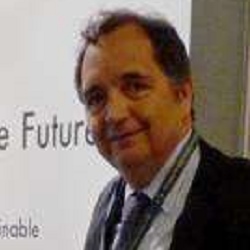
Susan Løvstad Holdt is an Associate Professor at the National Food Institute, Technical University of Denmark (DTU), where she leads research in bioactives – analysis and application. Her work focuses on algal biomass for food, feed, and high-value ingredients, with expertise in cultivation, breeding, and regulatory frameworks. She is actively involved in national and international seaweed research initiatives and networks. University: Technical University of Denmark Institute: National Food Institute Research Group: Bioactives – Analysis and Application Her research interests span seaweed biotechnology, sustainable food systems, biorefinery concepts, and food safety. She investigates how algal biomass can be utilized as a biofilter, food source, and platform for extracting high-value compounds, with residual biomass used for bioenergy and fertilizer. Her work aligns with UN Sustainable Development Goals, particularly in sustainability and responsible consumption. The recent publications highlight trends in kelp processing, fermentation, nutrient retention, and enzymatic extraction of seaweed. These studies focus on species like Saccharina latissima , Alaria esculenta , and Palmaria palmata , addressing iodine reduction, flavor enhancement, and bioactivity. The interdisciplinary nature of her work bridges food science, microbiology, and environmental sustainability. Susan Løvstad Holdt supervises multiple PhD students and leads or participates in key projects such as EAT-pack and VALUEKELP, which aim to develop edible food packaging and high-value seaweed products. She has secured research funding through Danish programs like GUDP and leads initiatives that integrate academic research with industry and policy. She chairs the Seaweed Network in Denmark and serves as Secretary General of the International Seaweed Association Council. These roles involve organizing symposia, facilitating cross-sector collaboration, and promoting seaweed research. She frequently delivers keynote and invited talks at international conferences, emphasizing science, safety, and sustainability in future food systems.